I Know Too Much
I know too much, including things I don't want to know at all. I could list a few of those things — funny, unexpected, strange, horrifying — but then you, against your will, would learn them too, even if you might not want to know them either.
One random fact could send an entire day into an unexpected direction. That fact would keep fidgeting around in your head, giving you no peace, demanding to be checked, expanded, supplemented, shared. The trouble with this kind of unplanned, unrequested knowing is that there's simply no way to ‘un-know’ it.
I always thought I had to know as much as possible. Maybe school taught me to collect knowledge and grade it. Or maybe it's that finding things out is pleasurable: when your knowledge expands, you can almost feel yourself expanding physically, too. If you know the answer to an unexpected question, satisfaction floods in. Perhaps that's why quiz games, where people compete over who knows more, are so popular. Knowing something can also make you feel superior to others and can almost permit you belittle someone with a question: "You don't know that? How do you not know that?"
As a child, my parents and I solved a lot of crosswords together; my job was to find the right words in the dictionary of international words and encyclopedias. I stored away every find — even the most random facts and the strangest words — as I believed it would make me a smarter person. "Knowing isn't enough, you have to reason it through," my parents would remind me whenever we hit a harder question. Isolated words or facts remained as just words or facts and I wouldn't become smarter unless I could weave them into a web of stories — only then would they help me understand how the world works.
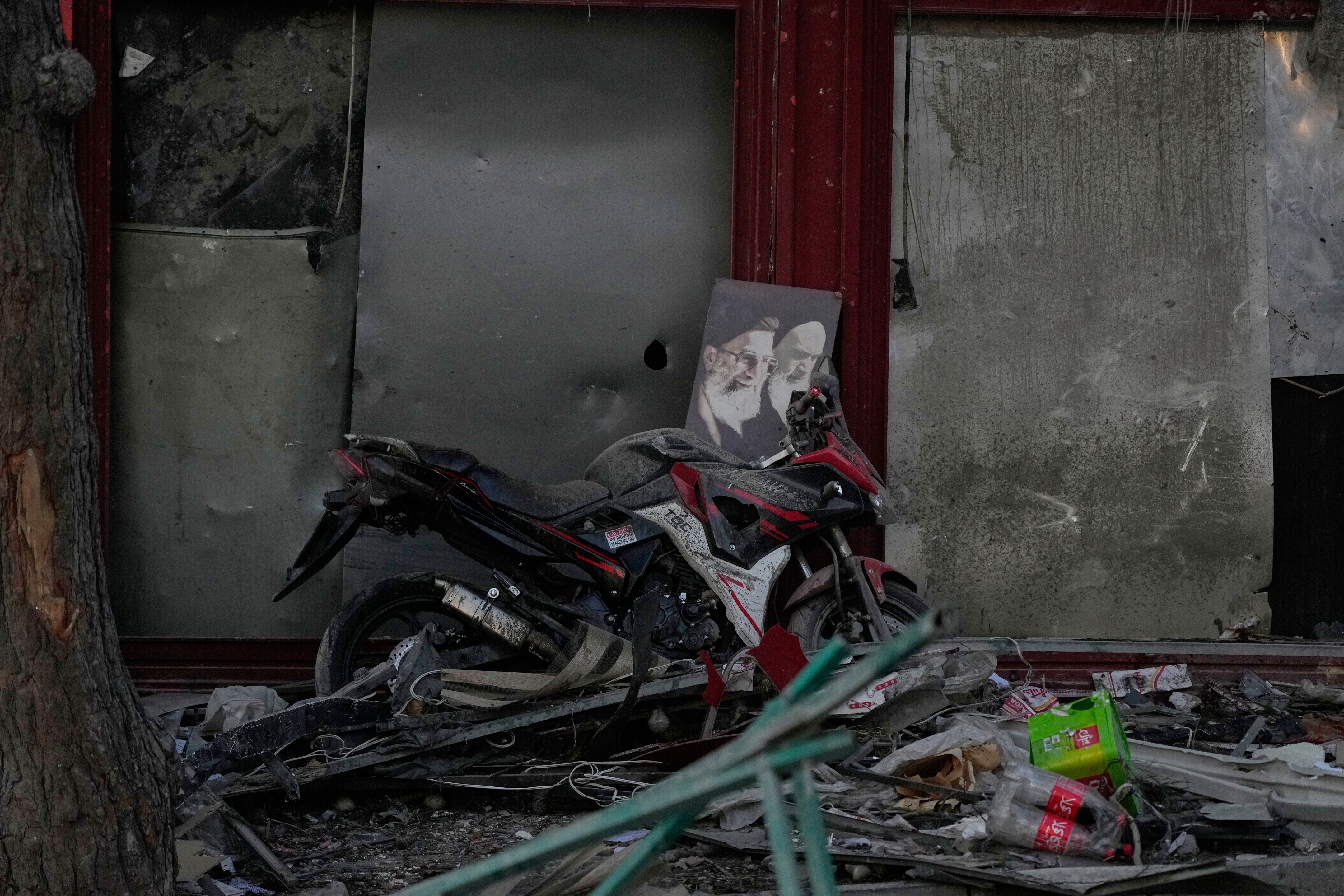
And what happens when words are replaced by images? In her book Regarding the Pain of Others, writer and critic Susan Sontag wrote that “Narratives can make us understand. Photographs do something else: they haunt us.” You can't unsee or erase them either, so what do you do once you've seen something too hard to bear? How do you assemble scattered visual fragments into a bigger picture? How do you resist manipulation by the people who capture and create those images — after all, it's easier to manipulate through images than through words.
I don't like horror films; I react to them sensitively, and deliberately avoid letting extra tension into myself when reality already supplies enough. But content warnings on articles or social media posts — that something might be difficult or not recommended for sensitive viewers — never used to stop me: I'd click and watch, because I felt a duty not to look away, to see the world not only in all its beauty but also in its cruelty. Not seeing, I thought, would mean to be ignorant, indifferent, avoidant of reality, failing to grasp what’s actually happening.
But when pregnant with my daughter, I saw two videos over the course of a couple of days on Instagram that were, to me, brutal, and will haunt me for a long time yet. The content involved children who had died and their parents' grief. For the first time, I felt my brain trip a circuit breaker. I felt something inside me break and that I was no longer able to bear reality. I felt as if I had overflowed, drowning inside myself, flooded by a world that simply would not fit under my skin.
Then I deleted Instagram. I turned off push notifications from news apps. For the first time, I could allow myself to do this because I had just left for a long break — maternity leave. Until then, following information streams everywhere possible had been a professional obligation. Only a few months earlier, NARA had launched the ad campaign ‘I want to know,’ so the desire not to know something surprised me. Could I really afford to think more carefully about what I want to find out and see? Do I even have the right to choose?

I never let myself grow numb enough to see one more death as just another corpse, another terrible event as just another routine fact. I knew that if that happened, I could no longer do my journalistic work responsibly — and I would no longer be the person I want to be. If I chose not to know or see something, would I instantly become less understanding, less sensitive, less empathetic, less compassionate? Can I remain that way while not seeing and knowing everything?
Last year, record levels of news avoidance were reported, and a similar trend has continued this year. On average, 40 percent of people (ranging from 63 percent in Bulgaria to 11 percent in Japan) choose to avoid the news because it negatively affects their mood. After all, they feel exhausted by the sheer volume of news, by coverage of conflicts and wars, or by the amount of attention given to politics. News is also avoided because people feel the information they receive is of no use to them, or because it might spark arguments they'd rather avoid. Finally, news content can feel irrelevant to personal life or simply too hard to understand. Minds punctured by the news and information are now replaced by rotting brains.
How will the world change if more of us want to know less about it?
The problem isn't knowledge itself, but what, how and when I find things out. What shook me the most after seeing those two videos was that I had witnessed the cruelest dramas of people's lives simply by scrolling in bed – that they had appeared wedged between endless ads for things I don't need, influencers' reality shows, posts from people I do or don’t know, and things I don't necessarily need to know, that I might not want to know, but that I keep finding out about anyway.
Pain and tragedy were given no room and no time to simply exist. Suffering was turned into a product, crammed into a little square, dehumanised, easily scrolled past, meaningful only to the extent of another worthless reel.
Today, around 50 percent of adults worldwide consume news primarily through social media — Instagram, TikTok and YouTube have overtaken television and radio.
News can reach us anywhere, anytime, interspersed with AI-generated content, work by favourite artists, event announcements and conspiracy theories. On social media, it no longer matters whether information has been verified, whether the facts are correct, whether anyone takes responsibility for what people claim to be true, or whether it's presented in order to inform or to sell something. Informative and entertainment units are mixed into one pile, becoming equal-weight pieces of a fragmented world's puzzle that will never actually assemble into anything coherent.
What once seemed like a convenience — finding and learning everything in one place — is now becoming a harmful, uncontrollable, overwhelming flood. At some point, the desire to learn turns into escapism, into overstimulation — no longer a desire to know but a desire to forget oneself. Infinite scroll and autoplay don't let you pause and think about whether you actually want to continue — and this is exactly how addiction is shaped.
We react more strongly and more quickly to negative information, threats, and bad events than to positive or neutral ones. This evolutionarily formed psychological tendency, which helped our ancestors stay alert and survive, is called negativity bias. And like our desire to know, it can easily be used against us.
There's nothing new about this in the media world. "If it bleeds, it leads" — I heard that phrase back in university, two decades ago. But social media takes the bleeding to another level. Politics, social problems, wars, the climate crisis, health issues, protests, and tragedies are part of the same attention economy as lifestyle content and productised lives. The quality of the content itself no longer matters. The algorithm knows only one metric — engagement. And harmful or fear-based content generates such engagement extraordinarily well.
When researchers analysed news articles and their shares on social media in the US and the UK, it turned out that negative content is shared 1.91 times more often than positive or neutral stories. Fake news spreads six times faster and reaches more people than the truth. In general, audience cynicism toward the news is growing, and worldwide, trust in the media has fallen to a record low, with an average of only 37 percent of people trusting it.
The UK's national Forced Feed 2026 report, which examines how social media algorithms shape what users see, states that it takes adults just 16 seconds and children 8 minutes to encounter harmful content in their feeds — even without seeking it out. Racism, misogyny and violence were the most frequently observed themes in the study. The content offered to users included incitement against various groups and communities, depictions of brutal violence, encouragement of suicidal thoughts and dangerous behaviour, and humiliation of people with disabilities. This content landed directly in people's social media feeds, even though they weren't looking for it or following the creators behind it.

The term ‘information overload’ was coined in the 1970s by writer and futurist Alvin Toffler in his book Future Shock, where he warned that people overwhelmed by data would eventually sink into depression and become disconnected from society. Studies show that overstimulated brains find it harder to solve problems and make decisions; memory, productivity and wellbeing suffers, cognitive load increases and stress, confusion, anxiety, or even mental health conditions such as depression, can emerge.
In his 1932 novel Brave New World, writer and philosopher Aldous Huxley feared the dangers posed by information overload and its triviality. These fears became a reality by the 'flood the zone’ strategy, associated with Donald Trump's political strategist Steve Bannon, who said in 2018: "The Democrats don't matter... The real opposition is the media. And the way to deal with them is to flood the zone with shit." Trump began applying this strategy during the 2016 presidential election, and others, such as Elon Musk, later adopted it too. ‘Flooding the zone’ means quickly filling the public space with a massive amount of contradictory information in order to dominate media attention, disorient opponents and steer public attention away from whatever one doesn't want people looking at. The result is fatigue, a weakened political response and audience disorientation — people not only lose track of what's happening but also lose the ability to clearly grasp what actually matters.
As Dr. Zsolt Kristóf Kapelner writes, who is a researcher in moral and political philosophy at the University of Oslo, this strategy is dangerous not only because of the content used to flood the public sphere — often lies, disinformation, polarising claims — but also because the flood of information itself undermines the very possibility of meaningful democratic politics. That's why, according to Kapelner, to preserve democracy, we will need to find ways to defend and strengthen our capacity to focus attention on what truly matters.
But how do we hold our attention when our ability to concentrate keeps shrinking?
Researchers have found that over the past two decades, the average amount of time people can stay focused on a single task has dropped from roughly 2.5 minutes to 40 seconds. The journalist and writer Johann Hari writes in Stolen Focus that we are living through an attention collapse not because we are weak or undisciplined, but because our attention is simply being stolen from us. We live in a society that systematically interrupts it, so no matter how valuable self-control might be, it won't be enough on its own to solve this problem.
He argues that when our capacity for sustained attention breaks down, our capacity for problem-solving suffers along with it; that solving big problems requires many people's sustained focus over many years; that democracy depends on our being able to hold attention long enough to identify real problems, separate them from fabrications, find solutions, and hold our leaders accountable if they fail to implement them — and that if we lose this capacity, we lose the possibility of a fully functioning society, which is why he stresses the importance of large-scale systemic change.
Among the solutions he proposes: restricting business models built around maximising our attention and engagement, along with manipulative app features designed to keep us using them as long as possible. Hari also suggests enforcing data-privacy laws, establishing a right for employees to disconnect and be unreachable outside working hours, letting children play independently and without structure as much as possible, reducing the number of high-stakes assessments in schools, expanding green spaces in cities, and fighting environmental pollution.
As a journalist and a social-media user myself, I contribute to the information flow, become part of the visual noise and burden others with information and images they don't necessarily need. Should I take more responsibility for what and how much I put out into the world, or should I leave that responsibility to people themselves and let them decide whether they want to know and see it or not?
After going on maternity leave, for the first time in almost twenty years, I consciously stopped creating and publishing. I thought I might not return to journalism at all, as the shifting media landscape had increasingly angered, irritated, saddened and exhausted me. But once I rested, I missed the very essence of journalism; in my fingertips I once again felt the urge to write, to tell stories and through that to better understand the world and the processes unfolding within it. I felt this all the more so because once my daughter was born, my field of questions expanded, too. For instance: how, amid this overabundance of images and information, do you raise children who are responsible, empathetic, environmentally attentive and alert? How do you protect them from harm, while preserving their curiosity, desire to know and capacity to actually do something with that knowledge?
And yet I still can't find the answers about how to keep working. Slowly, responsibly, ethically — that part is clear — but how do you reach an audience that is already overwhelmed with everything and wants to know less and less? Can we find ways to compete with social media's dopamine factory? What do you do when, exhausted by the sheer volume of events in the world, you no longer have the capacity to keep finding fresh and unique ways to talk about them? When you can't adequately cover all of the most important events and processes? What do you do when the work and resources poured into a piece simply don't pay off? When readership keeps dropping, and along with it, funding opportunities? And on top of that, the ugly comments, the accusations of serving some ideology, of spreading propaganda.
The femLENS collective describes the relationship between documentary photography and social media aptly: "The image is expected to provoke reaction, circulate quickly, and remain visually legible within seconds. [...] For photographers, the ethical tension is not only about what to show, but how images function once they enter platforms. How do we document political struggle without turning it into spectacle? How do we avoid reducing people to symbols, evidence, or consumable trauma? How do we make work that resists the speed of the feed and leaves room for memory, contradiction, and political thought? Documentary photography still matters precisely because it can slow things down. It can return context where platforms flatten it. It can pay attention to the quieter realities that rarely circulate widely: waiting, organising, exhaustion, care, grief, bureaucracy, survival. And sometimes the most important thing a photograph can do is refuse the demand to make suffering endlessly visible for public consumption.”
But won't we destroy ourselves by refusing to play by the rules? Is it even possible to work in the information space while stepping back from social media and its algorithms? Can we reach our audience without them? Will new listeners and readers still be able to find us? Will they be willing to pay for what we publish, and is it even possible to survive on audience funding when only 17 percent of people pay media outlets directly? And what new ways of communicating and exchanging information can we still invent?

"I opened Instagram and the first thing I saw today was ____ naked ass. Why? Why did I have to see that? What am I supposed to do with it now?," a friend complains to another friend. I search my memory, trying to trace whether I myself have ever so carelessly served up an exposed part of my own body, or my own life, and thrown off someone's day.
While scrolling, I can hear the most intimate stories, watch personal dramas unfold, witness births, weddings, divorces, awakenings, illnesses, deaths, funerals. In a single moment, I can find myself in ten different places, live through hundreds of different lives, abandoning my own. There are no content warnings here the way there are for material about cruelty, even though such stories can shake you in much the same way. Even after deleting your social media accounts, fragments of personal stories will still reach you through news sites or conversations with people around you.
I don't feel I've earned any of it. After all, I put in no effort to earn that trust, to show attention, to spend time listening carefully, responding, reflecting, asking questions. Sometimes I feel as though I've stolen something against my own will. Can I simply take everything that's served up in an unbroken stream? Am I obligated to react, to give something back in return? Is a ‘like' enough, or should I comment, say thank you, share something from my own life?
Through screens, we know each other inside out, our guts are intertwined. But loneliness keeps pulling us deeper down, and the epidemic of loneliness shows no sign of retreating. The most commonly cited cause of loneliness is technology. Screens make it easy to create an illusion of closeness and intimacy, but the relationship often stays one-directional. That's why the sense of disconnection keeps growing. We know too much about strangers without putting in any effort at all, so we no longer bother striking up conversation, actually seeing and getting to know the person next to us.
Meeting people I know, I increasingly heard: "I saw, you were there, you did that." And then I would feel a kind of sadness that we ourselves are stripping conversation of any element of surprise. We steer towards whatever direction the things we've already seen suggest, while beyond them lies an entire ocean of untouched territory. The illusion of already knowing can scare people off from asking questions or having deeper conversations — why bother, if you think you already know everything? Maybe you don't even need to talk anymore, just flick through the stories.
So when I'd meet people and ask how they were doing, what was new, and they'd answer, "You probably saw, I posted about it, I'm doing this now...," I would pretend I hadn't seen it. I pretended so I could hear the authentic version of the story, so I could give the person the joy of sharing it live, so I could respond to them in person, rather than through a screen and actually see and hear them, ask questions and communicate not only through letters and images, but through the whole language of the body. A sarcastic glance, a silence, laughter that's a bit too loud.
Philosopher Leonidas Donskis wrote that privacy is dying before our eyes, colonised by publicness — that this is very good for politics, because it leaves less room for tyrants, especially in fairly educated, well-read, democratic societies, but that hard times are coming for the sphere of culture, since no great culture has ever existed without the individual's secret, and today that secret is dissolving before our eyes.
Stories don't just help you find things out or understand — they can transform you.
Recently, while reading a book, I once again found myself forced to live through a brutal scene. The videos I'd seen on social media had shown only the aftermath of tragedy, but in the book I lived through the entire tragedy, word by word. But this time I didn't feel ambushed — I traveled slowly, page by page, toward that moment; I was gradually prepared for it, and having settled into the context, I could sense what was coming and had room to pause. I wasn't blindsided by an ad or a random reel; I could keep reading calmly, at my own pace, and stay with that tragedy alongside the characters.
What I miss most in this fragmented, overloaded world is wholeness — the chance to live through something from beginning to end, uninterrupted, without my attention being pulled away. Media and scrolling take away one very important thing: the experience of a real story, the pleasure of a masterfully constructed narrative, the immersion in the flow of images a text creates, without distractions. The chance to let a story intrigue you, unsettle you, anger you, disgust you, move you, make you cry, comfort you, embrace you, scramble your mind, inspire or exhaust you — all of that within just a handful of pages. And not necessarily in a book, but also in journalistic narratives, photo essays, audio documentaries. As you move through the verbal introduction, the first stirrings of the plot, get acquainted with the characters, live through the climax and rush toward the resolution, the story flows through you, stirring your nerves, your imagination, your senses, your memories. When you can trust the author, when you know they won't manipulate you in bad faith to push or sell you something, because their only goal is the story itself, the unfolding of the narrative — you can relax and surrender to that flow.
There you can immerse yourself in characters' most intimate experiences without feeling uneasy — by putting in the effort to enter the story, by setting aside hard-won free time for it, by unpacking bone by bone the narrative being given to you, you earn everything — all of its gifts.
A well-told story acts like a cloak you can wrap yourself in to hide safely, to try on someone else's skin, to explore how it overlaps with your own, to discover connections. Stories don't just help you find things out or understand — they can transform you.

There was a time when driving, washing dishes, tidying the house, or going anywhere without a podcast playing felt like wasted time, because if your ears were free, information should be flowing into them. News app notifications were supposed to inform me of world events in real time — or better yet, in advance. And before bed and on weekends, if I still had any capacity left, reading was essential — though of course not fiction. I was constantly absorbing everything, with every sense and the whole surface of my body, partly out of professional habit too. A phrase overheard by chance, a new scientific study, an unexpected event, a sensation, a newly discovered place, a person I'd just met — each was a potential new story that needed to be dug up, investigated, thought through. But there was less and less time left to actually tell those stories. It grew harder to concentrate; creativity and playfulness sank somewhere out of reach.
Since deleting my social media apps (sometimes I download them again for one purpose or another), turning off phone notifications, and starting to limit and control my information flow, I haven't become a worse person. On the contrary — there's more room now for real conversations, more inner resources for compassion and empathy, for seeking solutions, and simply being present. With more empty time and fewer disruptions, I've regained the ability to hold my attention for longer. When I don't have to constantly process incoming information, my brain finds room for creativity, for deeper reflection on ideas, or simply for letting my thoughts wander.
Research shows that constantly browsing short, frightening headlines heightens fear and anxiety. It's safer to read one high-quality article. To reduce the risk of clinical anxiety and depression, it is recommended that media consumption should be kept to no more than 2.5 hours a day, and news should be checked no more than 7 times a day.
One Harvard study published this year found that limiting phone use for just one week can reduce anxiety symptoms by 16.1 percent, depression by 24.8 percent, and insomnia by 14.5 percent. A similar effect appears simply from cutting daily time spent on social media by one hour.
But personal effort is only a small part of what's needed to build a healthier information flow, consumption habits, and to safeguard our psychological well-being. We need to think about bigger structural changes and regulatory mechanisms, so that our desire to know can't be manipulated, and so that we have more ability to control what, how, and when we find things out.
I keep asking myself what isn't necessary or important to know, and what I would actually most like to find out. When I have the cognitive capacity for it, I take the time to slowly dig in and understand. I look for information in trustworthy sources and conversations, and I choose not only what's pleasant and convenient to learn but also what's needed to grasp the world's complexity and many layers. I subscribe to writers' newsletters — I like it when they surprise me with topics I hadn't thought about. And I very much enjoy turning off the internet and opening a book — increasingly, a novel.
In the end, all I really know is that I know too much, and yet I still know nothing. It's a great paradox that knowledge is not the same as wisdom. These days we're racing artificial intelligence when it comes to knowledge, and we're doomed to lose that race. But wisdom is a race we can only run against ourselves.