The Dictator Is Dead But Freedom Didn’t Come From The Sky – The Bombs Did
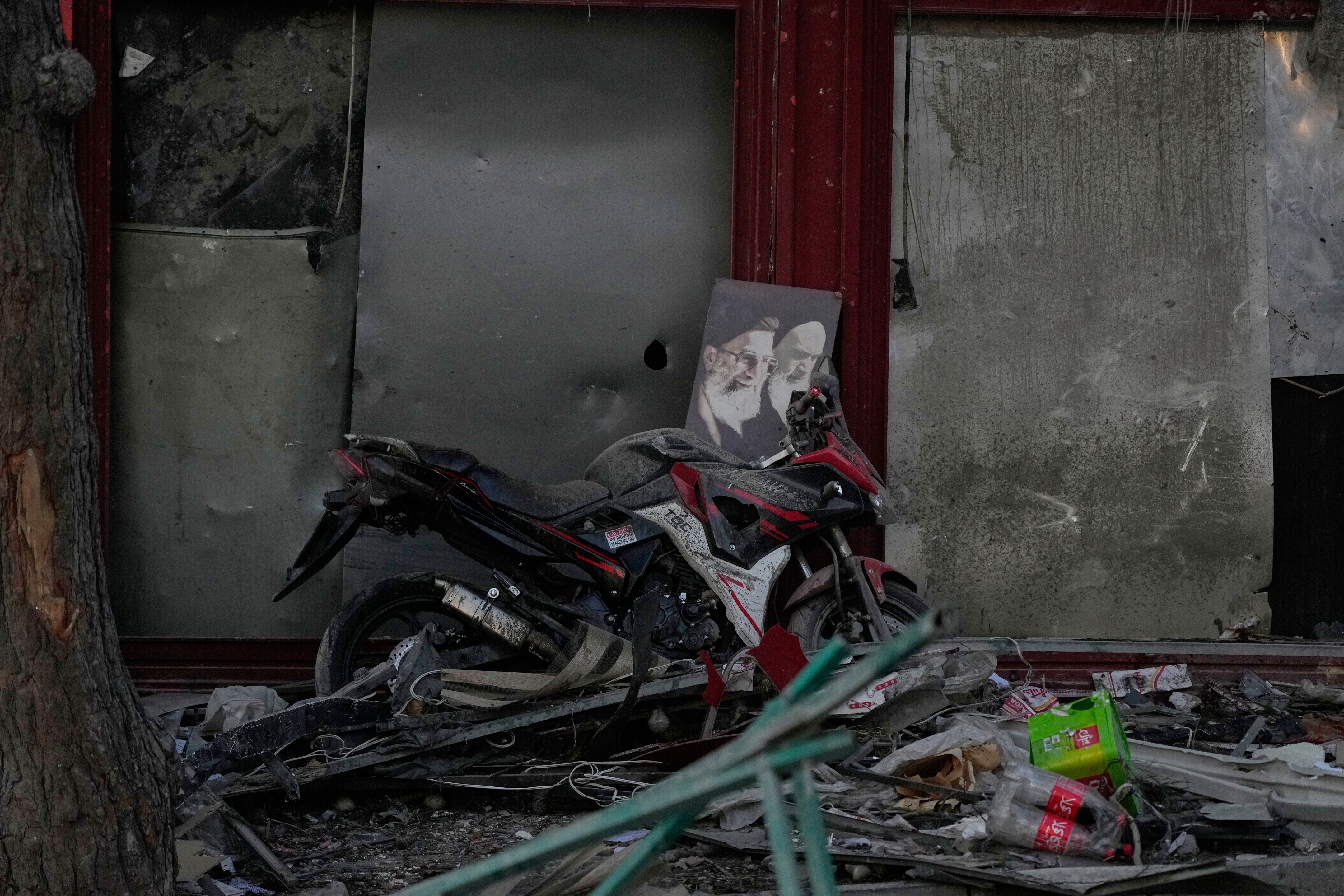
Khamenei ruled Iran for thirty-six years. Many Iranians spent years hoping and trying to see him gone. When he finally died, their happiness didn't last. Nothing was as they had dreamed. The bombs that killed him were still falling on their cities.
Joy, and the shame of joy
For years, I thought that if the news of his death ever came, I would breathe with relief. The day came and I held my breath. The man who was casting the shadow of fear over Iran's streets, universities, schools, culture, and over the bodies of women for over thirty-five years, was gone. But his passing was followed with yet another catastrophe — the war.
This was when I understood that some feelings have no name. What settled in the chests of so many of us that day was not joy, not grief, nor victory. It was something in between, something perhaps only Iranians could relate to: joy and then immediately, the shame of joy.
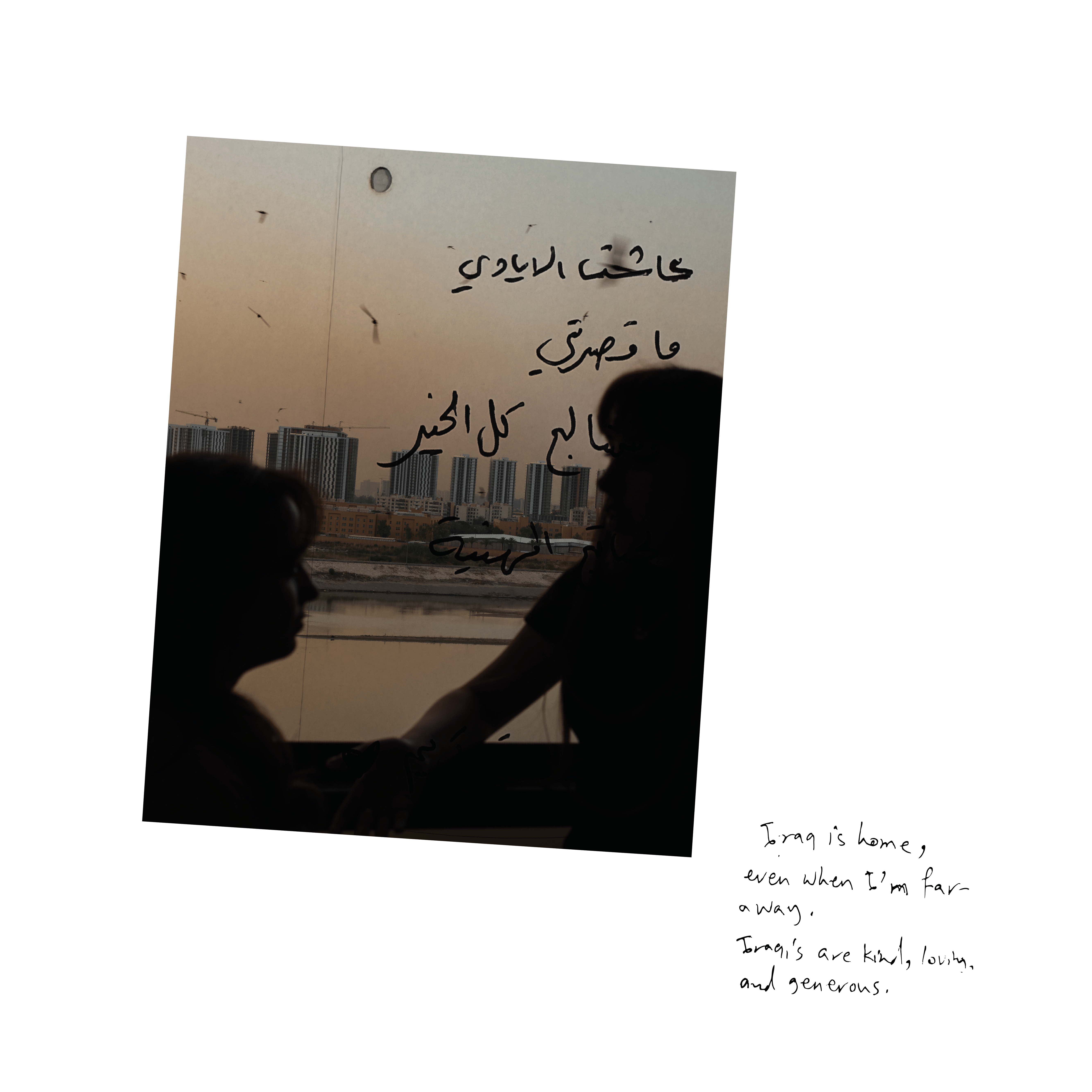
For me, an Iranian living far from Iran, the news came in fragments to my phone screen: a text message from Tehran, a video clip from the south, a trembling voice message from a friend, a breaking-news report, a blurred photograph of smoke, sometimes a phone call, often interrupted by lost signal.
The news of his death was supposed to bring relief to Iranians. Before, I had imagined Iranians breathing out all the long-standing tension. But at the time of his death, the country was instead breathing in exhaustion. Exhaustion from years in which any change seemed impossible. Exhaustion from hearing the names of prisoners, from headscarves turned into court cases for the crime of slipping down onto a shoulder, from news of executions, from promises that were trampled, every time under the heel of the same old power. For many Iranians, Khamenei was the name of a long era of fear. For me, too.
A friend texted me from Tehran: "For a few seconds I was happy. Then I saw the news about the school and I was ashamed of myself." This sentence stayed with me.
It's been years now since being Iranian has meant living among questions that are both uncomfortable and unanswerable.
We, Iranians under the rule of the regime, have learned to censor our political feelings, even from ourselves. We have learned that if we feel glad over a dictator's death, we must immediately ask whether that feeling is moral. If we fear the war, we question our fear and whether it serves the government. If we hate bombing, we ask whether someone will call us a supporter of the Islamic Republic. If we speak of the regime's fall, we ask how many more children must pay for it. It's been years now since being Iranian has meant living among questions that are both uncomfortable and unanswerable.
Cracked glass
That same morning, in the very hours when the unconfirmed news of Khamenei's death was still moving across our screens, an explosion brought the roof of an elementary school in Minab down. Among all the images of the war, the destroyed elementary Shajareh Tayyebeh school was the most unbearable for me. It stood beside a Revolutionary Guards complex and was struck by an American-made Tomahawk missile. At that moment, something started to crack from within, like a glass, in which one final blow is enough to bring it all down.

The school sat in a poor neighbourhood and its students were the children of Revolutionary Guards, alongside those of low-income families. When the strikes on the city began that morning, the staff started calling parents to come and pick up their children. But many of the families were coming from outside the city, and the roads took time. By the time they reached the school, it had already been hit. Families sent their children to school in the morning and by the evening were searching for their names on the lists of those whose bodies were found under the rubble. It was the very beginning of the chronicles of war.
The attack killed 156 people, including 100 children. Amnesty International concluded that the United States had failed to take the precautions required to spare civilians and called for a transparent investigation and accountability. Human Rights Watch stated it should be investigated as a war crime and the United States opened its own military investigation. Early findings suggested the school was struck by a U.S. Tomahawk missile, based on outdated targeting data, but months passed without a public report or no formal admission.
The state kept the grief to itself: It forced the families, many of whom were Sunni, into a state-directed funeral with Shia rites that only represented their beliefs and had little to do with the customs of the families who lost their children.
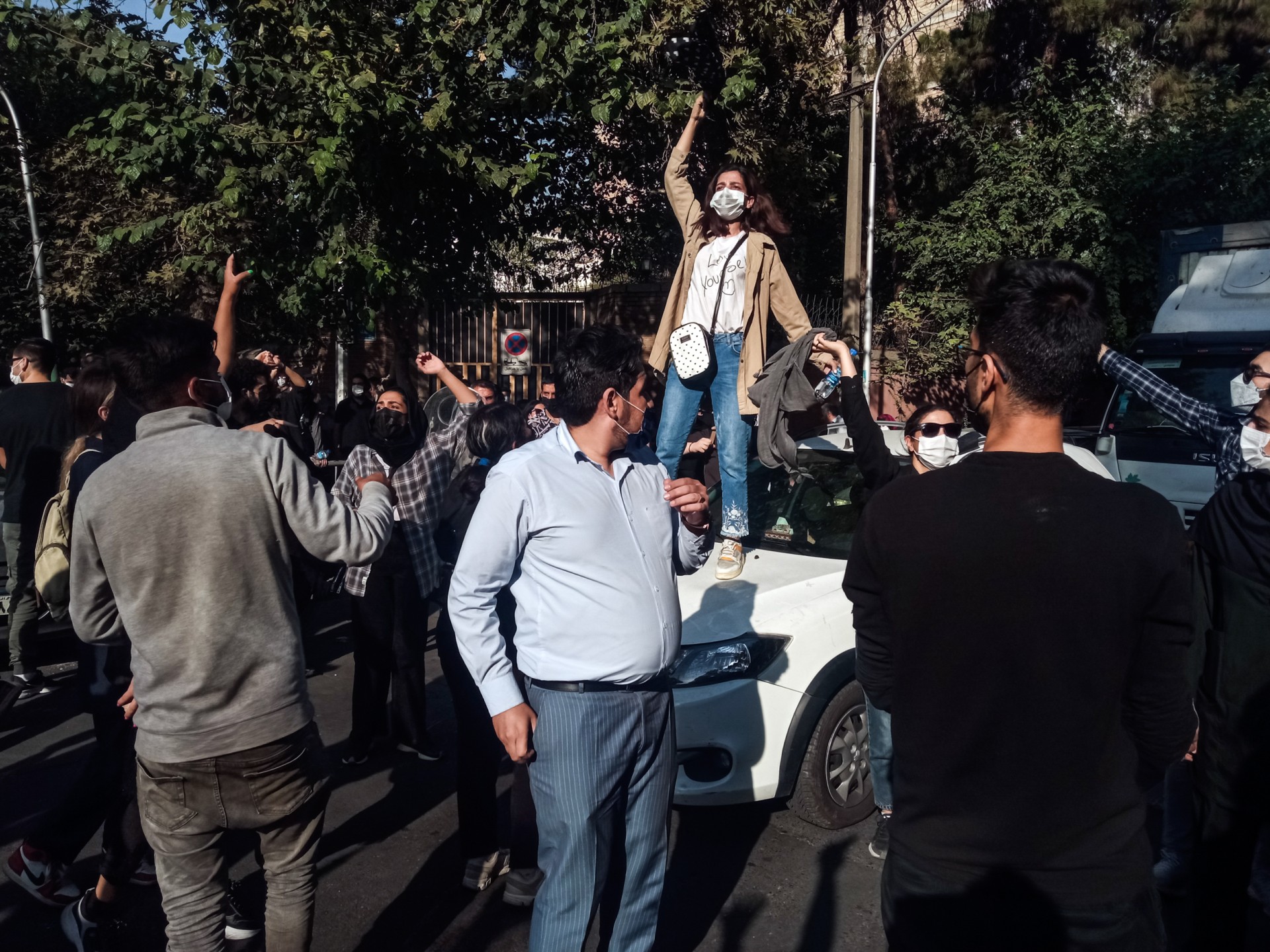
That first night, while the strikes were still falling, some windows opened. In Tehran and other cities people leaned out and shouted, whistled, sang; cars honked in the streets and some filmed it on their phones. These videos reached the world in fragments, as the internet in Iran was already collapsing; for days, connectivity sat at about one percent than usual, with most of what anyone knew of the war ending at the edge of their window. The videos kept coming: voices in the dark, joy of some kind. Then, as the news began to arrive and the size of the war became visible, the windows went quiet.
As the scale of destruction became clear, the world got to know that at least 66 schools across the country had been damaged or destroyed. In its fourth humanitarian update, the United Nations reported that some 1,200 educational facilities had been damaged and 20 schools were destroyed outright.
The numbers travel slowly through a country with no internet. Parents could no longer say the simplest sentence with honesty "Go to school, you'll be safe there."
Are you okay?
For years we wanted Khamenei gone. We demanded it in writing across the cities' walls: “take your hands off Iran.” At home we said it quietly; and those in exile, louder. But only a few, among those I knew, had ever imagined him going like this – amid smoke and missiles, alongside schools turning into ruins. We wanted him gone, but not like this. We dreamed of him being taken to court and being held accountable for his crimes against the Iranian people. Now, against everything we had hoped for, he was being turned into a war hero. Not all Iranians shared this view — a part of the population remained loyal to the regime.

Now, a council of senior clerics — the Assembly of Experts — is supposed to choose the next supreme leader. Its members are elected by the public but only after a body loyal to the leader has decided who is allowed to run; and until they choose, a temporary council holds the leader's powers in his place. That choice had been prepared in advance. Fearing the strikes, and perhaps his own death, Khamenei had reportedly planned past his own succession, setting aside replacements for the country's most important military and government posts, so that no single killing could bring the whole structure down.
And the system has held. The high-ranking officials' deaths were coming one after another. Within a week of Khamenei's death, the Assembly of Experts had named his son Mojtaba as the new leader, with the Revolutionary Guards and the army falling in line behind him. The men died and the Islamic Republic remained.
Khamenei's death was big news but it changed little about the danger people were living through. At the same time as the regime was choosing its successor, after the airstrike a mother in Bandar Abbas was searching for the phone number of a hospital. A father in Minab was searching for his child's name on the list of the missing. A family in Tehran was taping their windows. Someone in Shiraz was telling their child that the sound of the explosion was only "a distant sound," nothing to be afraid of, while not knowing themselves how far away ’distant’ really was. Yet, among all that, some were quietly saying, "It's over." And others, "It's only just begun." People were calling each other asking "Are you okay?" – a sentence that in Iran has different meanings: “Are you alive? Is your home still standing? Do you have the internet? Has anyone been arrested? Was the explosion close to you? Where are the children? Do you need anything?”

A poor man’s shelter
In the first days of the war, the hallway of a house had become a poor man's shelter. There were no safe basements, no public bomb shelters, no official warnings to alarm you on how many minutes you have before the airstrike. People were deciding for themselves, judging by experience and fear, or often just guessing, which part of the house was the least dangerous: a room with no window, a wall that did not face the street, or the narrow corridor between the bedroom and the kitchen.
Leila is 42, a single mother for a few years now, living with her son and her mother in a neighbourhood beside the Shahran oil depot. For years, the depot had been part of the silent geography of the neighbourhood and the neighbours had long discussed the danger of living beside the huge fuel tanks. Leila acknowledged it as well, but in Tehran, you learn to live alongside the things that frighten you.
On the 7 March, a wave of air-strikes hit Tehran's oil infrastructure. The Shahran depot was part of the city's fuel network, marking it as a ‘legitimate target’. Leila's home was in the same area on the map.
"All was shaking at once. It seemed like the trembling was coming straight from the underground. [...] The windows were trembling, my son's bedroom door slammed against the wall, my mum jolted awake asking, Is it an earthquake? I shouted back for her to get to the hallway."
The fuel tanks were catching fire one after another, before turning into huge torches in the dark. The state TV, at this point of the war, would already 'normalise' explosions, telling people that there is no danger or threat to their homes. However, normal sounds are the sounds of dishes, the street cats and children playing. Definitely not the sound of fuel tanks bursting one by one.
"I couldn't understand: if this isn't danger, then what does danger look like?"
Leila lifted her mother from the bed. Her son came with a blanket and sat down on the hallway floor. The power was still on, but no one dared to turn the lights on fully, not in fear that the light of the house would become a target, but out of the older fear that returns in Iran with every crisis: be less seen, make less sound, be less visible.
From the kitchen window, the sky was visible, not fully, but enough to understand that something was not right. First a blast of an orange light, then smoke; it was different from one raising and vanishing over the flame, it was a heavy one, a black column settled over the sky. A fire was moving like water through the streets, turning the night into day – and for Leila this was more frightening than the explosion itself: the fire was not limited to one place. Then came the emergency sirens and the street was firelocked; some people tried to get away, others moved closer to see what had happened, and some just stayed, because they did not know whether it was safer inside the house or out of it.
Leila hates the government, but that night she couldn't focus on who this attack really served: "I could only think about whether my mother could breathe or not."
The family did not sleep until the morning. Leila's son kept dozing off and waking up crying. Her mother spent the night sitting on the hallway floor, wrapped in a blanket. Every few minutes Leila would pull the curtain an inch, then would close it again. She didn’t know whether to keep the window shut so the smoke wouldn't enter, or open it so the house wouldn't suffocate. There were no instructions on what to do – the warnings came late and said little.
By midnight, the burning neighbourhood, together with the oil plant, was thirstily drinking the capital's oxygen, breathing back smoke and fire, and the morning was not the end of it. The smoke exhaled by Shahran and the other depots did not stay up long in the sky. The next day it came down as black, acidic rain – something that puts the eyes, the skin, the lungs and the heart at risk, as health officials and the Red Crescent warned, and as the Associated Press explained later.
For Leila this was a scientific explanation, though she needed a domestic one. She needed advice on whether to put gloves on before wiping the windows; whether to throw away the clothes on the line or wash them again. If her mother coughed, she worried not about her heart but her lungs. It meant that rain – which in Tehran had always been a little like deliverance – was also becoming a threat.

Tehranians got used to living in crises of different kinds, and its people knew how to outwait one. But after some days of continuous airstrikes people slowly started to leave.
Leila also held out for a few days before finally deciding to take off. The explosions were back every night, and staying was becoming unbearable.
In the morning, as smoke was seen from the western part of the city, she pulled the document bag out of the drawer: birth certificates, ID cards, mother's insurance, a few prescriptions, some cash, the gold, chargers, blood-pressure and heart medicine, a few masks. She left the key with the neighbour across the hall. Turned off the gas. Checked the windows. Her mother stood in the doorway until the last moment, looking back at the house, imagining the possible outcomes, whether they're leaving for a few days or longer.
The city was emptying slowly — not the way a city empties in a movie, when people are running from imaginary disasters. Tehran emptied with resistance, with guilt, accompanied by phone calls asking, "Have you stayed or have you left?"
As they were driving west, along the Hemmat Expressway, Leila's son asked her from the back seat, "When are we going back home?" She didn't answer. Tehran was slowly pulling away. The city was standing like someone who can't sleep at night. Tehran's vast squares and bazaars were half empty, overlooked by taped windows and a blackened sky.
The city was neither fully stopped nor moving as usual. The shops were open, but barely alive. Fewer taxis on the streets, and only pharmacies grew busier. Some streets would empty after the explosions, but a few hours later people would gather again – searching for bread, medicine, baby food, petrol or news. War in Tehran, unlike the eventful images in the news, was not always loud and active; often it was the opposite – silent queues, people walking out of a shop empty-handed, a man at the petrol station cautiously staring at the sky, while fuelling his car.
The soundscape of the city had changed. It was a noisy place before – car horns, motorbikes, the metro, prayers from the loudspeakers, street vendors, the school bells. It has grown quieter now, as though someone had pressed mute. Even familiar sounds appeared more frightening and suspicious. A motorcycle could be mistaken for a drone. A plane overhead caused the body to tense y before the mind could recognise it. An explosion, even a distant one, took a few seconds out of the day. You stayed exactly as you were, holding whatever you were holding, waiting to hear where it had landed. And then came a silence, which was more frightening than the blast itself.
This cat is our country
Staying in Tehran doesn’t mean bravery. Some didn’t know how to get away, many had no money, or no place to stay outside the city. Some had old parents, others were held by their businesses – the paperwork of life. And some, like Raha and Kian, were kept by their three cats: Fandogh (eng. Hazelnut) – white-and-grey and shy; Limoo (eng. Lemon) – orange and talkative; and Khakestar (eng. Ash) – a black one – "more Tehrani than Tehran itself, you can never tell what he's thinking", as Raha described him.

They are living in a small flat near Khodami Street, in the Vanak and Gandhi area – in one of the busy, contemporary parts of the city: cafés, shopping malls, offices and private clinics. Raha is 32, a freelance graphic designer, mostly working from home. Kian is 38, a video editor and photographer. Their lives [before the war] were running between a laptop, a café, music and the care of a few small creatures.
Kian recalls one night, when Khakestar had curled up on the old map of Iran pinned in the corner of his desk. "In Iran, they teach us as kids that the map of our country looks like a cat — a sitting cat. Some people say it faces the Caspian, some say the other way, but everyone agrees it's a cat. [...] Our cat is our Iran. She’s scared, but she won't leave. She sulks, she hides, and by the end of the night she’s back in the same corner of the house." That was the night they knew they couldn't leave. Not their three cats, nor the biggest one, the land under their feet.
Anyone who lives with a cat knows how complicated these creatures are. Fandogh, when going to the vets, has to be coaxed into the carrier with a towel, patience and pleading. Leaving Tehran, would mean handling three carriers – one for Khakestar, who has kidney disease and eats special food – alongside medicine, litter, food, an unsafe road, a house that might not accept animals, and a fear no one could say was lesser or more on the road. "People think a pet is something extra. In war, you learn they are not extra; they are family."
Raha and Kian organised a safe corner in the house for the cats and themselves. They set the water bowl against an inside wall, moved the litter trays into the bathroom, which had no window, and put down pieces of cloth for cats. They packed a small bag, just in case: dry food, medicine, a folding bowl, a few absorbent pads, collars they had never used, and the vaccination booklet. It was their survival plan.
The cats were the first to sense the upcoming explosions. Before Raha could hear a thing, Fandogh would flatten his ears and fixate on one spot. Limoo would go under the sofa. Khakestar was the most fragile of the three; at every heavy sound he would pant and dig his claws into the carpet.
When a city empties, it is not only people who go missing; the small chains of care are breaking, too.
The war makes animals homeless too, only their homelessness is less visible: the courtyard cats, the workshop dogs, the animals of shops whose owners had left, the cats that used to eat behind restaurants that are now closed. When a city empties, it is not only people who go missing; the small chains of care are breaking, too. "There's no one left to fill the water bowls. No one is noticing that the cat who was coming every night at seven, hasn't been seen for three nights now," says Kian.
At first, they had stayed only for their own cats; but soon their care moved beyond the house. In the building's carpark there were two cats known by all the residents; one of them had just given birth and had hidden her kittens behind the boiler room. The neighbour who always left food for them had left and the food bowl stayed empty. That night, Raha went down with the torch on her phone, with Kian behind her. Facing the explosion alone felt scarier than going together. Raha placed the bowl down and took a step back. A few minutes later the cat came out of the dark; thin, anxious, her body still nursing. Raha burst into tears. It was the first time she had cried since the war began. She was crying not only for the cat, but for herself, for Tehran, and for all those who had to hide their loved ones from war – whether humans or animals.
From that night, their work began. Every day, if the sky was quiet from strikes, or after one had passed and things settled a little, they walked a short loop around the block: the courtyard, the side alley, behind a half-empty supermarket, past the corporate building whose guard had left, as far as Gandhi Street, where there were always a few cats, gathering by the bins. Food was scarce. Prices had gone up, the pet shops were shut, and online orders either came late or didn’t arrive at all. They mixed their own cats' dry food with rice and boiled chicken, or whatever they could find, and set it out in small bowls. Kian said, "At least we humans know it's a war. They [animals] just think the world has gone mad."
A battle over meaning
At some point, the active phase of war started to calm down — at least in the capital. The war drifted away from Tehran to the south, a region that captured world attention as a strait, as a military base, as a refinery — all but home, though it is first and foremost home for the Iranians living by the sea.
Maryam lives in one of the southern cities, on the Persian Gulf. In her voice message she sounds calm after a great deal of crying. She pauses after every few sentences, as though deciding how much of her pain to let out and how much to keep in.
Her brother was killed in this war, but she doesn’t speak of him first; instead she begins with her father, who served in the army of the Shah — the monarchy overthrown in 1979 by the revolution that brought the Islamic Republic to power. He was too junior to be purged with the senior officers and simply carried on, in the same uniform, under the new state — an ordinary serviceman. "He was a soldier, but being a soldier did not make him love war. The opposite — he hated it."
After the revolution, the Islamic Republic did not appear to become a political home for Maryam’s family. From the early years, they kept their distance from the regime ceremonies, and they were vocal about it. The women of the family didn't accept compulsory hijab, and no portraits of the leaders hung on the walls. Before he died of a heart attack, the father had urged his children to join the army. "Dad used to say we must protect Iran, no matter what the ideology."
Maryam's three older brothers each went their own way. Two of them didn't want to wear a uniform that someone might read as approval of the government. Only Ahmad, the youngest one, went into the army.
Ahmad was a quiet type – sparing with words, a little stubborn – one of those people who make their decisions without going into explanations. "When he joined the army we were all upset and worried. But he always said the same thing: the government is one thing, the country is another."
Even in peacetime this sentence is not simple. In wartime Iran, it is even more complicated. For years, the Islamic Republic has tried to force the country into being one with itself. On the other side, the opposition of the regime would read every sign of defending the land as defending the government.
Ahmad lived between these two misunderstandings. He was neither an agent of repression, nor someone who stood against the people in the street: a soldier in the country's regular army, not the Revolutionary Guards.
When the U.S. and Israeli strikes began, Ahmad was killed in the very first days.
His death brought a double pain. The grief for a brother was not enough; they also had to stand against those who were quick to judge. "We ourselves were wounded by this government. No one accepted the Islamic Republic in our house." Some people were calling them the defenders of the regime. "Ahmad defended Iran, not them." She repeats this sentence several times, as if she knows that in the polarised Iranian space it has to be said again and again before it might be heard.
Maryam doesn't want Ahmad turned into the government's official martyr, and she doesn't want him reduced to a meaningless ‘victim’ either. What she wants is the difference to be seen; between Iran and the Islamic Republic, between the army and the crackdown in the streets, between grief and propaganda.
After Ahmad's death, his family home became a battlefield – a battle over meaning. As the government wanted to make him its own martyr, the family tried to keep him as he had been, hardly finding the freedom to mourn.
For years, Ahmad's wife wore her headscarf in a way that wouldn't cause trouble for his job. Now, through her tears, she says their daughter will grow up with the word 'martyr' attached to her name. Ahmad never wanted that. Now she's taken off her hijab.

Not now
At the same time as the country was under airstrikes, the presence of security forces and the Basij became more visible: checkpoints, patrols, eyes scanning the phones in people’s hands. The government, while watching and suspecting everyone, still wanted the people to unite and stand against the foreign enemy. Yet, it was suspicious of reporting, of spontaneous gatherings, and of how people expressed their grief. Iranians were watching the sky and the ground at the same time – for bombs and for officers.
In wars, governments ask people to be silent so that ‘national security’ can be preserved. In Iran, this idea was already familiar; for years, national security had been another name for fear. Fear of free speech, writing, asking for the names of the dead. But after the U.S. and Israeli strikes began, that fear became more official. The government, while presenting itself as the victim of a foreign attack, used the conditions of war to shut people's mouths.
Since 28 February, the Iranian authorities had arrested more than six thousand people: protesters, journalists, lawyers, human rights defenders, members of ethnic and religious minorities. The judiciary, Amnesty said, had ordered faster trials and harsher sentences. ‘War’ had become a pretext for besieging society not only from outside, but from within.
Iranians were watching the sky and the ground at the same time – for bombs and for officers.<...> ‘War’ had become a pretext for besieging society not only from outside, but from within.
Evin prison sits on the northern edge of Tehran, at the foot of the mountains, in a neighbourhood people drive through on their way to somewhere pleasant. Built in 1972, it survived the revolution that toppled the Shah. Revolutions change the names on the doors of prisons, not the function of the rooms. The facility, with its most notorious ward – Section 209 – is run directly by the Intelligence Ministry, skipping the system of law. No lawyers allowed, no family contact, no news about the prisoners' existence. What comes out of it are the stories of inhumane torture and forced confessions. Journalists, academics, artists, dual nationals — anyone whose existence inconvenienced the state — end up here.
One former prisoner, whose writing was passed from hand to hand among Iranians, had described the feeling that in Evin "...every night you hear the footsteps of the executioner." It is a metaphor, but a precise one, because for a political prisoner, execution is not only the moment the sentence is carried out. It begins weeks earlier: with interrogation, forced confession, a heavy sentence, transfer to solitary confinement, the cutting of contact, and the rumour that the sentence will be carried out tomorrow morning.
When the war reached Evin, the little order that remained fell apart. Guards left their posts, kitchens stopped, but the cell doors stayed locked. Some prisoners were released on bail. The political ones were not.
I tried to speak directly with the families, the lawyers, and the relatives of political prisoners. They were afraid, and so was I, not only of surveillance or arrest, but of the possibility that a single call or a single name might make a prisoner's situation worse. One of the people I reached through an intermediary only wrote: "Not now." Those two words were enough. In a country where a single call can become evidence, that "not now" was itself a kind of testimony to an atmosphere in which even a prisoner's family must first think about the danger of simply saying their loved one is alive.
★ ★ ★
Saying this was not easy. The Islamic Republic had seized on every criticism of the war. The government wanted everyone who opposed the bombing to stand alongside it.
But we are not obliged to choose between lies. It is possible to hate the Islamic Republic and to oppose the bombing at the same time. As this government does not represent the people, this soil, these cities, these children, and these lives are not instruments of pressure.
There was joy in his death, but it was never complete. It was brief and broken. Like walking out of prison only to find the city was on fire. Only this was clear: Khamenei was dead, but fear was not. Fear still walked the hallways of homes, spreading through text messages, standing behind windows, sitting beside children's beds, lingering in silence. The war had not come to replace repression. It had come and settled on top of it.
Someone texted me recently: "For years we were saying 'death to the dictator,' but we never said 'death to Iran.'"

The author of this piece remains anonymous for their safety. Their identity is verified and known to the editorial team. The names of interviewees have been changed to protect the individuals and their families. The reporting is based on interviews conducted remotely by phone calls and messaging platforms. The scenes described in this article have been reconstructed from video reports and interviews with Iranians in Iran.