How Sholto Dobie Transformed Jauna Muzika

Meeting the Scottish artist and performer who revived Lithuania’s longest-running experimental music festival.
It’s late April, Saturday, well after midnight. Draugų vardai, a pocket-sized listening bar in Vilnius on the other side of the Neris River is packed. Takako Minekawa, a pioneering Japanese experimental musician, is at the DJ booth, playing a selection of songs that sound like spring. The prolific composer Arturas Bumšteinas stands next to me, waving a sakura branch he found in the nearby park – it’s that precious time of year when the cherry blossoms are blooming in the city. It’s hard to feel a sense of collective ease in Lithuania these days, but this evening is an exception.
The Jauna Muzika [Young Music] festival has not always been this way. Bumšteinas remembers how between 2019 and 2021 he also curated the festival, which has been passed into the hands of many others since it was founded in 1992. The joy of presenting experimental music in Vilnius was always followed by the stress of shrinking budgets and an unclear future for the festival.
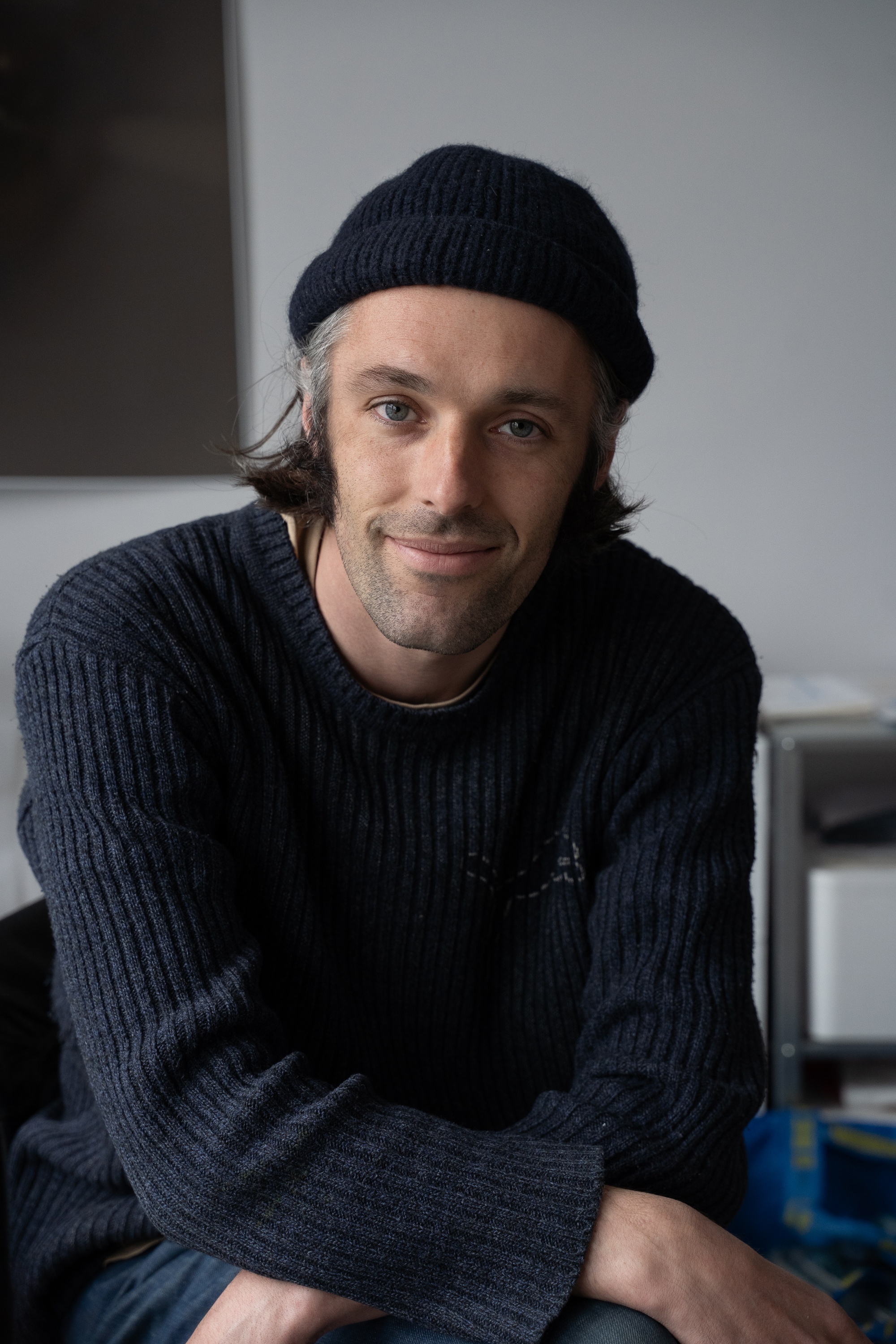
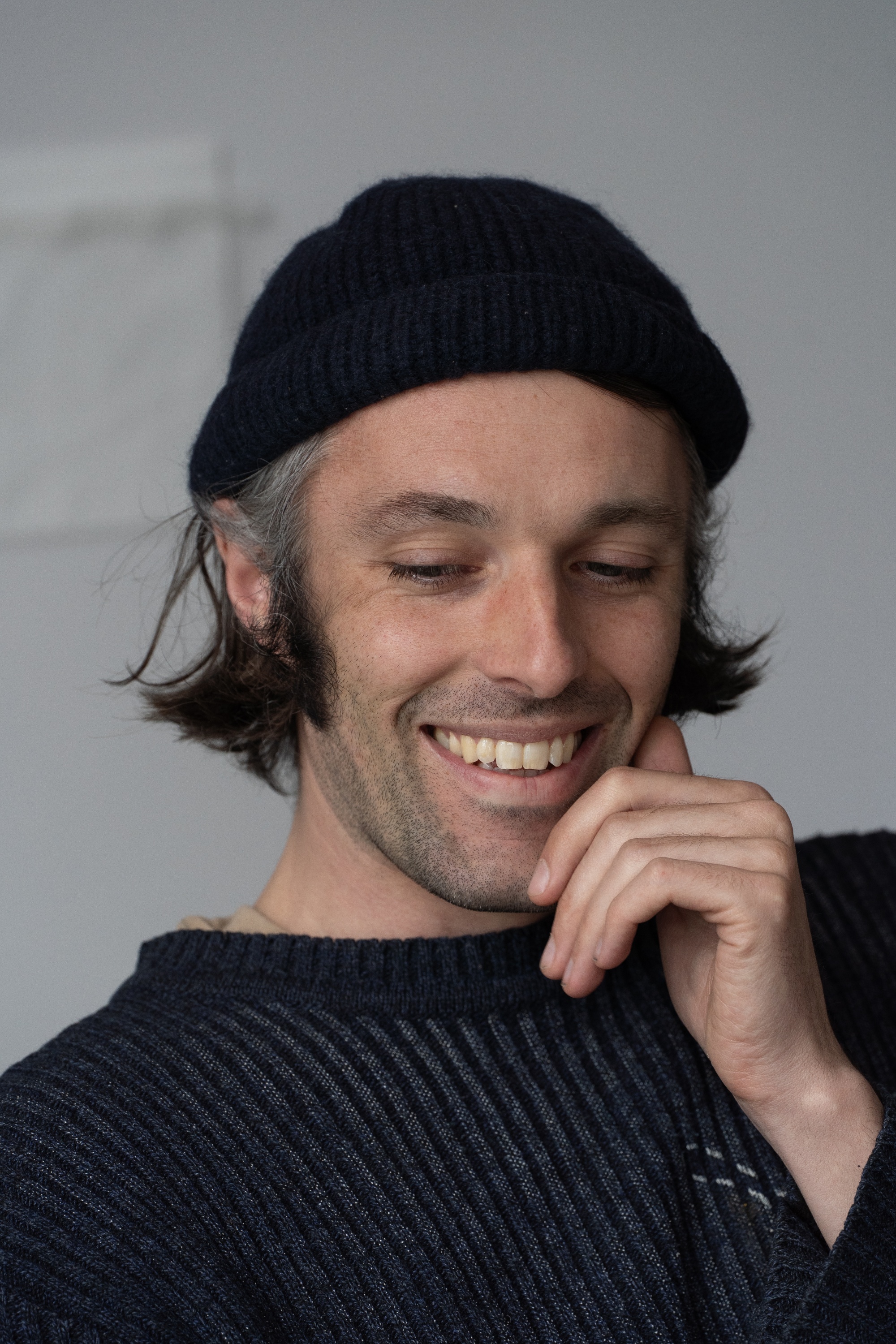
Like many music listeners in Vilnius, I discovered Jauna Muzika last year, under the curation of Sholto Dobie, an Edinburgh-born artist with a kind smile and an infectiously calm presence. Sholto, who moved to Vilnius seven years ago, built his experience by organising events at London’s Café Oto and releasing his own music, which is made with field recordings, homemade organs and bagpipes.
“Sholto is a fantastic community builder,” says Bumšteinas in the voice message for this article. “He is a very charismatic person who unites a large community of people around him. Sholto has great taste and has a lot of connections; he can convince people to open up spaces to the festival’s performances. His character and chemistry bring people together, which extends to the whole organisation.”
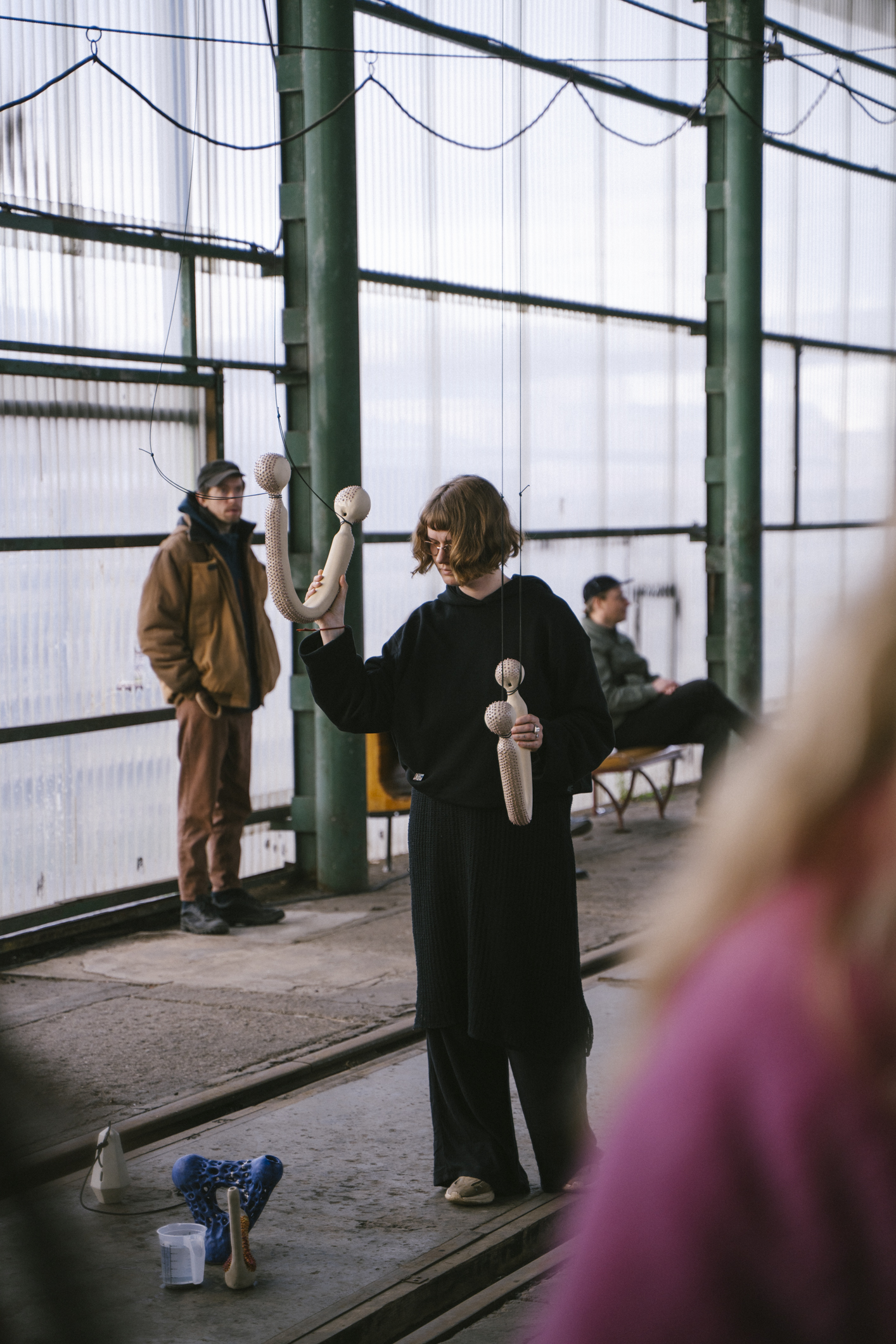
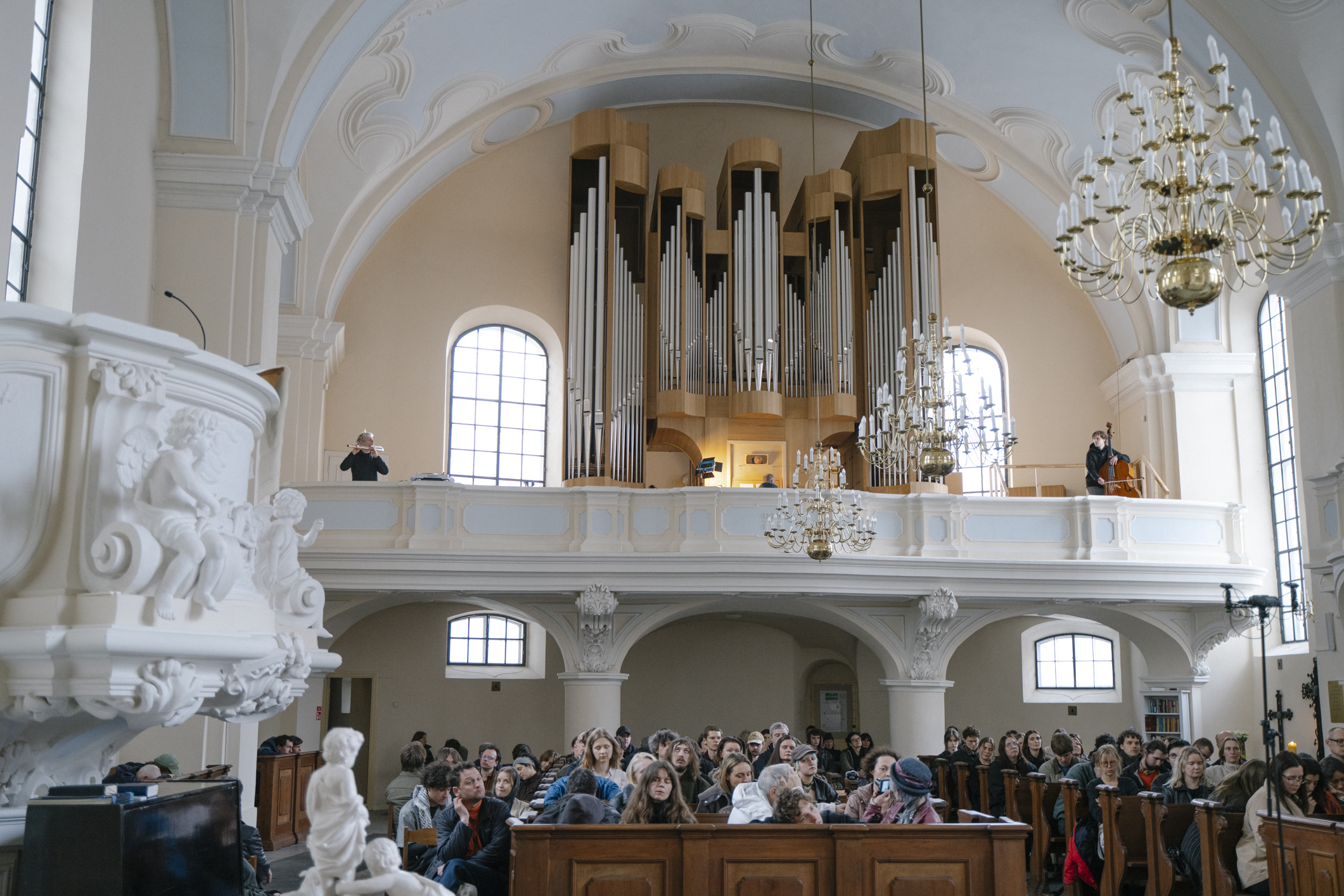
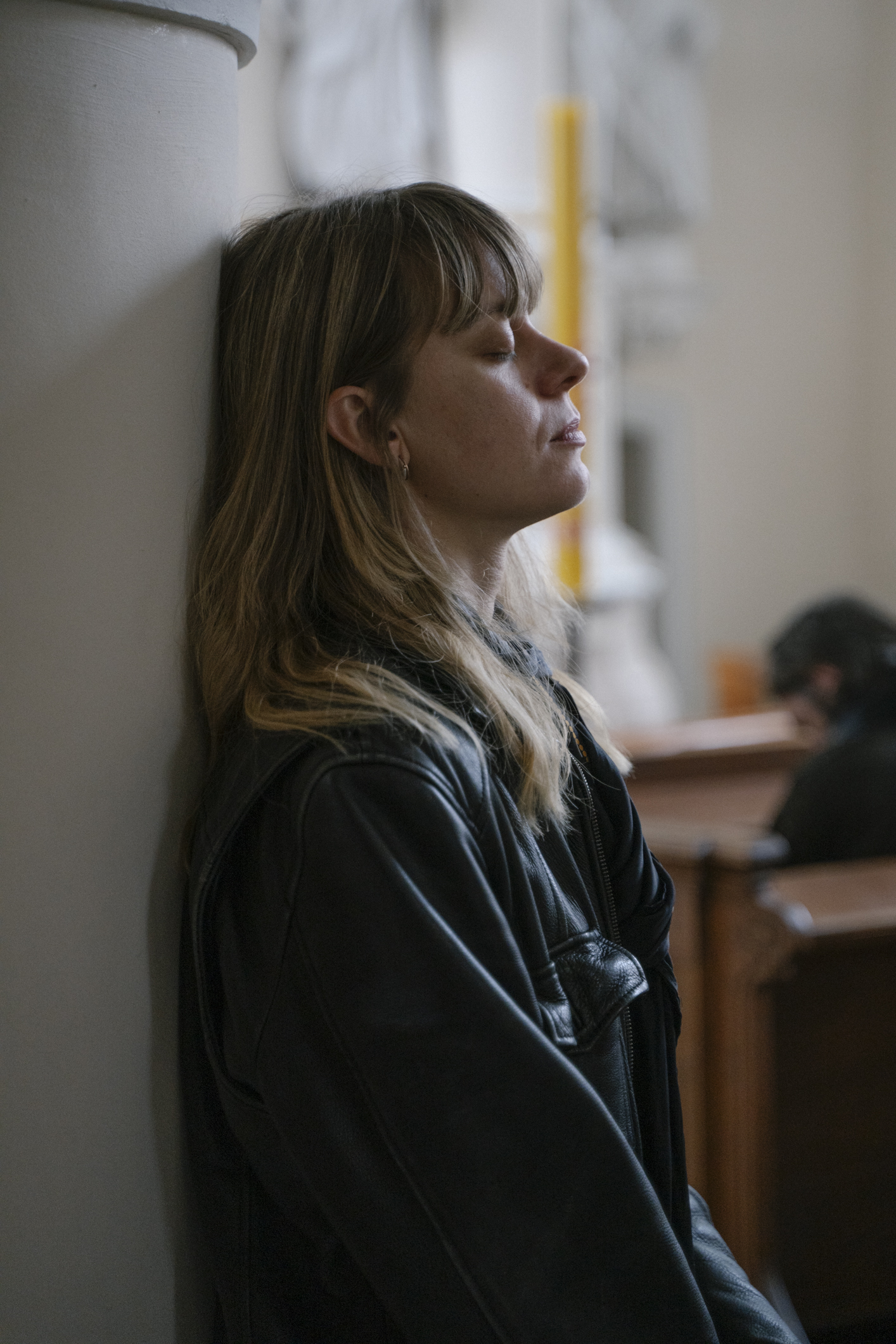
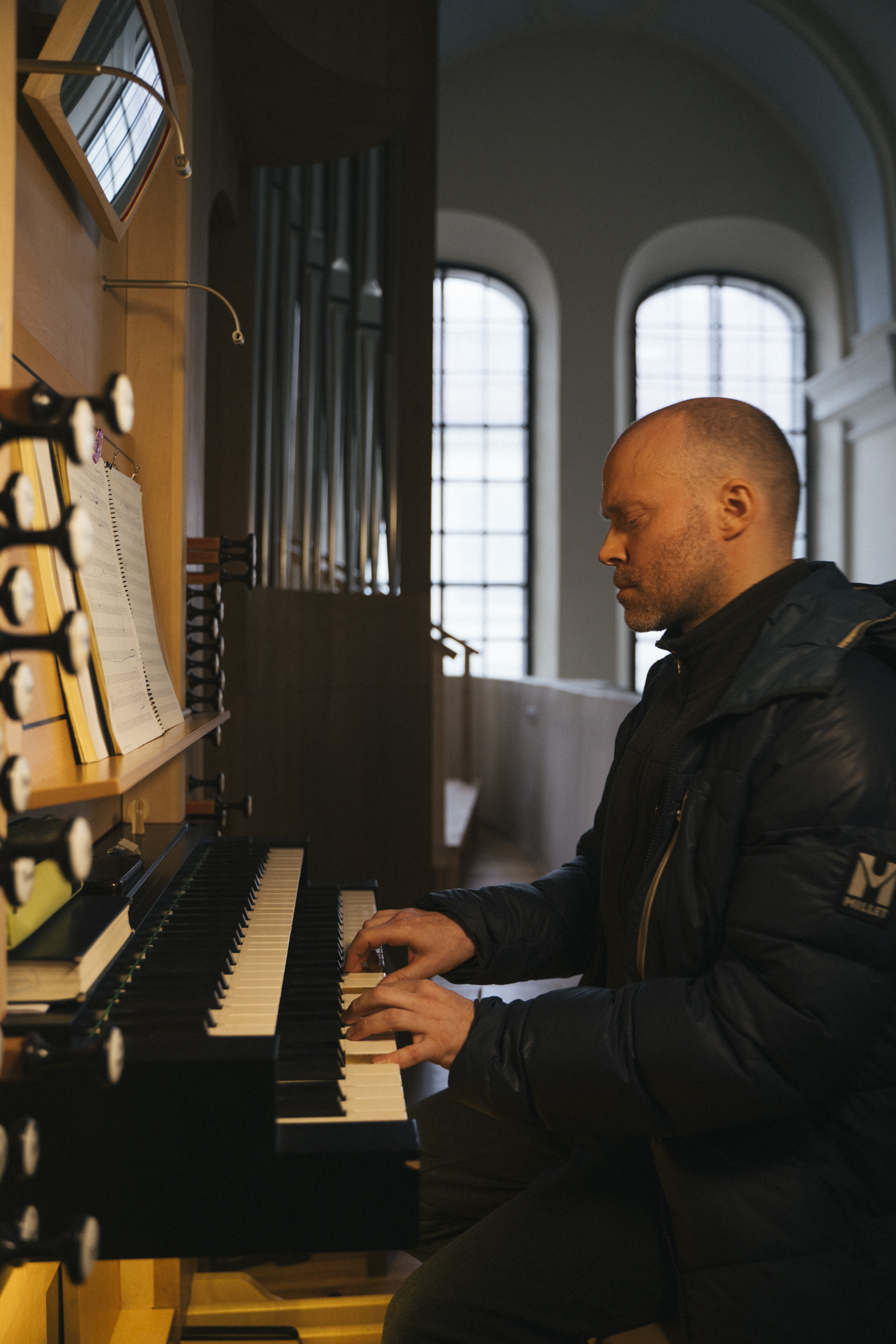
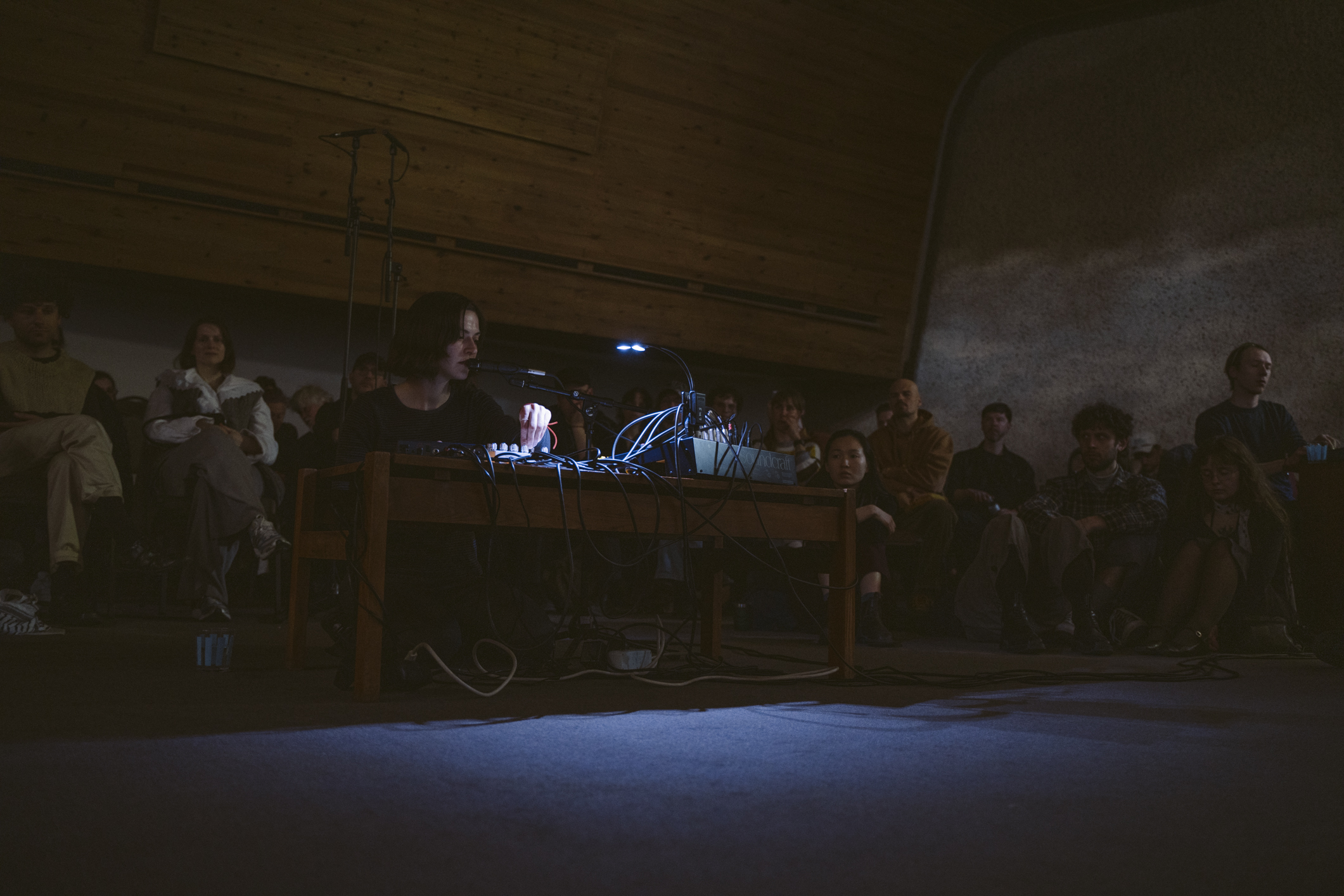
But it wasn't even the music – or sometimes, 'non-music' – that attracted me to Jauna Muzika. It was the unconventional spaces where this music was performed. Last year, one of the concerts was held in a disused swimming pool in the district of Žirmūnai. This year, the gorgeous organ music of Romain C. Bertheau and Liepa Vozgirdaitė was performed in the Lutheran church, hidden deep in the courtyards of Vokiečių Street. The opening concert by Elena Laurinavičiūtė was held on disused railway tracks in Naujininkai.
Such a multi-location experience reminds me of Dutch festivals like Rewire (The Hague) and Le Guess Who? (Utrecht), where the city becomes an adventure park, with groups of strangers rushing from one venue to another hoping to discover something they have never heard before.
I met Sholto Dobie on April 28th, a couple of days after Jauna Muzika ended, in his studio in Naujamiestis. He and his friend, sound artist Alanas Gurinas, were preparing a performance for the Oscillation festival in Brussels. At that time, Sholto hadn’t yet had the chance to reflect on the festival experience. This interview, which was edited for length and clarity, became an opportunity to do just that.
Karolis: Jauna Muzika has been running since 1992, showcasing adventurous music in Lithuania. How did you get involved with the festival?
Sholto: A couple of years ago, Arturas [Bumšteinas] wrote to me and said, “Maybe you want to be an artistic director of Jauna Muzika?” I was like, “Wow, Arturas, thanks so much.” What a proposal. "Then you should apply," he said. The Lithuanian Composers' Union, the organisers of the festival, had a job opening.
I applied because for a long time I had considered this my dream job. I have lived in Lithuania for six years now, and since the moment I arrived, I have gained a lot of experience organising concerts but never a festival. I understood quite quickly that this city and the scene in Lithuania – and also where we are geographically – would be an amazing place to connect a lot of dots.
At that time, I'd only ever experienced Jauna Muzika as something that happened in Menų spaustuvė. I liked the events I went to there, and I was once part of the festival when Arturas was curating. But I was really missing a festival that would explore the city and its communities.
Also, Jauna Muzika was pretty strict at that time. Most of the performances took place in a black box theater. There was no space for real socializing. No one used the bar. It was concerts back to back.
But I knew that there wasn't another festival here dedicated to experimental music. There's Muzikos Ruduo, Muzika Erdvėje and other events, but they are more connected to contemporary or new music.
So it was quite motivating for me to take on the festival, as there are plenty of artists who had never been given a stage at Jauna Muzika. Someone like Simonas Nekrošius had been active for ten years, but he was never invited to perform. At one point he even created a festival called Jaunesnė Muzika [Younger Music]!
You applied and you won the position. What happened then?
The Lithuanian Composers’ Union said to me: “Okay, go make a festival. We have this much guaranteed budget. We can try to apply for more but that's your starting point.” They trusted me fully.
I needed to make everything from scratch. There was no infrastructure from the previous festivals. There's an accountant, but apart from that, you’ve got to build a website and put together a team. And at that point, the festival was very, very different.
"I understood quite quickly that this city and the scene in Lithuania – and also where we are geographically – would be an amazing place to connect a lot of dots."
I think you did a terrific job transforming Jauna Muzika into an essential annual event in Vilnius. How do you feel about this year’s edition?
I am so, so happy with how the festival went. I was also feeling the same last year but what felt really amazing this year was that it grew and it became a thing that people could recognise and place a lot of trust in.
That's amazing to feel as an organiser because the programme is made of a lot of really incredible and talented artists, but they're not widely famous names. Most people don't know anyone in the programme so it's something that demands a lot of trust from the audience. To be like: “I'm just gonna go! I don’t know what I'll see, but last year was good, or someone else said it was a good experience.” That's quite a joy to witness.
A lot of people in the contemporary cultural landscape think that we need advanced marketing tools and a good advertising strategy and all of these things to build an audience. But I still believe that there's another way to do that, and that it’s actually more sustainable.
How would you describe this other way?
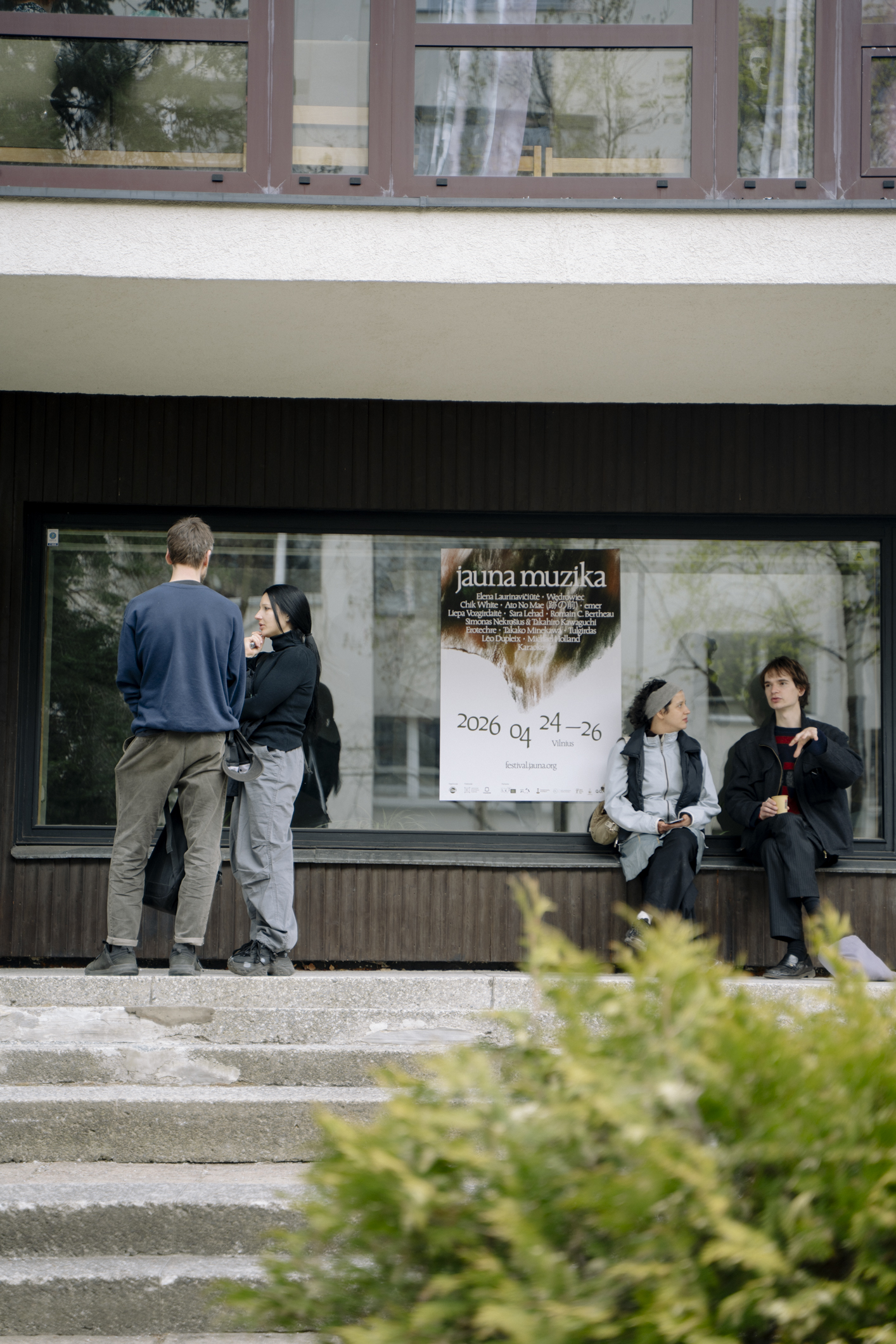
It's organic. It's connections between people, not coming from the top down, but spreading out. And I think that word of mouth is one of those ways. Some people told me that they just loved the poster, or that they've seen the poster in someone's house.
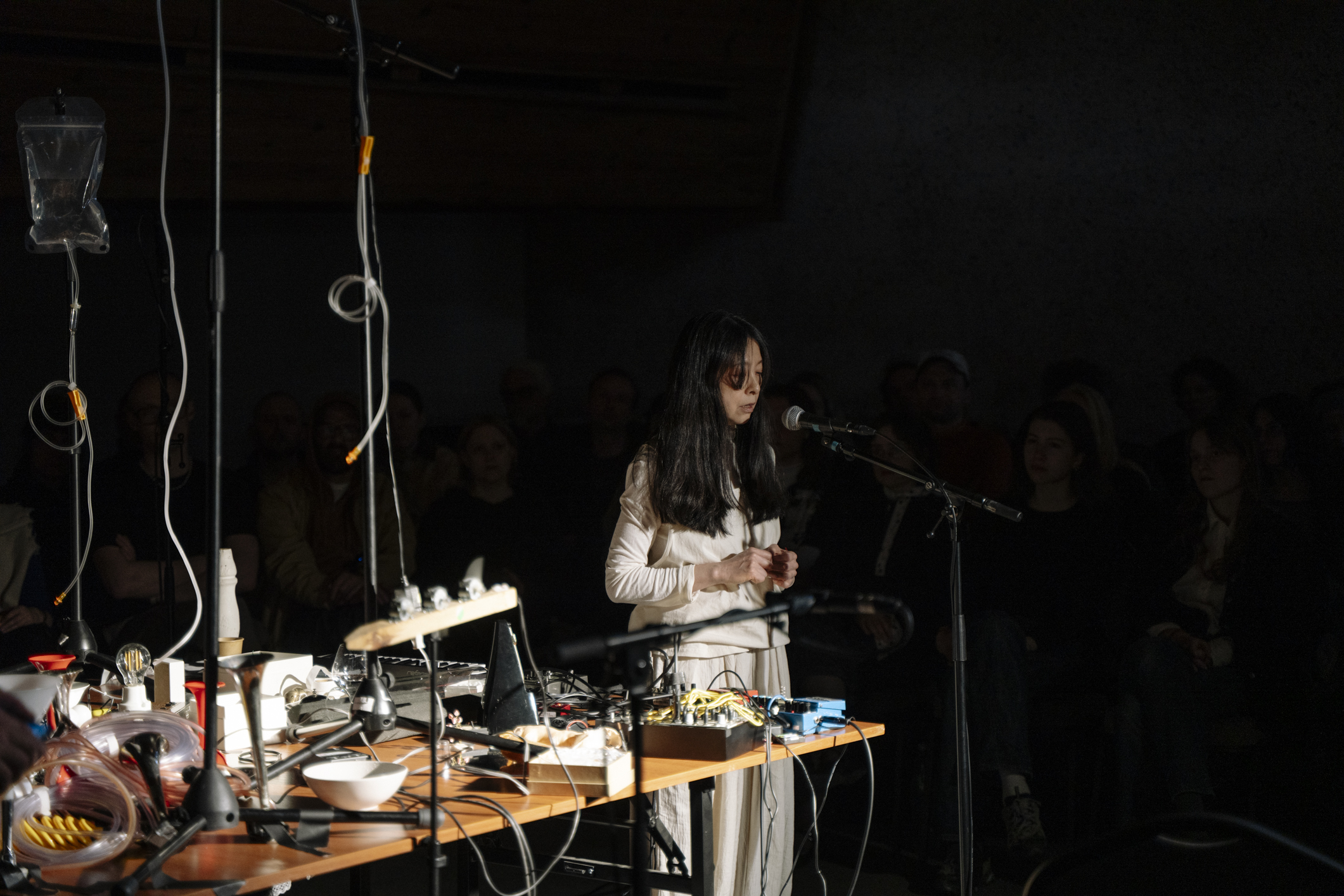
Then I think it’s also the way that the festival is programmed. It encourages meetings between local artists from different scenes because the programme is really varied. Also, it creates meetings between local artists and international artists who might have never met. Sometimes, through the programme, they play together.
Almost all the events mix a local artist with someone from abroad. I think that all these different ways of encouraging meetings and connections are something people really value and that helps to spread the word.
This year’s programme has been varied geographically and stylistically. How did you manage to bring all these artists to Vilnius? Does the fact that you are also a touring artist help?
I've been performing, travelling and organising concerts simultaneously for maybe ten years. So it's something that happens quite naturally – you move around, you meet people, then maybe you have a chance to invite them to where you live to meet other like-minded people. I think that's a lot of how the programme is put together, but I also really want to be surprised.
I'm often choosing both Lithuanian artists and foreign artists based on what I know they can do, but also on a feeling of what could happen. This is also why the festival is something that I really, really enjoy, as I actually don't know what most artists are going to do. I feel that this reciprocal trust is quite particular to how festivals like this feel to be involved in.
"Counterflows Festival in Glasgow showed me how you can make a festival fun and engaging but also political, challenging and difficult."
How many people are in the Jauna Muzika team now?
On the core team, it's about eight people. This year we also had around ten volunteers in total. Quite a lot of them had travelled from abroad, which was a big surprise.
And among the audience members there were also a lot of guests from different countries.
All the artists in the festival receive guest invitations. Fortunately, there’s no huge pressure to sell all the tickets – for now – so I can be generous with the amount of guests who attend the festival. There were all the artist guests and a delegation partly organised by the Lithuanian Cultural Institute, who generously let me help them put together the delegation from Germany and the UK, so I could invite a bunch of organisers from those countries whom I knew previously and who were interested in music here. Most of them came to experience the festival for the first time.
I think this international element is important. It sounds corny but when you think about the world today, you think about how music can bring people together across borders. When you see it in real life it's quite special.
The guests of Jauna Muzika are surprised not only by the music itself but also by the combination of music and the spaces where it is performed. How do you discover new venues in the city?
It's often guided by the artists. I usually have a bit of an idea for the programme. For example, this year I was really keen to do some organ music. Then it goes both ways. Sometimes there's a space I really want to work with and I want to find an artist who would work really well in that space. And there'll be certain things that the space dictates. Maybe it has special acoustics, or maybe it has a special sound system.
Or it will work the other way, where there's an artist and I think, "Their set really needs to be in a church or in Kompozitorių namai [The Composers’ Union].“ So it goes both ways.
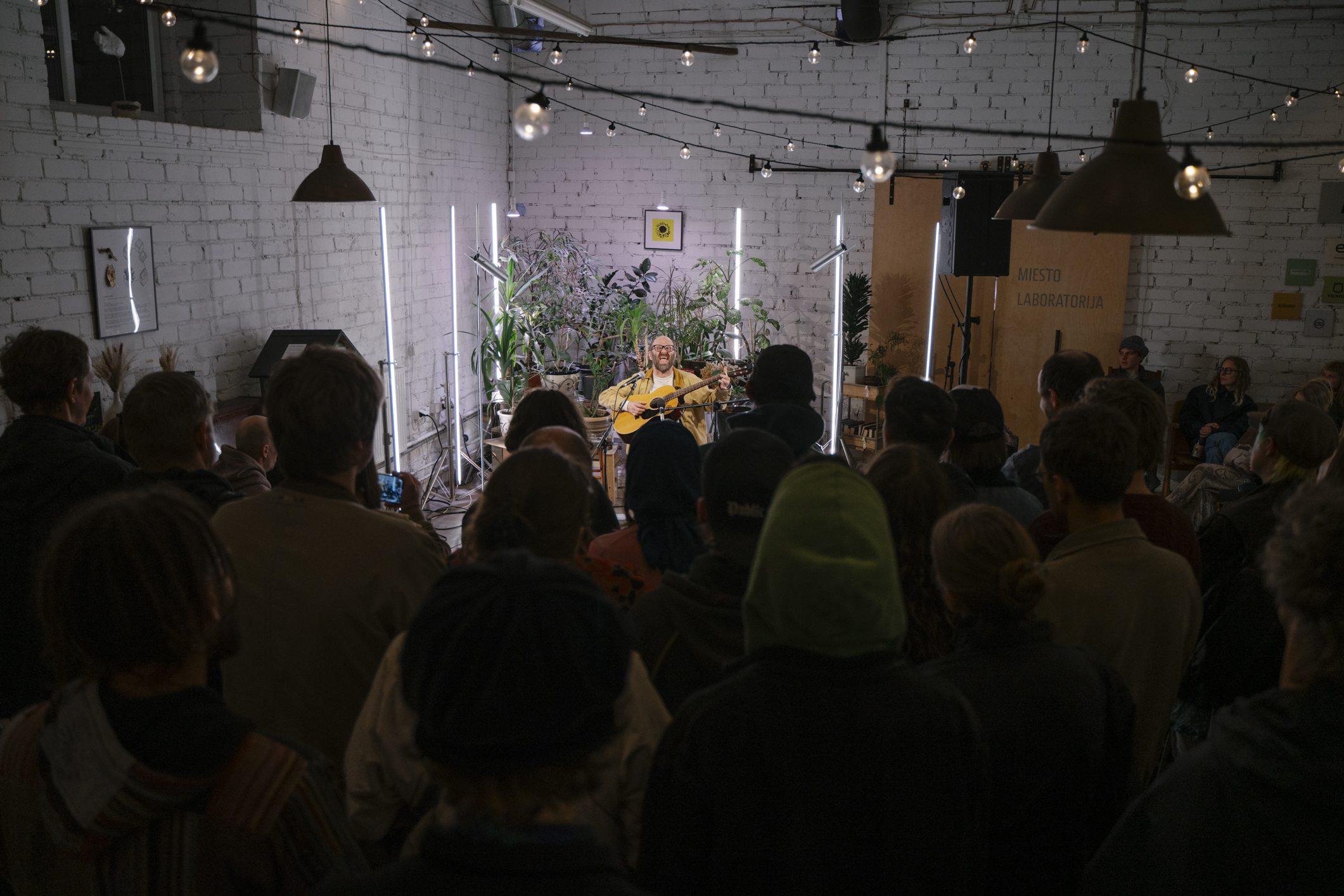
Vilnius has a big variety of places and it's so nice to listen in different ways. How you listen in a community space like Miesto Laboratorija, which is very social and has a bar, is very different from how you listen in a church.
I think the longer term goal is to support different communities in Vilnius through the festival, because you have an opportunity with a bigger crowd of people. You can use some community spaces, which have been overlooked, or even some of the familiar art spaces that are also spaces for the local community of musicians and artists. Even if they're quite familiar, during the festival, these spaces kind of change.
That's always interesting – to be in a familiar space but experiencing it within the continuous atmosphere of the festival. It somehow feels different.
When you attend Jauna Muzika shows, you feel like you are in a different kind of Vilnius. It’s more international, more relaxed. I think a lot of music events in Vilnius have this corporate side to them – there’s often a wish to make a show bigger, more profitable. Here it felt like we were just there to enjoy the creativity and be surprised.
I recently came back from the Rewire festival in the Netherlands which felt a bit similar. Of course, it's a much bigger event, but for me, Jauna Muzika felt like a continuation of Rewire. It seems that there are certain values that these kinds of festivals follow.
True. It's hard to put into words because a lot of it comes out of many, many years of doing similar types of things – or, rather, with a similar attitude. I'm quite lucky that I've been able to experience and witness other organisers in this field whom I really respect.
Like the Counterflows Festival in Glasgow, who really excel in this kind of community building. I'm quite close to them. They showed me how you can make a festival fun and engaging but also political, challenging and difficult – also celebratory.
I lived in London for ten years, and for maybe half of those years I spent going to Café Oto and organising there. I was really close with a lot of people who work there and they also have strong values attached to the space and the programming.
How would you define the core values of Jauna Muzika?
I think it's important that everyone feels part of it. From the artist to the audience, to the volunteers. It would be nice to make more and more people feel that.
So at the end of the day, that value would be accessibility. It's about making music accessible. This kind of music can sometimes be really hard to access for many different reasons. Either it’s because people feel it's from ‘high culture’ and it's not for them, or people feel you have to understand it intellectually. Or it takes place in bars and clubs, which are not spaces where children or elderly people tend to frequent.
This year, for the first time, we published guidelines about the physical accessibility of the festival’s spaces. It was shocking how few of the spaces that we use have an accessible toilet. I think perhaps only two venues were wheelchair accessible.
Another value would be that it's not about exponential growth, but about making the festival sustainable. That brings in a whole load of other complicated stuff about how the festival relates to the dependence on funding from the Lithuanian Council for Culture and other sources. That part of sustainability is hard to predict, especially these days.
"I would love for the festival to remain at the same scale. It doesn't need to get bigger. It's okay."
I think that the other side of sustainability is not just about having the budget and making sure everyone is paid and paid fairly, but it’s also about having a kind of audience and an ecosystem of artists.
Every concert of this year's festival was attended by 150 to 200 people, more or less. I would love for the festival to remain at the same scale. It doesn't need to get bigger. It's okay. Just being able to continue, because after two years, you just start to see what could be possible.
Why is it important for Jauna Muzika to continue existing in Vilnius?
I was thinking about this, actually. Because okay, it's a celebration. Music has always been about bringing people together: weddings, funerals. When you think through the long history of folk music, it's always been about bringing people together. Not always to be happy, but also to share, mourn, think, be playful and have fun together.
I think what a festival can do, which maybe other things can’t, is create this festivity and celebration. You can celebrate in a condensed timeframe and that condensation has a special effect on everyone who is part of it. Suddenly you step out of the city, you step out of your day-to-day life and you enter into this festive zone, which is a space where you can imagine things, leave a part of yourself behind and openly experience things in ways that if you were to just go to a concert for one night, it could be hard to shed your skin.
When you are in those kinds of spaces, you can connect, maybe more openly and deeply, with other people around you – in this case, people whom you might only ever meet once. Hopefully that makes you feel better about being human, because sometimes it's hard to feel that. But it is still something on my mind, like, could we do this every day? Or is it something that we just do temporarily?
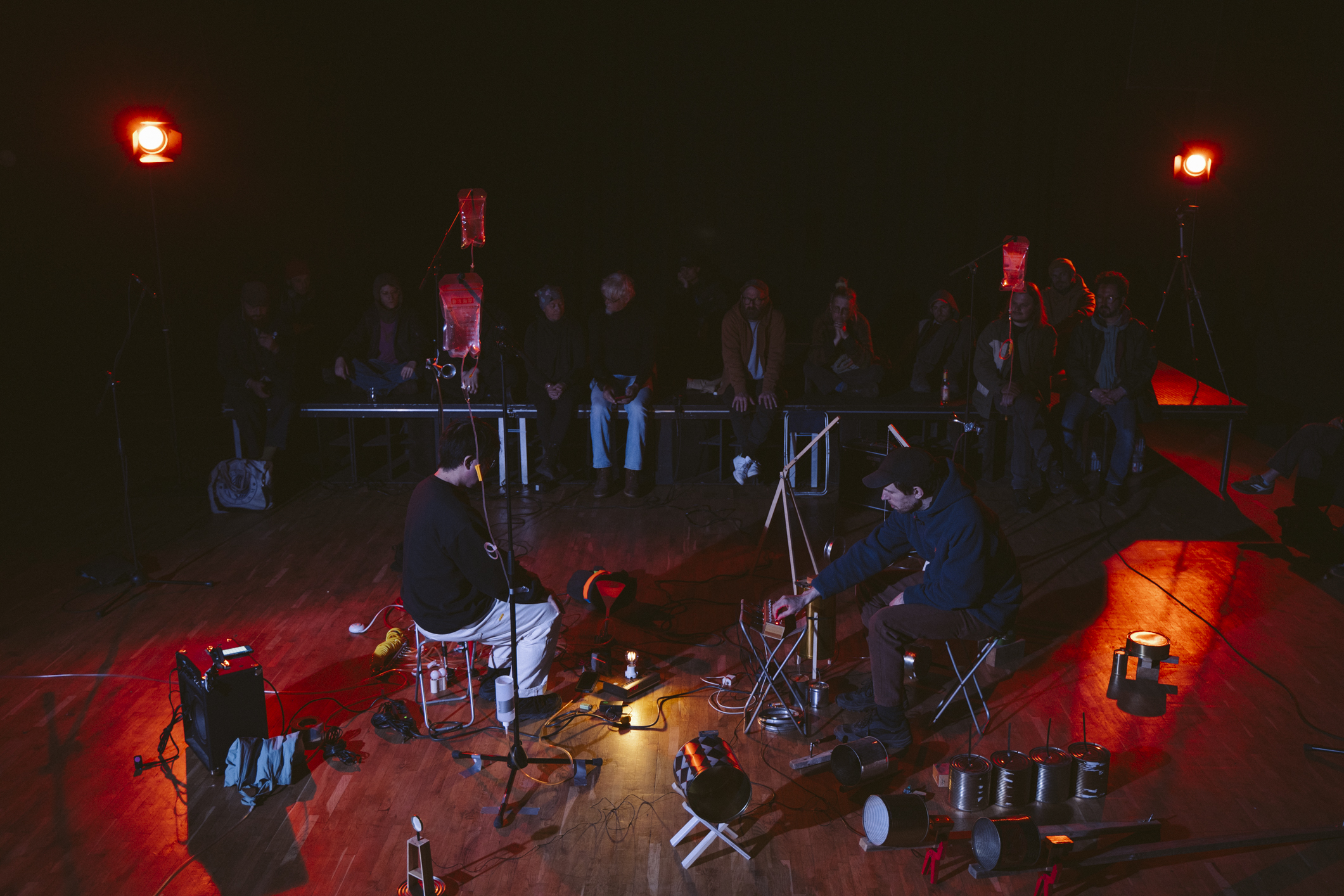
I think I know what you mean. There's a certain kind of playfulness with a lot of Jauna Muzika performances. Even the closing performance with Simonas Nekrošius and Takahiro Kawaguchi felt like witnessing children playing in their self-made laboratory. It’s typical to think that once you reach a certain age, you are not allowed to play anymore. That it’s just a waste of time. This festival felt different, showing that actually you can keep creating things, keep experimenting. It helps you stay connected with your human side, which a lot of us have forgotten.
-
Friend €5 mo.
-
Penpal €10 mo.
-
Advisor €30 mo.
-
Patron €100 mo.
-
Friend €50 y.
-
Penpal €100 y.
-
Advisor €300 y.
-
Patron €1000 y.
Austėja Pūraitė helped with editing the article. The author was granted a festival pass to Jauna Muzika, and the festival provided photographs from the performances.