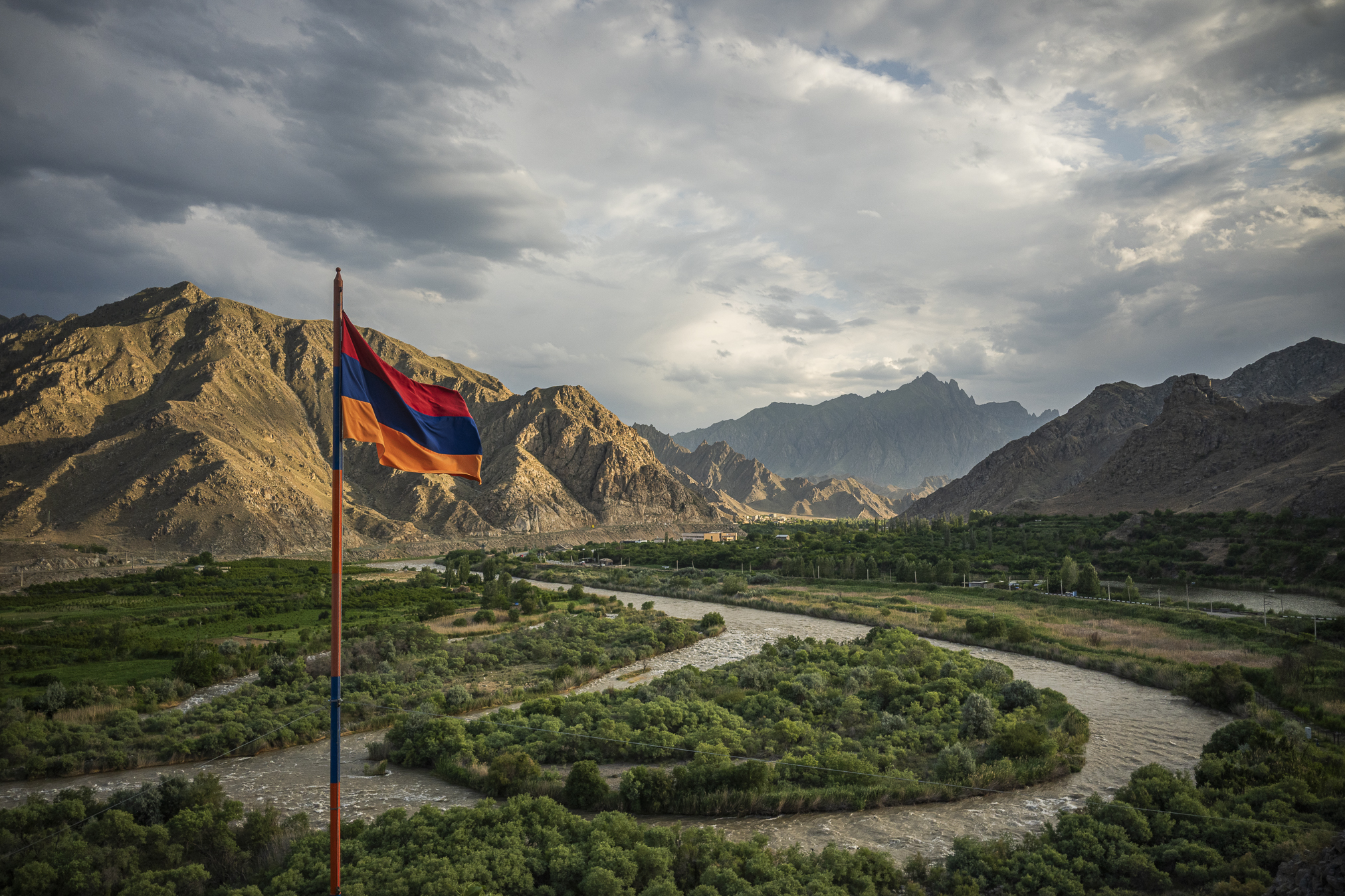


Mountains in exchange for peace. Armenia chooses its next direction
Parliamentary elections are taking place in Armenia, often presented as a choice between East and West. While Russia and the European Union compete for their influence in the South Caucasus country, Armenians are also grappling with an even more difficult question – whether the peace agenda proposed by Prime Minister Nikol Pashinyan can help to heal the wound of the loss of Nagorno-Karabakh.
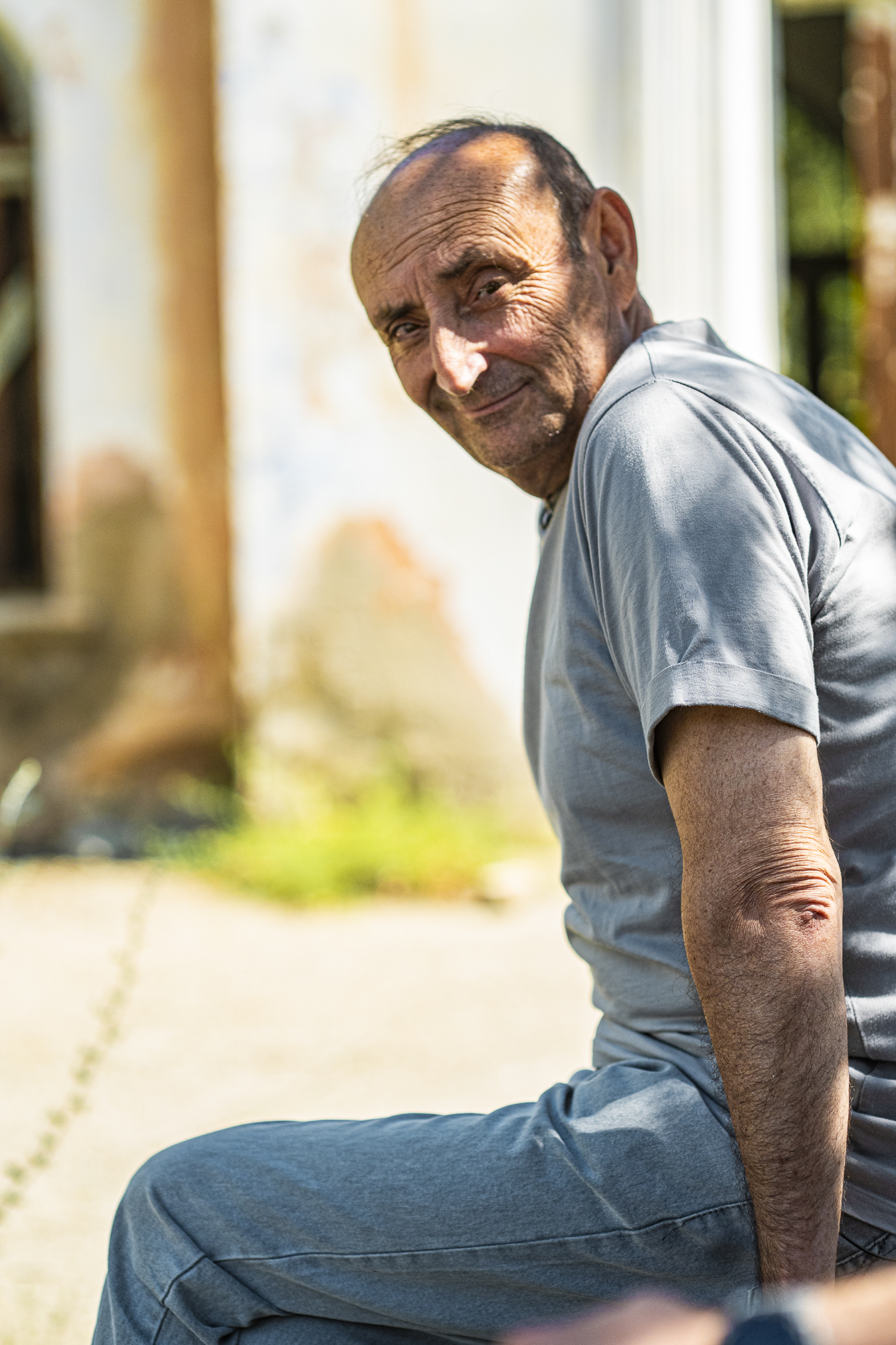
I am blonde and blue-eyed. Obviously not Armenian. Locals in Armenia register this in an instant and immediately address me in Russian. The assumption that I speak Russian, and am most likely Russian, is grounded in personal experience and statistics. Most tourists here are Russian citizens, making up roughly 40 percent of those visiting the country. There are no exact statistics, but since the start of the full-scale invasion of Ukraine, more than 100,000 Russians have settled in Armenia.
I rarely meet an Armenian who doesn’t speak Russian. They don’t seem to associate speaking Russian with politics. . To me this is a striking contrast with Armenia's neighbour Georgia, where waiters wear T-shirts reading "20 percent of my country is occupied by Russia", where some restaurants impose higher charges on Russian citizens, and where certain bars admit only those who agree that "Crimea is Ukraine" and "Putin is a khuilo".
I heard Armenians say more than once that citizens are not to blame for their government's decisions As well as the claim that Russians bring the country plenty of good: they boost the economy, their restaurants and bars add variety to Yerevan's character and they take up initiatives such as cleaning up litter in nature or creating blogs about Armenia that attract more tourists. (Although once a shop assistant checked my bag because "Russians often steal"). Afterall, there is now so much propaganda in Russia declaring Armenia to be a traitor that if Russians come here, it means they don’t believe those claims, says Stepan, who is helping me with my work in Armenia.
When I ask Stepan what he thinks of Russia, he asks in return: before the war or after the war? He is referring to the 2020 Nagorno-Karabakh war — another stage in the decades-long conflict with Azerbaijan over the mountainous region, historically populated mostly by Karabakh Armenians. Since 1994, following Armenia's victory in the First War, the region was controlled by Karabakh Armenians, who had established their own de facto independent state, the Republic of Artsakh – although under international law the region belonged to Azerbaijan.
Stepan, like many other Armenians, became disillusioned with Russia when, despite being Armenia's long-standing security partner, it failed to help during the 44-day war in 2020 and Baku reclaimed a large part of the territories. In September 2023, the Russian peacekeeping forces deployed there did virtually nothing as Azerbaijan seized the entire territory of Nagorno-Karabakh in a one-day military operation, forcing more than 100,000 Karabakh Armenians who had lived there to abandon their homes. While in 2019, 93 percent of Armenians described relations with Russia as good, by 2023 only a third still did.
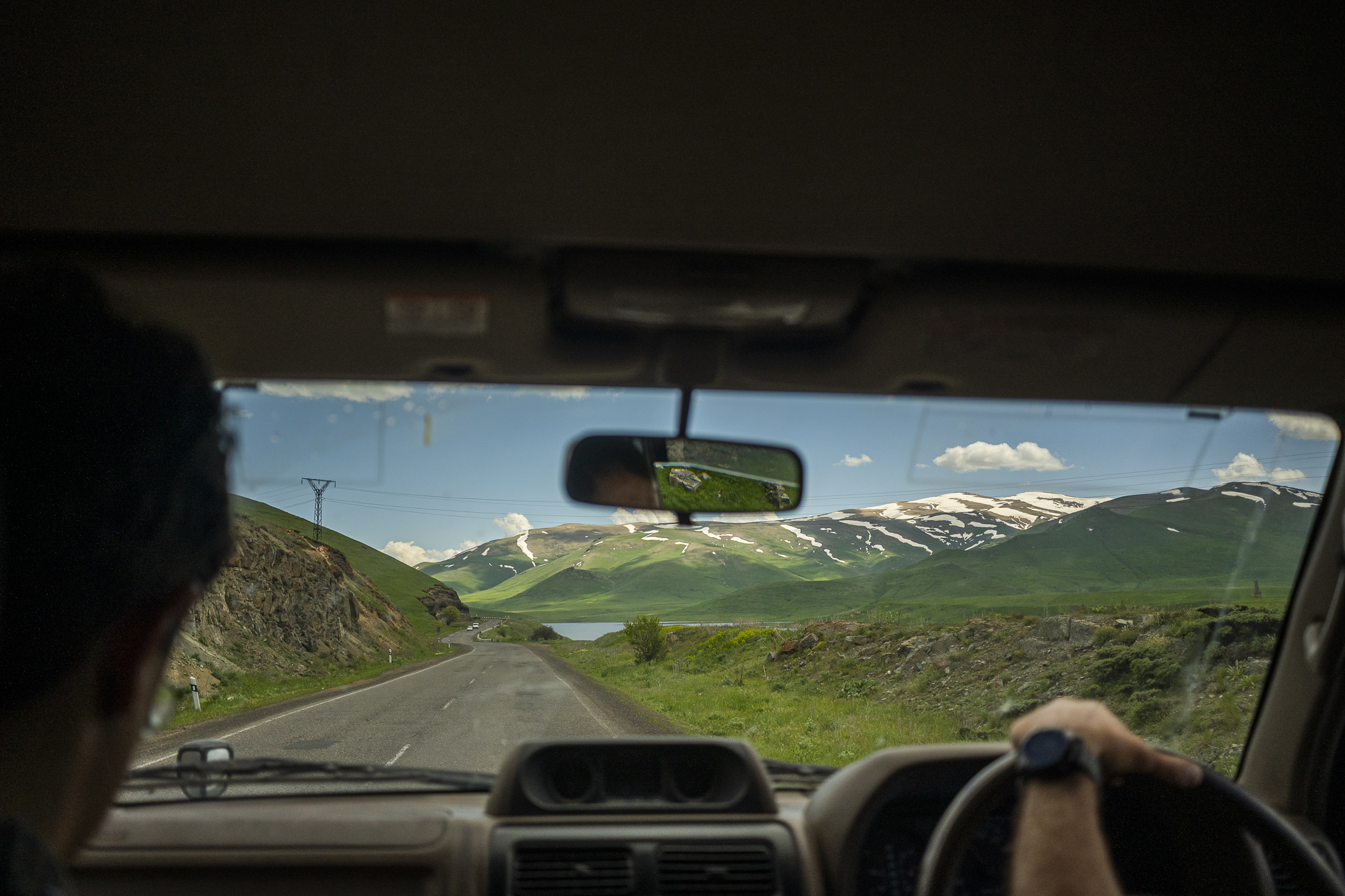
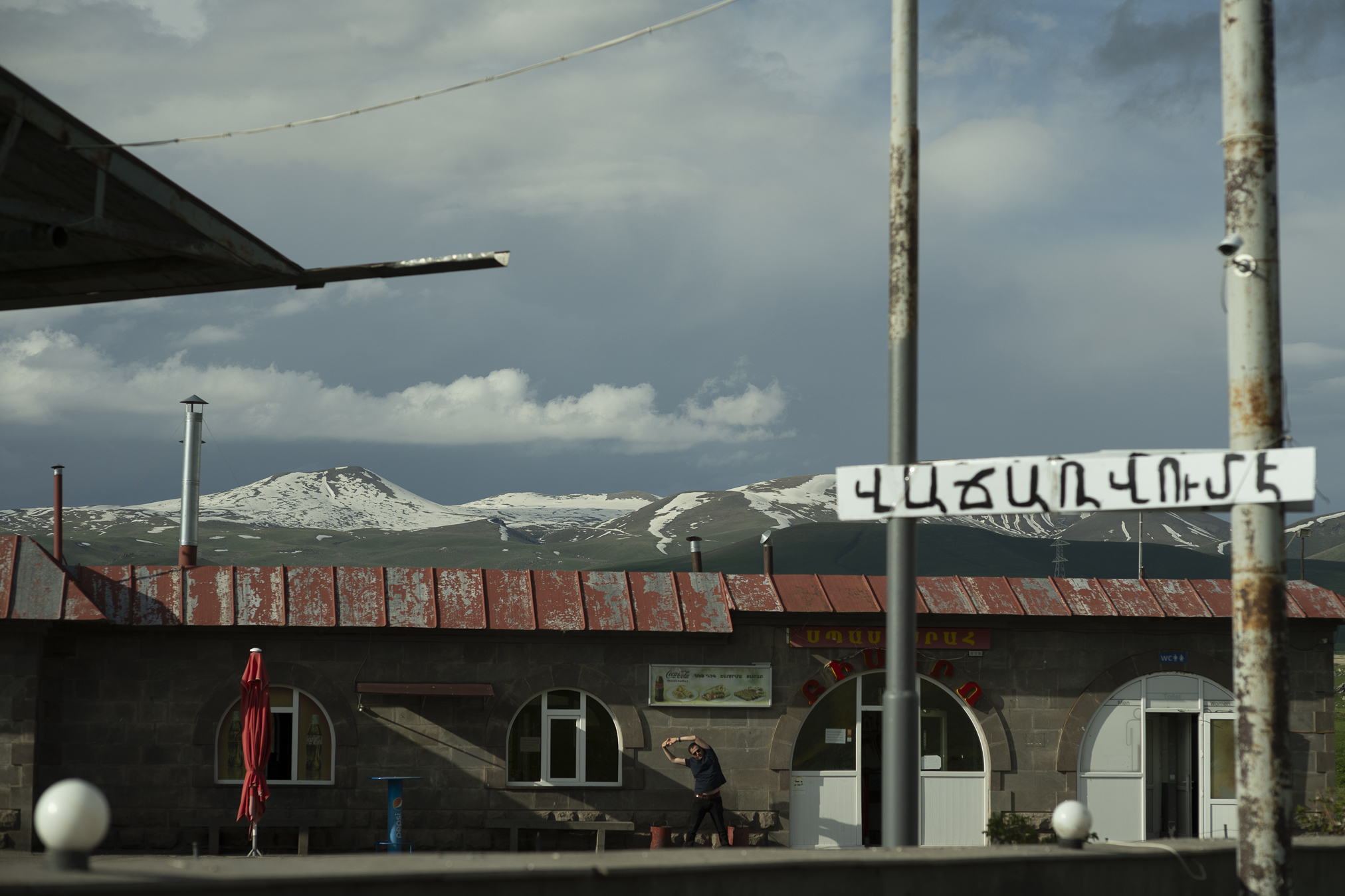
Russia has betrayed Armenia more than once in pursuit of its own interests, but Armenia has forgiven it more than once too, says Gregory, nicknamed the Cossack. "Now the time has come when we must tell them it is time to leave," he says. The nickname has followed him since childhood, when he played ’Kazaki-razboiniki’ (‘Cossacks and Robbers’) as the commander of the Cossacks. Back then he had a wooden sword and gave orders to the Russians. He says that even now he tells the Russian soldiers still stationed near the border with Iran, where he lives, to their faces that they betrayed Armenia. He can say it because they are on good terms.
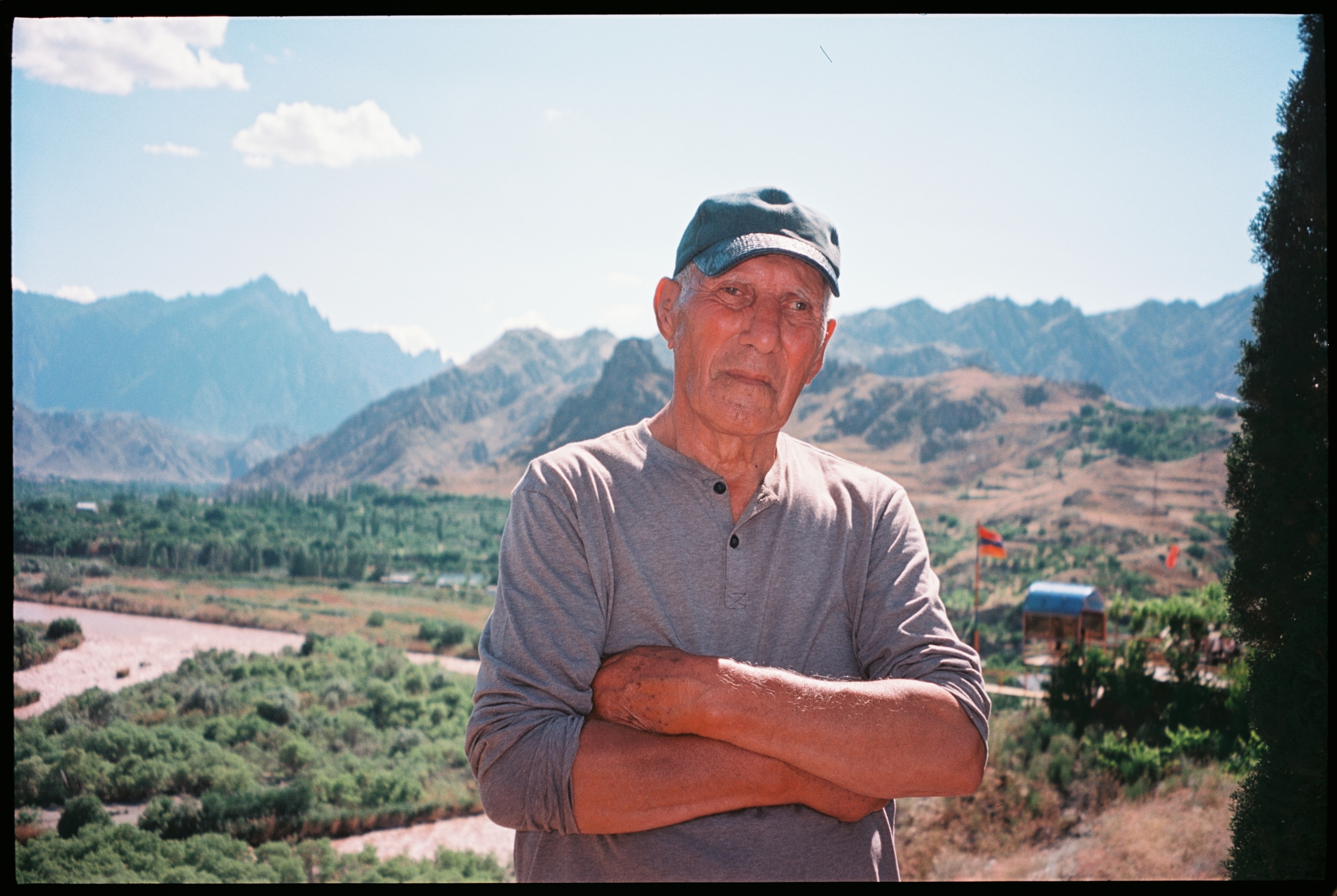
Gregory mentions that he would like to see Armenia in the EU. I am surprised, as he is probably the first Armenian to bring this up unprompted. The EU is not part of everyday conversation here not because Armenians wouldn’t want it, but rather because membership feels too distant — just like the far away European countries on the map.
Reducing dependence on Russia and building closer ties with the EU and the United States is one of the priorities of the current Prime Minister Nikol Pashinyan’s government. He is one of the few pro-European candidates in this year's parliamentary elections. Recently, Pashinyan has received support from European leaders and Donald Trump.
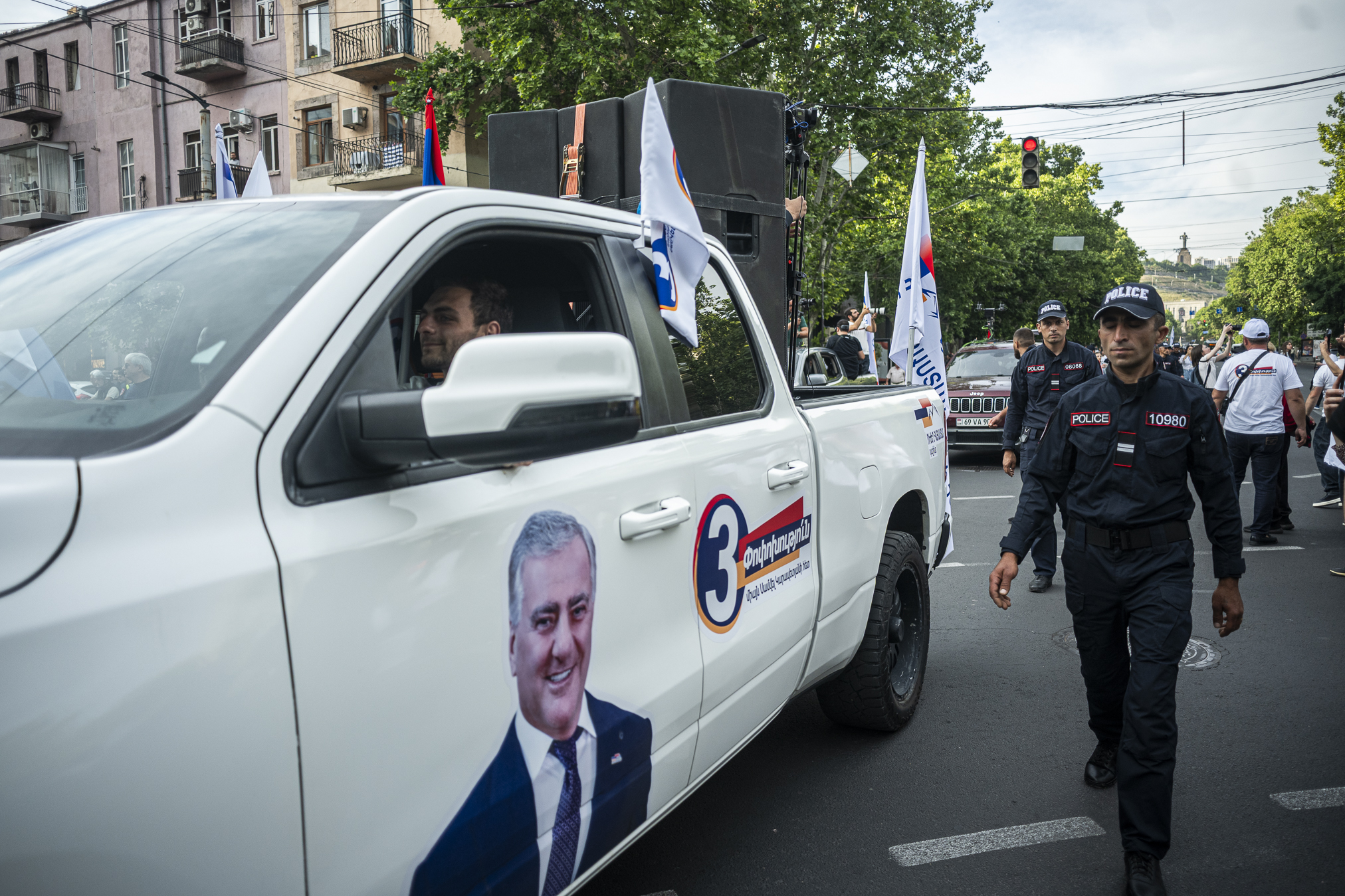
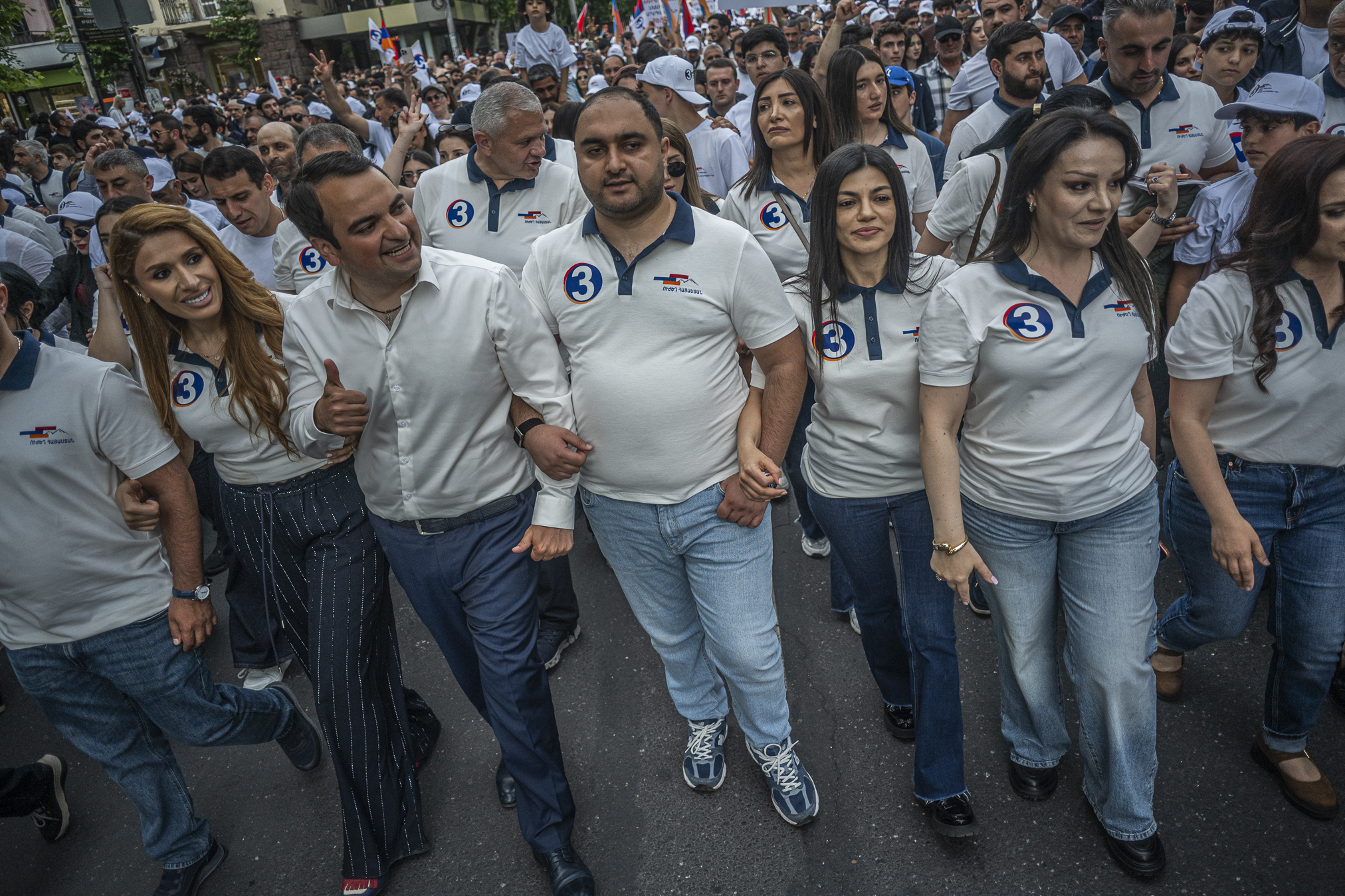
The main opposition candidates are openly pro-Russian. The most popular among them is Samvel Karapetyan, a billionaire who made his fortune in Russia and whose party, Strong Armenia, advocates for close relations between Armenia and Russia; in the run-up to the elections, Kremlin propaganda has backed him above all others. Members of Karapetyan's party have been accused of buying votes and paying people to attend party rallies. After reports emerged that Armenians living in Russia were being transported to Armenia in an organised manner to vote, Pashinyan's government announced that they could be called up for compulsory military training.
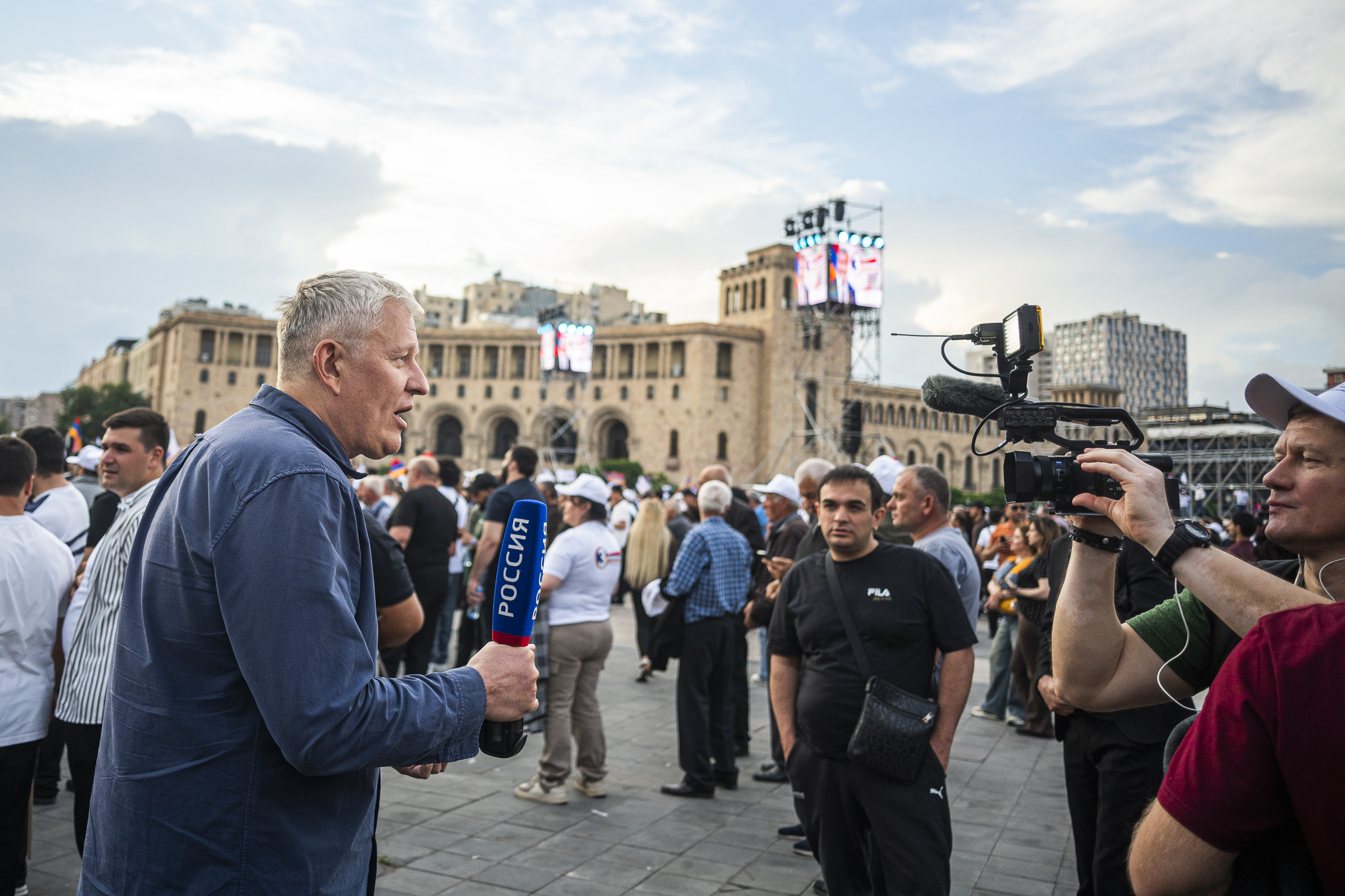
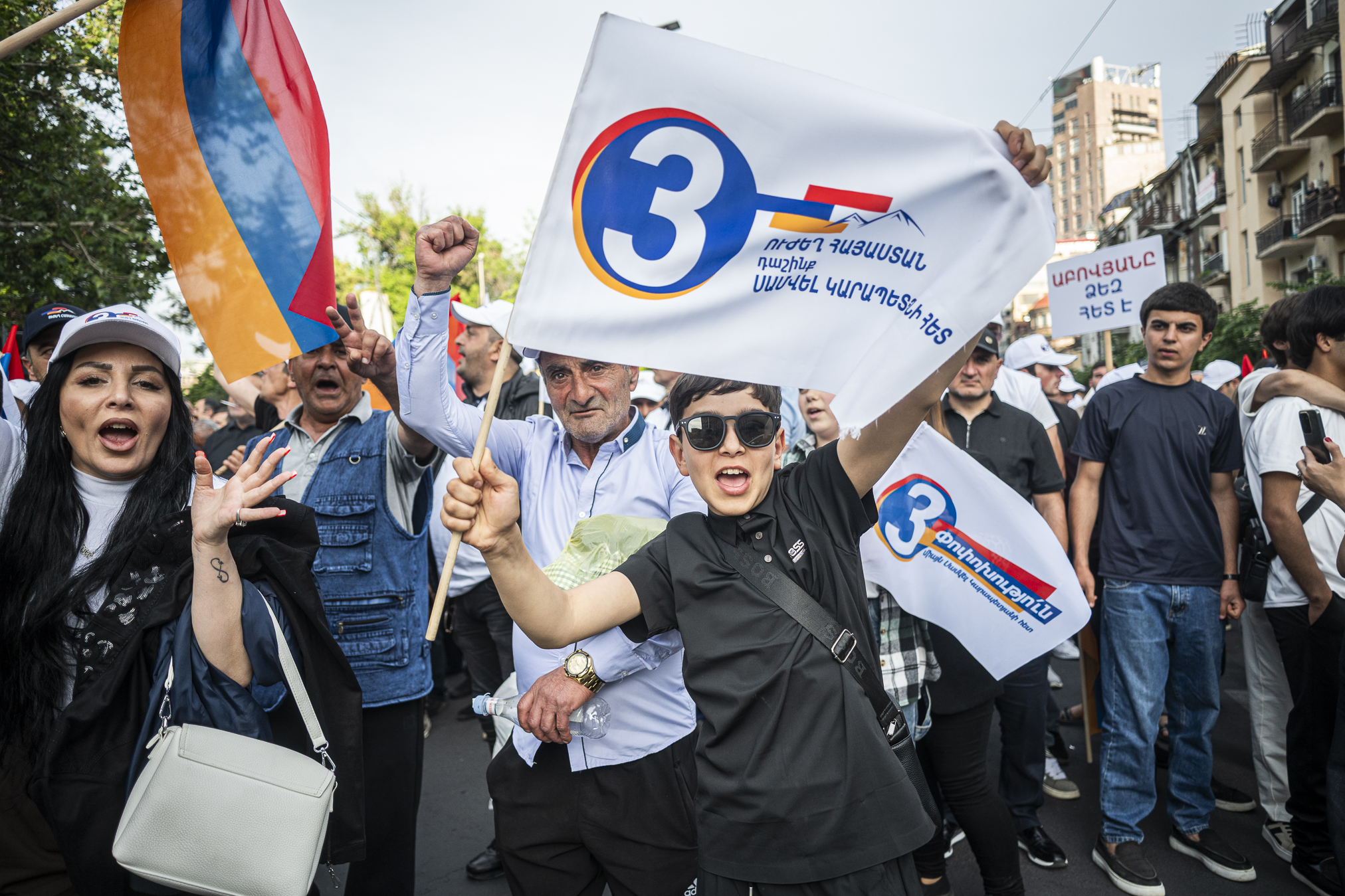
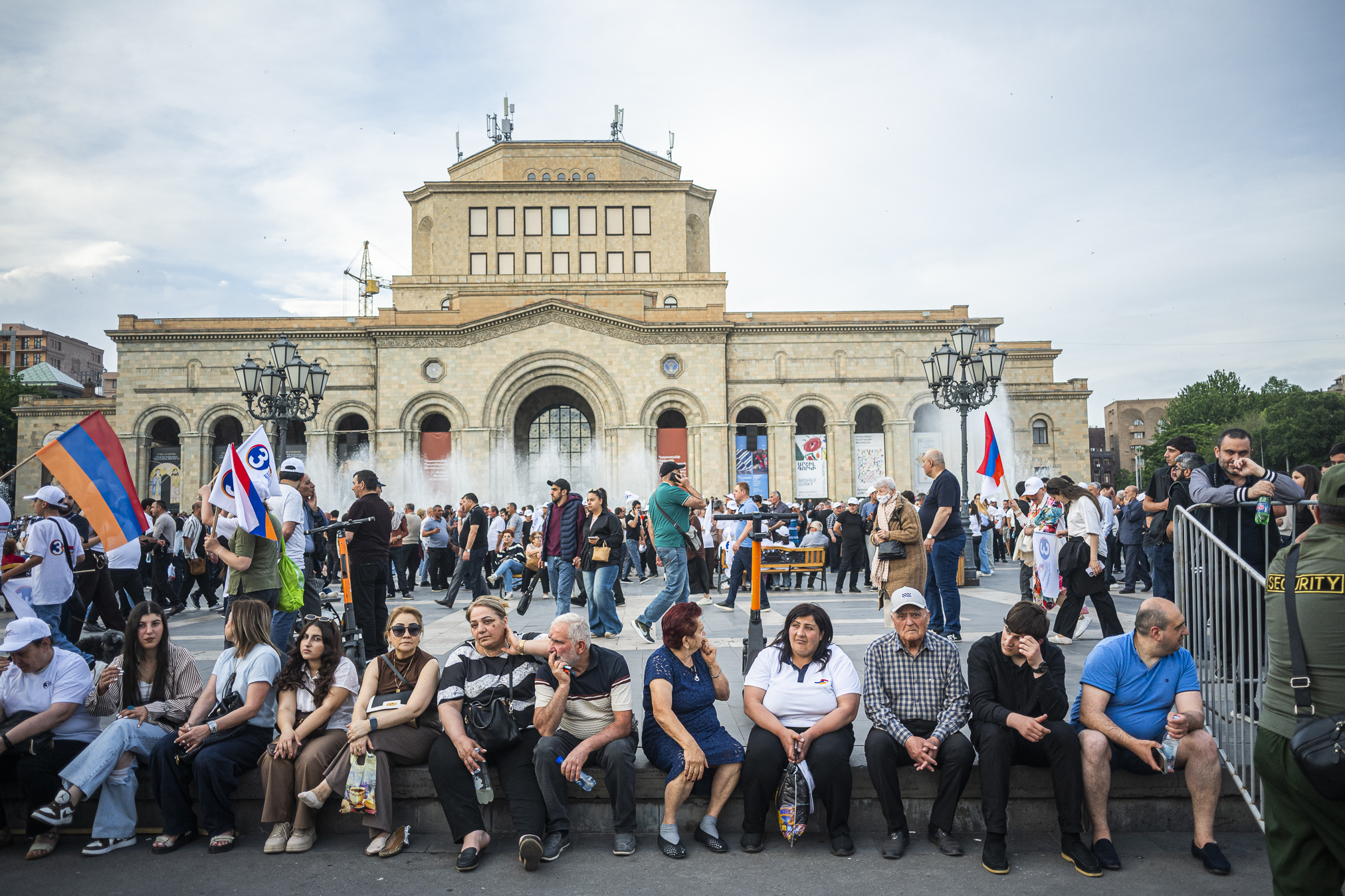
Both Russia and the EU appear determined not to let go of Armenia. Whenever Moscow puts pressure on Armenia with bans or temporary restrictions on imports of Jermuk mineral water, vegetables, fruit, berries, fish and alcohol, Brussels immediately announces that it will provide support to offset the losses.
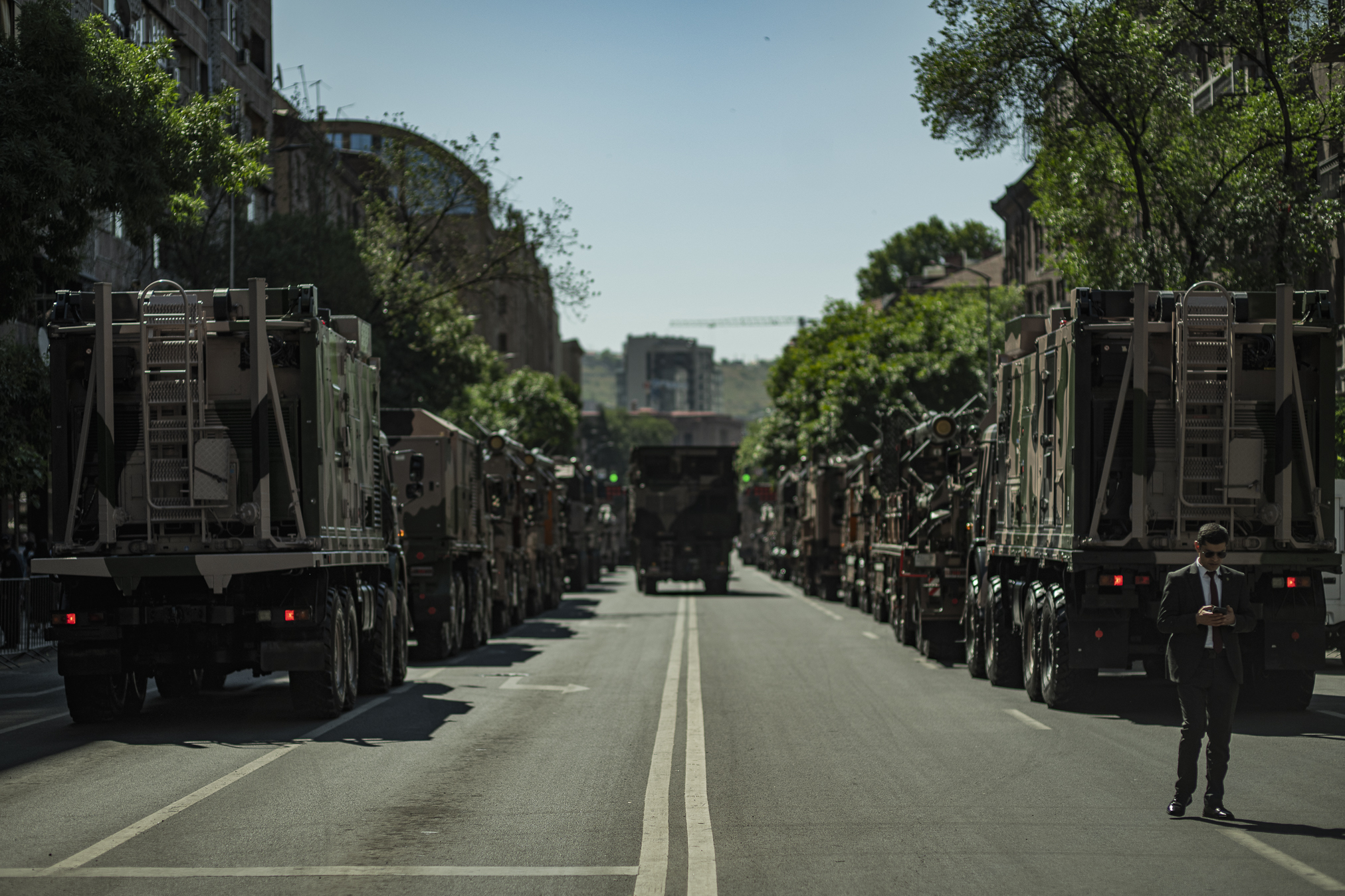
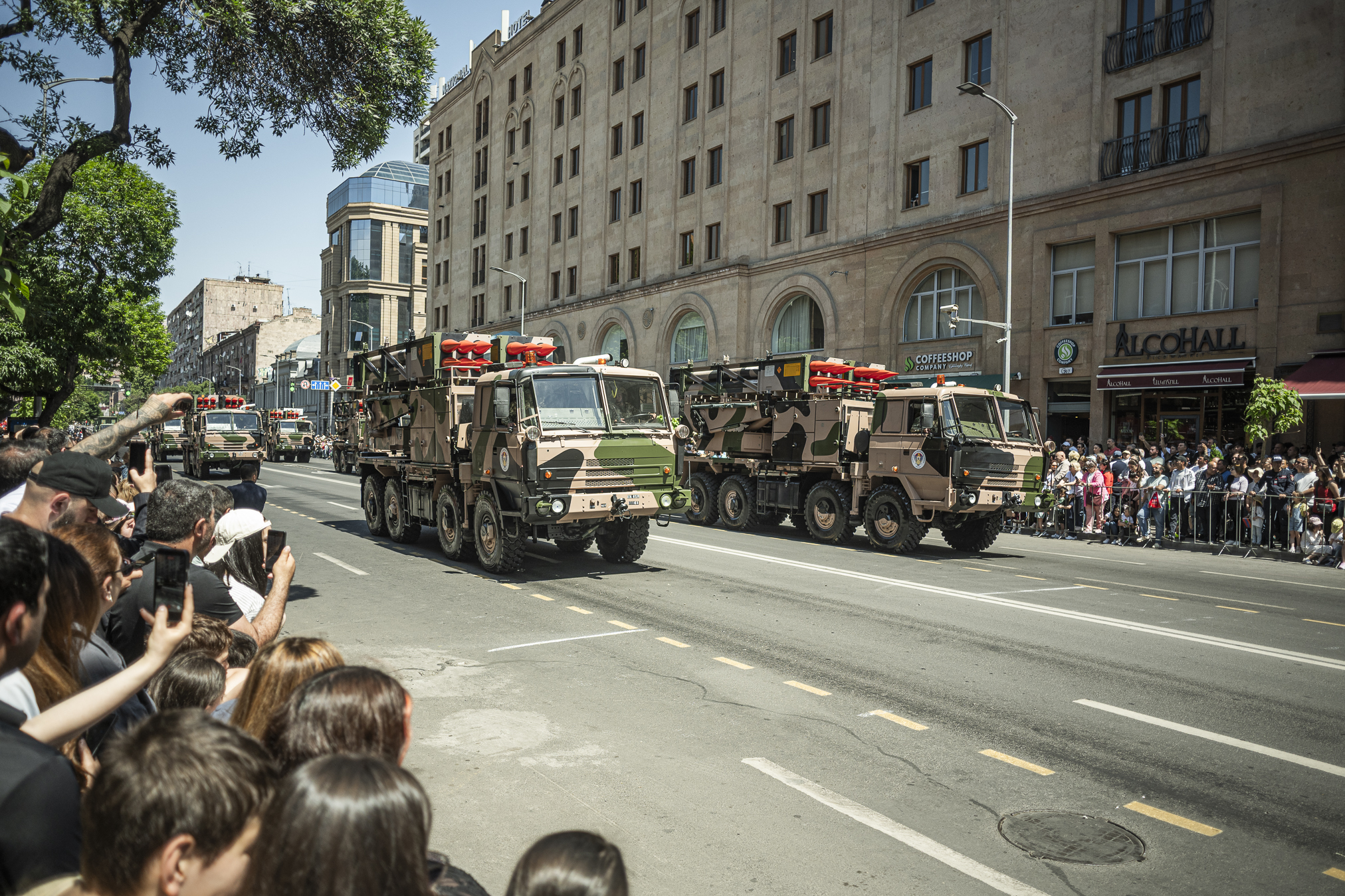
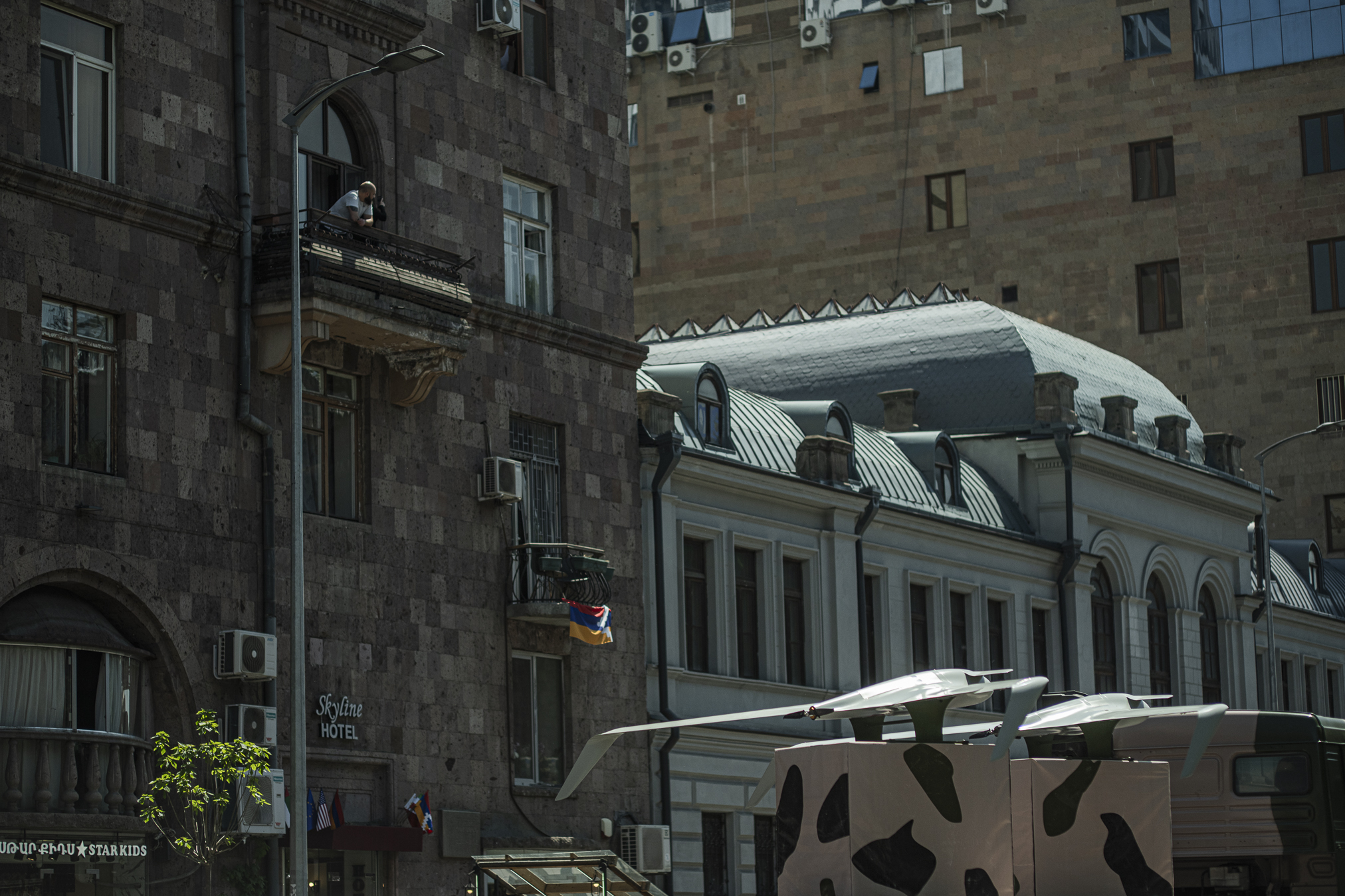
Pashinyan speaks not of severing relations with Russia, but of a ’balanced and balancing’ foreign policy. After the expulsion of the Karabakh Armenians in 2023, Yerevan replaced Russian weaponry with French and Indian arms, gradually drove Russian border guards out of the country, accepted an EU civilian monitoring mission and took legal steps to move the EU accession process forward. Yet it has remained in the Eurasian Economic Union and the Collective Security Treaty Organisation (albeit with its membership frozen), and the city of Gyumri still hosts a Russian military base with 3,000 — 4,000 troops stationed there. A third of Armenia's trade is with Russia and the country also depends on cheap Russian gas and oil. Moscow threatens to cut off supplies at preferential rates and Armenia understands perfectly well that such an abrupt cut-off would send prices soaring.
Armenia is too small and too weak to afford having enemies on all sides, Pashinyan states.
"Whenever the Russians withdrew, the Turks would always come, and the Turks were worse," says Vahan Tamusyan, head of the NGO Shirak Centre. He lives right by the Turkish border, beyond which stretches what Armenians call "Western Armenia" – the region from which Armenians were forced to flee during the mass killings that began in 1915; the Armenian genocide. Ankara doesn’t acknowledge that this was a systematic policy of extermination, describing the massacres as a consequence of wartime turmoil.
When asked what he thinks of Russia, Vahan first laughs for a while – it’s one of those questions every foreign journalist asks him. Vahan's grandfather was killed by the Bolsheviks but he points out: Armenian Bolsheviks, not Russian ones. In his view, many people often forget the good Russia has done. Asked whether he would like to see Armenia in the European Union, he replies: I would like to see Armenia in the Union together with Russia.
"But Russia supplied weapons to Azerbaijan too – how could you trust it?" I ask Stepan. And although the roots of the conflict run deeper, the Soviet Union contributed to its escalation – for example, by assigning the predominantly Armenian-populated territory of Karabakh to the Azerbaijani Republic during the Soviet era and granting it autonomous status.
"But they supplied [weapons] to us as well," Stepan replies, reminding me that Armenia has never had many friends.
★ ★ ★
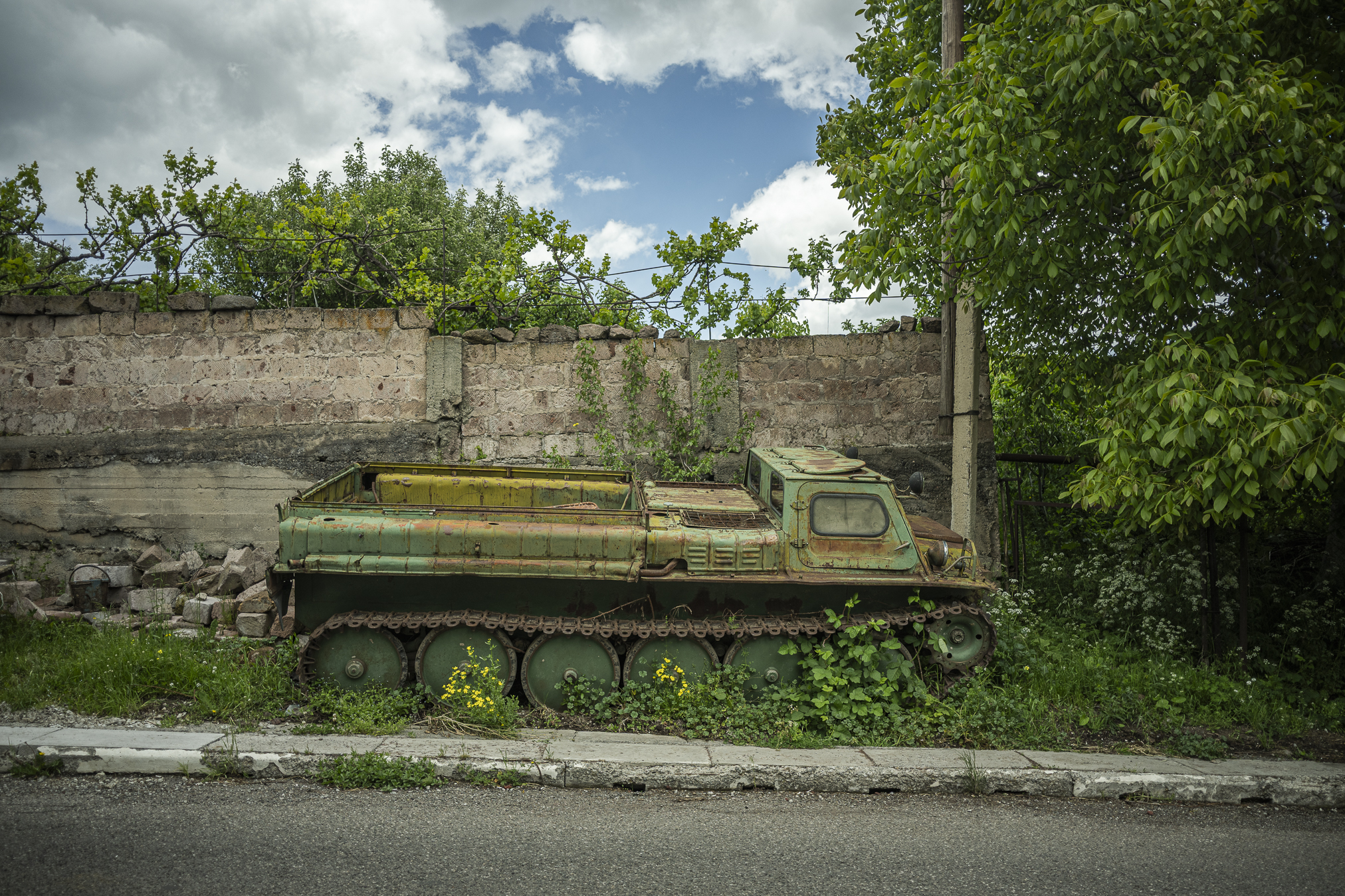
"We are like Robinson Crusoe — totally alone," says a family living beside Akhuryan railway station near the Turkish border. The tracks are overgrown with grass and weeds – no trains have run here for 33 years, ever since Ankara closed the border in solidarity with Azerbaijan, which had lost the First Karabakh War (1988–1994).
In Soviet times, the stretch of railway that passed through here was the only direct rail link between the Soviet Union and Turkey. When the station was operating, hundreds of people lived here; now only two families remain. Zvart used to work at a sugar factory and her husband was a railwayman. The two of them remember life pulsing through the place – when the border was open, they would meet Turks and sometimes invite them in for tea. "No conflicts, no clashes, normal relations. It’s only the leaders who are in conflict, not ordinary people," each member of the family repeats at least a couple of times.
The family hopes that Akhuryan station will soon be running again and the region will flourish once more – this is the promise of Pashinyan's government and part of the normalisation of relations with Turkey, which includes opening the borders and resuming trade.
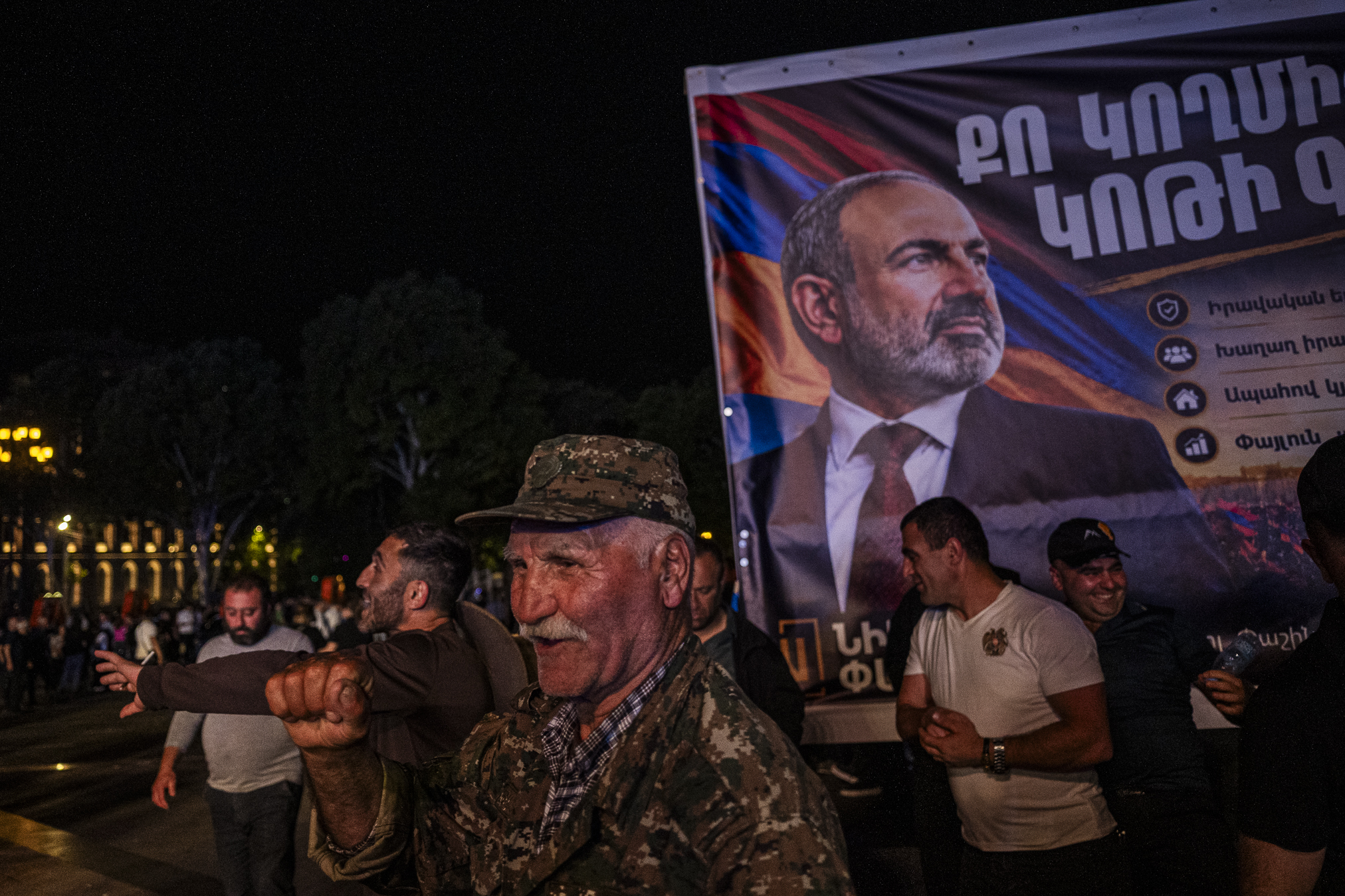
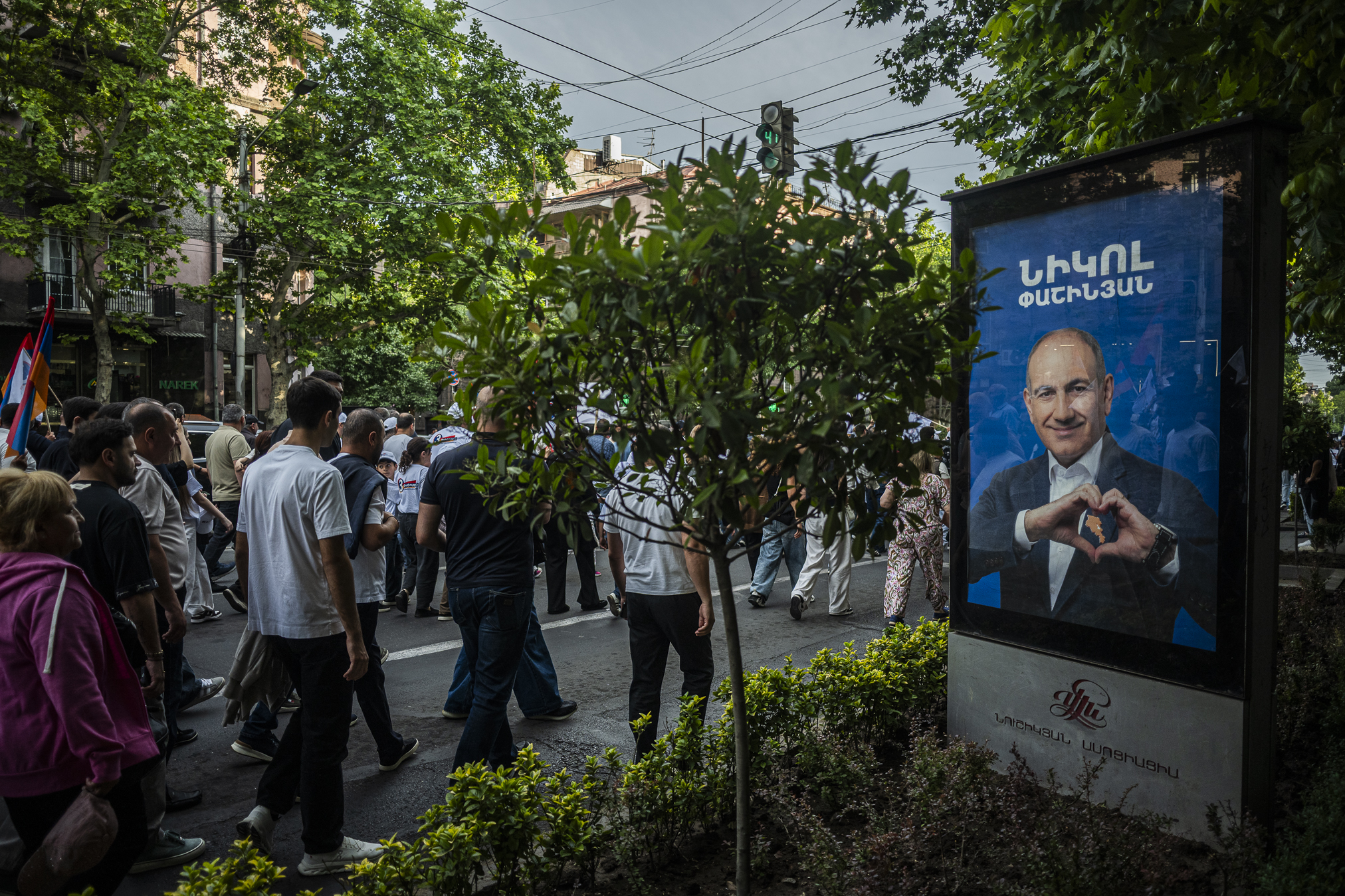
The campaign symbols of Pashinyan's Civil Contract party are a heart hand gesture and a map of Armenia. His idea (a ‘real Armenia’) involves coming to terms with internationally recognised borders, including renouncing claims to Karabakh. Pashinyan's thinking is this: if it doesn’t normalise relations with its neighbours, Armenia will remain isolated and vulnerable. Opening the borders with Turkey and Azerbaijan would diversify the country's Russia-dependent economy, increase freight flows and open up new markets for Armenian products.
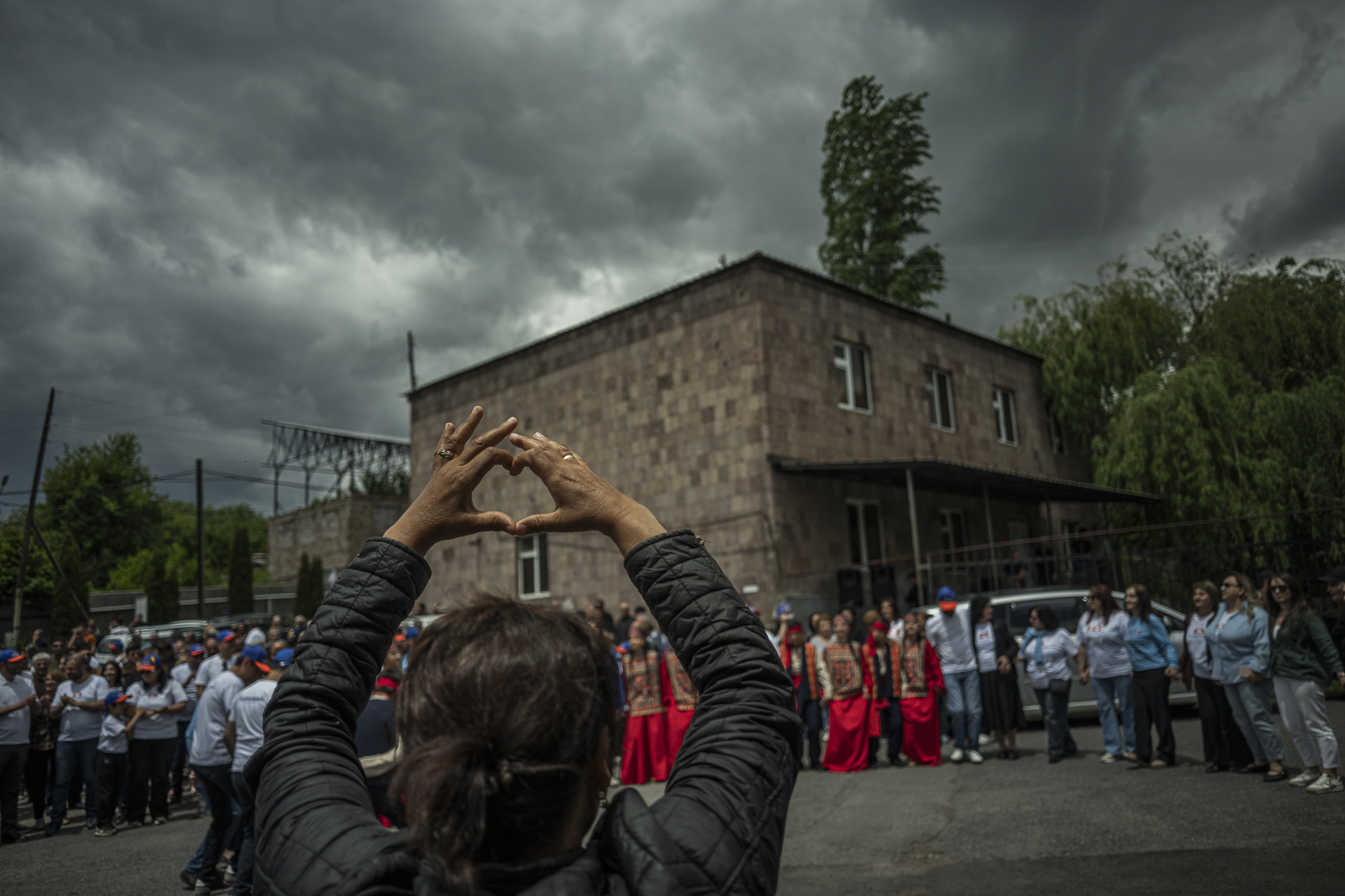
Pashinyan's campaign slogan is ‘Stand for Peace.’
"If the ideology of war, fighting and revenge continues, my son will have to go and fight, and I don’t want that," says Karine, Zvart's daughter, whose son is sixteen. For now, he is winning bout after bout in wrestling – and when inspiration strikes, he paints.
The family supports Pashinyan and his current government because, above all, their life has improved in recent years: pensions have risen; the state covers health insurance for certain groups, including pensioners; the government provides support when hail destroys the harvest; roads in the regions are being repaired; and the level of corruption has fallen.
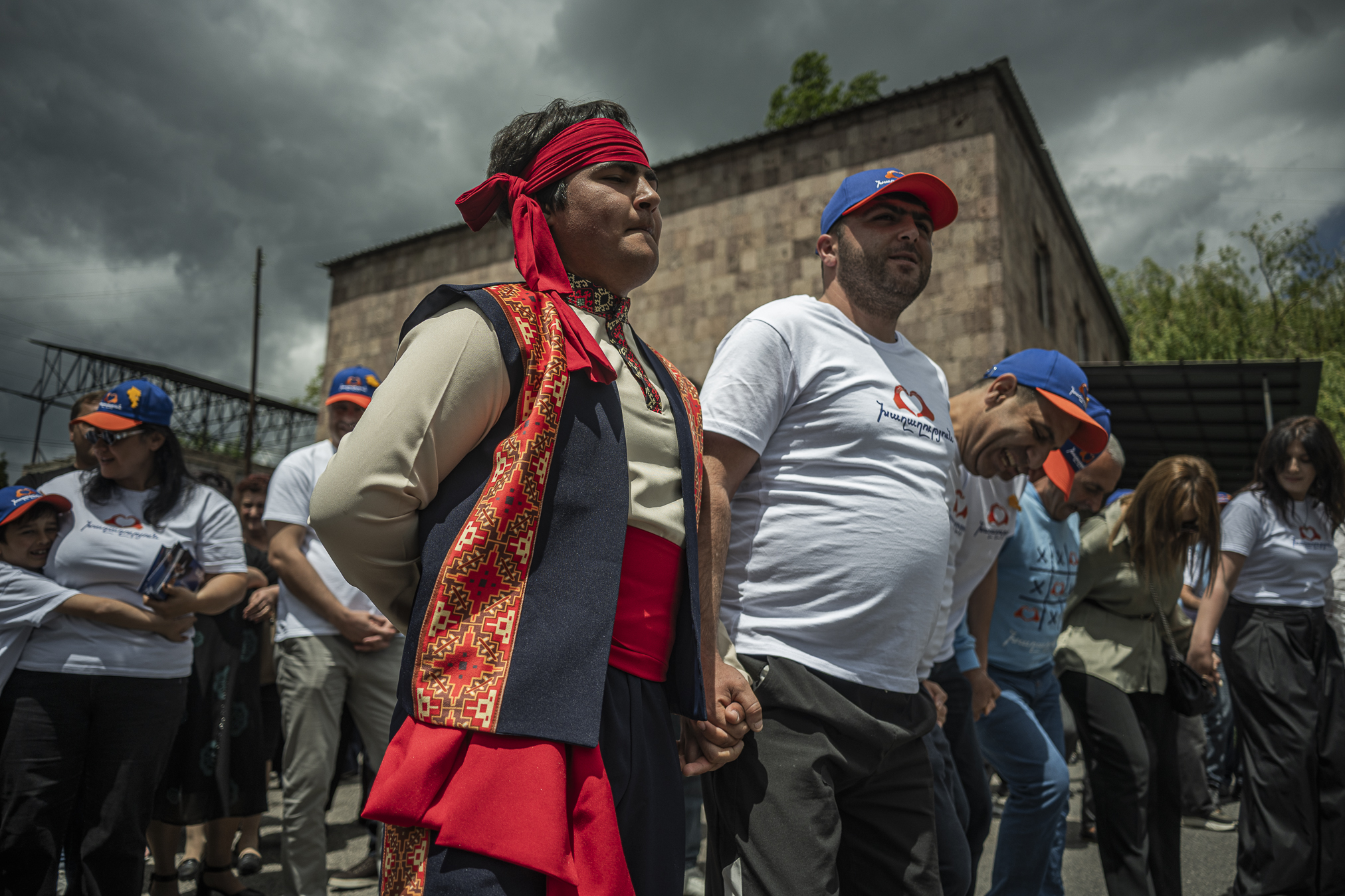
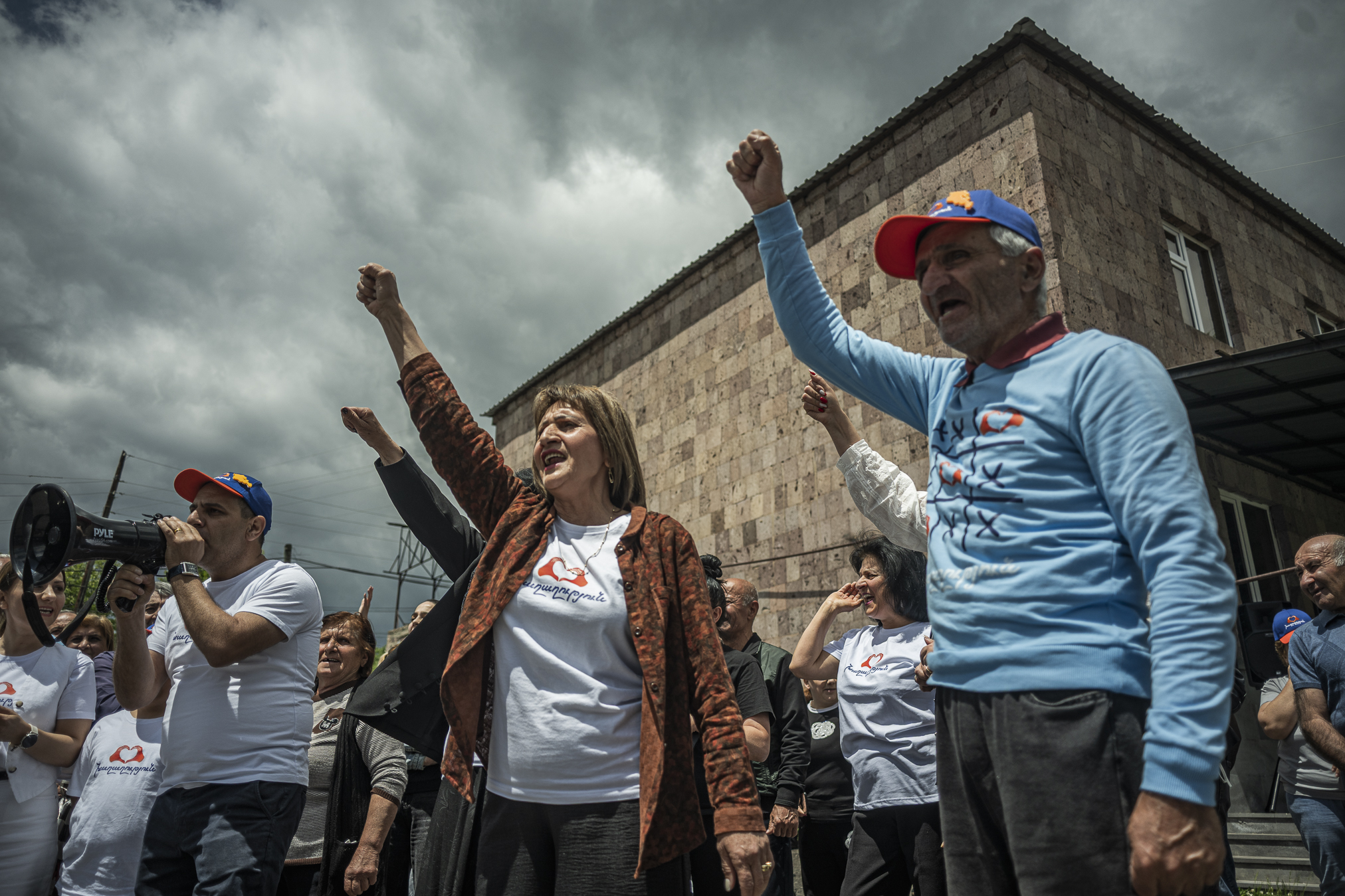
"Better to have Pashinyan, eating his pirozhki [little pies], running the country," says Zvart. The family does not want corrupt oligarchs in power – the same people they also blame for the loss of Karabakh. "We should have done what [Azerbaijani President] Aliyev has now done. We stopped and did not see the matter through. Aliyev went all the way."
The family has backed Pashinyan since his rise during the 2018 Velvet Revolution. They watched as a ‘hungry and thirsty’ Pashinyan set off from this region of Armenia on his march to Yerevan, rallying Armenians to rise up against a corrupt government.
"Only Pashinyan. Only Pashinyan can save us."
★ ★ ★
It seems I am yet to meet an Armenian who did not take part in the Revolution. They did not necessarily support Pashinyan back then, but everyone wanted to be rid of the corrupt rule of the oligarchs. But as so often happens after revolutions, people grow disillusioned and return to their everyday concerns. Immediately after the Revolution, 80-90 percent of voters supported Pashinyan. He still remains the most popular politician, but his support now stands at 10–20 percent. More than 60 percent of Armenians say they do not trust any politician.
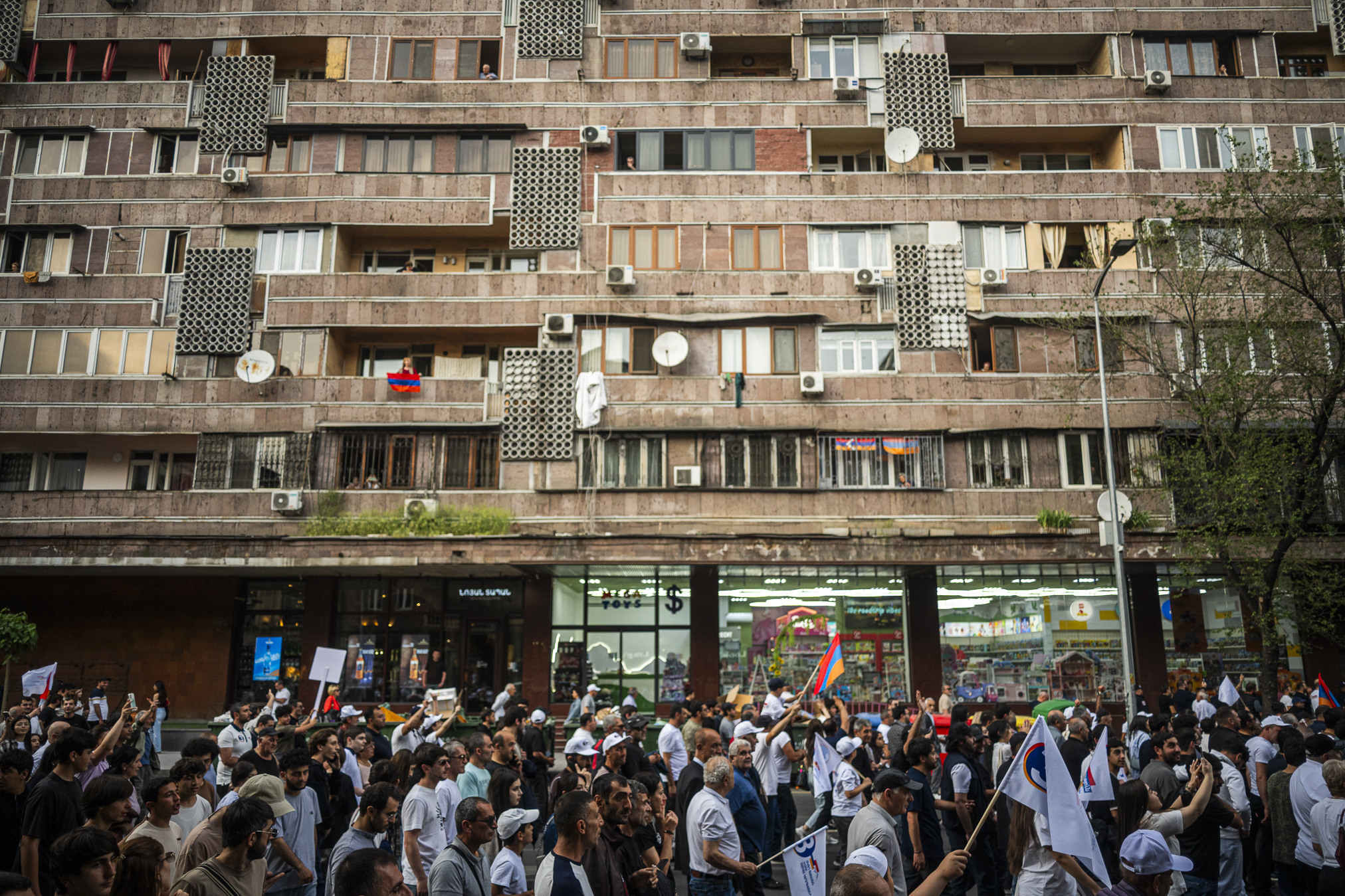
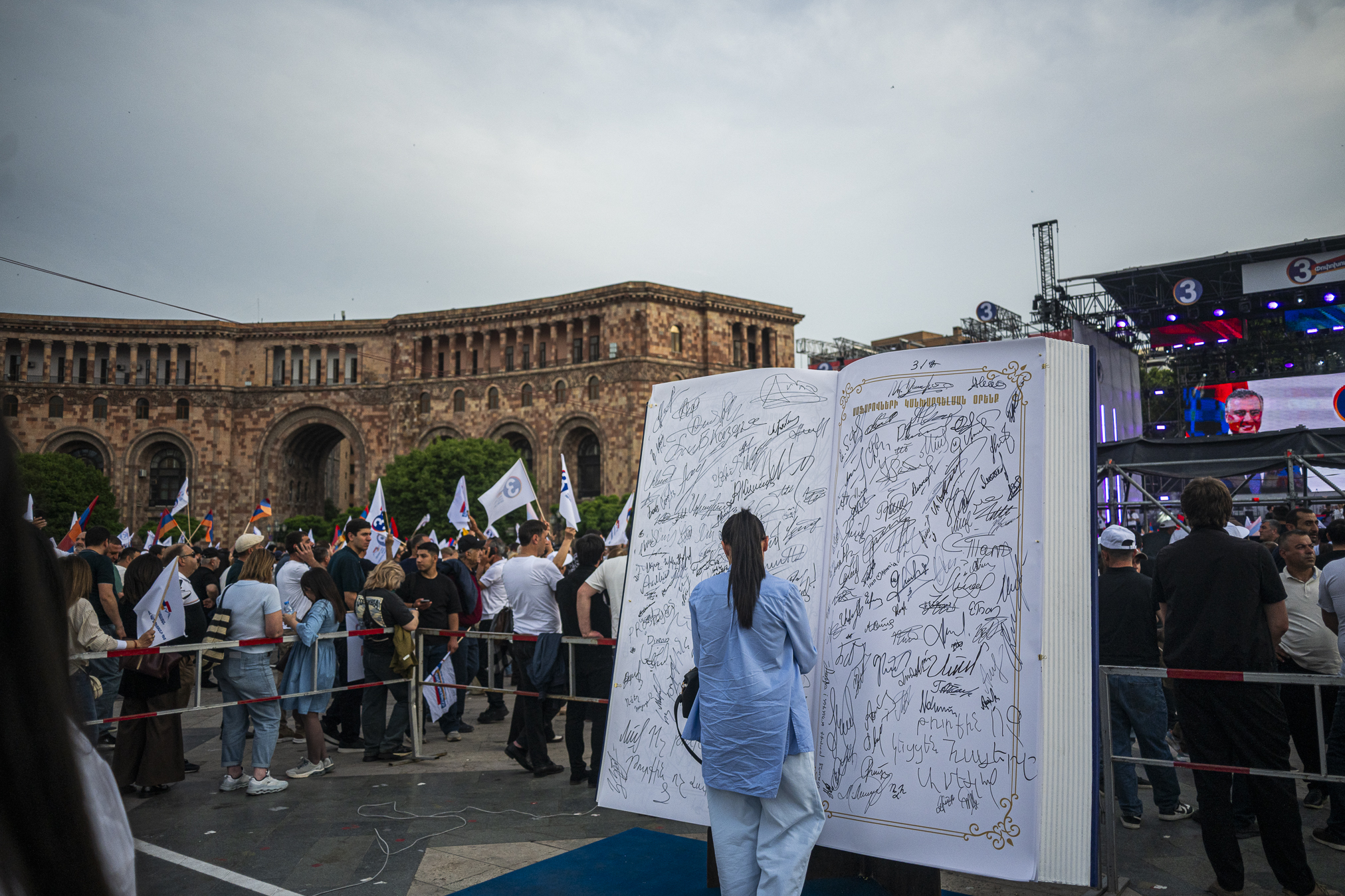
Pashinyan's closing rally in Yerevan ahead of this year's elections also feels like a small revolution. From the stage, Pashinyan speaks like the leader of one, saying that everyone can contribute to change. Republic Square is full, although Pashinyan is mostly supported by people from the regions. The crowd dances while the prime minister plays the drums.
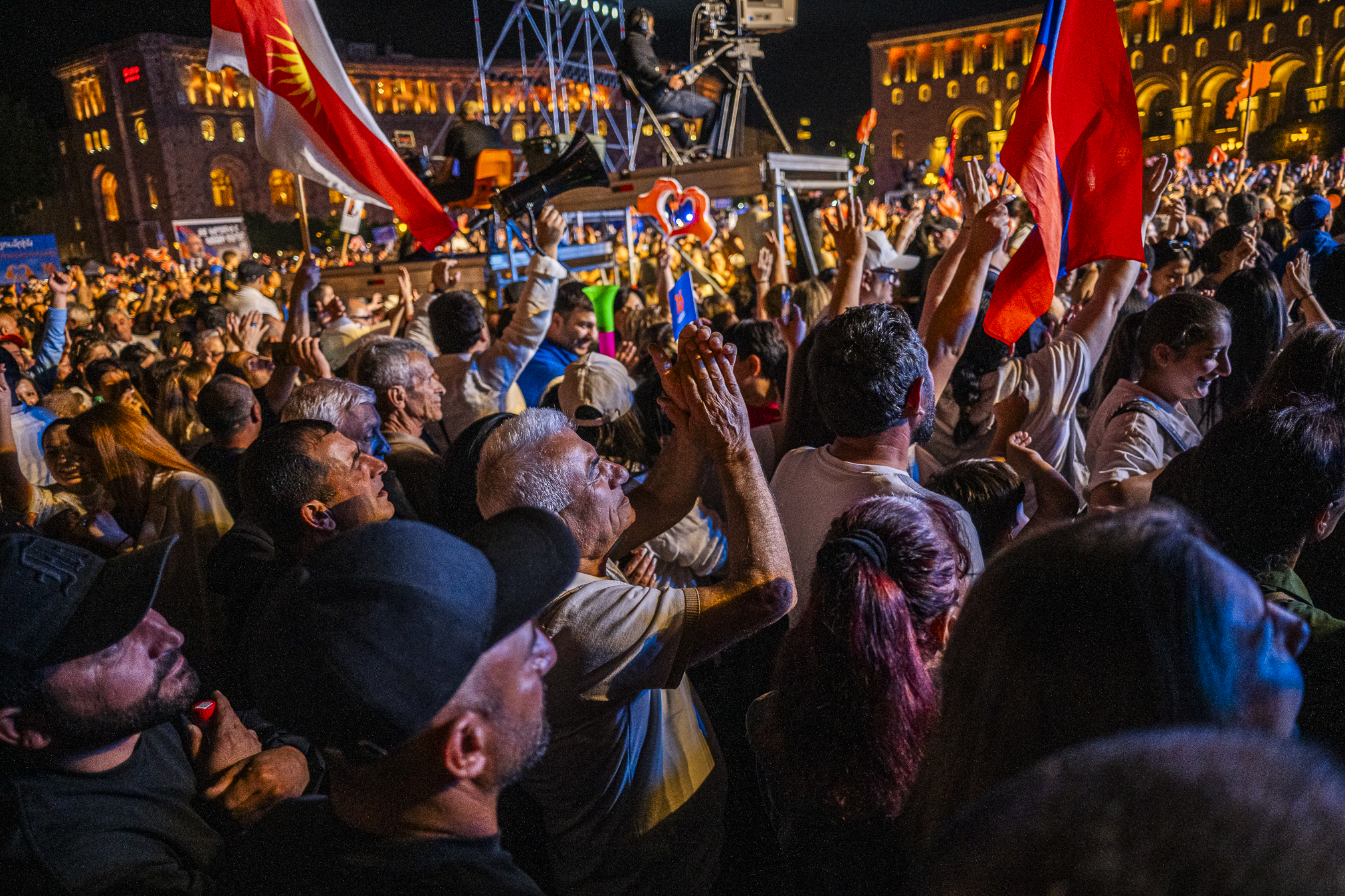
"You can see for yourself — everyone is laughing, everyone lives freely, the country is flourishing. Life is better on every street," says Armen, a member of the party's youth wing. His voice changes only when asked about the loss of Karabakh.
Every time the subject of Karabakh comes up, I seem to feel a heavy sense of loss in the pauses and the words, interwoven with the painful awareness that there is nothing left to be done. Like a lump in the throat that is hard to swallow.
"It hurts so much about Artsakh, so much," says Gayane. She also feels pain from the negotiations with Azerbaijan, in which Armenia is making many concessions, but she adds that a small state hardly has a choice.
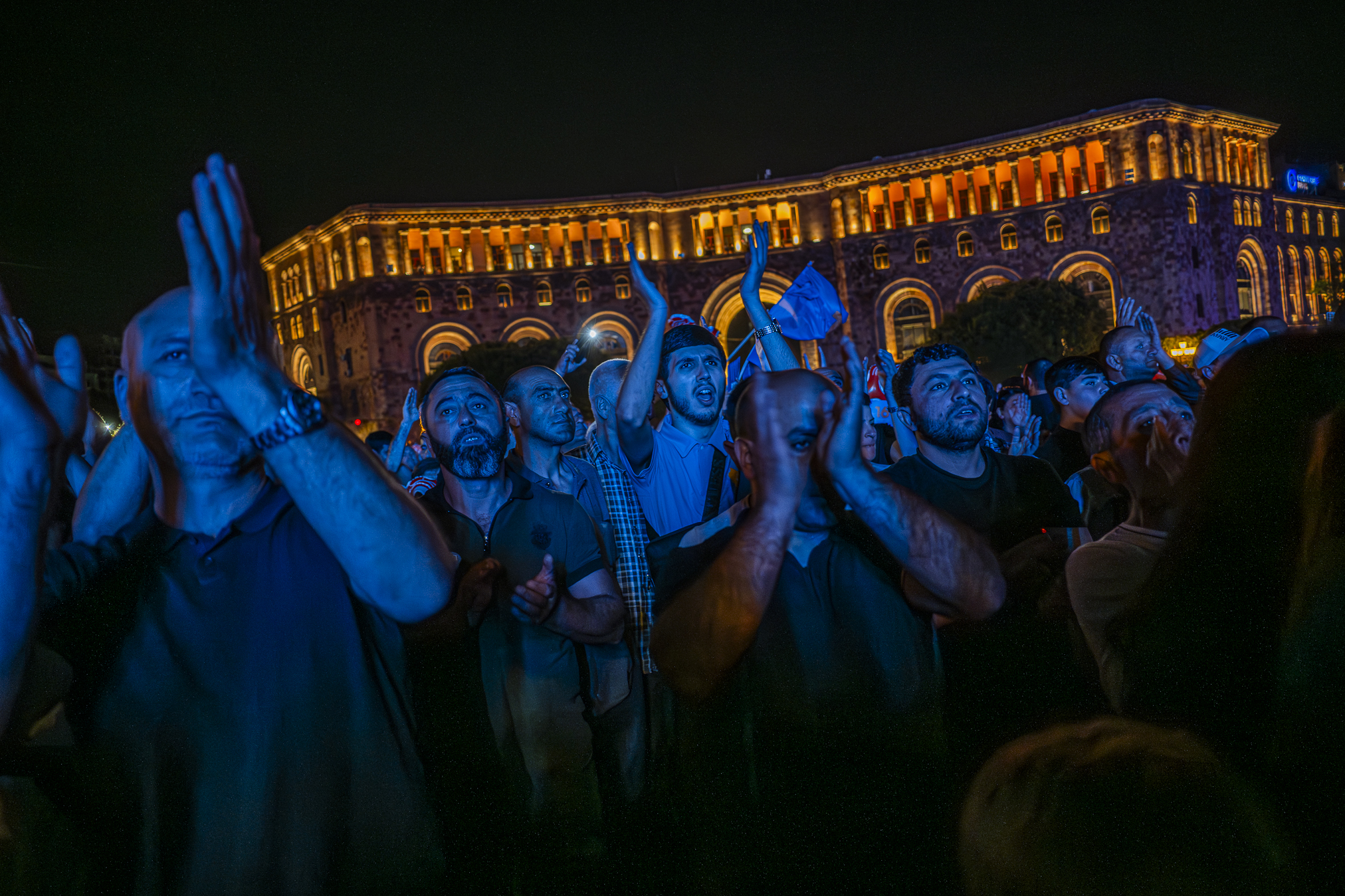
Gayane supports Pashinyan primarily because of the growing economy and the sense of security that emerged straight after the Revolution. She recalls that during the Revolution she was afraid to go out into the street — there was no freedom of speech, she feared reprisals, feared that Pashinyan might be killed.
She supports Pashinyan despite his greatest failure — the loss of Karabakh. "It was our most vulnerable point and it was used to manipulate us. Perhaps that is why he gave it up – so that we could no longer be manipulated?"
This is one of the interpretations in circulation. For decades, Karabakh was a symbol of Armenian identity, but at the same time Russia used it to keep Yerevan dependent — without Moscow's backing, Artsakh could not be protected. Azerbaijan and Turkey used it to block Armenia's integration with the West — peace negotiations always circled back to the status of Karabakh. In domestic politics, it remains a major issue to this day. Pashinyan himself has said that Karabakh was used "...so that Armenia, too, would no longer be ours."
★ ★ ★
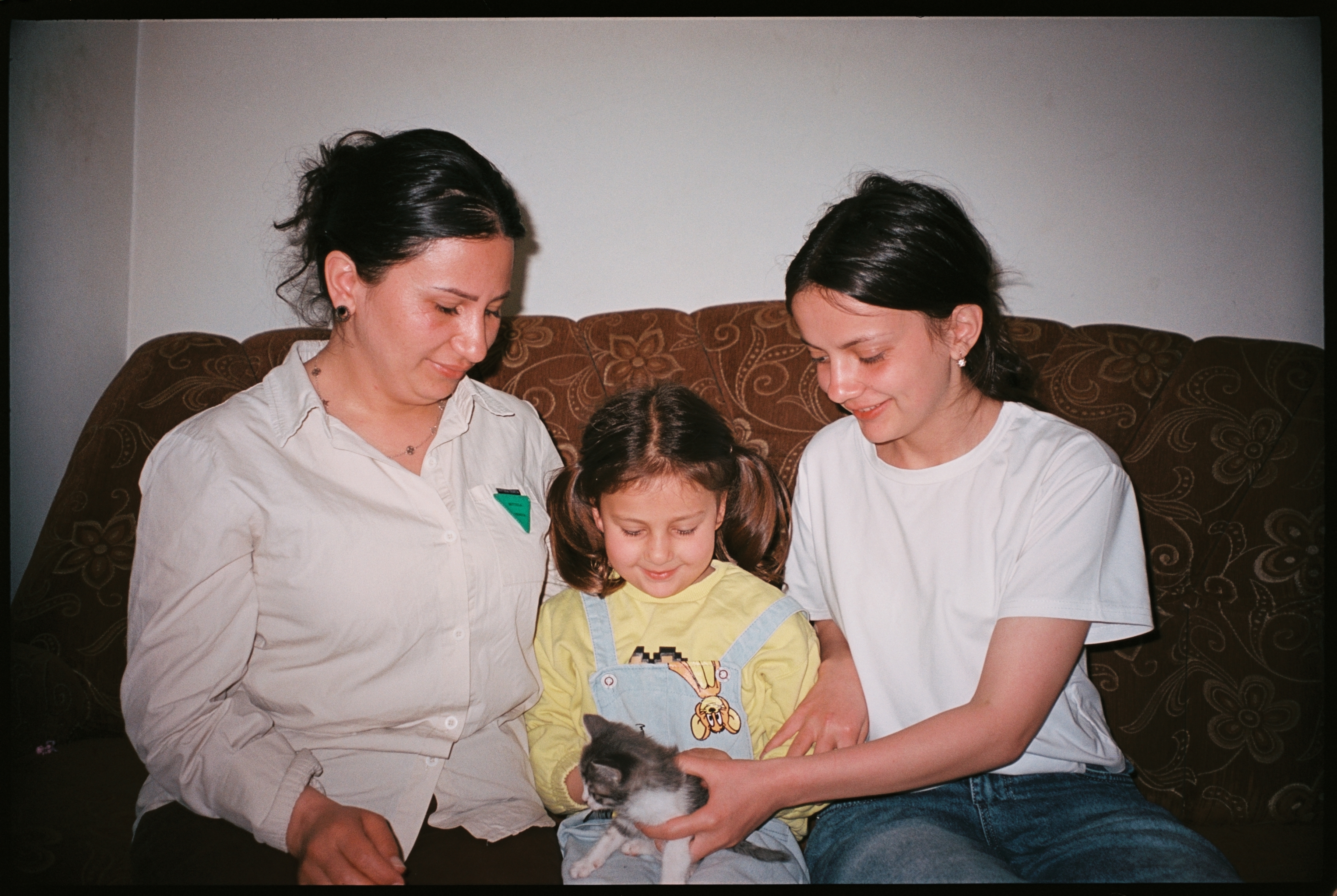
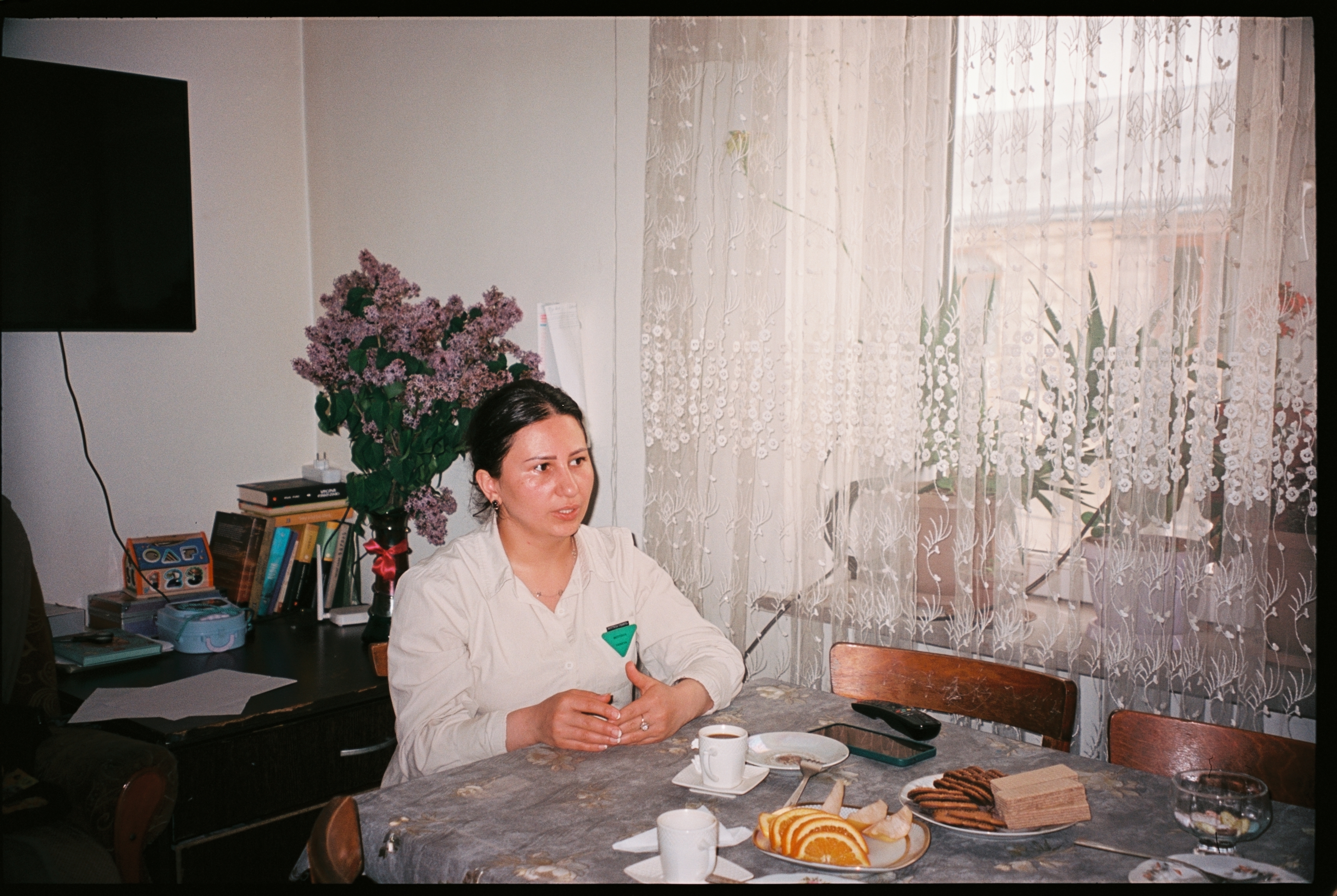
For her situation, Lusine primarily blames the current Pashinyan government above all. Her situation is this: a single mother of three, whose husband is considered missing in action in the war and whose family home in Artsakh is now under Azerbaijani control, out of their reach.
Lusine lives with her children, her mother-in-law and a kitten named Milka – who has captured the undivided attention of all the children – in the south of Armenia, in the Syunik region, where her husband is from. Here she works in non-formal education, with community and youth initiatives. Her work often takes her out to villages unreachable by public transport, so colleagues frequently pick her up from home. Recalling her work, the first thing she mentions is that she tries to ignore the gossip of those around her about what a single mother driven by different men could possibly be up to.
When Artsakh was under blockade, Lusine collected signatures with the civic association HayaQve (Armenian Voice) to initiate constitutional amendments. The aim was to make genocide denial punishable by 10 to 15 years' imprisonment, with the same penalty for handing Artsakh over to Azerbaijan (such amendments were never adopted). Lusine is now involved in politics, contributing to the election campaign of the main opposition leader, Karapetyan, and his party Strong Armenia.
Karapetyan entered politics in 2025, when he defended the Armenian Apostolic Church amid its tensions with the Pashinyan government. The billionaire is currently under house arrest, charged with calling for the usurpation of power.
The campaign of Pashinyan's Civil Contract party is built on the promise of peace. Party members speak of Karapetyan with the warning that electing him – and two other opposition parties – would drag Armenia into war. They call Karapetyan himself "homeless" and he would remain so even if he won the election — under Armenia's constitution he cannot become prime minister because he holds three citizenships — Armenian, Russian and Cypriot. But his party promises to change the constitution and thereby open his path to the prime minister’s post.
"I will do everything in my power to make sure they [the Pashinyan government] do not stay in power," says Lusine.
Lusine was born in the village of Vaghuhas in Artsakh and soon afterwards, when she was a year and eight months old, the First Karabakh War began. The family fled to Russia, and on returning after the war found their home in ruins. They lived on the ground, later in small rooms with no furniture or appliances of any kind. They had little, but were grateful even for that: "Candyfloss was to us like that stone in the world, grandidierite, which is considered rare and precious."
When Lusine was in the tenth grade, "handsome young men from Armenia" arrived in Artsakh to build flats and among them was her future husband, Abel. Once married, the two of them lived between Artsakh and Armenia.
In October 2022, Abel began serving in the Artsakh armed forces as a contract soldier. He soon left on his first mission and a month later on his second. When it was time to return home, Azerbaijan began its blockade of the Lachin corridor — the only road from Artsakh to Armenia. Abel remained stranded for more than half a year, constantly searching for a way out but finding none. When it finally seemed he would manage it, the small amount of petrol left was used for more pressing purposes.
Almost a year later, on 19th September 2023, Lusine and her family were visiting the cemetery to mark the thirtieth anniversary of the death of Abel's father in the war. Abel called his wife, but as the family was busy honouring his father's memory, they agreed to speak later. As the table was being laid for the memorial meal, at 1pm, Lusine opened Facebook and saw the news flooding her entire feed: Azerbaijan had launched a large-scale offensive in Artsakh. "I kept calling, calling, calling, but it went to voicemail every time."
Lusine rang everyone, but received no reliable information, only rumours. "It felt as though we were constantly searching and to this day we still feel as if we are caught in that search." Her husband is listed missing in action, as his body was never identified.
What angers Lusine most is that the peace agreement with Azerbaijan includes no provisions on the missing or prisoners of war: "The peace agenda contradicts that." Nor does it address the return of the Karabakh Armenians. She had met Pashinyan, but he apparently had nothing to say.
Lusine also blames the previous government for leaving Artsakh in such a position, as well as Russia, whose peacekeeping forces played a part in the fact that the Republic of Artsakh no longer exists. But the greatest blame lies with Pashinyan’s government. "He used to call Karabakh Artsakh and he would say: Syunik [the region bordering Karabakh] is our backbone and Artsakh is our gateway. Artsakh is Armenian, Artsakh exists and will exist, and there will be no capitulation, neither in Artsakh nor in Armenia."
The Karabakh question was not a central theme of the Revolution in 2018, unlike before, when Karabakh shaped Armenian identity. During the Revolution, Pashinyan focused on the fight against corruption and on democracy, yet he declared: "Artsakh is Armenia, full stop." His rhetoric began to change after 2020 and the Second Karabakh War, when Azerbaijan took control of part of the territories and Armenia, after 30 years, went from victor to loser. From then on, Pashinyan spoke of being ready to make concessions in peace negotiations. Eventually he publicly acknowledged that Artsakh belongs to Azerbaijan and questioned whether Karabakh had ever been Armenia's at all.
Videos keep appearing on social media in which Pashinyan publicly attacks Karabakh Armenians. In a video from the metro, Pashinyan shouts at a woman and her daughter for having fled Karabakh. Lusine accuses him of stoking tensions between Armenians and the people of Artsakh. She herself speaks Armenian in the Artsakh dialect. She says she has heard more than once accusations from Armenians that she speaks Turkish: "The people of Artsakh are supposedly Turks, not Armenians." More than once, riding in a taxi, she has had to listen to claims that the people of Artsakh themselves, and those who were in power, are to blame for what happened.


"The Artsakh dialect is one of the dialects of the Armenian language too."
Now Lusine is involved in an initiative that encourages young people from different places to meet and speak with one another in their own dialect. "In the near future, I don't see us getting Artsakh back, or its people returning. So all that is left for us is to integrate the young into society, because they are the easiest to integrate."
"The Artsakh dialect is one of the dialects of the Armenian language too," says Lusine.
While negotiating peace, Pashinyan handed several villages over to Azerbaijan that Armenia had captured during the First Karabakh War. He has also promised to hold a referendum and amend the constitution so that it no longer contains any claims to the territory of Karabakh. This last point strikes Lusine as especially ruinous. She fears appeasement of Azerbaijan and calls Pashinyan a vassal of Aliyev. Meanwhile, on the eve of the elections, Azerbaijan's state media are voicing support for Pashinyan, believing it easier to negotiate peace with him than with the pro-Russian opposition.
"They killed my brother, my husband is missing, my sister's husband is a prisoner of war, my uncle's son was killed, my uncle was killed and my uncle on my father's side is also considered missing. How can I, carrying so much pain, make peace with them?"
Pashinyan's main opponents, including Karapetyan, do not promise to win back Nagorno-Karabakh. In principle they support peace, but they object to Pashinyan's formulation of it. According to the opposition, the current agreement is too favourable to Azerbaijan and gives Armenia no additional security guarantees. The opposition argues that the question of Karabakh should not be closed.
In Lusine's view, there is no need for war — what is needed is someone who would not raise tensions in society but ease them. Karapetyan, in her view, would be such a person. Even out of power, he supported Armenians in Artsakh, in Armenia and in the diaspora. "We need people like that, who could soften this tense situation."
★ ★ ★
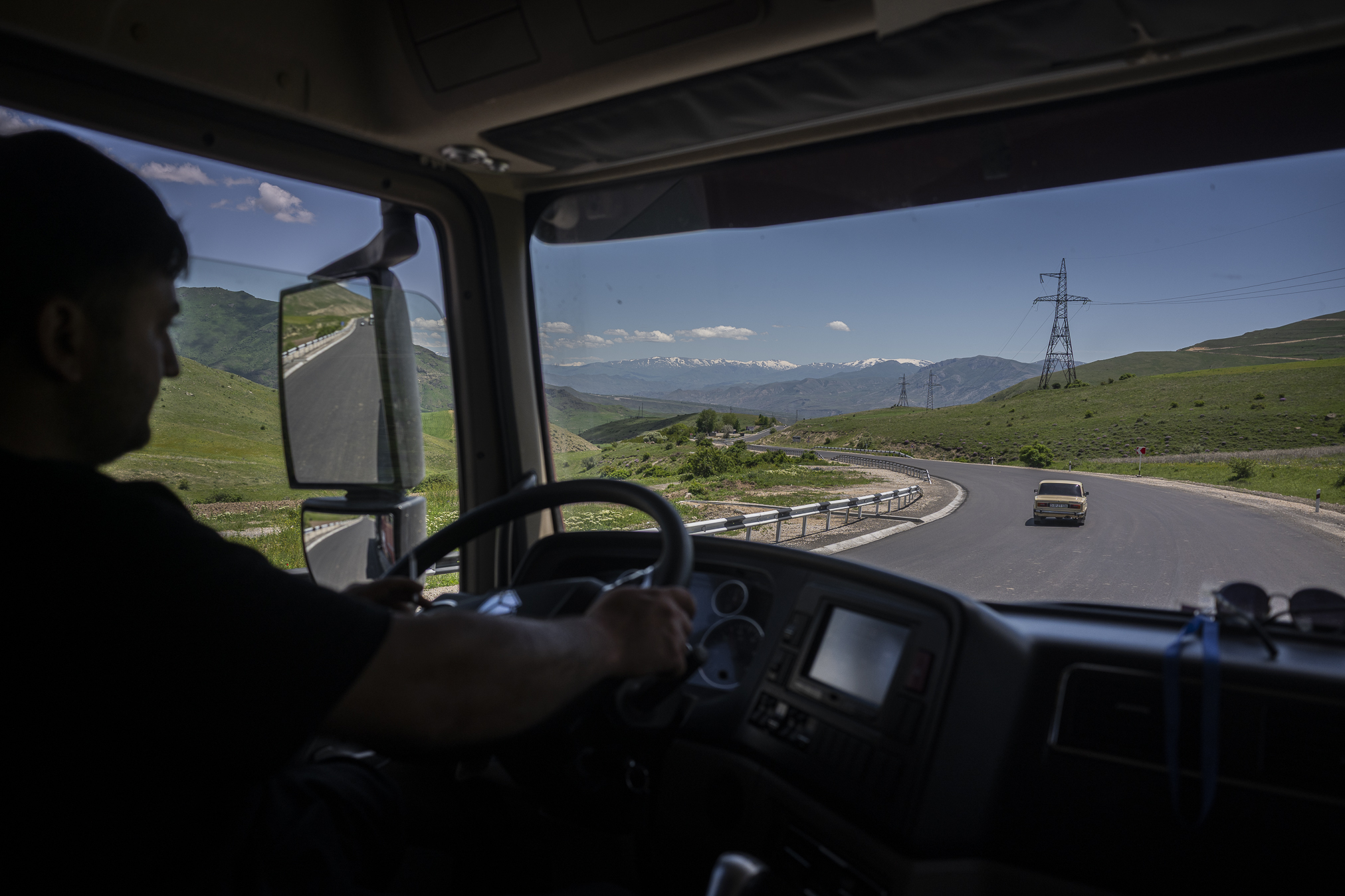
Residents of Meghri, a mountainous town on the border with Iran, often travel to Iran to buy cheaper goods, much as Lithuanians go to the Polish supermarket Biedronka. The comparison makes me laugh, but it is telling too – speaking of how dependent we are on our neighbours and our place on the map. In Yerevan I eat soft Iranian dates, brought in along a narrow mountain road. Meanwhile, Iranian workers are laying a new motorway that should make travel between Meghri and Yerevan faster.
There was a time, until April 1993, when trains also ran here. Meghri railway station was one of the liveliest places, buzzing with life, and the station itself was a vital link in the Yerevan–Baku railway, which connected Armenia with Azerbaijan (and Azerbaijan with its exclave of Nakhichevan), and served transit between Moscow and Iran.
The station has found itself back in the spotlight as Azerbaijan and Armenia negotiate peace. Restoring the railway is one of the most contentious conditions. Azerbaijan wants to control it; Armenia wants to retain its sovereignty. The countries were helped towards a compromise by Donald Trump, who keeps stumbling over the correct pronunciation of their names.
But in Washington the two countries' leaders agreed that the 43-kilometre transit route would be called the Trump Route for International Peace and Prosperity (TRIPP). It will run through southern Armenia, linking mainland Azerbaijan with the Nakhichevan exclave and, via Turkey, with European and Mediterranean markets. A railway, a gas pipeline and a power line will be laid along the corridor. The corridor will operate under Armenian law, though unresolved details remain in the implementation document.
The land will be leased to a private American company, which will manage the construction and logistics. Washington and the EU will invest in the building work. Iran is the most indignant at the American arrival, arguing that the corridor could pave the way for a NATO presence on its borders. And Armenia, for its part, must find ways not to anger its neighbour. Until now Armenia's transit has run through two overloaded and not always reliable corridors – Georgia and Iran.
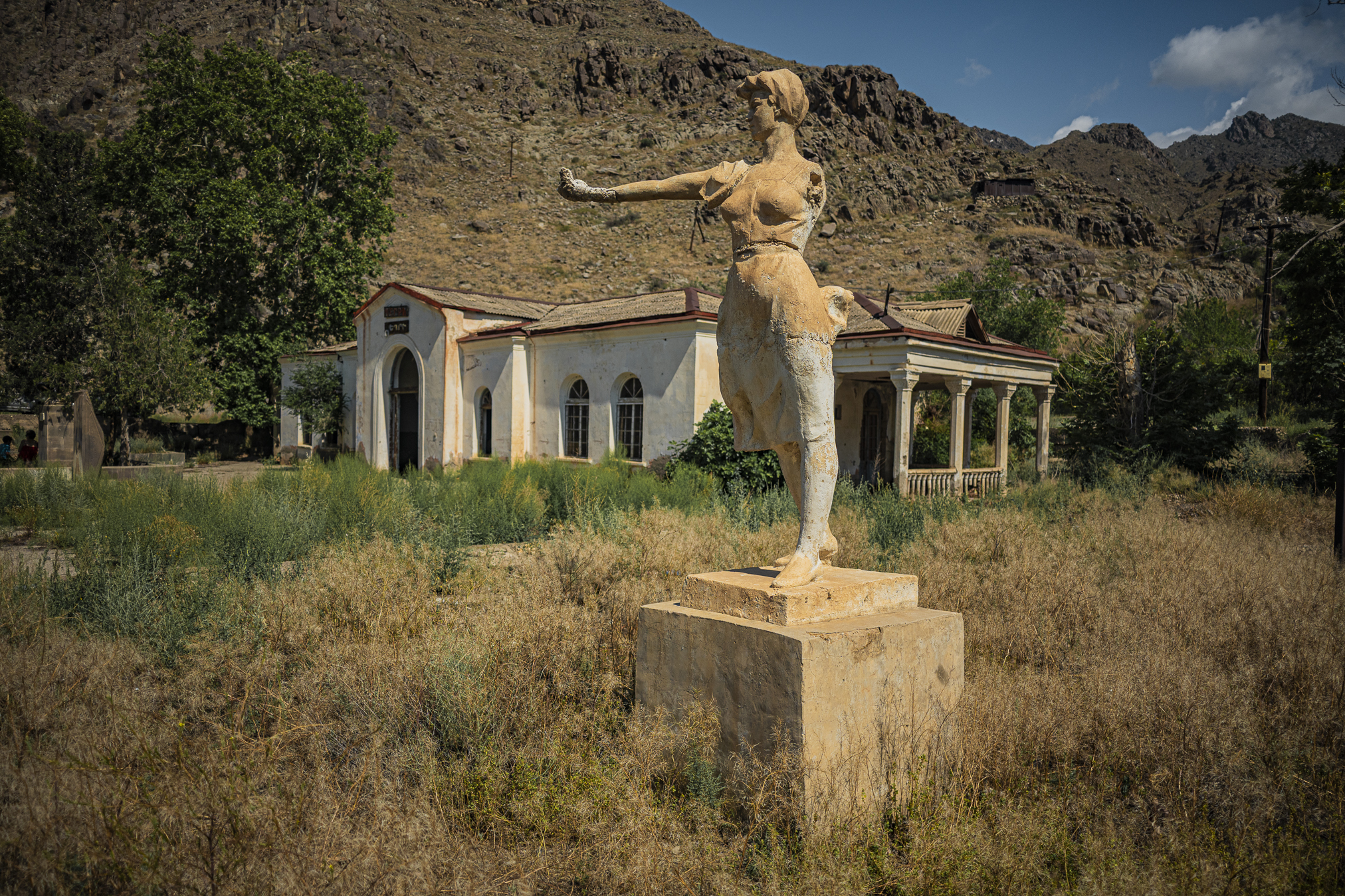
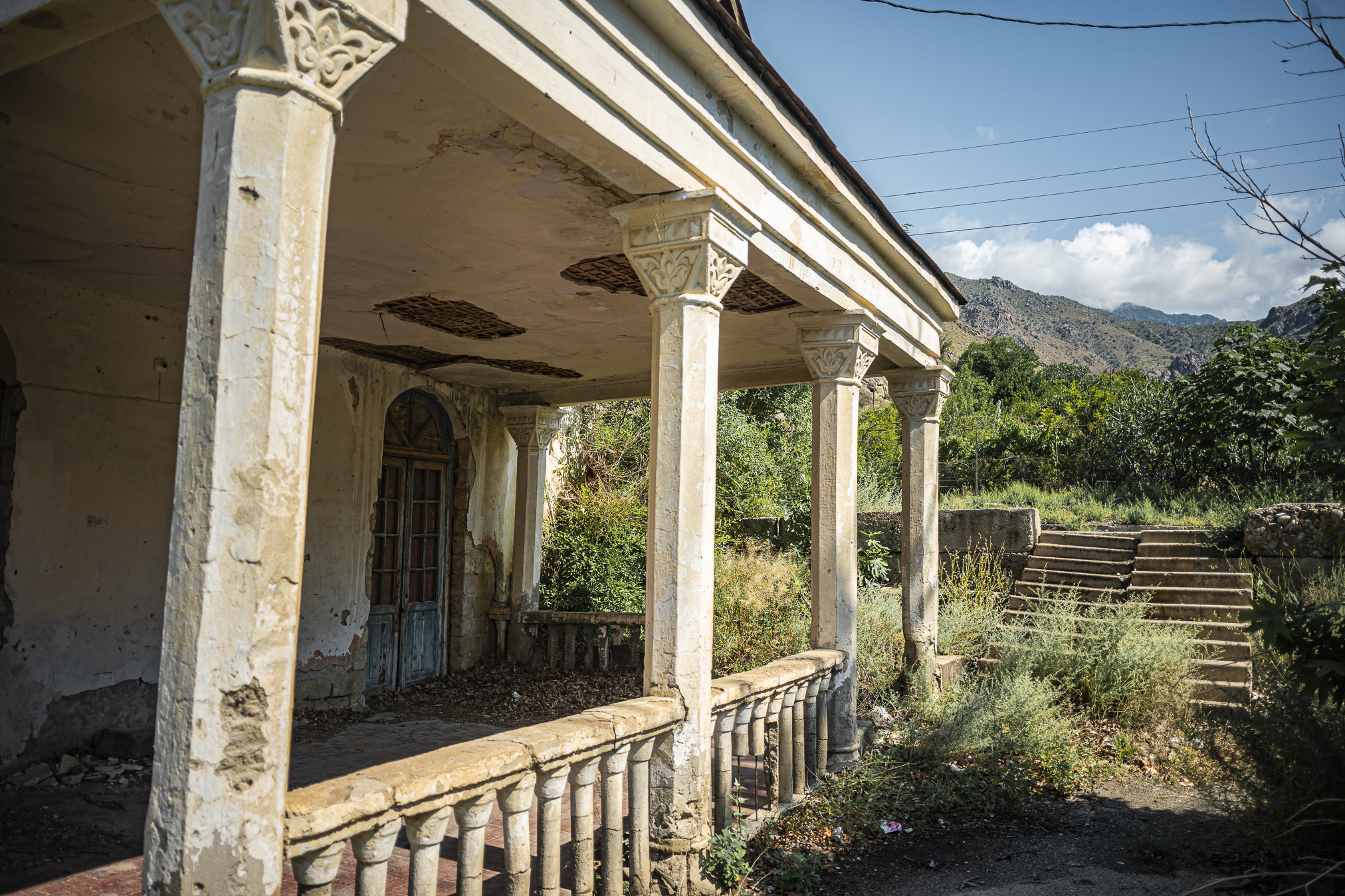
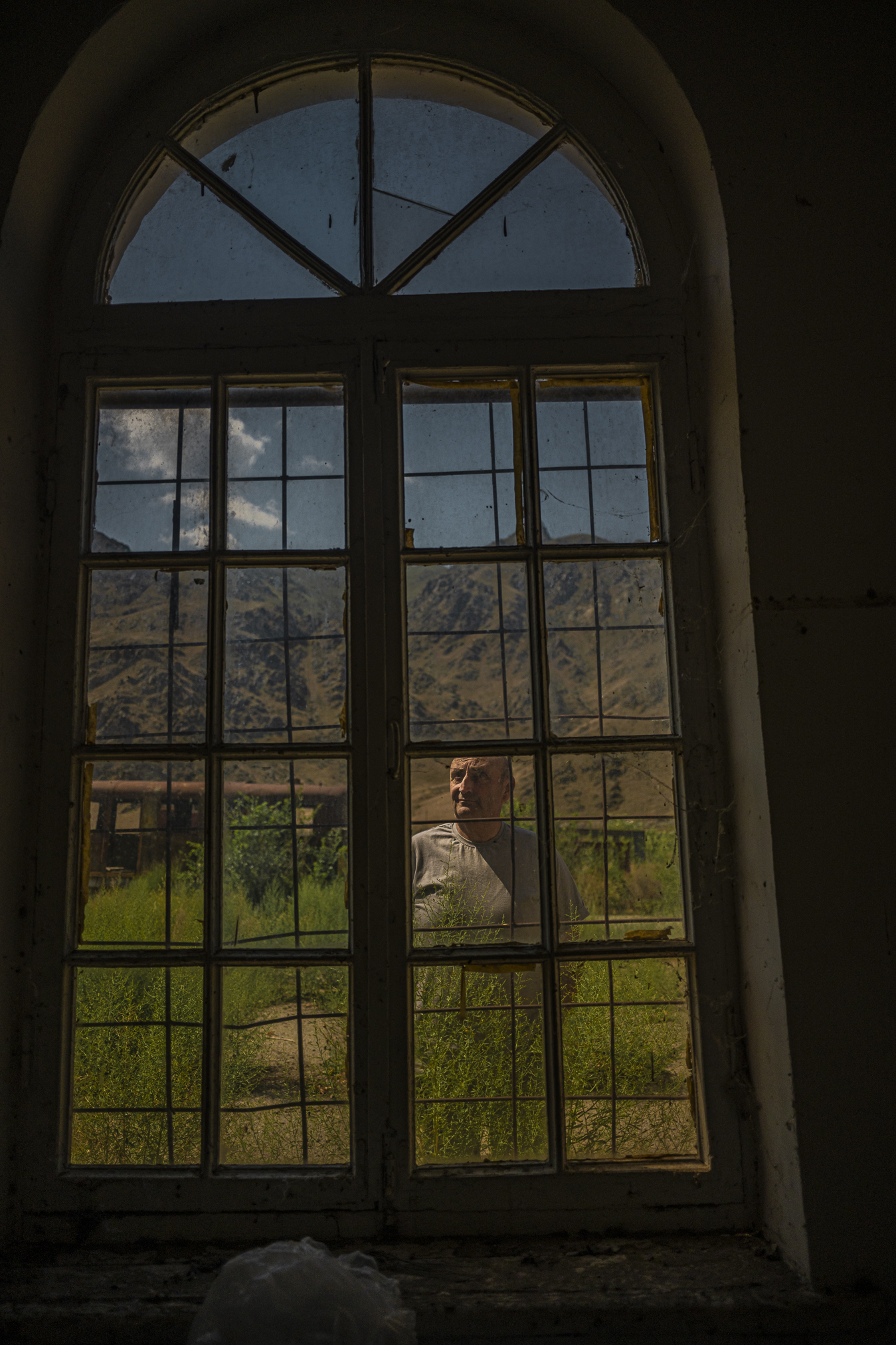
"Whether it is called the Trump Route or the Armenian Route makes no difference. What matters is that it works. What matters is that Meghri, as our prime minister says, becomes an economic crossroads," insists Armen Davtyan, a former railway worker. He is convinced that the station will reopen, although no construction work is under way for now. As far as Armen knows, specialists from the US are due to arrive shortly to familiarise themselves with the situation.
As a railwayman, Armen says he understands very well the role of the railway in economic development. "I am not dismissing other modes of transport, but by international standards the railway is the cheapest." He offers an example: a single railway wagon can carry a load that would require three or four lorries.
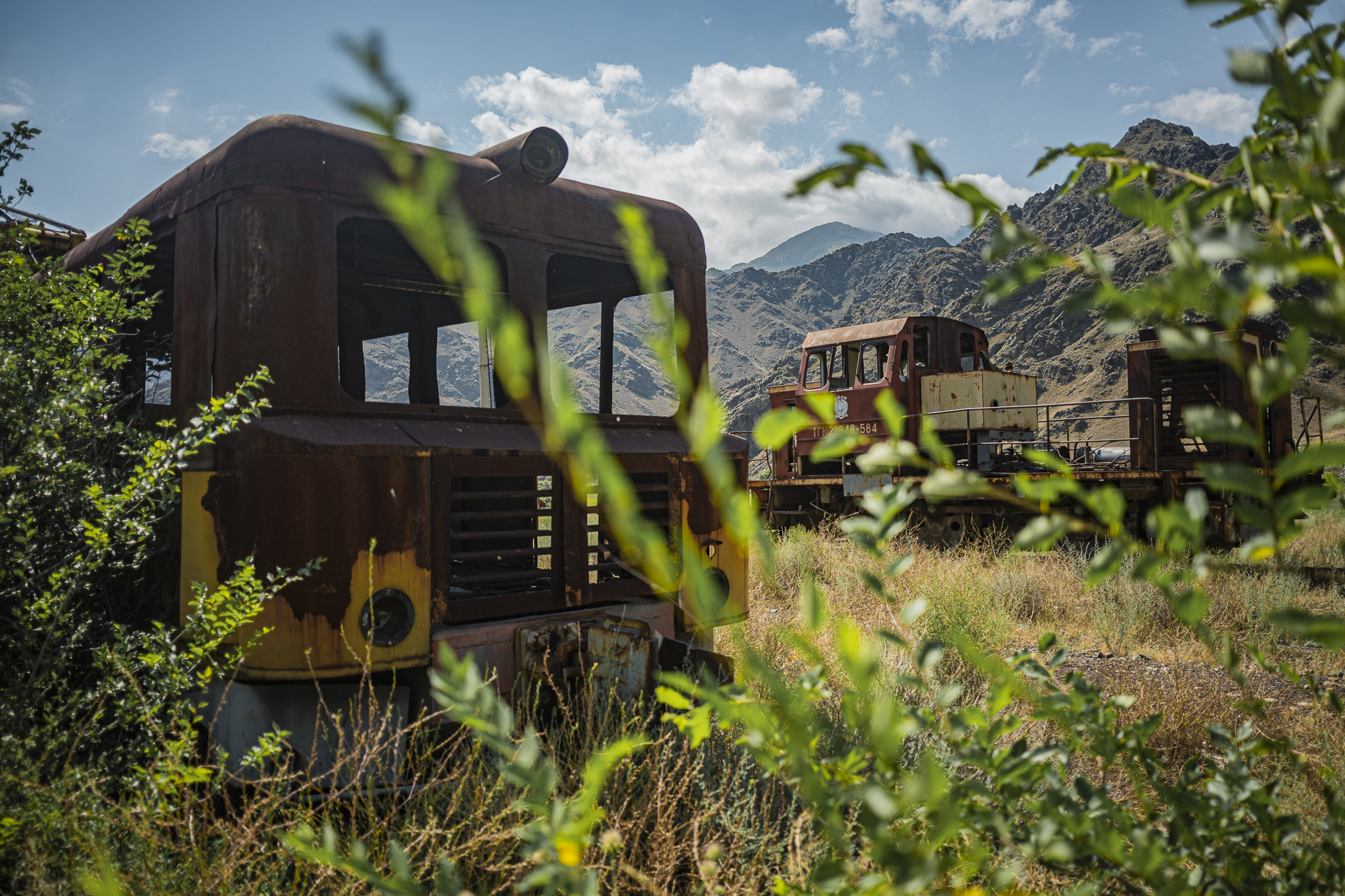
Armen has spent practically his whole life at Meghri railway station. His warmest childhood memories are of watching his father work here and of playing with children of different nationalities, including Azerbaijanis, who in childhood scraps would often take his side. "It never even occurred to me that a time might come when an Armenian and Azerbaijani would treat each other in the most brutal ways."
But from 1989, when he began working here, what he mostly observed was hostility stoked by the war. From 1993, when the station was closed, he guarded it so that it wouldn’t fall into ruin and could resume operating at any moment.
Later, he watched as one of the once-busiest places turned to ruins. Every time he comes to the station, it hurts. He compares the place to a cemetery. "I loved every bush at this station. The trees you see are perhaps only three percent of what was once here," says Armen.
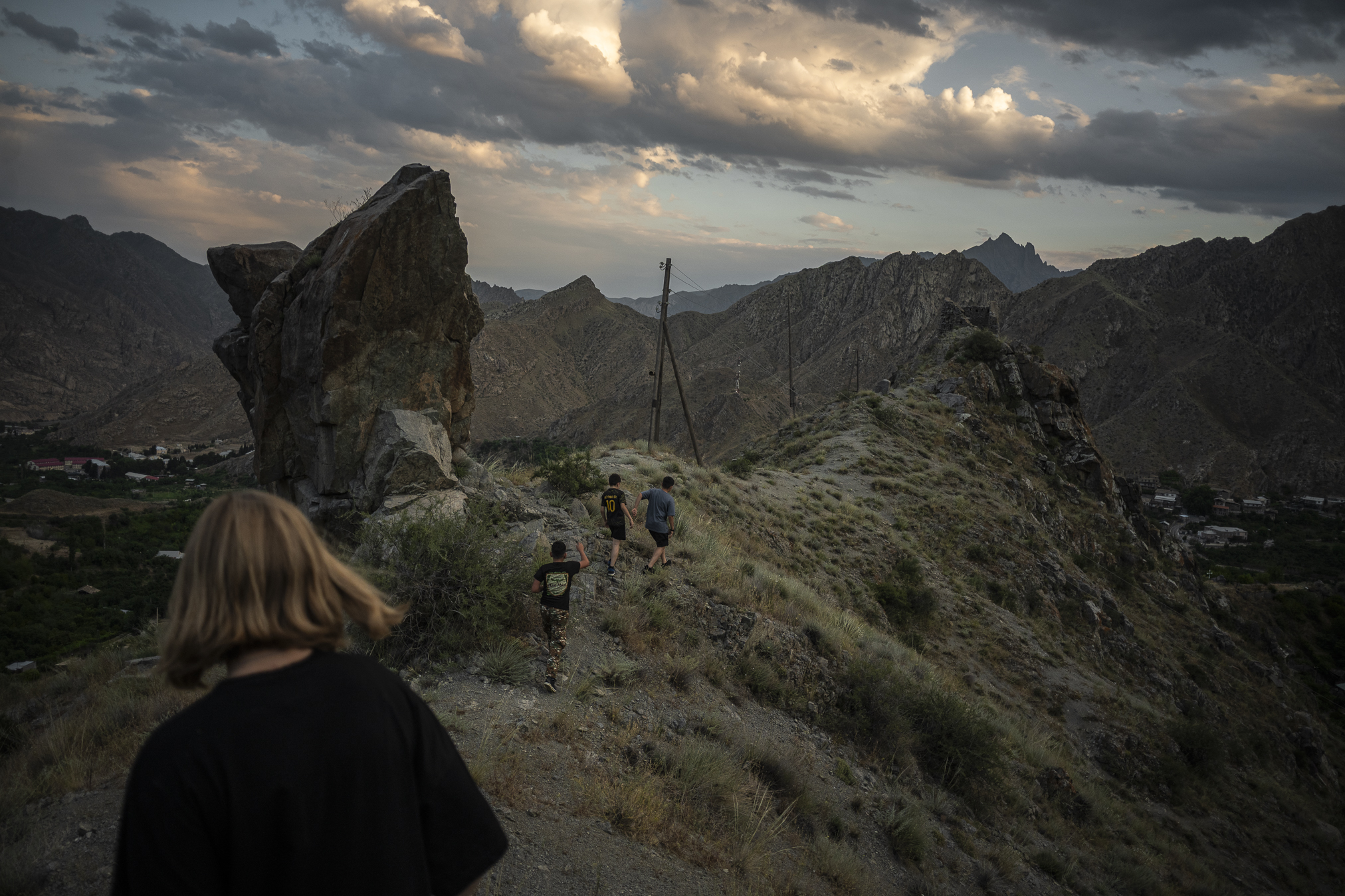
He only comes to the station now when foreign journalists arrive, as if to check whether it has not yet fallen into ruin completely. "Inside, I am glad that today our tiny Meghri is at the centre of the world's attention. Before, not even Armenians knew where Meghri was."
★ ★ ★
Catching up after Pashinyan announces the removal of Ararat from Armenia’s entry stamp
“What he’s telling us to do is to stop
dreaming.” This part of the conversation
has been put off until after lunch, when what’s left
of our hilov sourj is a muddy map
of grains. I tell him that before he died, my dad
hand-carved sixteen wooden Ararats
and gave them out as gifts. I was embarrassed
to display mine—symbol flattened, stretched
and fitted to diasporic longing. I settled
on the highest shelf, above the kitchen sink.
Now I take my friend’s cup in my palm and fly
to the summer of ninety-four—sunrise
leaving Zvartnots, fogging up the window
with my first breaths in a motherland hemmed
with barbed wire. But my eyes don’t catch
the edge—only mythic mountain
at arm’s length. Thirty years on, I still won’t dare
reach out to break the spell. I turn to where
a window might be in this underground
Yerevan suryahay cafe, and roll my wrist
until two peaks form from the grit.
– Nyree Aprahamian (2026). Published by ‘Seventh Wave’.
This is Nyree Aprahamian's first poem about Ararat and her first about politics, although she describes her poetry as political in general. She wrote her first poem, ‘Aftermath,’ immediately after the Second Karabakh War, when working with a friend on a photo essay, they realised that the experiences they had documented did not come together into a linear narrative but rather into fragments, images and sensory details.
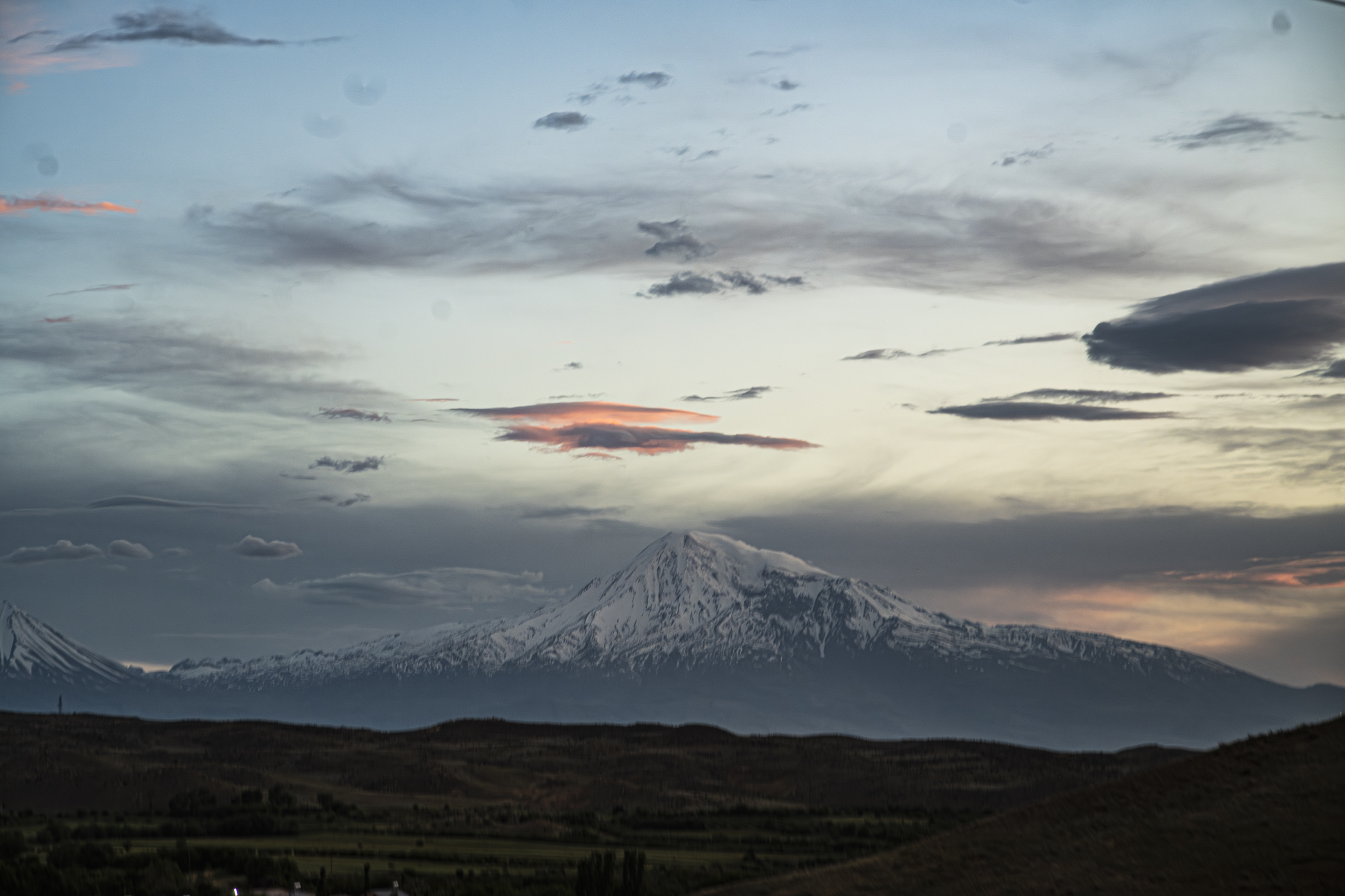
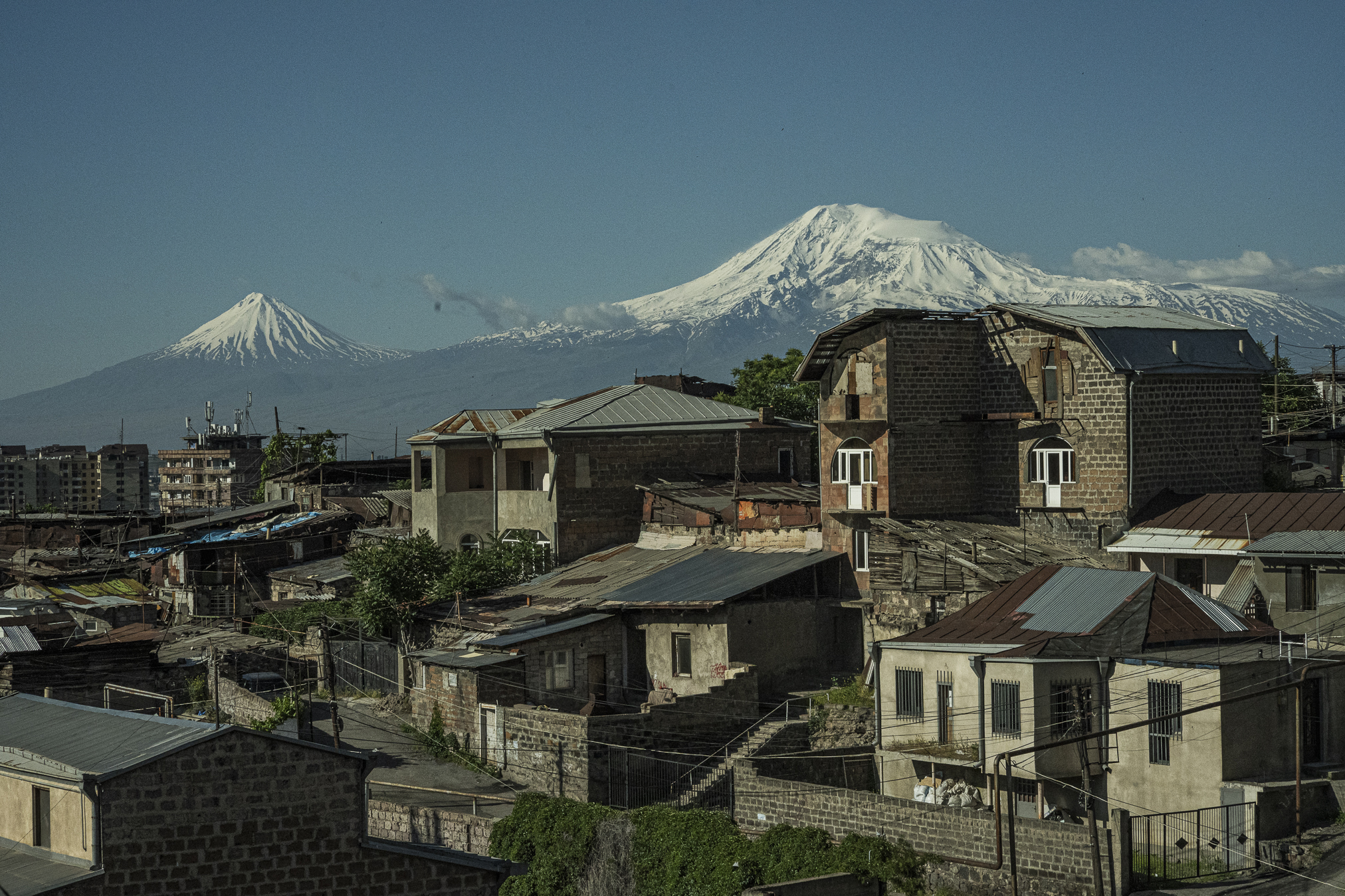
In Armenia, Ararat is a symbol of everything: brandy, restaurants, cigarettes, spas, chocolate. There is so much of it in Armenia that it sometimes begins to feel overdone and kitsch. Mount Ararat itself is clearly visible from many parts of the country and flats with a view of Ararat are more expensive.
Every morning, without noticing, I start by checking how Ararat is holding up today – how much of it shows through the clouds? Nyree says, every time, it is its sheer beauty that takes one’s breath away first.
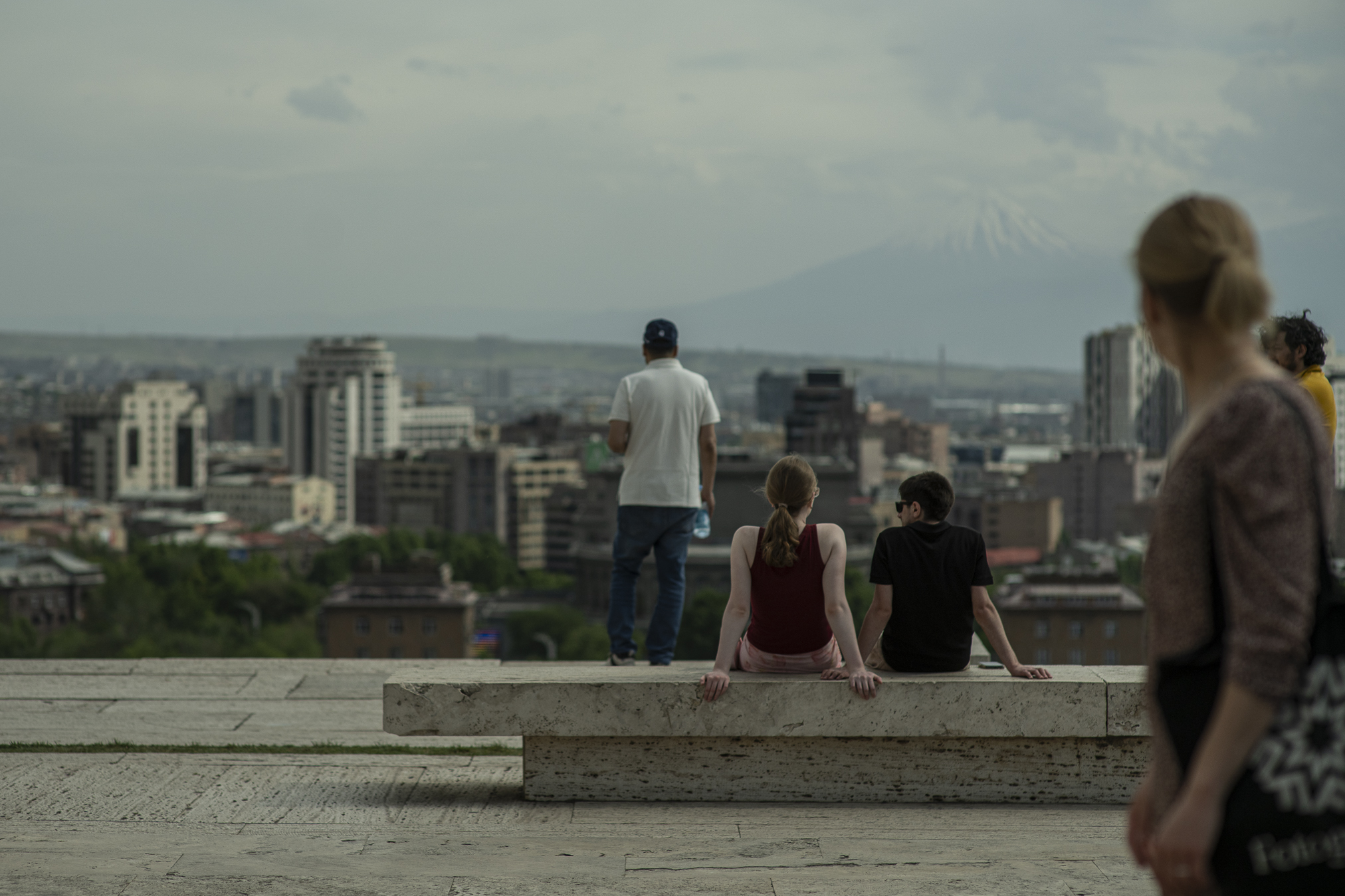
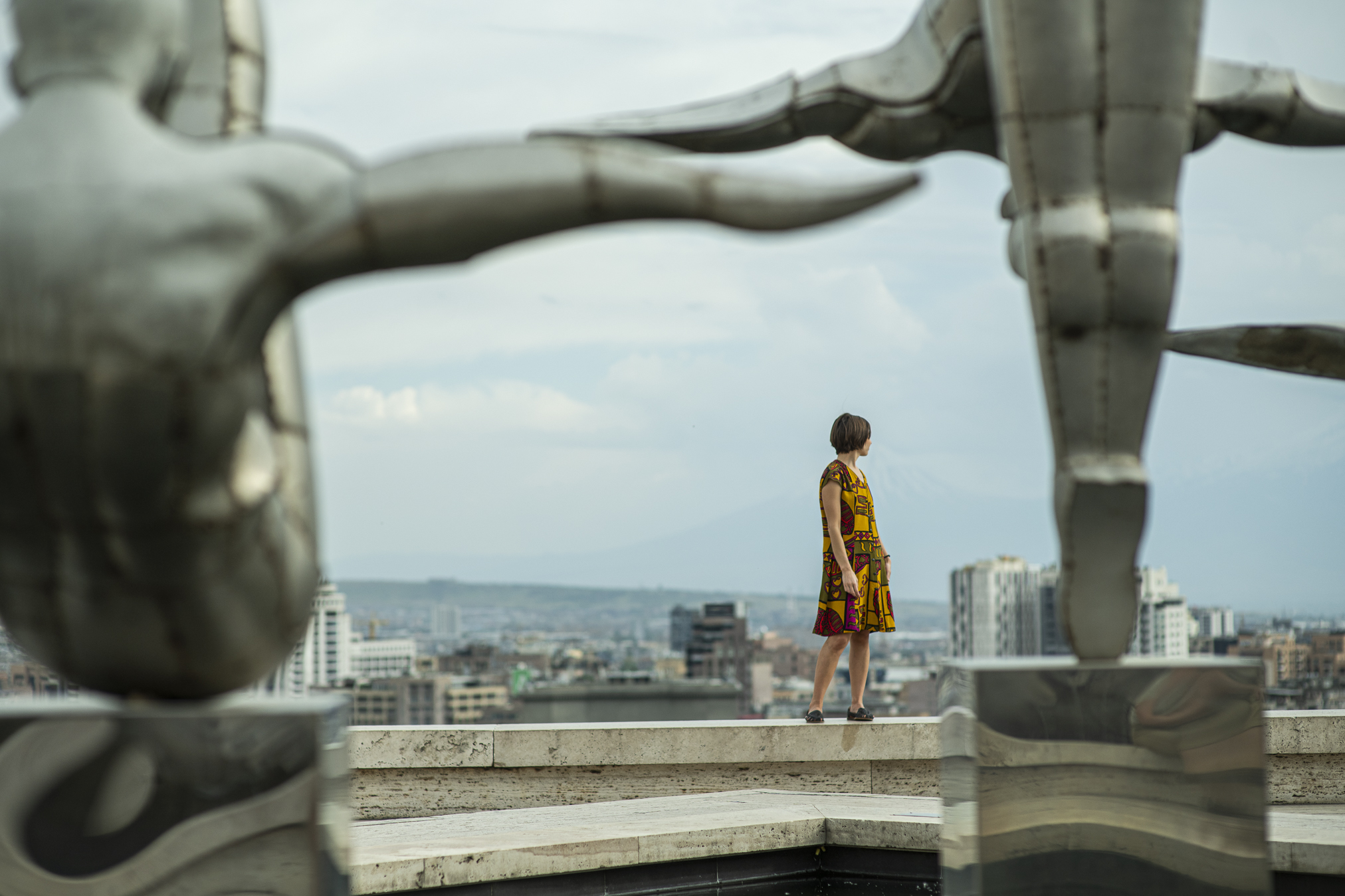
"But the striking beauty is only part of it. It [the mountain] is like a little piece of Armenia that is out of reach. It seems you can climb the Cascade [a popular spot in central Yerevan] and you are so close, yet you’re unable to get to it — and that feels like a symbolic expression of the Armenian experience and existence."
Mount Ararat lies in Turkish territory, from which Armenians were once forced to flee during the genocide that killed between 600,000 and 1.5 million people. For many years, the image of the mountain has been used to preserve the memory and is an inseparable part of the country's symbolism. Now the Pashinyan government seems to be trying to erase this symbol — Ararat is no longer on the stamp placed in passports on arrival in Armenia nor is it in the newly unveiled passport design. Moreover, this year, for the first time, the genocide commemoration is not being broadcast on national television. This is linked to Pashinyan's broader course, under which international recognition of the Armenian genocide is no longer among the country's foreign policy priorities. Security and the normalisation of relations with the neighbours matter more than that
"In principle, I agree with his [Pashinyan's] saying: ‘Let us focus on the country that we have and make it the best it can be.’ The thing that really upsets me is the erasure of symbols. It almost feels as though he’s trolling us."
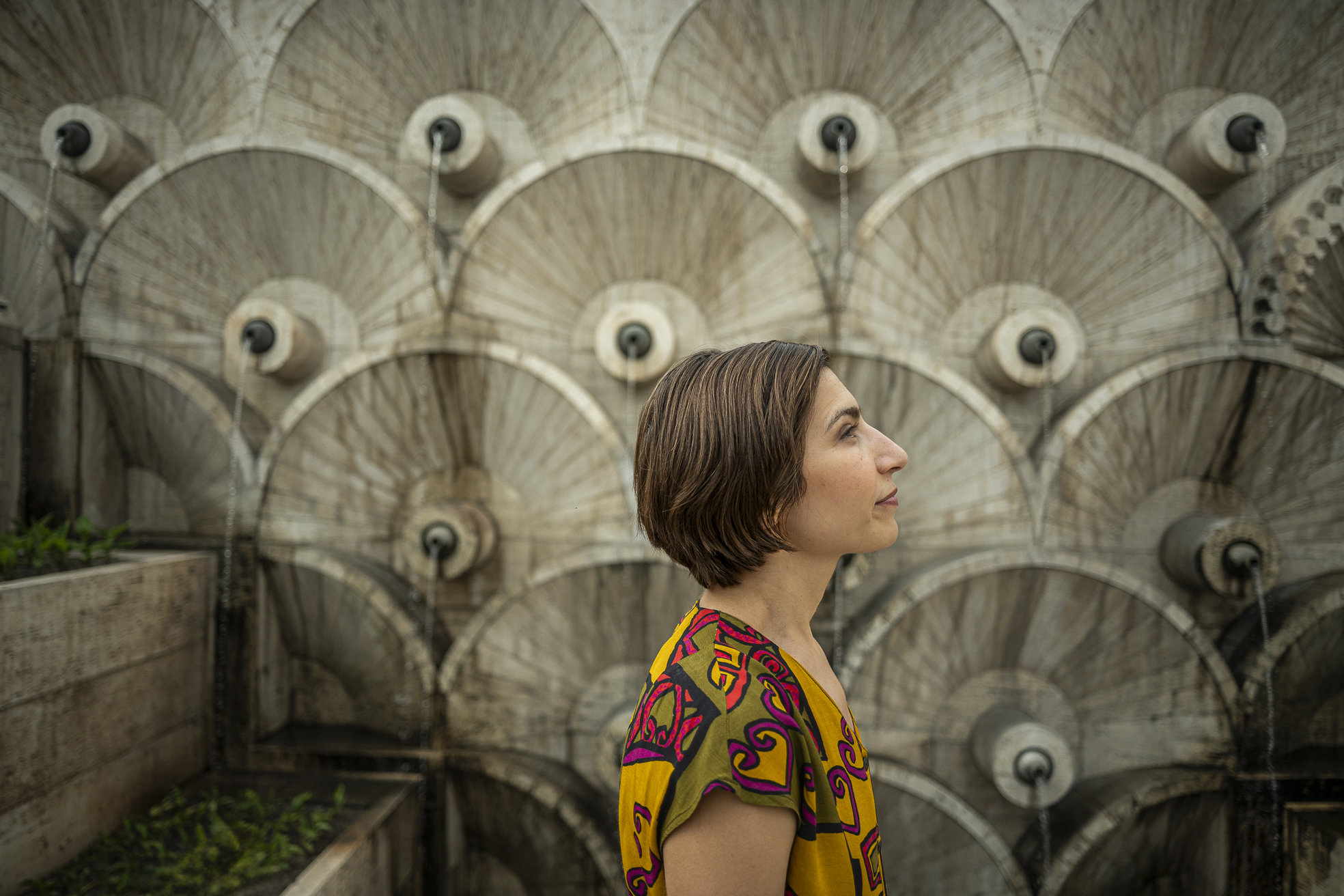
Nyree is a writer, producer of the narrative podcast Country of Dust and one of the organisers of the Tumanyan International Storytelling Festival. In all her work she reflects on her roots, drawing parallels between the ethnic cleansing of Artsakh and the history of her own family, who survived the genocide. She also writes about the body, motherhood, human connection — about what remains when we step away from our roots.
Nyree's roots lie in what is now Turkish territory. Her father was born in Syria and grew up in Lebanon, where Nyree's mother was also born and raised. Later, both emigrated to Canada. Nyree was born and grew up when Armenia was struck by disasters: the 1988 Spitak earthquake, then the First Karabakh War and the energy blockade. "If you asked me what an Armenian is, I would think of food, the alphabet and culture. But if you asked about Armenia — I knew it as a sad place and sad people. But then I came here and I was able to form a nuanced picture of the country."
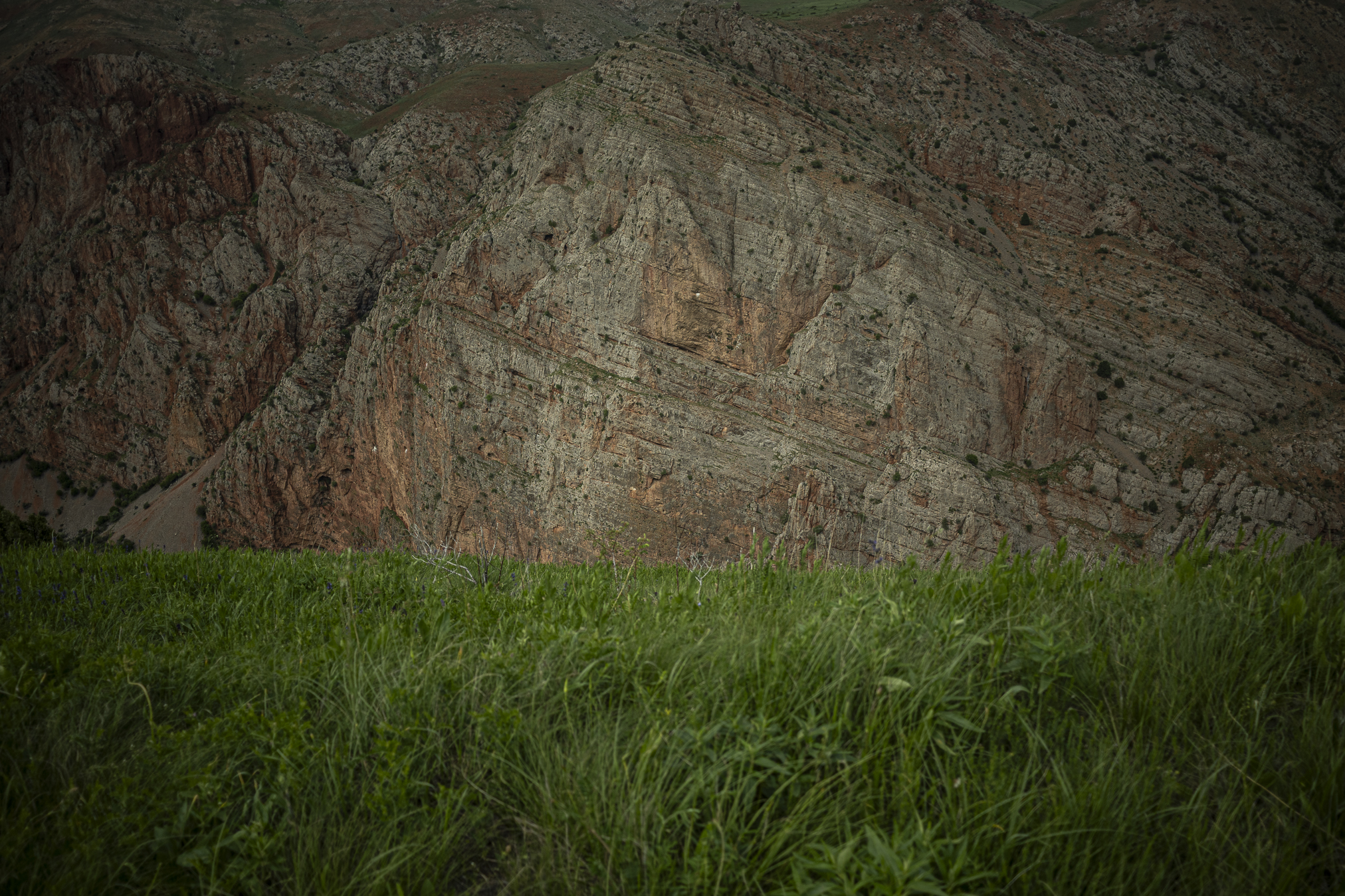
Nyree explores her roots by travelling to places. She documented the stories of the people of Artsakh between the wars, during the Second Karabakh War and during the 2023 exodus. She has also travelled several times to Musa Dagh, a region in south-eastern Turkey where, as she discovered by chance, some of her relatives still remain. In Musa Dagh she also met the Turkish family living in her great-grandfather's house, which he left to them as he fled the genocide.
"I grew up knowing about the genocide and knowing that my roots were in a place I have no access to. And now it’s like, I have access. Sure, it’s changed, it’s paintful, but it’s still an actual place and there are actual people there. And for me it’s important to form some kind of connection."
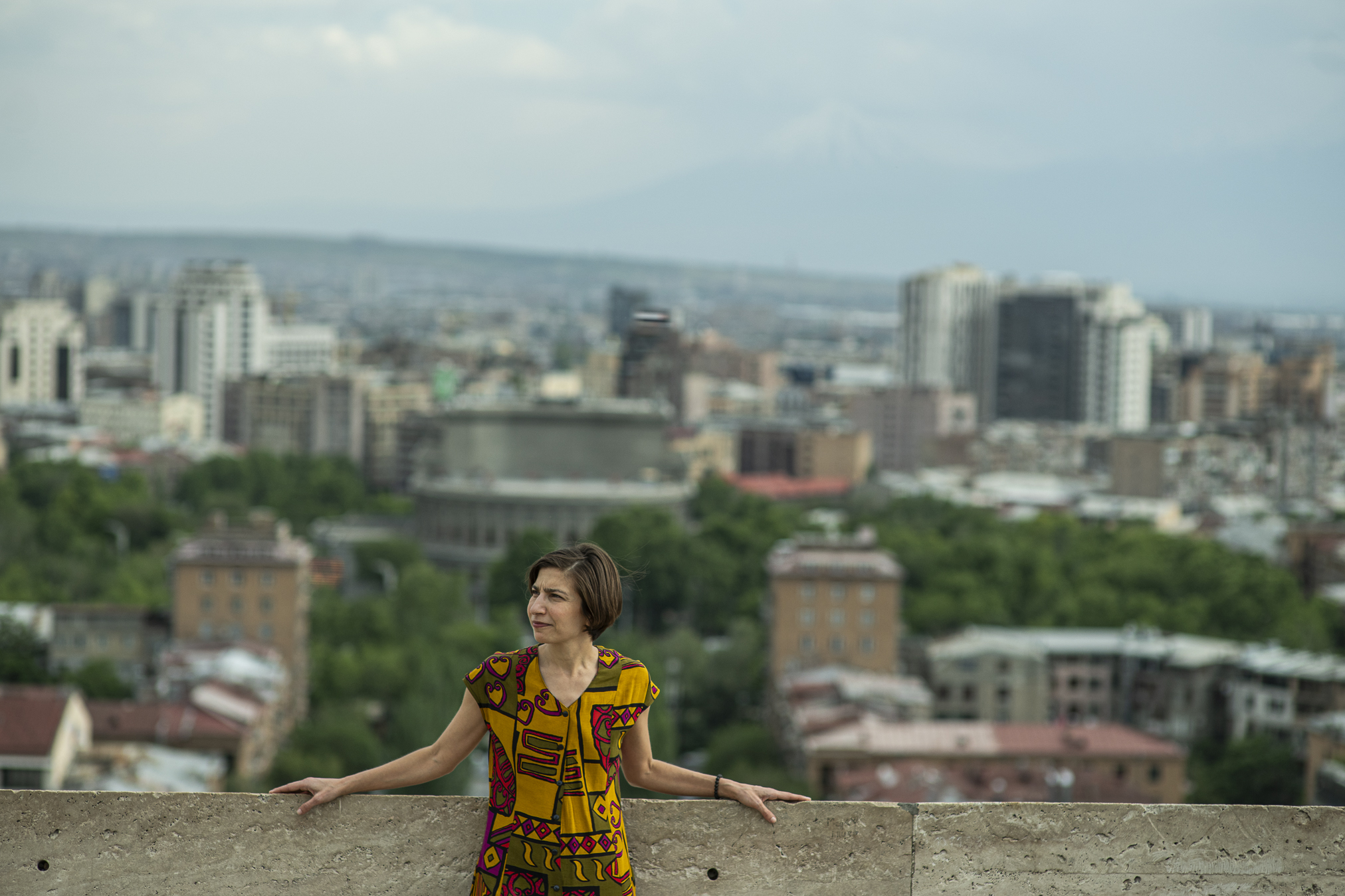
Nyree now lives in Yerevan with her family. They moved for good after the Revolution, which was the extra push to make the decision. Even before that, Nyree spent a lot of time in Armenia. She says that before 2018, taxi drivers — who often have a good sense of the public mood — complained about everything and kept repeating: "This country is not a country. Who cares? It’s never going to get better. It sucks.” After the Revolution, taxi drivers were already telling stories of seeing injustice in their community and would take action to change it. "It felt like people developed a sense of agency overnight. I was surprised by how many things felt so set in stone, the sense of complacency and lack of hope that people had. I was amazed at how this one person and his political party that he formed could just come and flip that and offer a sense of not just hope, but a sense of agency."
What is happening in Armenia, Nyree still sees as a process the country is going through. She sees Armenia as an exciting place in constant flux and feels that she herself is part of this still-exciting change.
"Outside of my feelings towards Pashinyan as a person and my disappointment and hurt at some of the things that he says, doubt or critique. Outside of all of that, or alongside all of that, I still feel like we are developing as a country where people have a chance to thrive and where people have a chance to participate in a democratic system. It's very imperfect but it's here, it's happening and there's some change — and I still feel good about that."