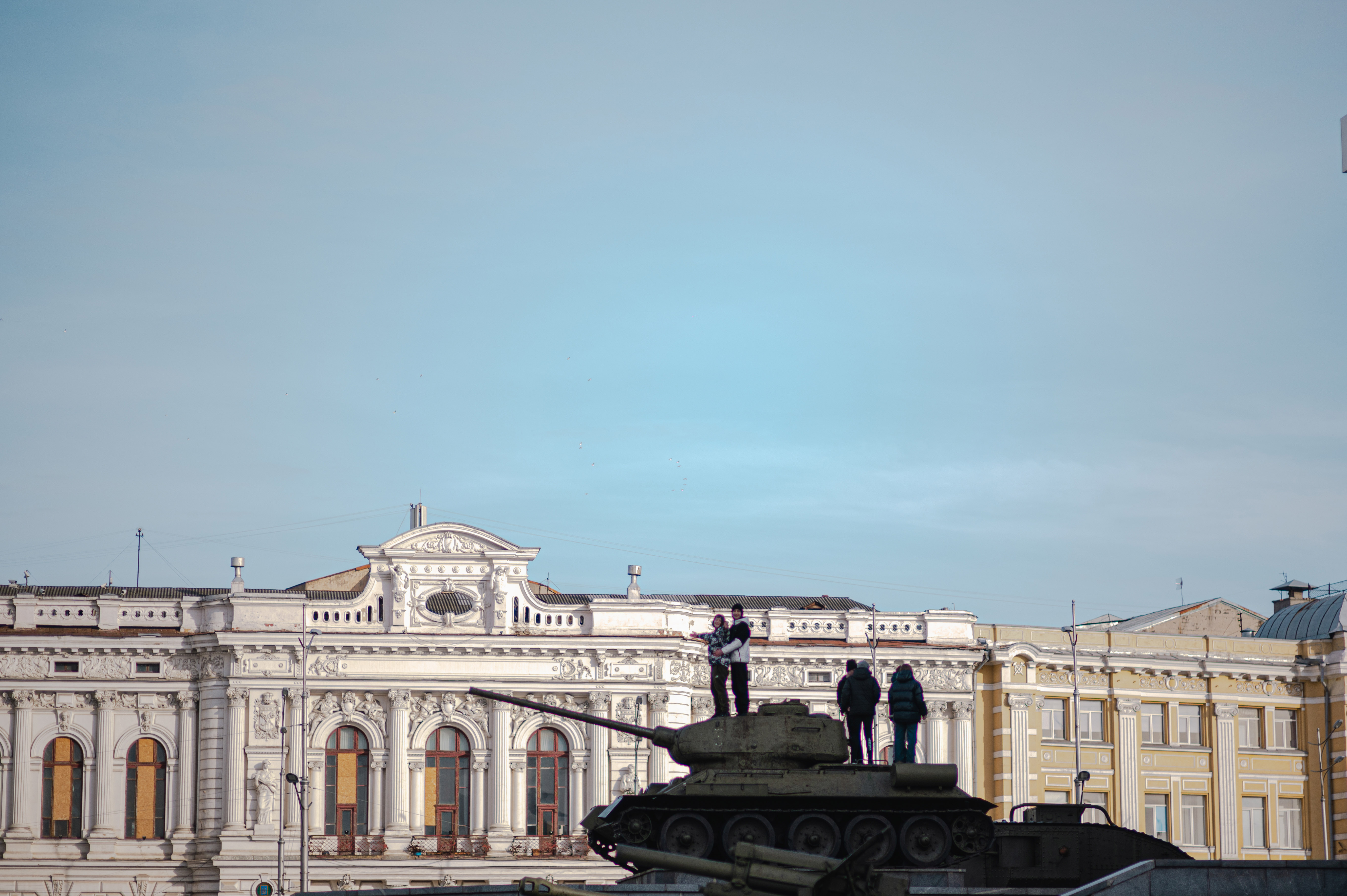

A Frontier City: An Architect’s Vision for the Future of Kharkiv
Ukraine’s second-largest city, Kharkiv, sits just a short artillery strike from the Russian border. It is a frontier city – one that has endured some of the most relentless attacks since Russia’s full-scale invasion began. Yet Kharkiv-born architect Maks Rozenfeld is working on plans to rebuild it, and world-renowned British architect Norman Foster has been invited to join the initiative. Between January and February 2024, NARA photojournalist Denis Vėjas explored Kharkiv with Rozenfeld to understand the vision taking shape.
When I first reached out to Maks to discuss his vision for Kharkiv’s future, he invited me to an underground art club event. “Come,” he said, “I want you to get a feel for what we’re going to talk about.”
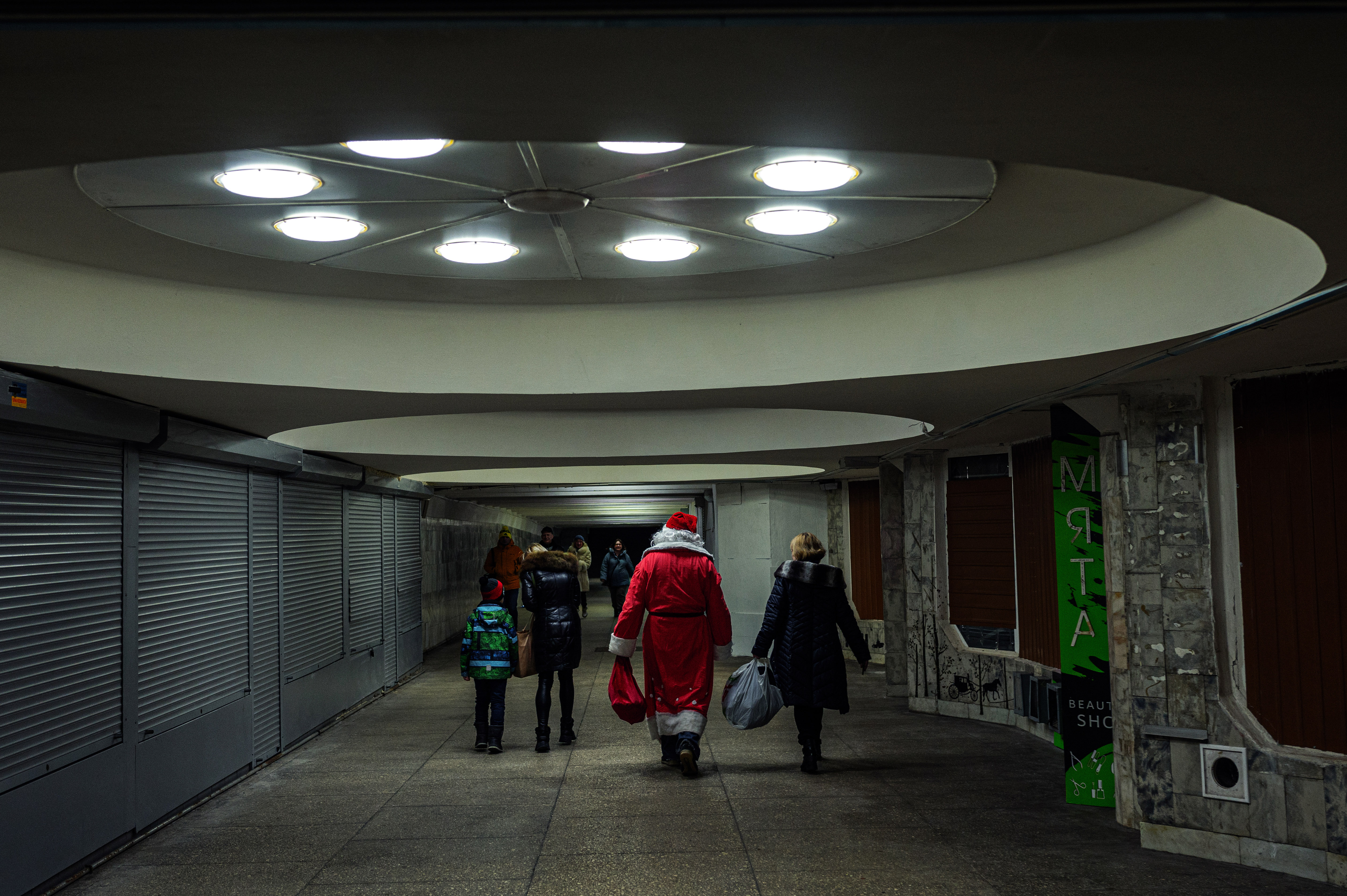
In wartime, the word ‘underground’ takes on a double meaning. It is not only an alternative to mainstream culture but also a literal place beneath the surface, out of reach of the Russian missiles. The event was held in the basement of a jazz club, where well-known Kharkiv fashion designer Kostia Ponomarov hosted a virtual tour of London art galleries. At first, the hybrid format felt like a throwback to the pandemic and felt slightly off-putting. But soon, along with about 50 others, I slipped into a dreamy, meditative state, guided through artistic epochs and masterpieces glowing on a projector screen.
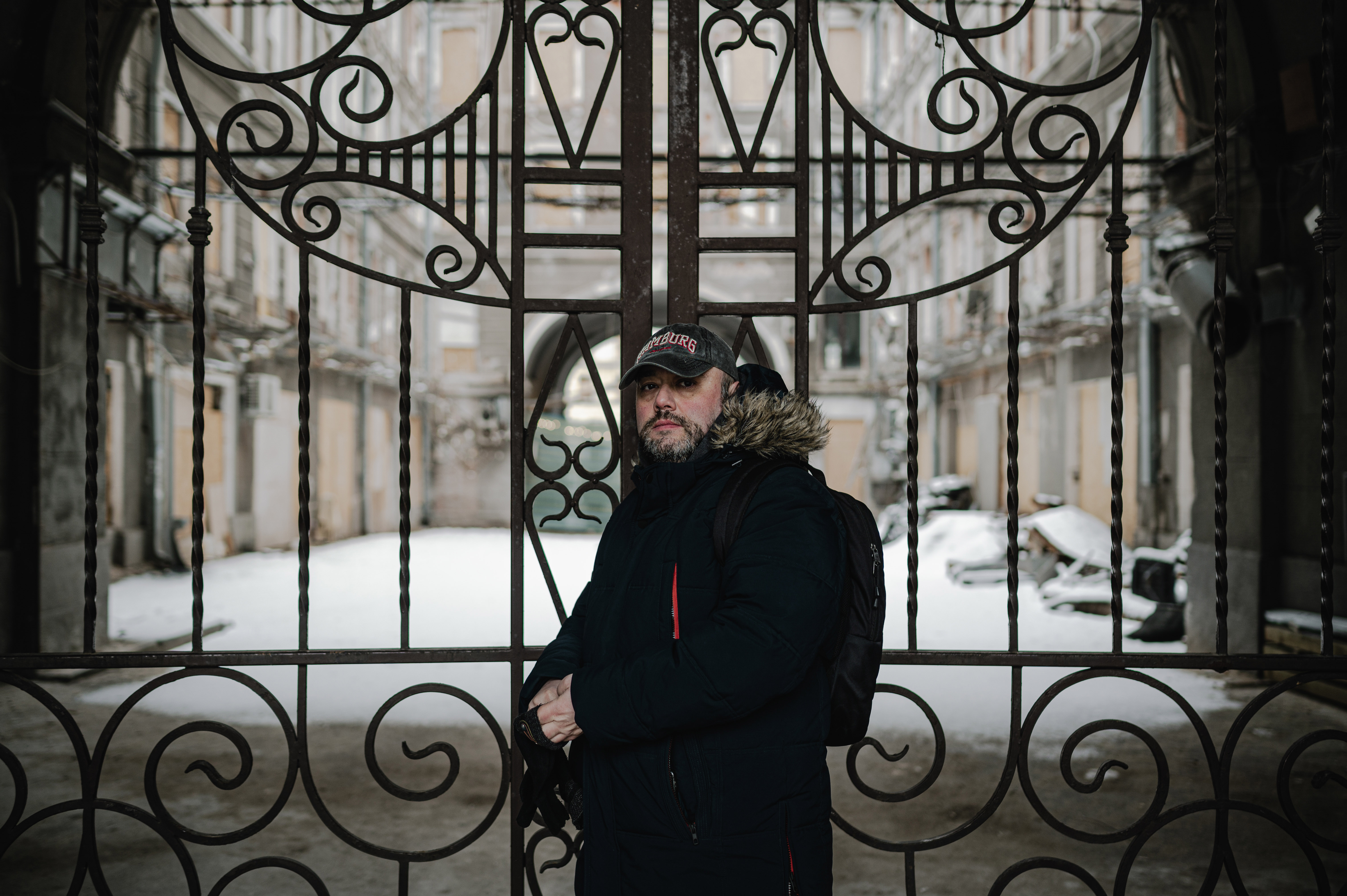
Maks Rozenfeld is many things – an architect, illustrator, historian, and design lecturer at Kharkiv State Academy of Design and Arts. For more than twenty-five years, he has studied modern architecture, with a particular passion and professional focus on the work of British architect Norman Foster and the emergence of ‘high-tech’ architecture in the 1960s. This style emphasises the use of technology, engineering, and industrial solutions – often characterised by exposed structures, visible piping, elevators, and other technical elements that become part of the building’s design. Foster’s designs include London’s ‘Gherkin’ skyscraper and Wembley Stadium; the Reichstag dome in Berlin; Apple Park in California; and Hong Kong’s International Airport.
Maks defended his doctoral dissertation on ‘high-tech’ architecture and wrote a book about Foster’s work, regarding him as not only an important architect but as a symbol of high-tech style and an architectural philosopher, given his forward-looking vision.
His personal admiration for Foster’s work and the living history of Kharkiv converged on April 4, 2022, during a conference of European city mayors in Geneva. There, Foster announced that he was ready, together with his foundation, to help rebuild a major Ukrainian city. Kharkiv’s mayor, Ihor Terekhov, approached him with a proposal: that could be Kharkiv, Ukraine’s second-largest city after Kyiv. Foster agreed.
The Foster Foundation assembled a team of experts, and Maks was invited to join. For him, it was the perfect opportunity to contribute to the rebuilding of Kharkiv and to collaborate with the architect he had long considered his inspiration. Maks became one of nine architects working closely with the Foster Foundation, shaping a strategic plan for Kharkiv’s recovery, from transportation and ecology to energy and industry. At the heart of this plan lies a central idea: Kharkiv as a frontier city.
Maks emphasizes that ‘frontier’ in this context doesn’t just refer to proximity to the front line, but also to a threshold or boundary zone where different cultures and ideas intersect, like a borderland between distinct worlds. “It’s a place of active exchange, interaction, and discovery – a space that creates opportunities for growth and transformation.”
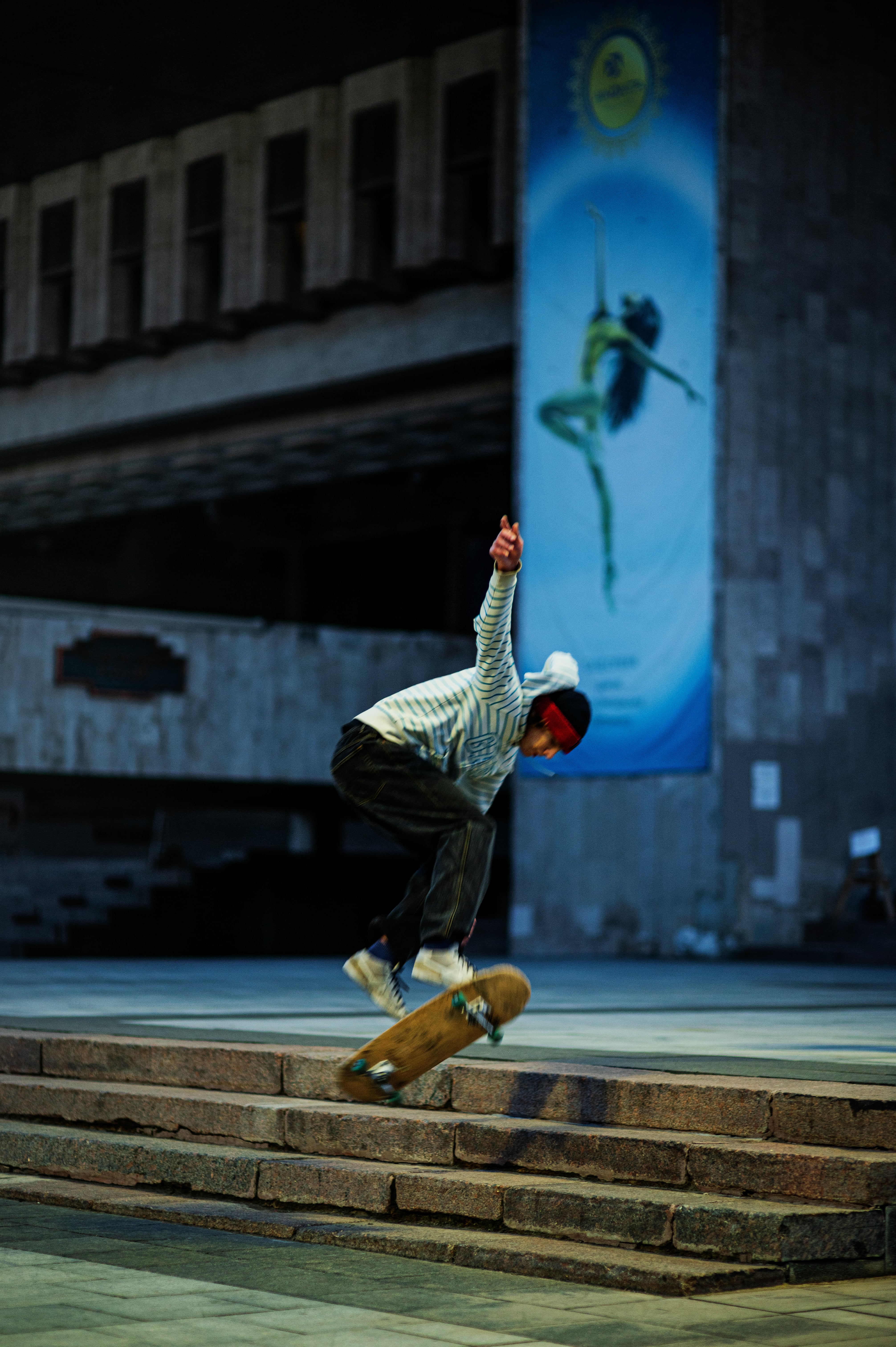
Just 30 kilometers separate Kharkiv from Russia – an artillery shot away. Another 40 kilometers into Russia lies Belgorod. The cities are divided by trenches. Since the first days of the full-scale invasion, Kharkiv has been under almost constant attack.
Can a city that is constantly at war, or bordering a war zone, be successful? Developing, not depressing and bleak? Are there examples of successful frontier cities elsewhere in the world? These are the questions Maks hears when he shares his vision. His response: Kharkiv and Belgorod could someday resemble Seoul and Pyongyang.
South Korea’s capital is also just 30 kilometers from the North Korean border. For Maks, it is an exemplary border city, a showcase of the Western world, projecting freedom and Western values across the border. “I believe Kharkiv can be that kind of showcase for Belgorod. We are standing where the values of freedom must be expressed most clearly. It’s our duty to embody the freedom we’re fighting for.”
According to Maks, Kharkiv was never only a borderland. Innovations were born here. The city attracted those who wanted to create and experiment with something new. It was always a place where different cultures, ideas and people converged. “And it’s the same today. It’s a frontier.”
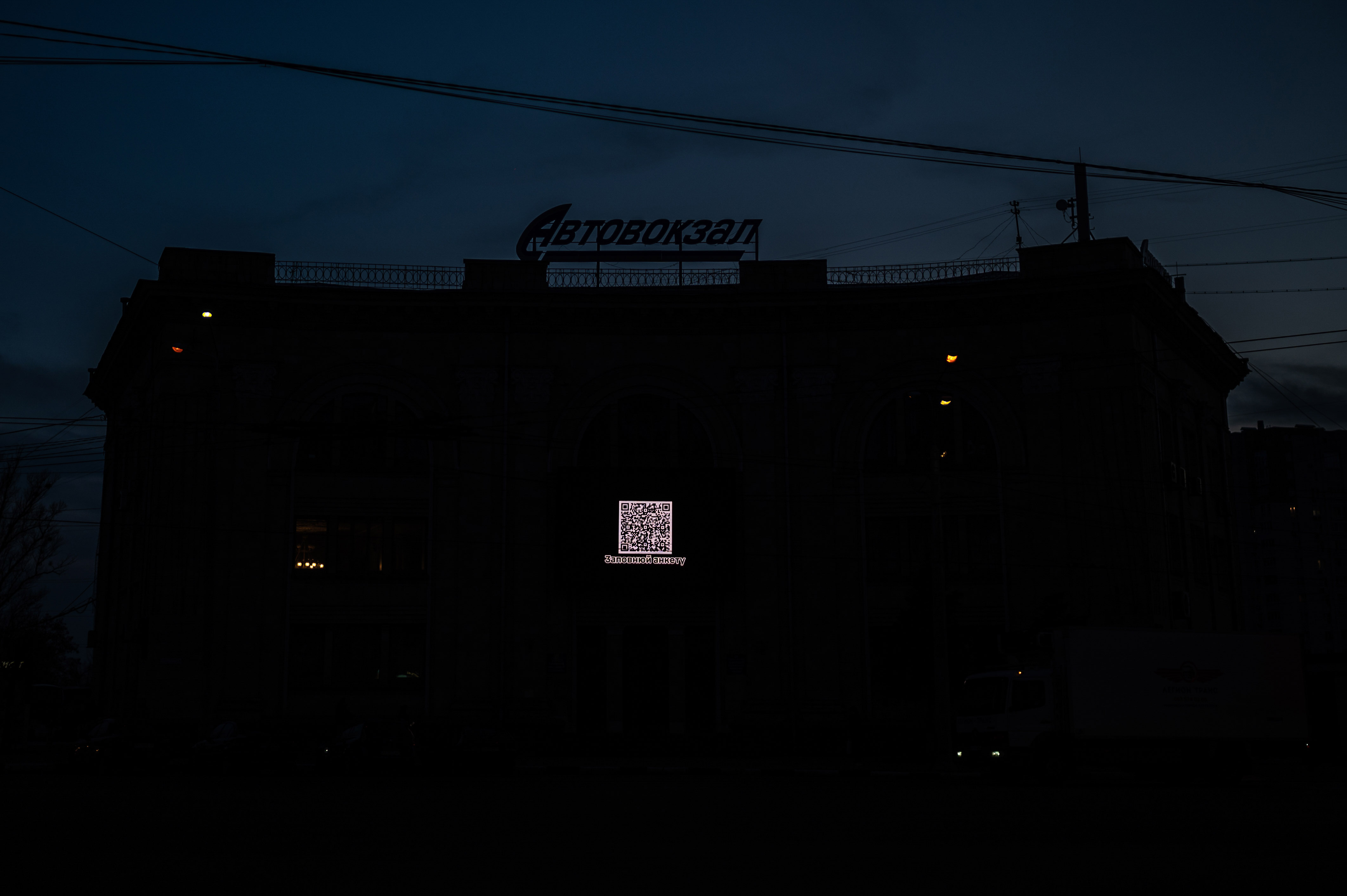
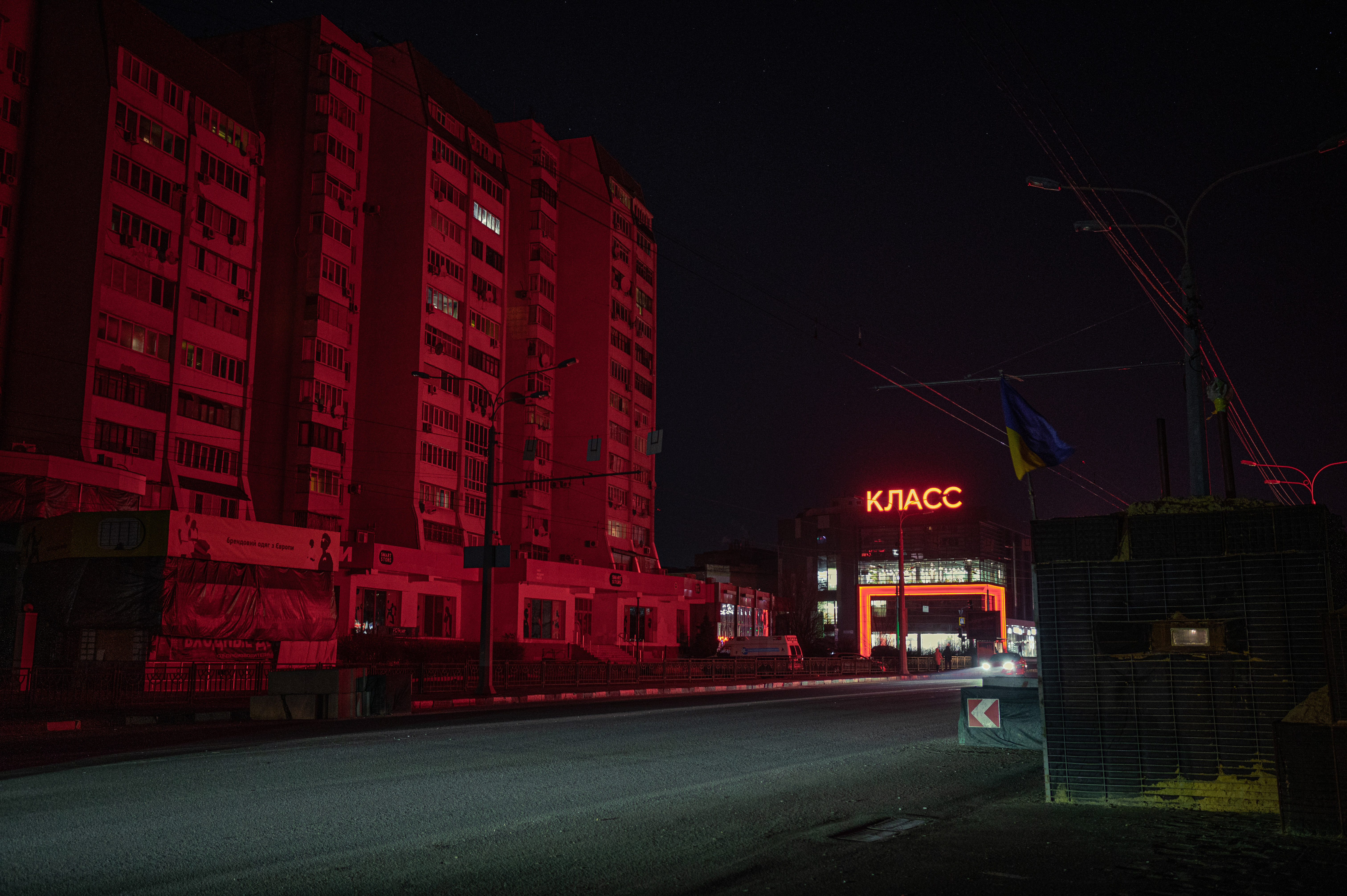
In the early days of the war, the vision of a thriving city felt almost surreal. Kharkiv was gloomy, without electricity, steeped in fear and darkness. It wasn’t even clear whether it would survive. It seems that before joining the Foster Foundation, Maks himself felt like the very city he was describing – bleak, depressed, and paralysed by uncertainty about the future.
The Battle of Kharkiv, which took place from February to May 2022, was one of the most significant early military engagements. The city suffered extremely intense bombardment and attempts to encircle it from all sides. By mid-May, Ukrainian forces managed to push the Russian forces back to the border.
Maks recalls that during those early months, he struggled to find his place in this war. Volunteers and soldiers had concrete roles and were able to help others. Maks, by contrast, felt like a burden with his skills.
“Whatever you do in that situation feels wrong. If you leave, it feels wrong. If you stay, it still feels wrong. Nothing feels right.”
What helped Maks escape his apathy was Viktor Frankl’s book Man’s Search for Meaning. Frankl, a Jewish philosopher, was imprisoned in a concentration camp. In describing his experience, he wrote that those who died first were the ones who hoped it would all end soon. Then came those who believed it would never end. The ones who survived were those who simply did their job and didn’t think about the end.
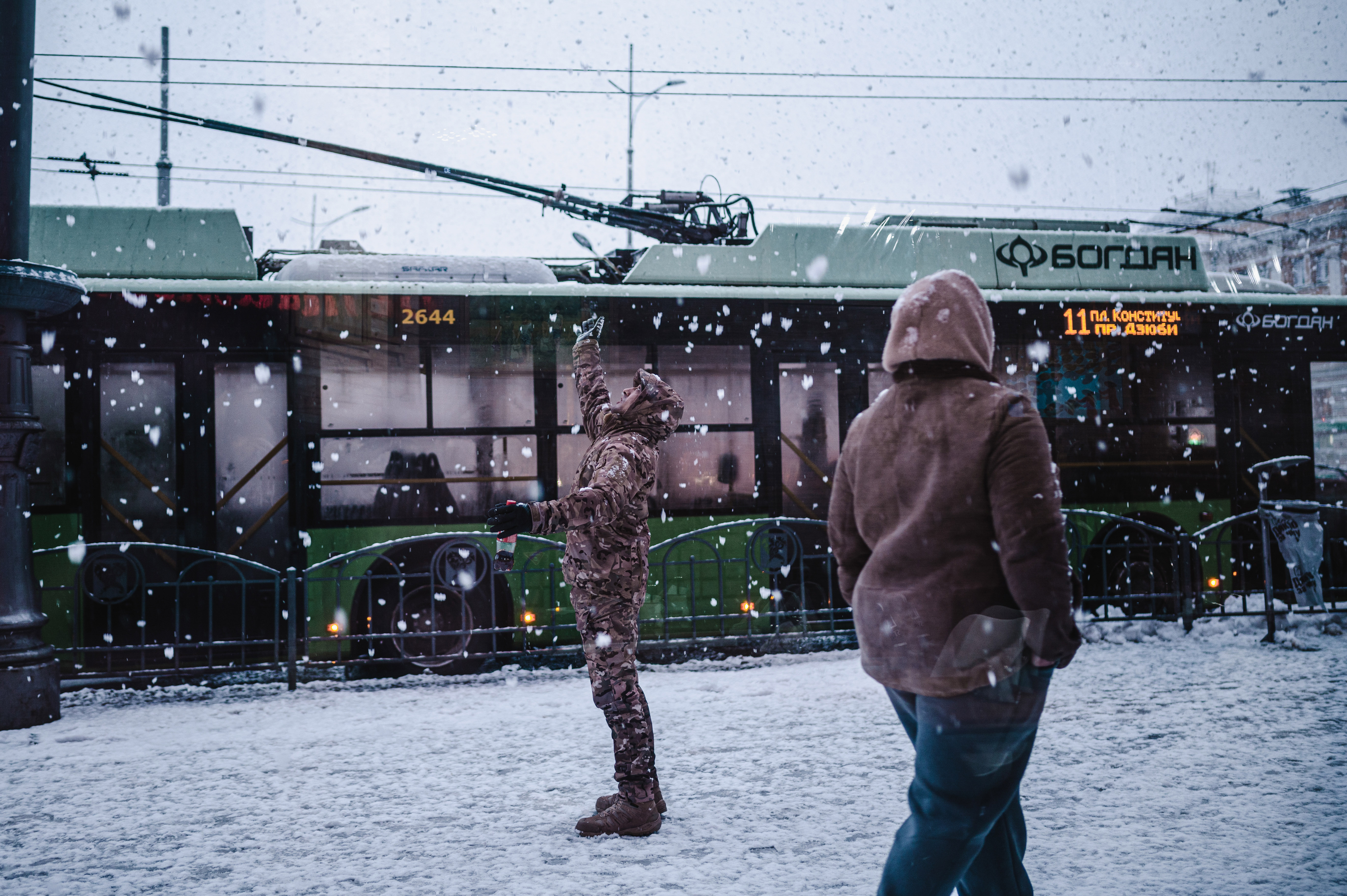
In 2022, there were still people who believed that the war would soon end, especially after Ukraine’s counteroffensive. It seemed like the end was near – just a few more weeks and it would all be over. However, by the end of the summer, those who had clung to that belief began to break down psychologically, as they realised the war might last for years. Later, many placed their hopes on the summer counteroffensive, but by autumn 2023 it became clear that there would be no quick end. People grew disillusioned, sinking into apathy and depression. Some left and never returned; others emotionally distanced themselves from the situation. Now, it seems that a wave of despair has swept over those who no longer believe an end will come.
Maks recalls that one of Viktor Frankl’s key suggestions for staying sane amid horrifying conditions – surrounded by death, hunger, ruins, and the awareness of it all – was to create a vision. Frankl imagined himself standing at the lectern of his native University of Vienna, dressed in a traditional academic robe, delivering a lecture on the psychological transformation of humans under extreme conditions. That image became so vivid to him that he stopped seeing his environment as horrific, and instead accepted it as the necessary conditions for his work.
The same was true for Maks: what helped him survive was finding his own place and vision in the war, and the work that came with it.
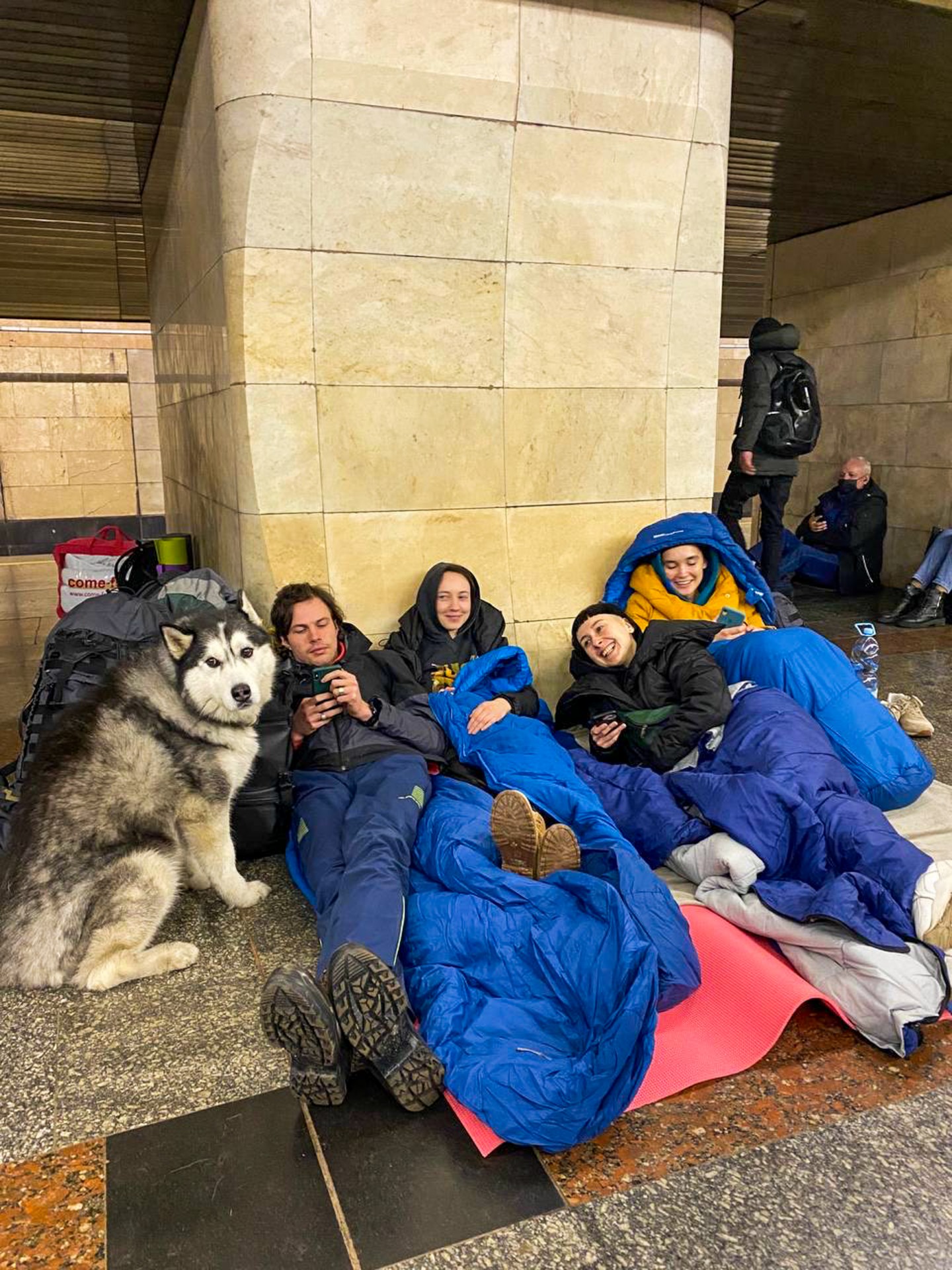
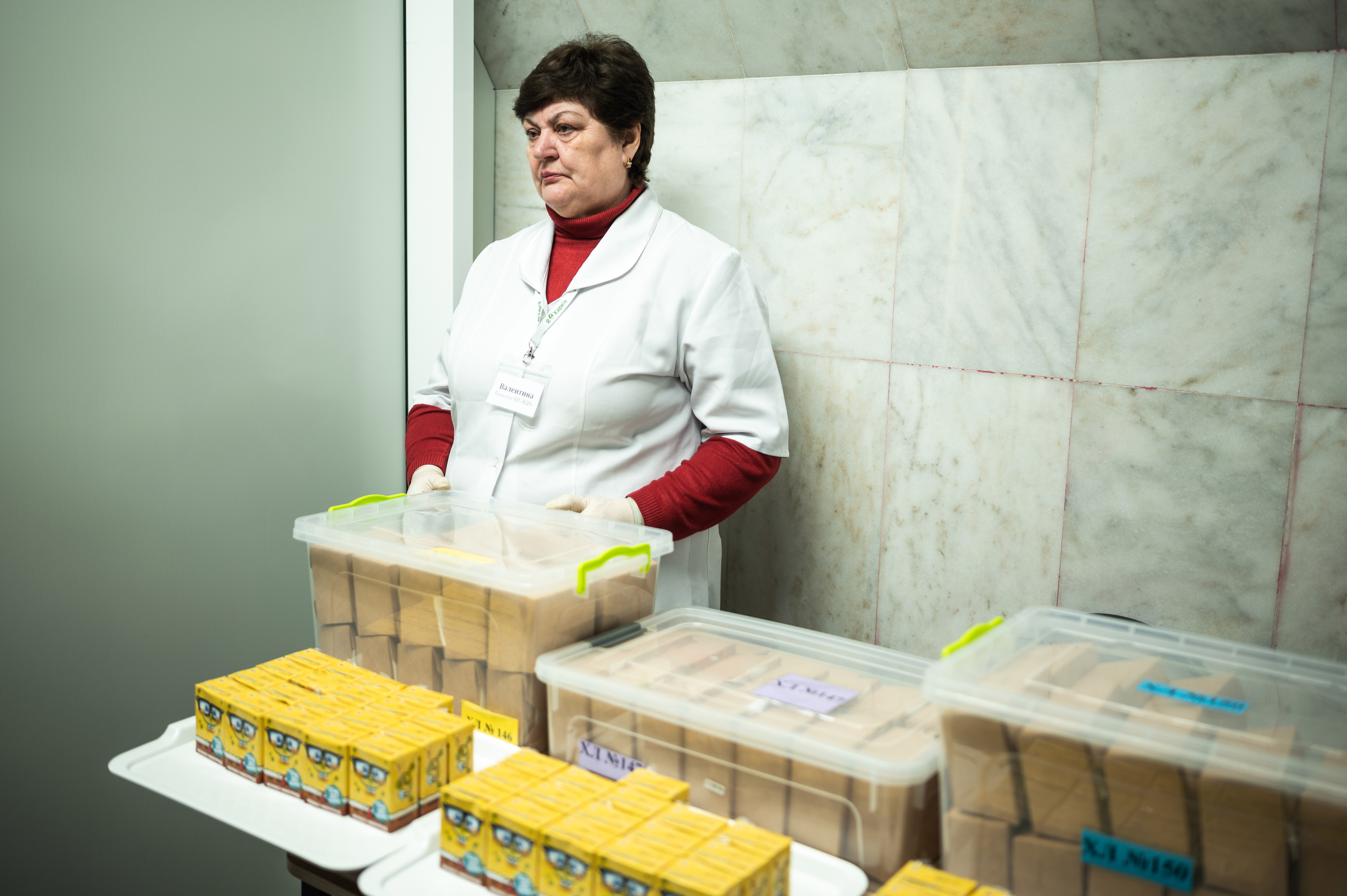
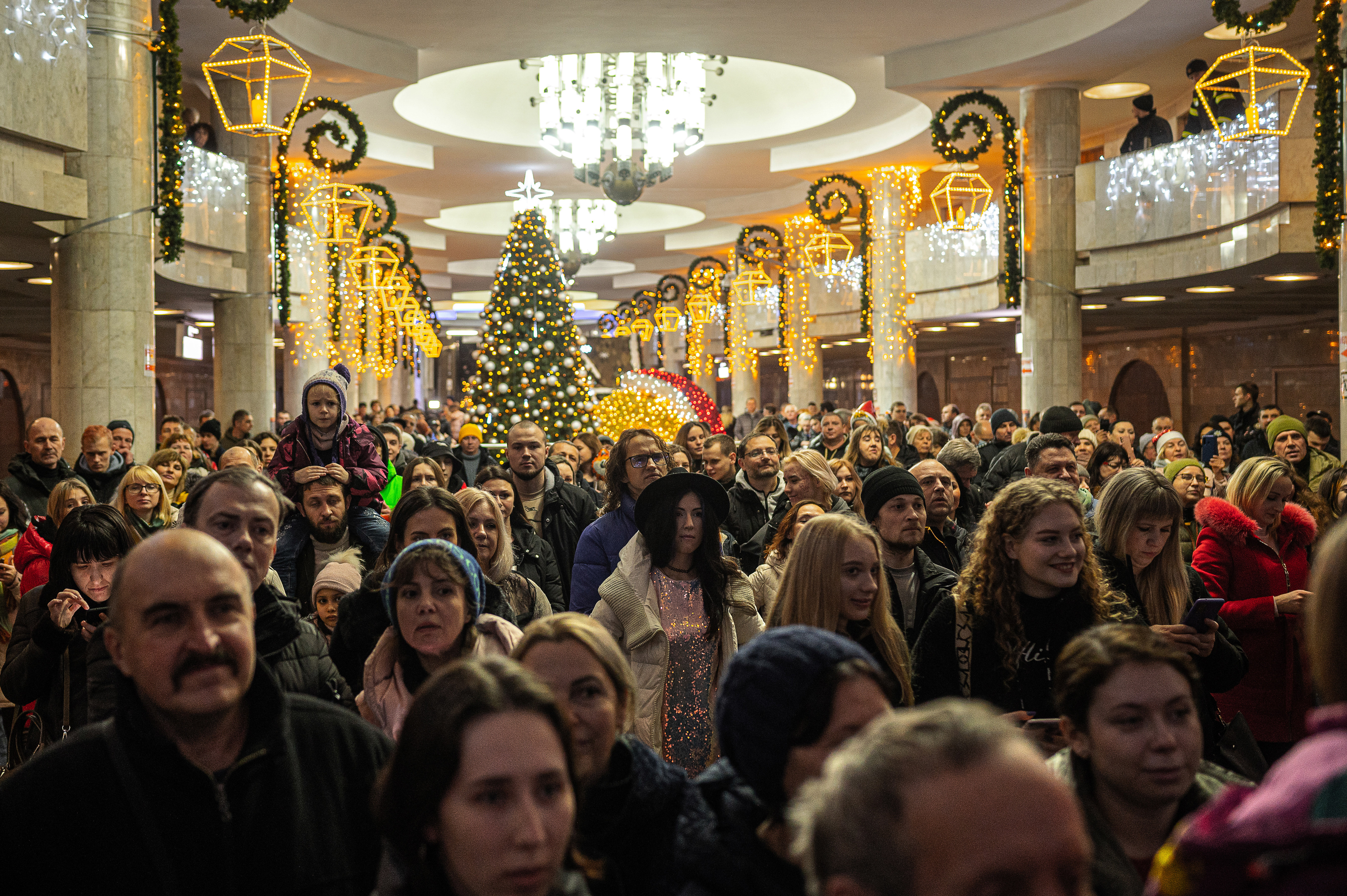
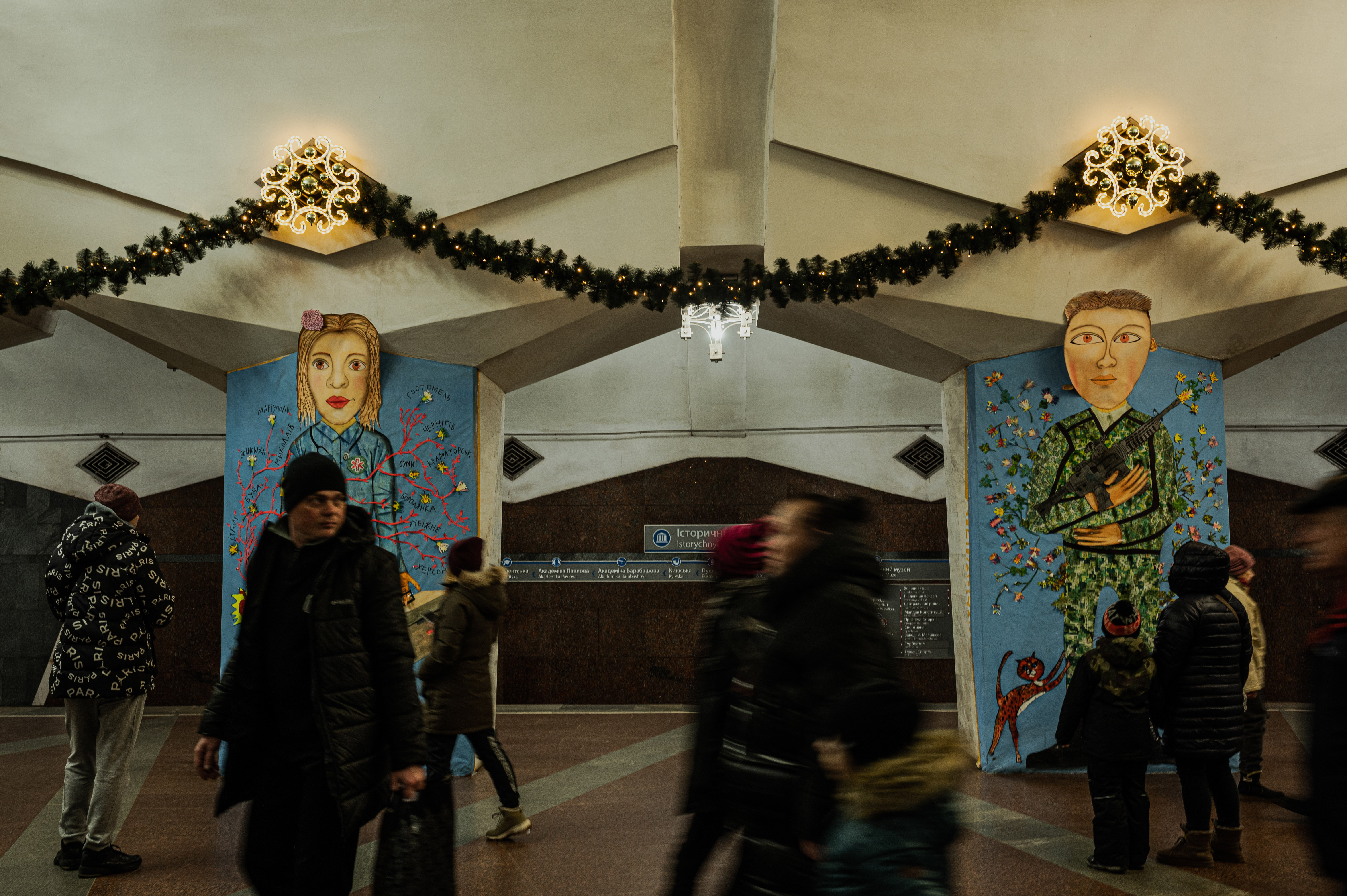
At the beginning of the war, some residents of Kharkiv managed to evacuate, but around 25,000 people remained in the city and spent their days, from February until mid-May, underground in the metro stations. Among them were elderly people, children, and entire families with their pets. Many spent days, weeks, or months beneath the surface, and some did not come up at all during that time. Those living in the metro received help from volunteers who brought food and essential supplies.
One of the directions in urban development is the idea of an underground city – a concept born out of the need for safe spaces. Given the proximity of the frontline, shelters are necessary not only in the case of shelling, but also as secure zones for schools, recreation, and infrastructure – for almost everything that makes social life possible.
The author of this idea is architect Yurii Spasov, project lead in Kharkiv. Together with fellow architect Dmytro Fomenko, he travelled to Helsinki, where they were introduced to the city’s underground complex – a bomb shelter system developed at the start of the Cold War. The Finns built it so thoroughly that it could shelter not only all of Helsinki, but even half of Finland.
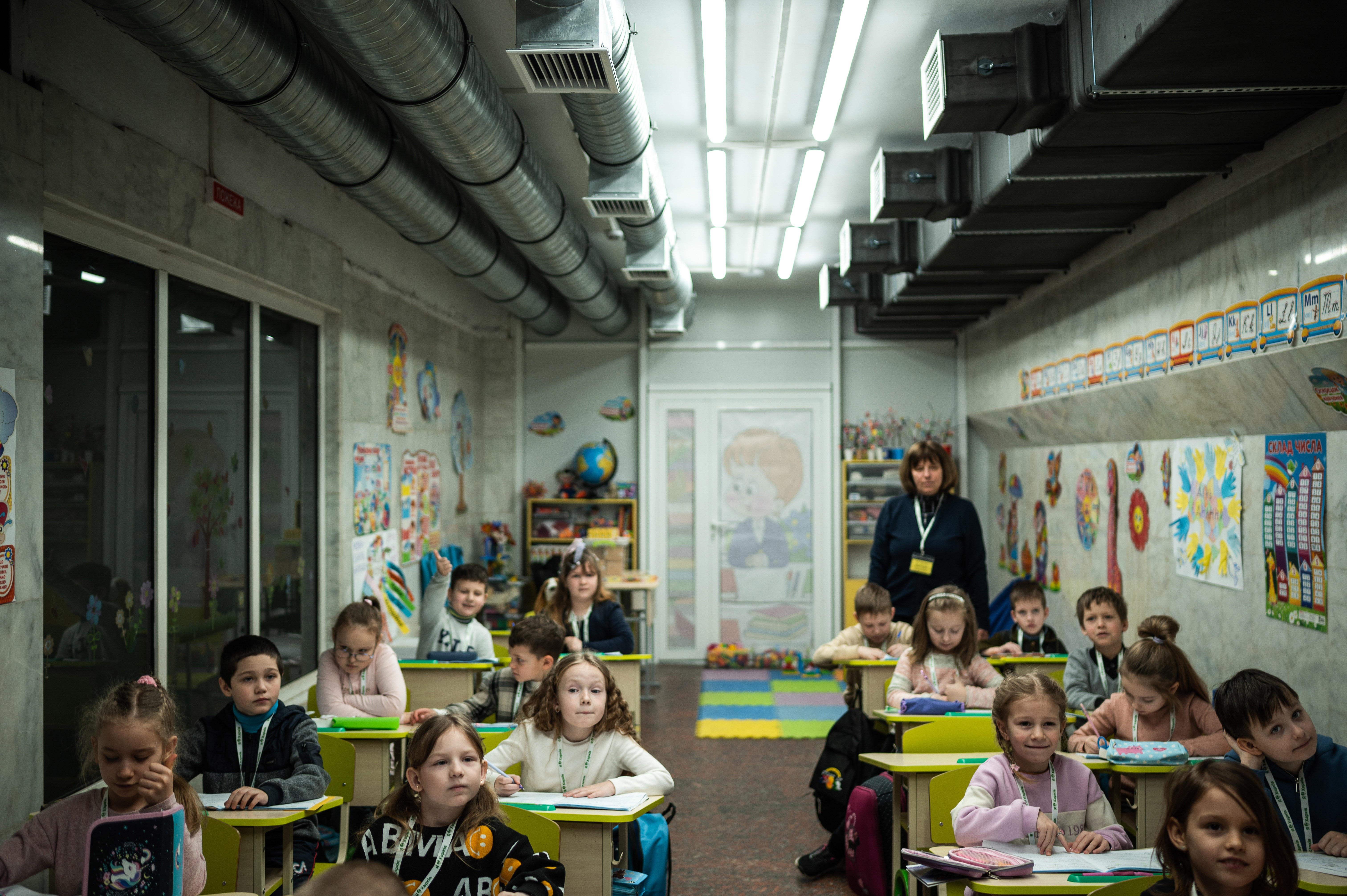
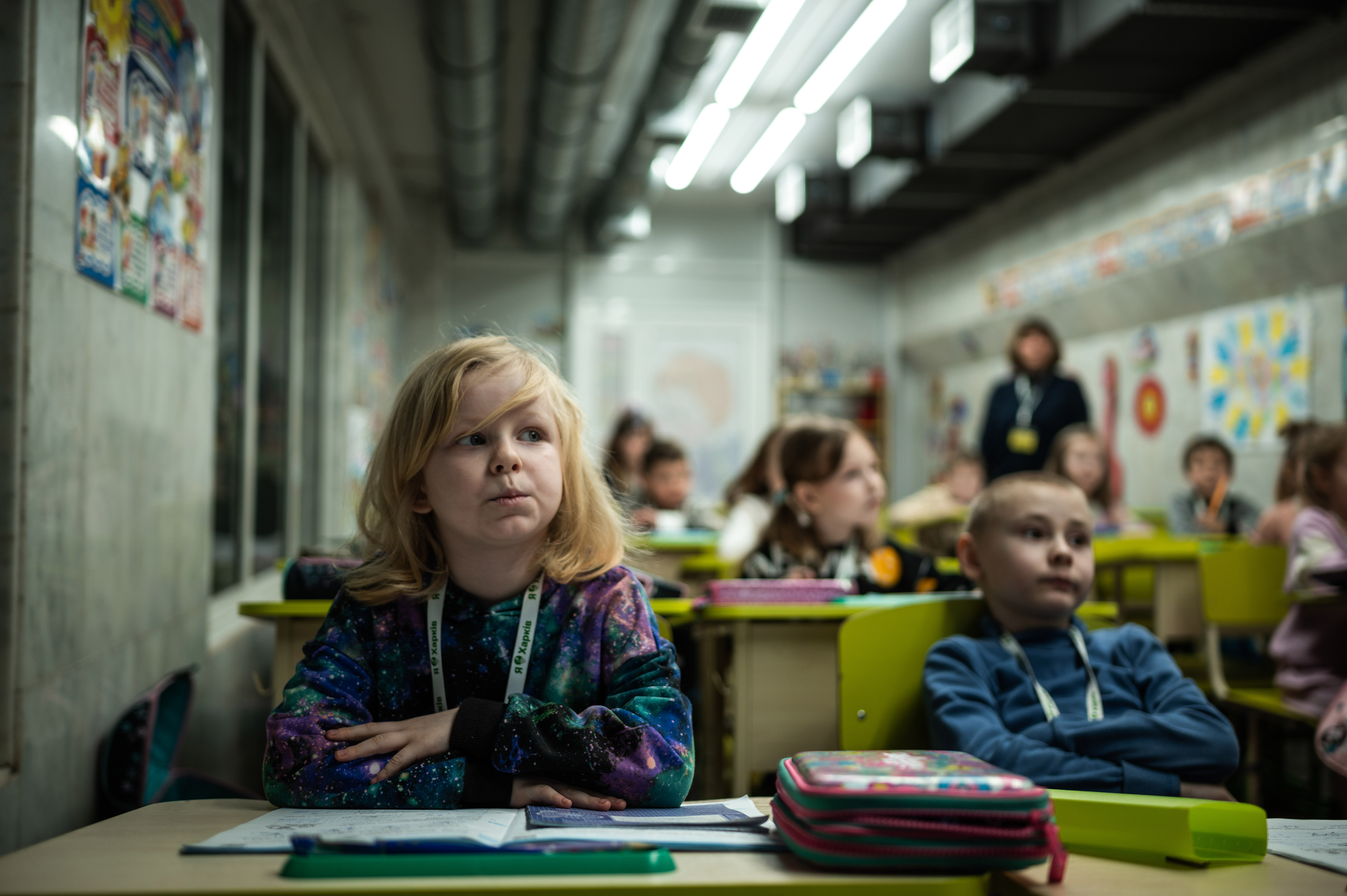
There are already five underground schools operating in Kharkiv, set up inside metro stations. One of them is located in the pedestrian underpass of the ‘Peremoha’ (Victory) metro station. According to the school’s principal, it took just one month to establish.
The underpass was divided into separate rooms. Lighting, ventilation, air recuperation, and heating systems were installed. Today, 478 students study here, from the first to the eleventh grade. Classes are held in shifts.
In total, 2,094 students are now studying across the five metro schools in Kharkiv, and the demand for such learning spaces is rapidly growing.
Maks says the idea of the underground city is not only about safety, but also about reimagining the transport system. Central Kharkiv sits on a hill, in the so-called Nagorny district. Like in many European cities, the city centre is congested with cars.
Back in the 1950s, there was a proposal to build cross-city car tunnels underneath this hill–underground routes that would connect the main districts. Similar tunnel systems exist in Brussels, Düsseldorf, and Guanajuato. According to Maks, Kharkiv’s geography is particularly well-suited for this and a team of architects have uncovered old plans and are adapting them to the needs of the contemporary city.
Maks jokes that the conversation about a new transport system actually started with a conversation about bike lanes. It was April 2022, just a couple of months after the start of the invasion, and nothing was functioning in the city: neither the metro nor public transport, and there were barely any cars on the streets. The only means of getting around was by bicycle.
Finally – there are the rivers. Kharkiv has four major rivers – Udy, Nemyshlya, Lopan, and Kharkiv – which form the city’s ‘blue framework.’ Rather than dividing the city, these rivers can connect it. Maks proposes creating green corridors along them, developing bike paths and recreational zones.
Another key aspect is energy autonomy. During the Soviet era, cities were outfitted with centralized heating systems that served the entire city. But in wartime conditions, such centralisation proves inefficient and vulnerable. Maks proposes building more small heat sources that could be installed underground.
It would also be possible to move much of the city’s industrial facilities underground. For example, in the UK, Norman Foster built an underground car factory, and above it, a green lawn, a classic English landscape with sheep and a small lake.
Maks draws inspiration from 19th-century London, when the city began moving its infrastructure underground – the Tube, the Thames Tunnel, and energy systems – while the gardens, green rooftops, parks, and elegant architecture remained above ground.
“The idea of an underground city carries a utopian, distinctly English inflection. In The Time Machine, Herbert George Wells described a bleak social divide between an underground working class and aristocrats living on the surface. Today, however, this idea no longer seems either utopian or absurd – underground schools in metro stations clearly demonstrate it can function.”
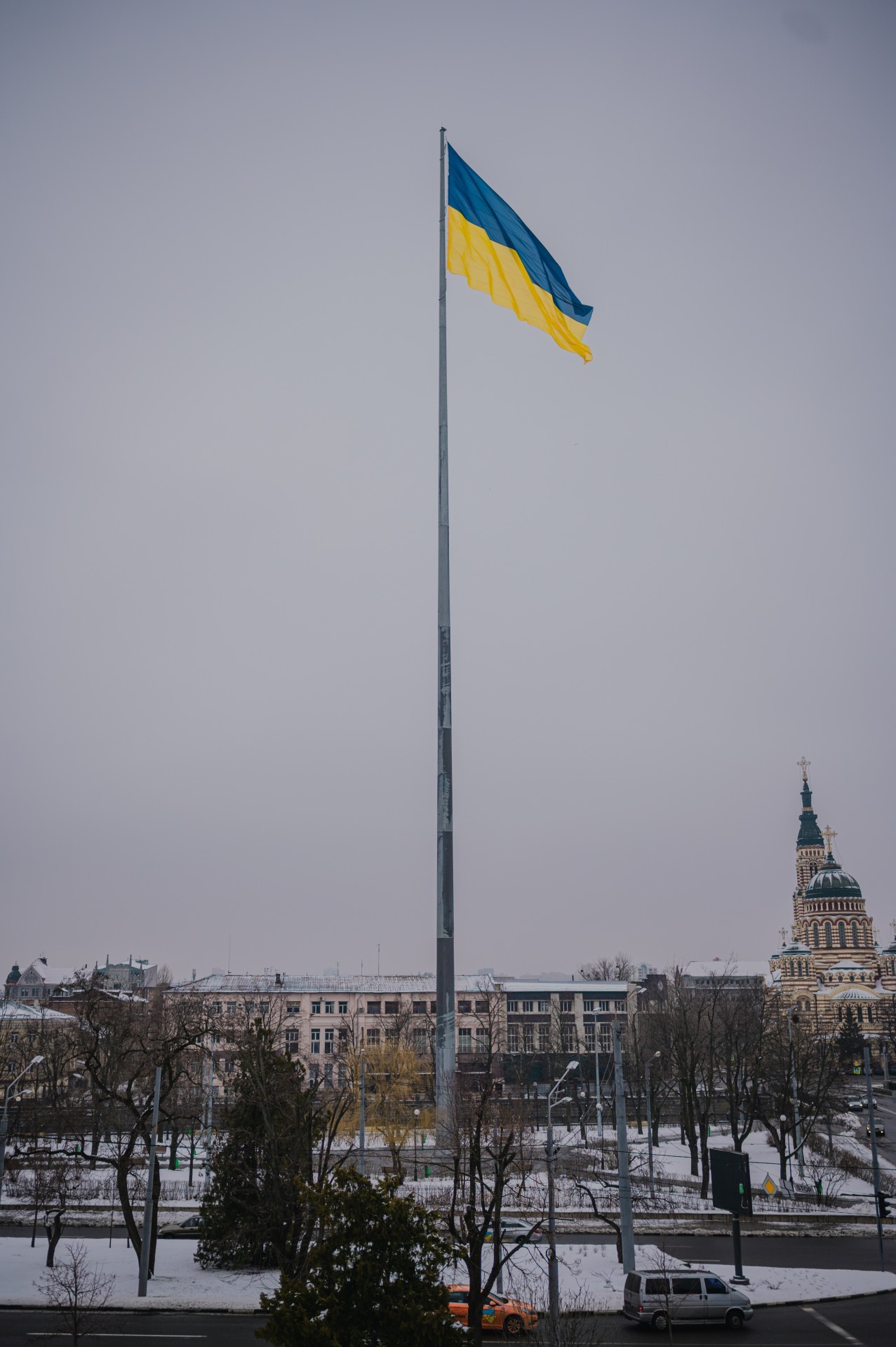
Maks and I are standing in the very heart of the city. Above our heads, a huge blue and yellow flag flutters, raised on the second tallest flagpole in Europe. It has become a true symbol of strength. Since the start of the war, it has not once been taken down, waving continuously above the city, even when bombs and rockets were exploding nearby. Maks says this is the place where Kharkiv began 350 years ago.
The city was founded as a defensive fortress on land that, at the time, was referred to as the wilderness. It served as a kind of buffer zone between Moscow, Tatar Crimea, and Poland, separating Orthodox Christians, Muslims, and Catholics. Much like today’s warfront, the area was practically uninhabited. In the mid-17th century, people fleeing the war with Poland in western Ukraine came here to seek refuge in this so-called ‘wild land’, waiting for the war to come to an end. It was here that a wooden fortress was built.

The other fortresses were established at such distances that, if necessary, it was possible to see the signal fire from one of them. If the Tatars attacked, these fires were lit to warn of danger. This is how Kharkiv, Izium, Chuhuiv, and other towns were founded – names that have since become known to the world through the chronicles of war. The entire territory where these wooden outposts stood was called Slobozhanshchyna, the Land of Freedom. The people who lived here were free from serfdom and could live independently because they inhabited a high-risk zone. They were exempt from trade, salt, and alcohol taxes, making this a true free economic zone, or a kind of ‘offshore’ of its time.
“Kharkiv was born as a fortress, as a frontier of freedom. That was the first impulse in the city’s historical development. It’s important to understand what it means to be Kharkiv – not merely to rebuild destroyed buildings. It’s important to return to the city’s history and spirit.”
Centuries later, in today’s war with Russia, the role of the city’s defensive wall has fallen to Saltivka, a northern district of Kharkiv. It is the city’s largest and most densely populated area. Before the invasion, around half a million people lived here. It is also the city’s gateway, from which the road to Belgorod, Russia begins.
Saltivka is a monolith of grey, concrete high-rise buildings. Beyond them lies a line of garages, and beyond the garages, open fields. Further out begin the war-ravaged outskirts of Ukraine’s northern capital. Maks describes how Russian artillery was positioned in the fields, and everything that flew toward the city flew over Saltivka.
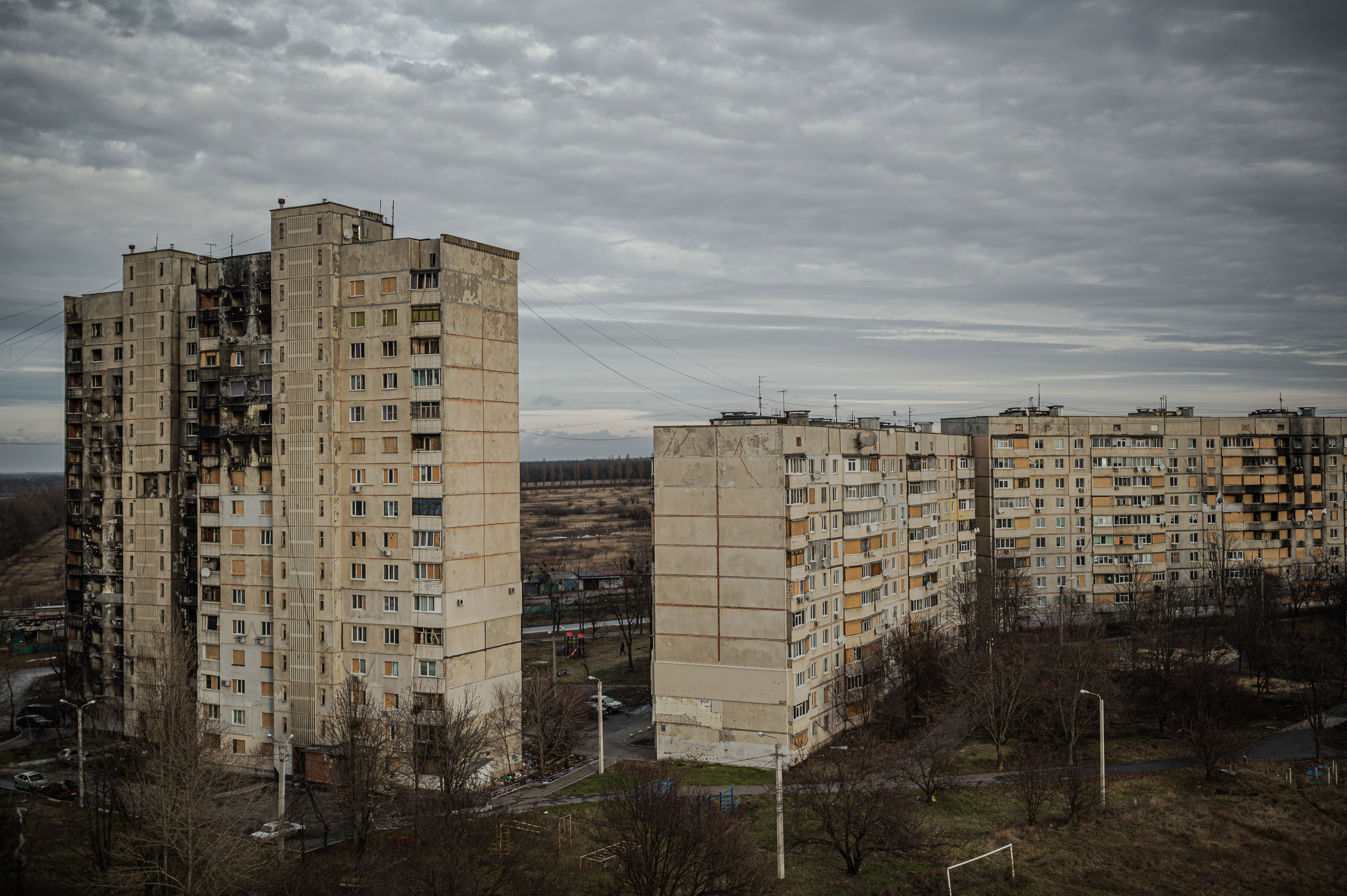
“This place is deeply wounded. These bleak nine, twelve, and sixteen-storey buildings shielded the city and withstood the Russian army’s assault.”
Within the group of architects, one of the most urgent questions to emerge is what to do with Saltivka. The simplest course of action would be to demolish everything and build new apartment blocks. Maks describes this option as quick and profitable.
“There’d be a queue of investors for such a solution. The Russians are doing exactly the same in Mariupol by organising architectural competitions for the reconstruction of the city. To me, this is an example of how it shouldn’t be done. Demolishing everything and rebuilding from scratch is like covering up the crimes committed here and pretending like nothing ever happened.”
Another option is to memorialise Saltivka’s war history, to preserve the scars and turn this place into a museum of living memories for future generations, like in Sarajevo. After the Bosnian War, the city chose to leave all the scars of the war intact – the marks of bullets and shelling are still visible in the city’s fabric today. However, this option also isn’t acceptable for Maks: “To me, that would mean the wounds are not healing.”
“I’m talking about an idea – a symbol. About the fact that wounds can be healed with plants.”
Maks recalls when he first came to Saltivka after the Russian army’s withdrawal, he realised that it was, for him, a place of meditation. “It’s terrifying to imagine what happened here. To me, it seemed like this was one of the worst things that could happen, but if that has survived, then there’s nothing left to be afraid of. When rockets are falling, there’s only one instinct left–to survive. For me, this place speaks about the instinct to live.”
“The place that was wounded the most must come into bloom.” In his vision, eco-architecture should emerge in Saltivka, and the district should blossom with gardens. He proposes planting trees in the craters left by explosions, turning them into green oases. In buildings missing entire sections, Maks suggests installing glazed winter gardens. Between buildings, he would build landscaped bridges. “I’m talking about an idea – a symbol. About the fact that wounds can be healed with plants.”
Speaking about greening Saltivka, Maks says that such symbolism would testify to surviving the tragedy and to victory. “If this place is not shown due respect, it will become like Pripyat in Chernobyl. Everyone would only know about the tragedy that happened here, but not about its survival.”
Maks dreams of turning the rooftops of apartment blocks into green viewing platforms. The current views overlook battle-scarred land. From the rooftops, it is clearly visible what has happened here – where the Russian tanks had advanced and what their aggression left behind.
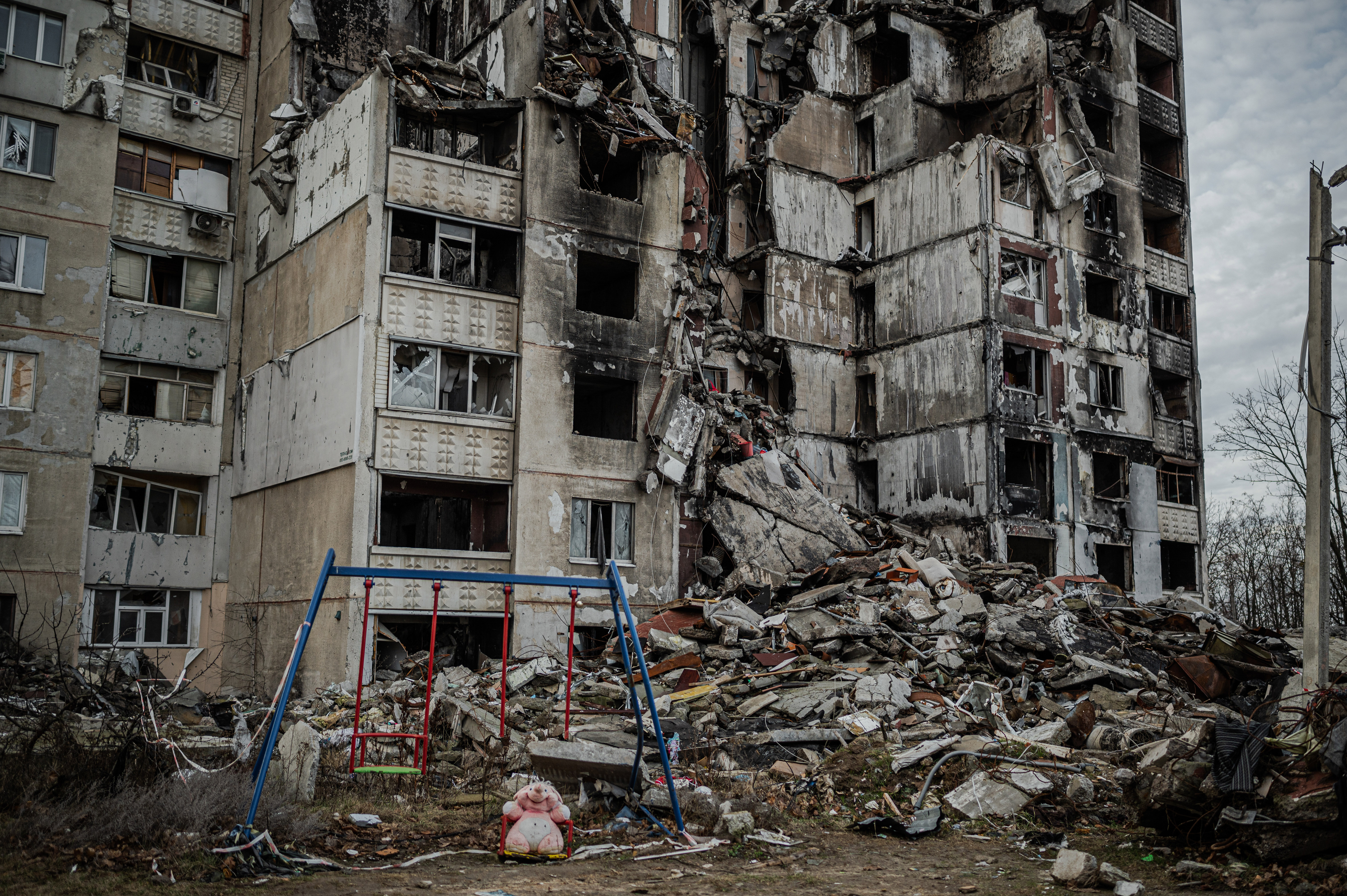
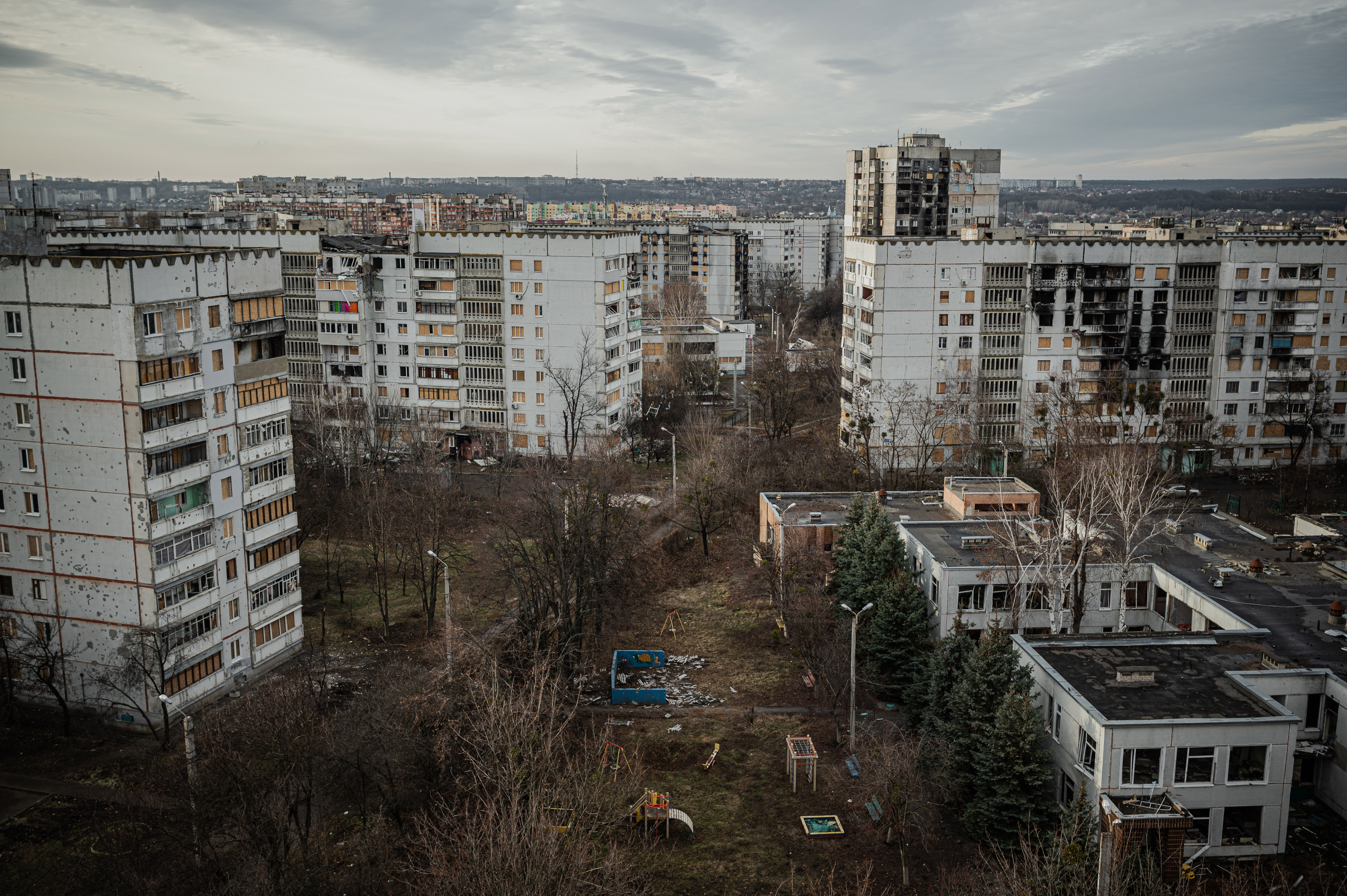
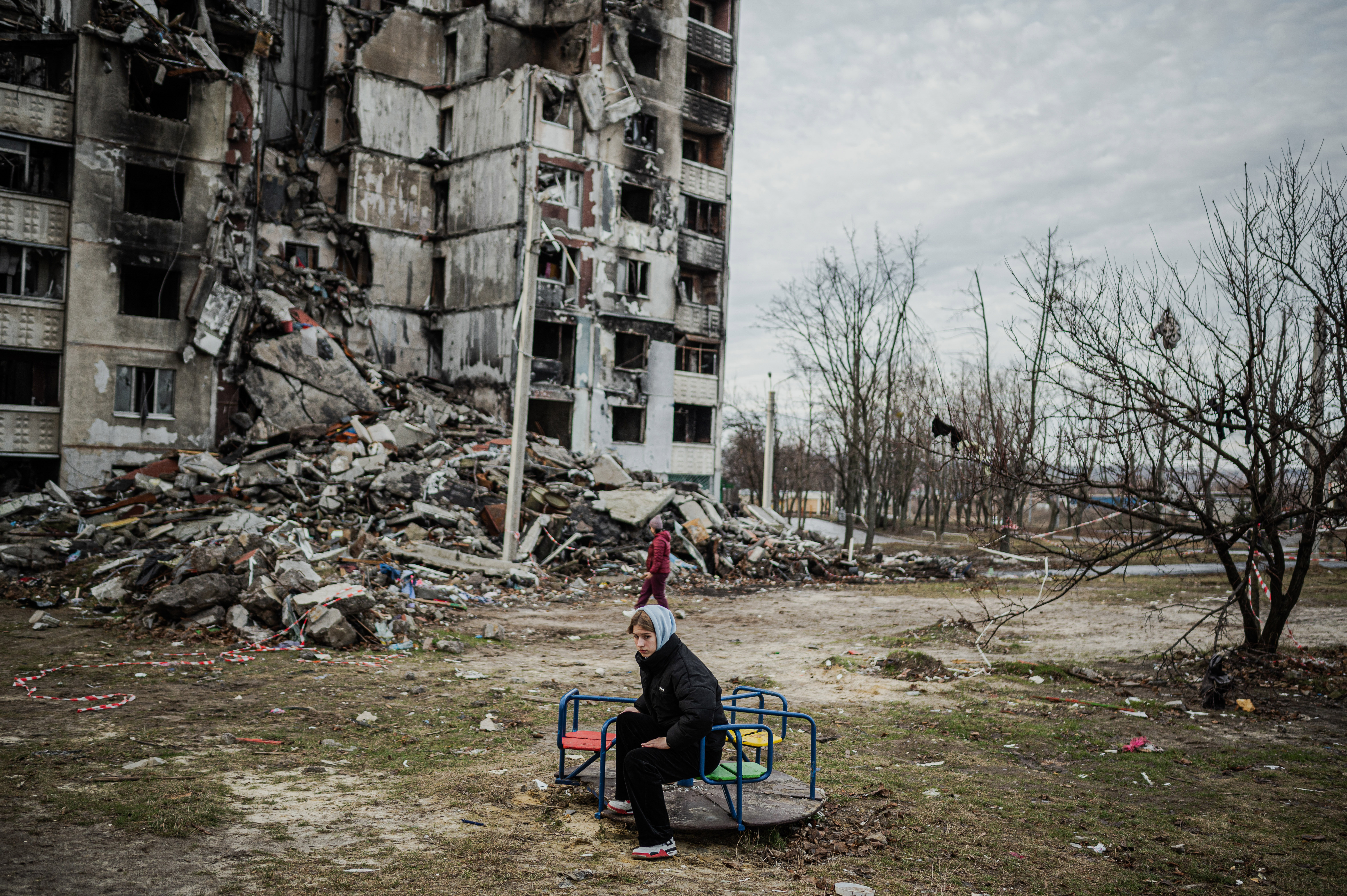
The expanse of these flat rooftops is enormous. In summer, when temperatures hit 40°C, they absorb and radiate heat. The roofing material becomes so scorching hot that a layer of burning air appears to hover above it, like a bonfire.
Maks’s idea is to cover these roofs with grass and to plant trees. Technically, this is feasible, allowing the rooftops to become a system of gardens above the city – vast park spaces, suspended in the sky. This idea is not only commemorative but also ecological.
Maks sees Saltivka as the city’s deepest war wound, demanding an extremely attentive and sensitive approach. According to the architect, now isn’t the time to rebuild, demolish, or preserve. It’s the time to pause, reflect, and attract more interdisciplinary thinkers and creators – sociologists, urban planners, artists, engineers and philosophers – who could collectively imagine a vision for the future of Saltivka.
Maks emphasises the technical complexity of the idea, which requires careful preparation: designing a sustainable root system, selecting suitable plants, creating irrigation infrastructure, etc.
The vision for Kharkiv’s future also proposes introducing architectural diversity, moving toward block-based development where each district has its own distinct identity. This principle is linked to community-building. Soviet architecture, however, was based on standardisation: everyone lived in identical ‘boxes’. In reality, people gather around shared lifestyles, interests and social connections. If these social dynamics were reflected in architecture, the city would become more alive and personal.
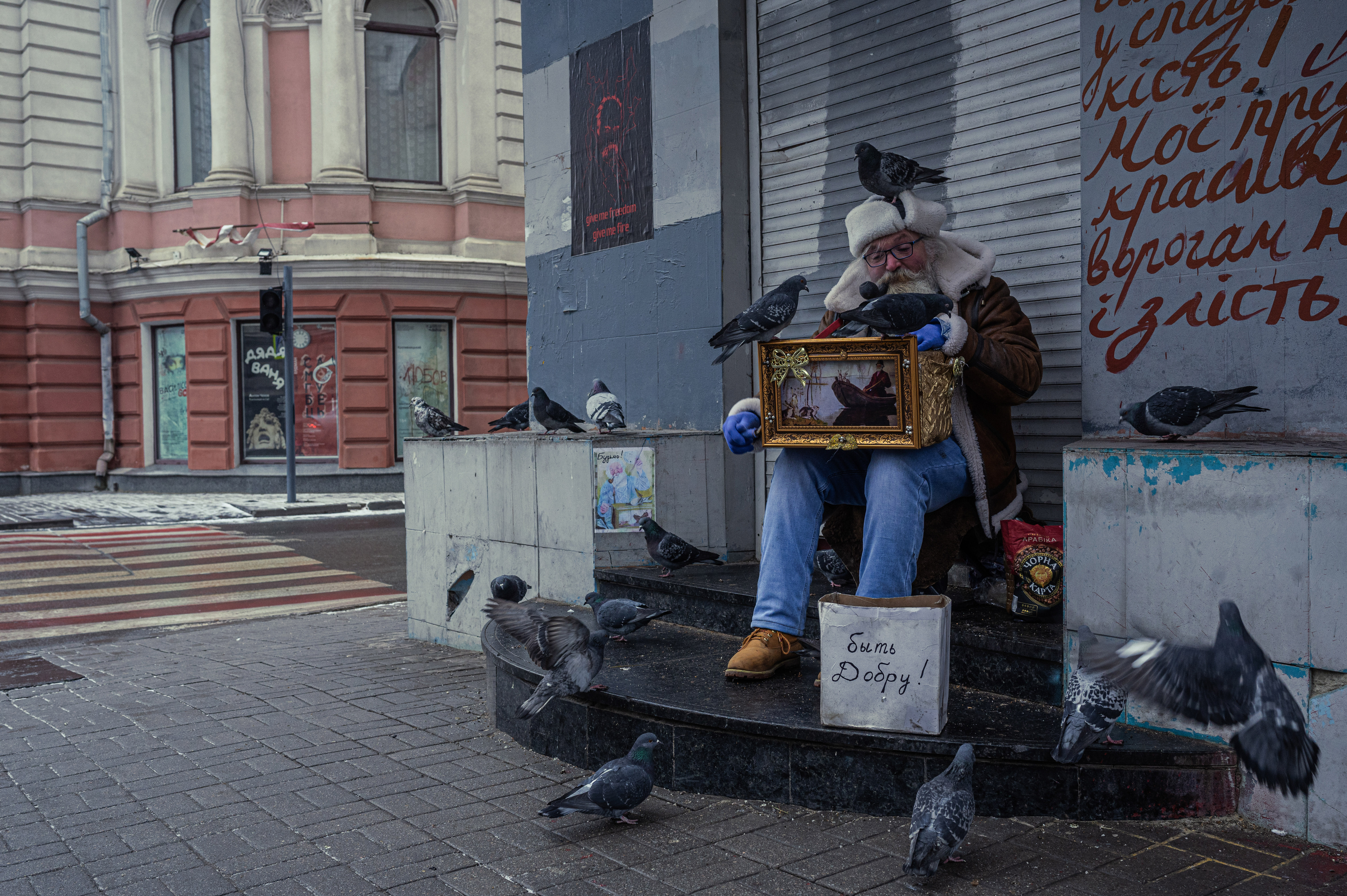
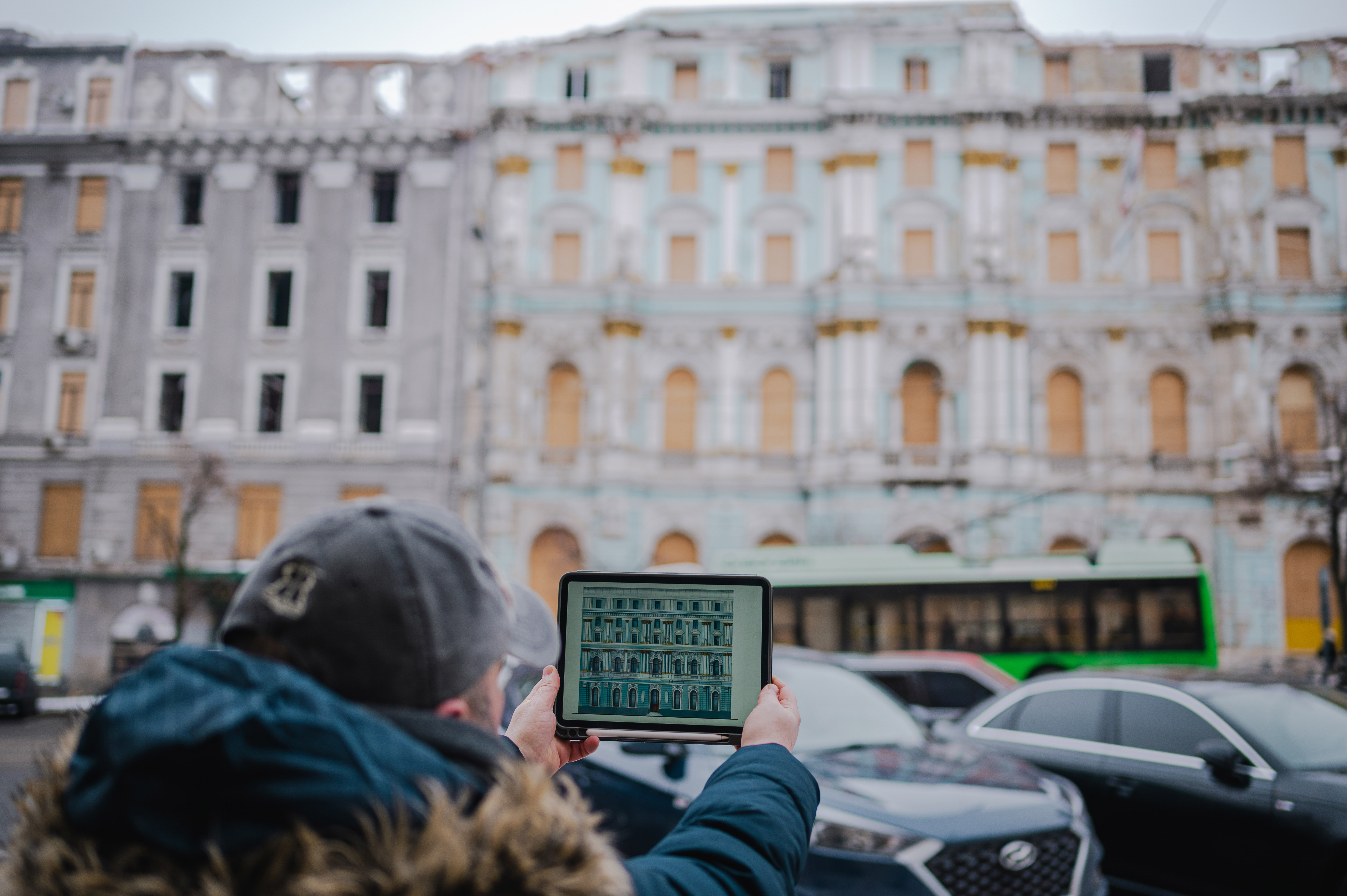
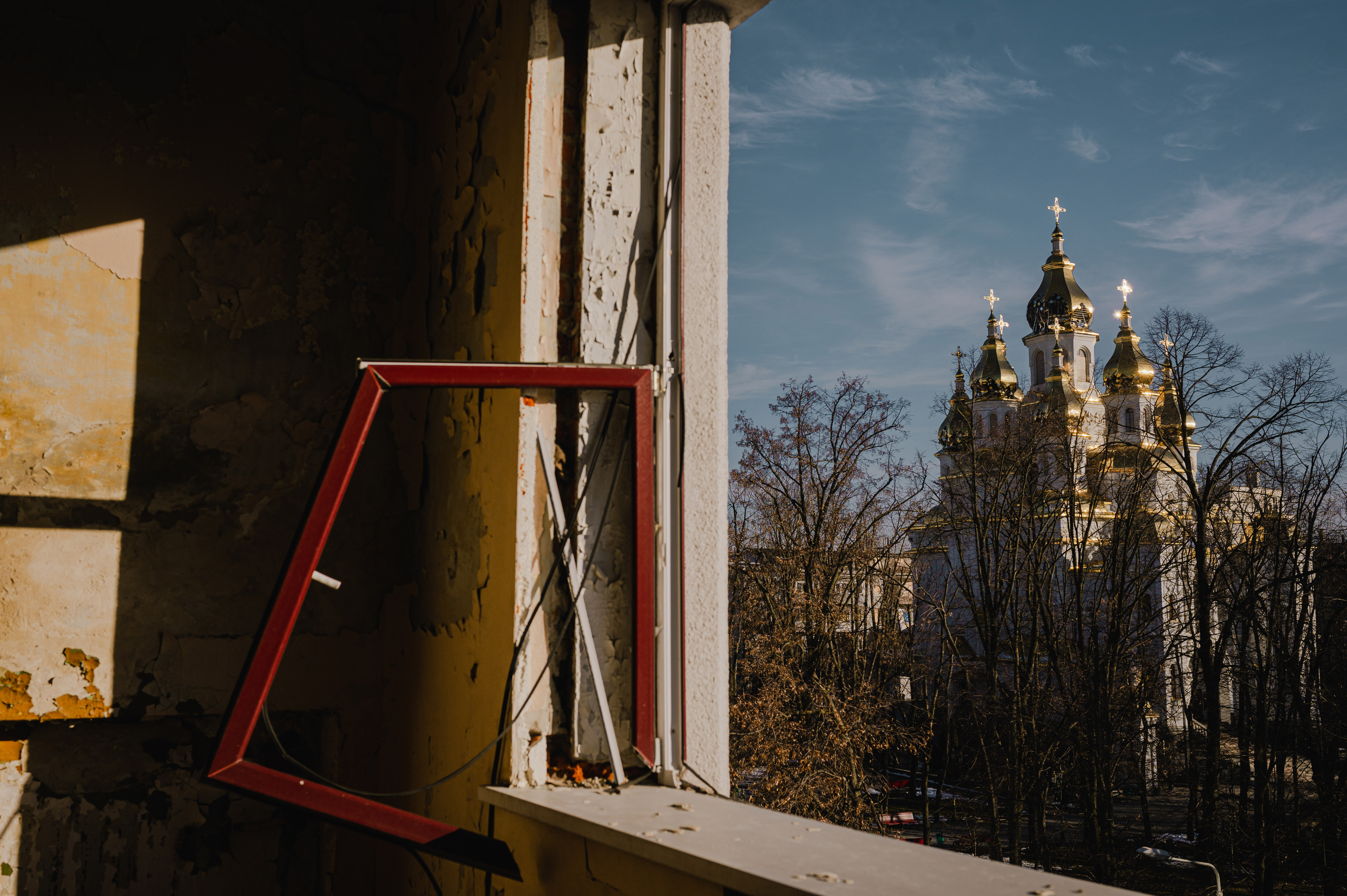
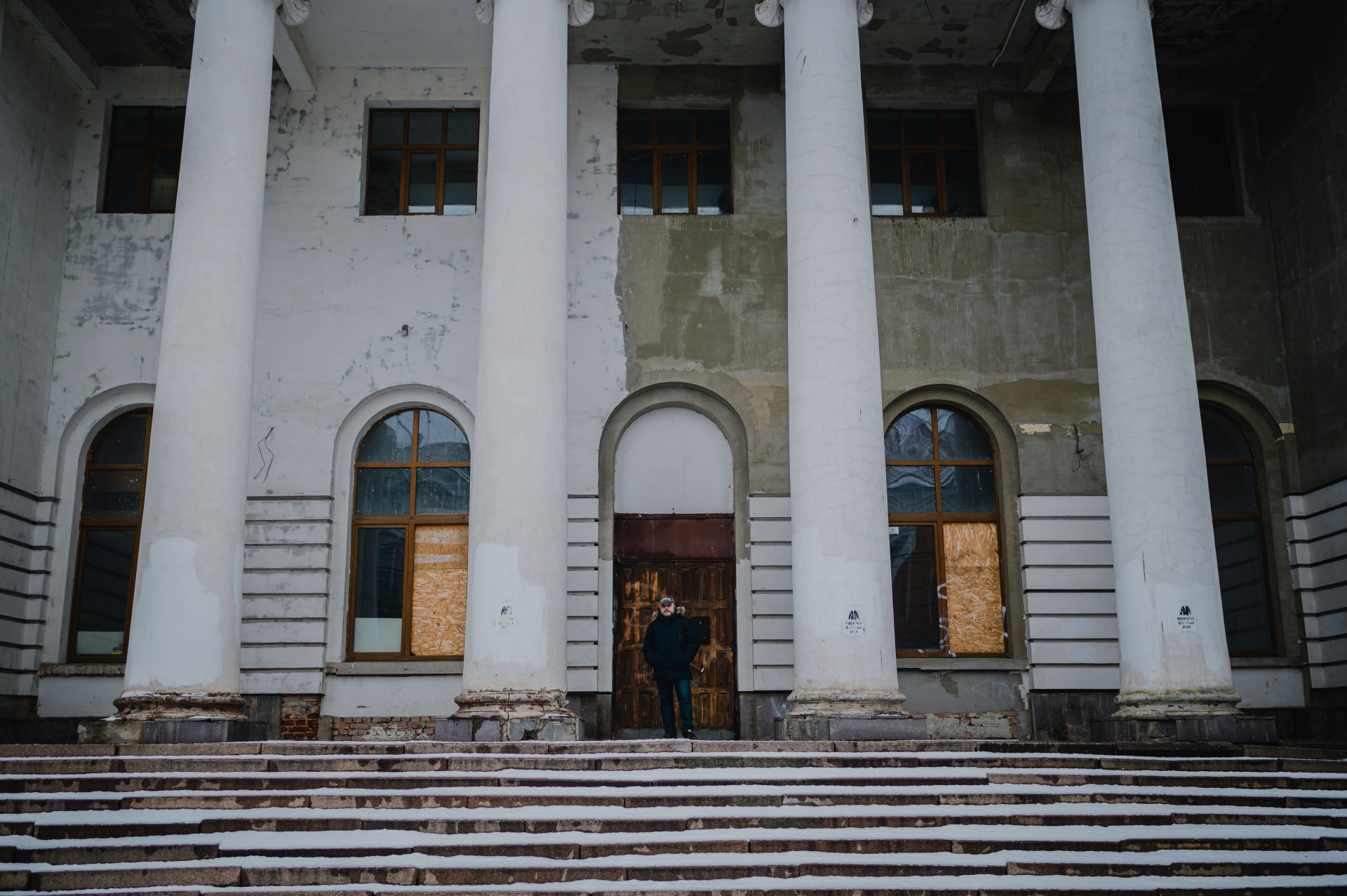
We return to the city centre. Maks leads me to the bombed-out building of Kharkiv National Medical University.
“The second frontier in the city’s history was education,” he says.
In 1804, the Enlightenment figure Vasyl Karazin founded Kharkiv University. His idea was to create centers of education in the provinces. There was a shortage of educational institutions and a lack of educated people. There were two options: send all young people to Moscow, the main university of the Russian Empire, or build universities locally to promote a culture of education where people actually lived. If everyone studied in Moscow, there would be few educated people left in the provinces, as they would remain in the capital.
The arrival of the university changed everything – the city, the region, the people. Kharkiv transformed from a fortress, a line of defense, into a university city where the fight against ignorance and limitation began. The establishment of the university shaped Kharkiv’s fate more profoundly than the construction of the fortress itself. It became a student city – before the war, every fifth resident was one. By February 2022, around 300,000 students were studying in Kharkiv, forming a huge, multinational student body from many different countries. According to Maks, education once made Kharkiv a frontier between darkness and possibility.
“It was a very open city, reminiscent of Berlin. East Berlin, before the fall of the Wall, was a border city. Back then, John F. Kennedy said that every free person of the free world was a Berliner. Today, you could say this about Kharkiv.”

Today, almost all universities and schools operate remotely. Reviving education isn’t just about rebuilding buildings, replacing windows or buying new computers. There are various paths: one of them is to review the curriculum, perhaps closing some programmes, and improving others. For example, new opportunities are emerging for Kharkiv’s National Medical Institute, driven by the proximity to the front and the growing demand for crisis-response technologies and knowledge.
One such initiative was born through a collaboration with the Foster Foundation. In October, Norman Foster spoke at MIT in Boston and proposed building an international science campus in Kharkiv. At first glance, it might seem absurd – a city under attack, with an electricity crisis, and he’s talking about an international science centre?
Maks supports this idea with enthusiasm, saying that “we need to not limit ourselves to the present, but to think about the future.”
According to the architect, the proximity of war opens up new spaces for education. “Where better to study how people change in the face of crisis? Medicine, technology, engineering – all have their place on the front. We need to step onto another level and establish this frontier as an experimental vessel. Modern Kharkiv is like Mars – an unknown territory, where the most intense changes are taking place.”
Speaking of such a frontier, naturally the question of safety arises. Maks responds without hesitation that there is no safety on the borderland. “Being on the frontier is a conscious choice made by an adult. For those for whom security is a priority, Kharkiv is not the place. This is a place for people whose priorities are to discover, learn, be interested, and take risks.”
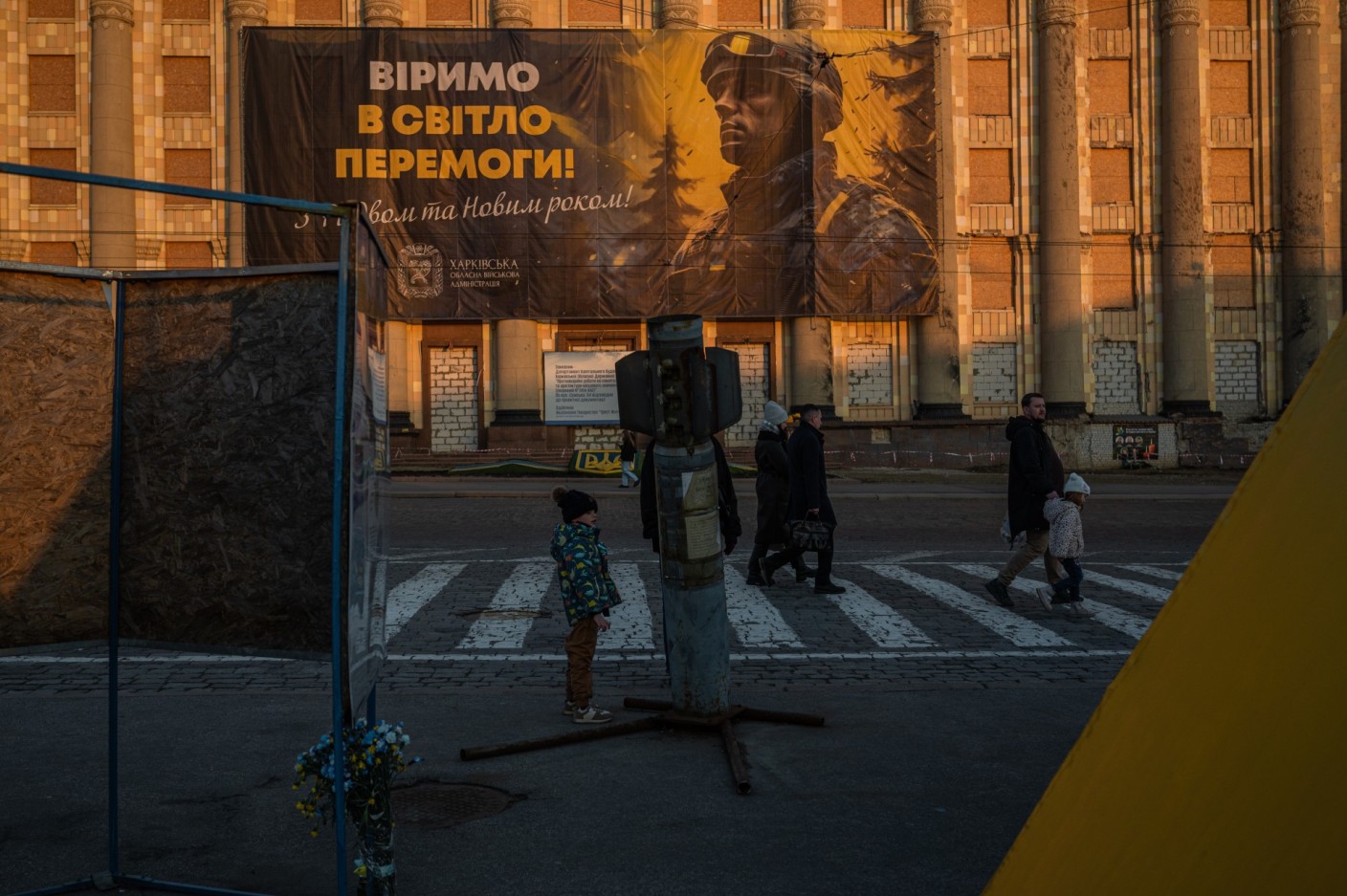
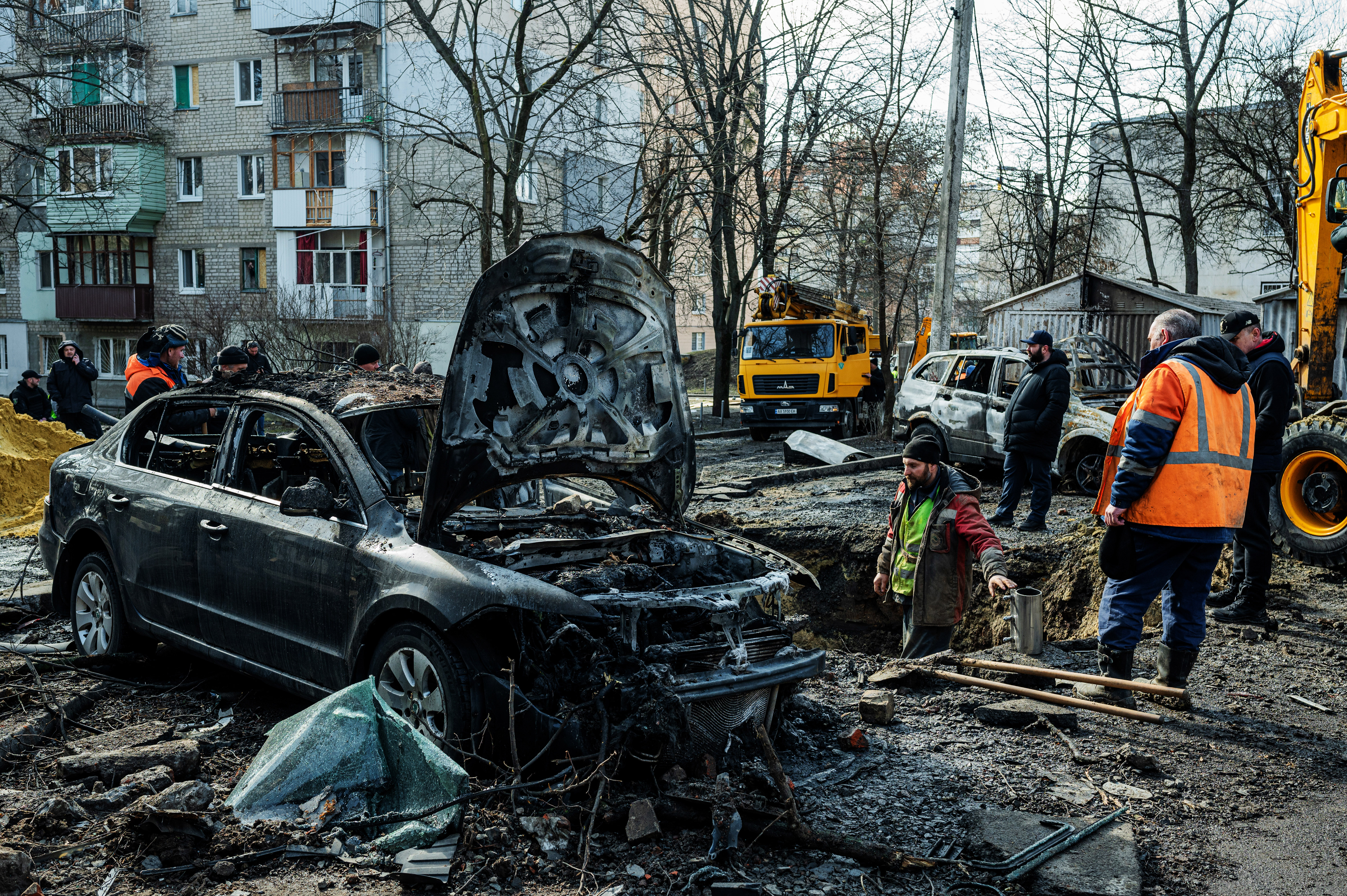
There is really no safety in Kharkiv. Air raid sirens sound almost daily. At night, the buzzing of flying Shahed can be heard – quieter or louder, depending on the distance. For Russia, Kharkiv is one of the easiest targets to reach, which means that almost every time Ukrainian forces strike a significant Russian target, it is Kharkiv that suffers the harshest retaliation.
Speaking of safety, Maks touches on perhaps the most painful subject of war – death, and how to honor those who have fallen.
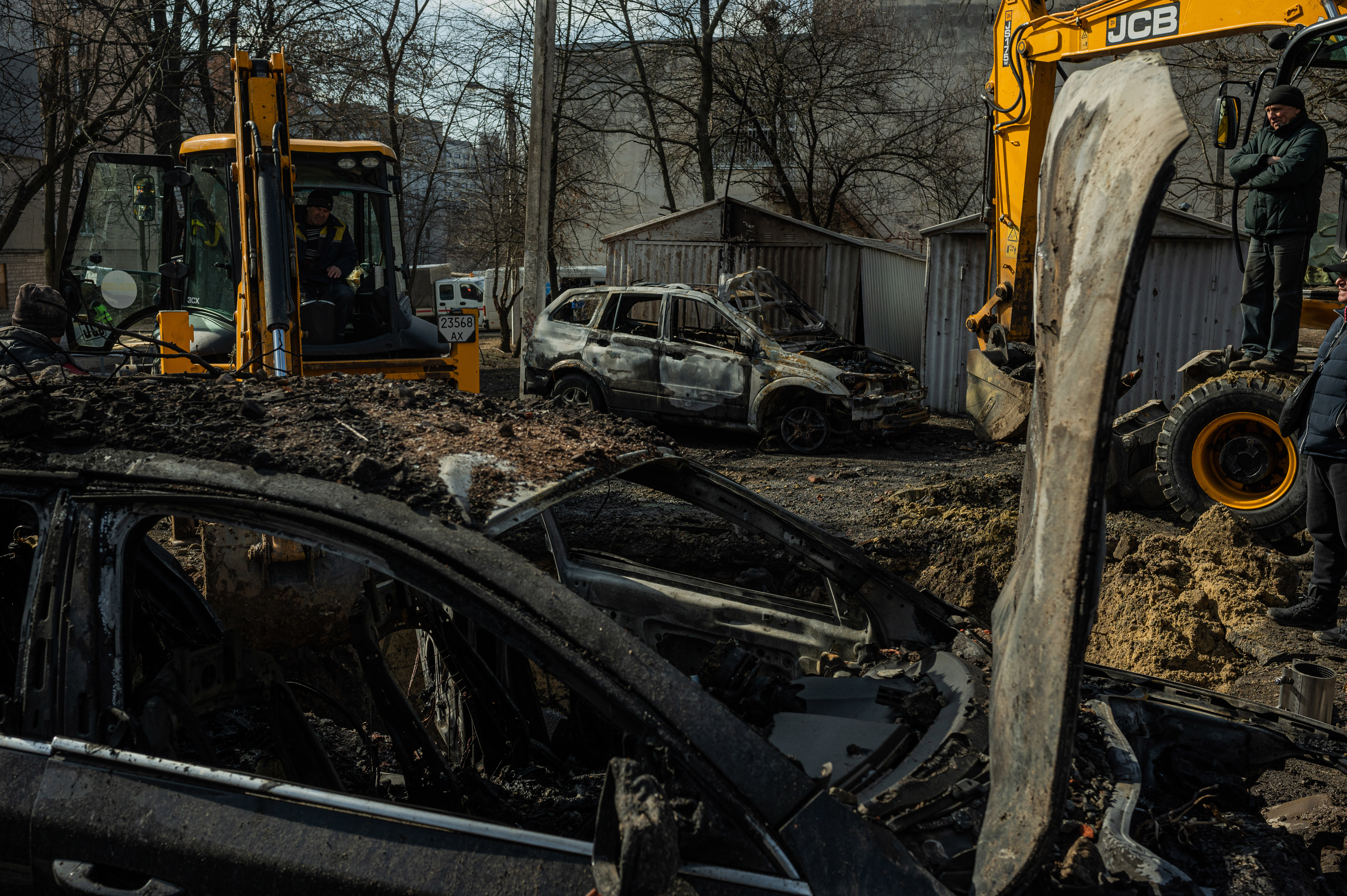
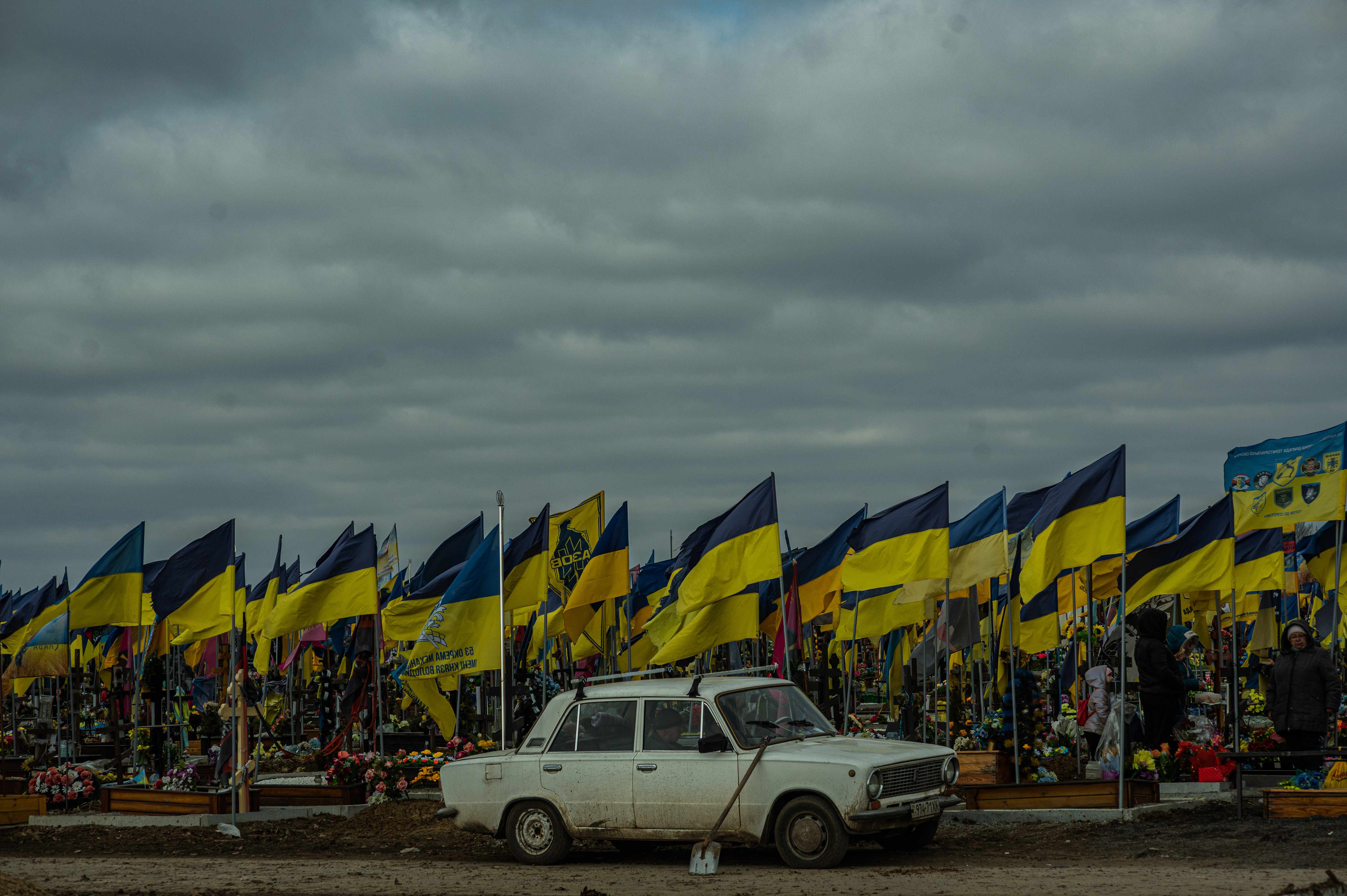
When I visited Kharkiv a year ago, the city’s cemeteries were already overcrowded. Freshly dug graves were covered with wreathes, together with blue and yellow flags. The air was heavy with the smell of fresh earth, mixing with slush that splashed underfoot. Every day, groups of people came to visit the graves of loved fallen relatives and friends, and it seemed as though the constantly trampled ground would not be able to freeze for a long time.
One of the architects on Maks’s team, Dmytro Fomenko, proposes rethinking Ukraine’s traditional burial customs by transforming cemeteries into eco-parks.
Dmytro wants to move away from the usual symbols of death – headstones, crosses, obelisks – and replace them with trees and plants. He proposes viewing cemeteries as gardens of the future, where a person’s ashes mix with the root system of a planted tree. In this vision, a grave turns into a tree, and cemeteries become forests and parks.
The theme of the afterlife has been part of urban development since the emergence of the first settlements, and necropolis spaces have always been given special importance and attention.
“The word ‘necropolis’ means ‘city of the dead.’ The philosophical meaning of a garden is flourishing and life. The idea of eco-burials and cemetery-gardens, to me, is about preserving memory, and about life overcoming death. About memory in bloom.”
“No matter how different we are, as trees we can grow next to each other,” says Maks. “In the context of war, I think this idea takes on a symbolic and beautiful meaning. Thousands of Ukrainians are dying on the front and in their homes from the air raids. Ukrainians are fighting for their freedom, and those who fall in that fight grow back as trees in the city garden. This garden would become their memorial – an eternal, and meaningful renaissance of the very idea of freedom.”
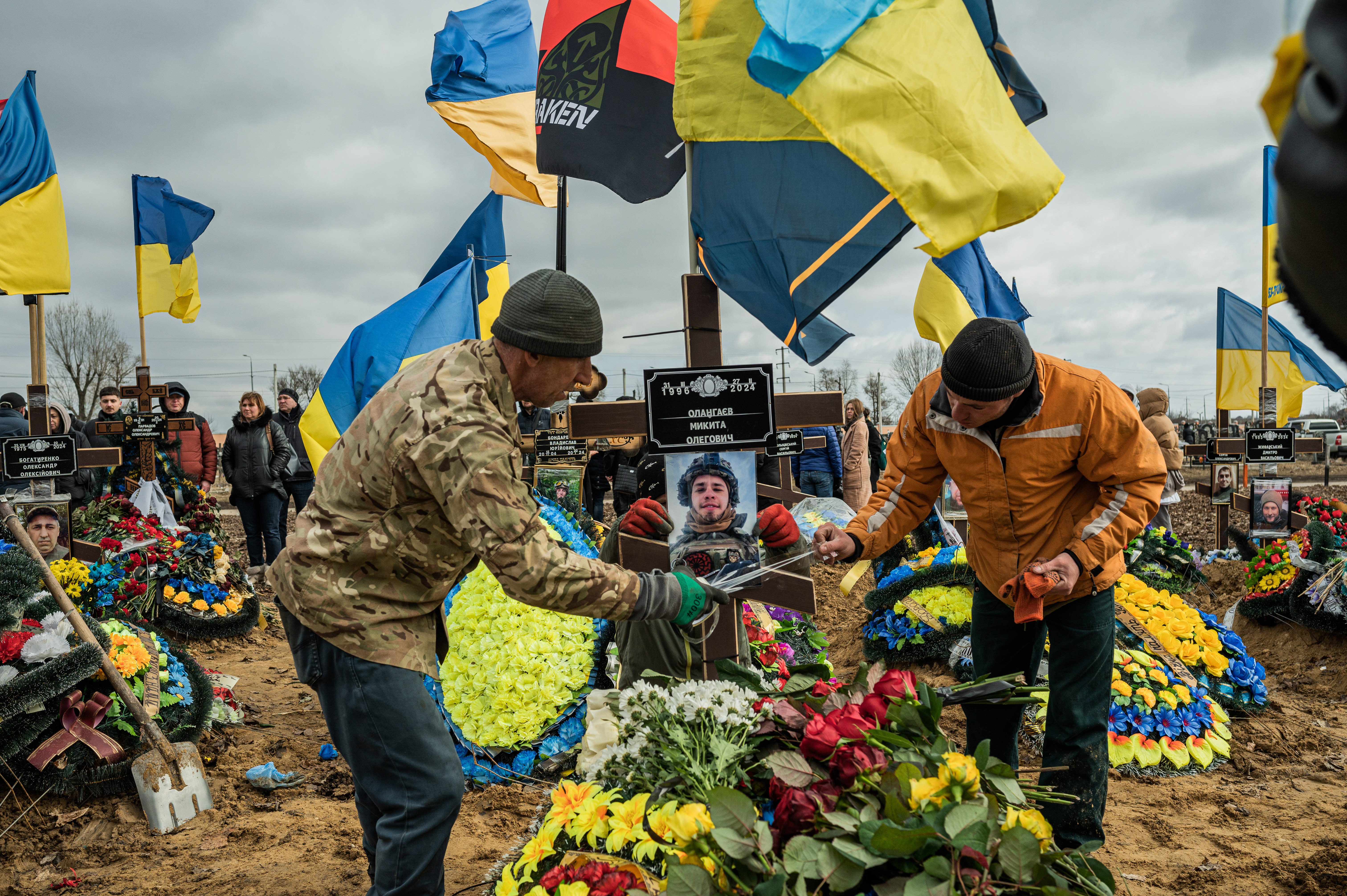
The architect emphasises that cemetery space is a particularly sensitive and conservative subject. Different religions have different burial traditions, each accompanied by strict traditions about how a person should be farewelled into the afterlife. For this reason, speaking about new forms of burial, especially when grief is still so alive and fresh in society, is very difficult.
Special traditions also accompany the burial of those killed in war. They are often given separate sections in cemeteries, marked by dedicated memorials. “Most often, such memorials take the form of marble plaques engraved with names of the fallen, or massive metal monuments with piles of weapons and muscle,” he says. The vision proposed by the architects’ group is far removed from that kind of heavy-handed war symbolism. They envision a necropolis space that speaks not only of tragedy and loss, but one that invites intimacy, meditation, nature, and its silence.
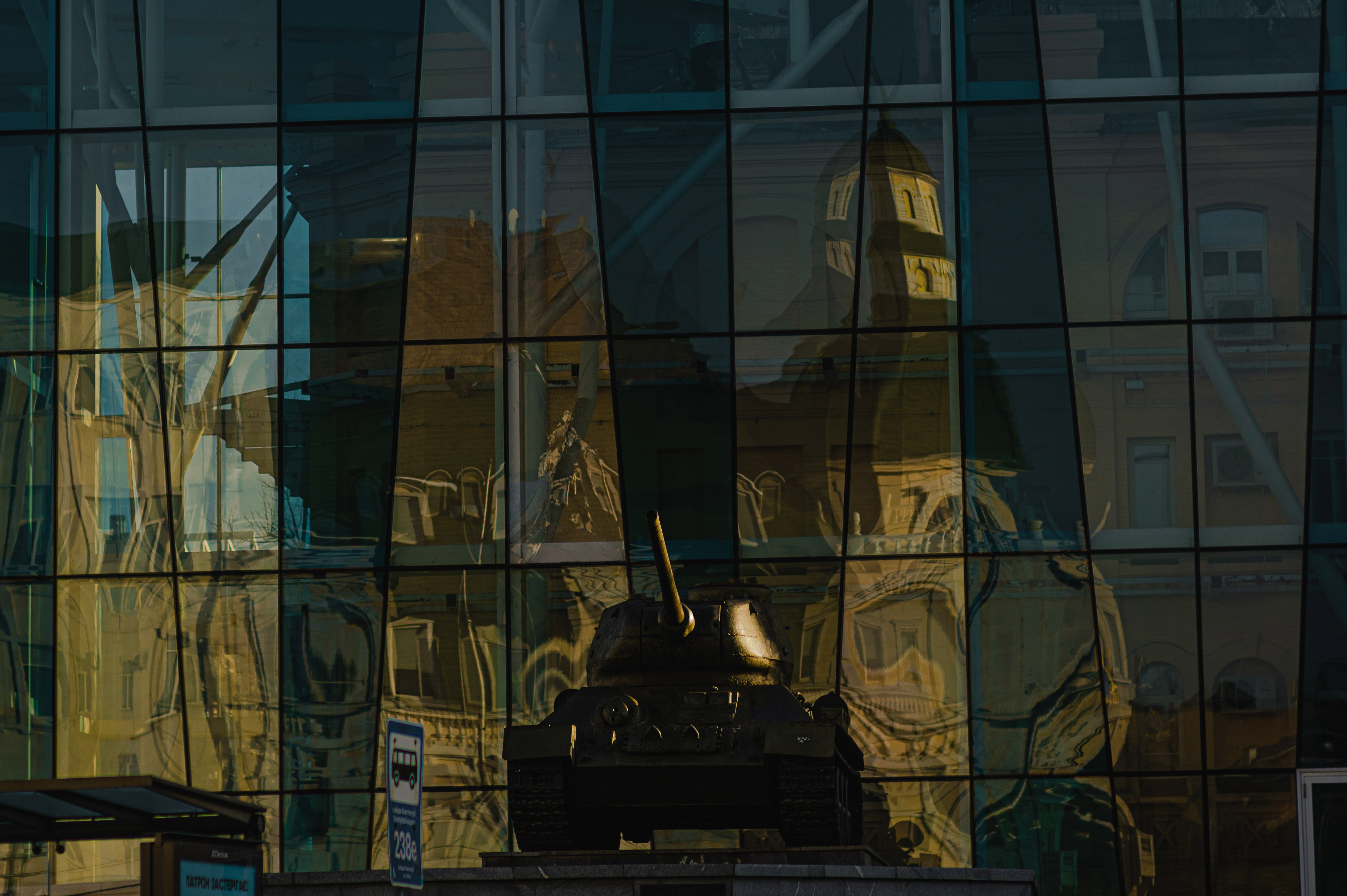
The first frontier was marked by the fortress, the second by the old university building, and the third by the avant-garde, visualised by the building of the State Industry Building (Derzhprom), completed in 1928. Often linked to the Soviet era, it is, in fact, a contemporary of the Bauhaus school’s architecture.
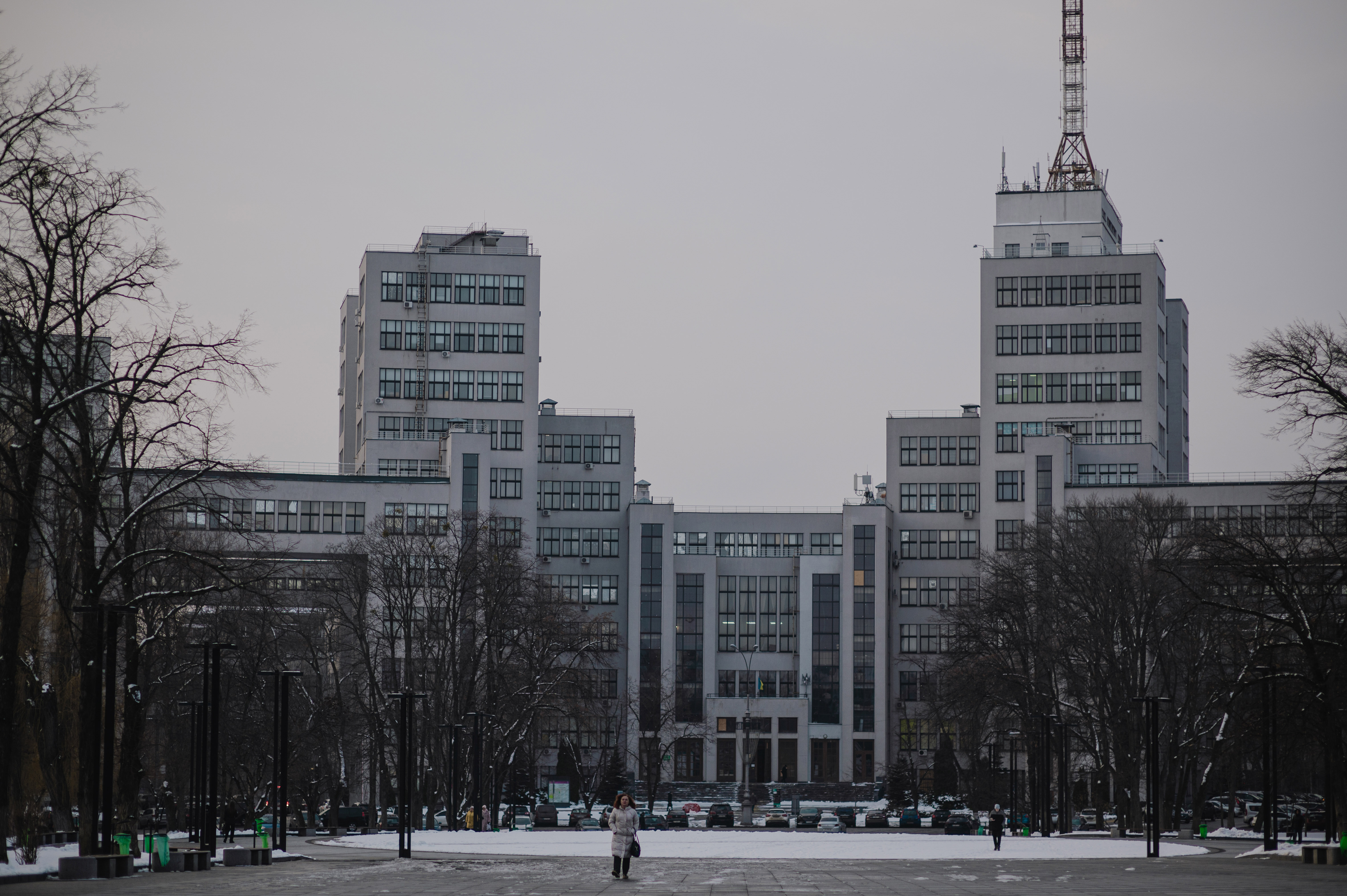
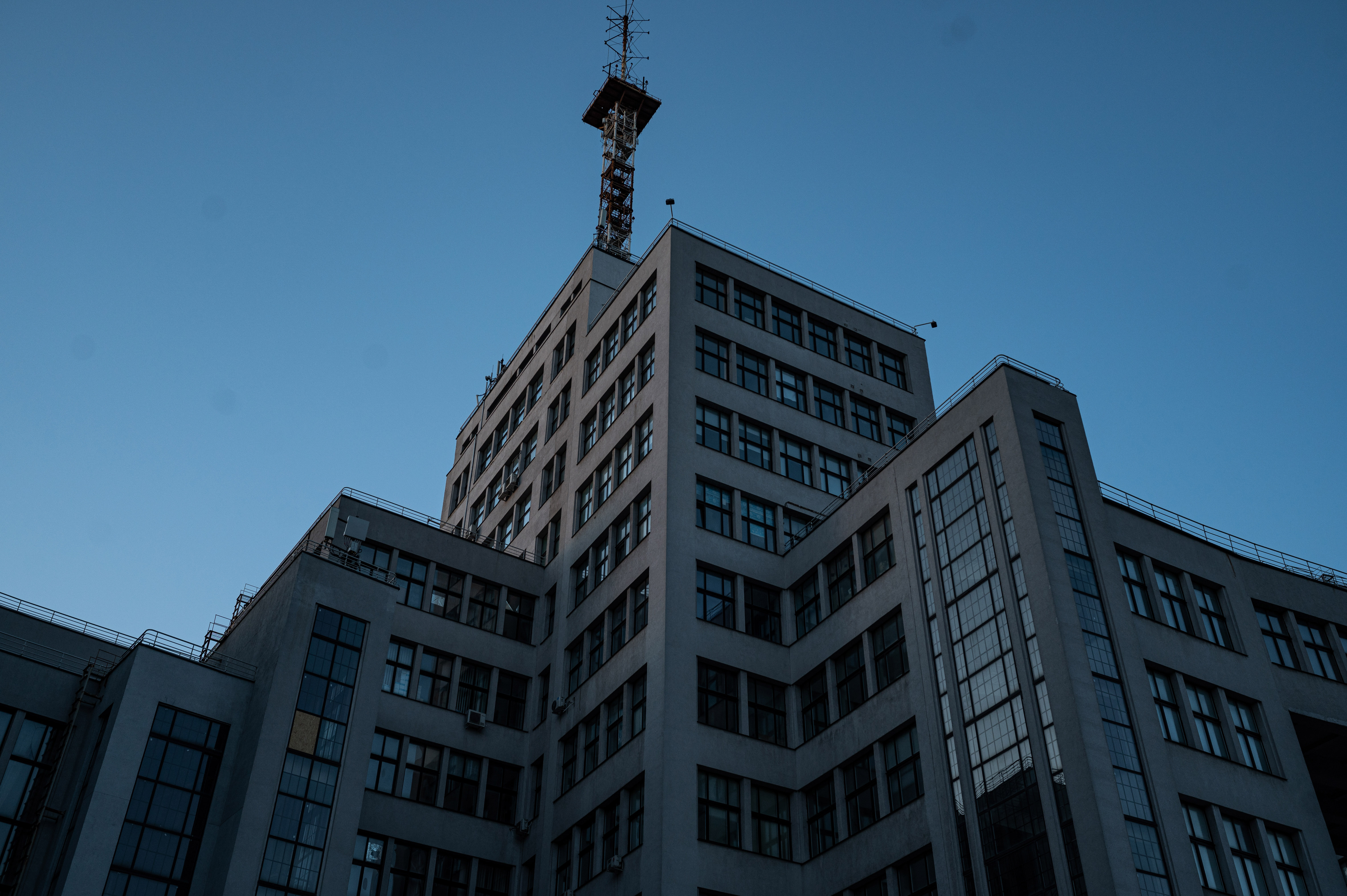
This building is more than just a piece of architecture – it symbolises the human capacity to create, even in times of crisis and despair. After the October Revolution of 1917 and the Russian Civil War that followed (1917–1922), Kharkiv became one of the central battlegrounds. Control of the city changed multiple times: it was held by the Bolsheviks, the German-backed Second Hetmanate, the Ukrainian People’s Republic, and the White Army, before it was finally taken by the Soviets in 1919. The political situation remained unstable, and living conditions were harsh. Five years of Soviet rule had not brought a better life and people were losing hope. And yet, it was precisely during this period that the idea to build something grand took place. The economy was in crisis, and soon the Holodomor followed – one of the greatest tragedies in Ukrainian history. But even in the midst of hardship, Kharkiv experienced a creative surge. Its architecture and culture became expressions of bold, new ideas.
It was decided to build the city from reinforced concrete, using cutting-edge technologies. No one really knew how to work with concrete or how to design buildings on such a scale. Derzhprom was completed in just two and a half years. It became not only a symbol of Soviet Constructivism, but also a sign of hope that the city could recover, even in the most difficult of times.
From 1919 to 1934, Kharkiv was the capital of Soviet Ukraine, and the city became a centre of avant-garde art, science and education. It was a time of experimentation: new movements in film, theater, photography, painting, and architecture emerged – analogous to the Bauhaus movement in Germany. In literature, this era is known as the ‘Executed Renaissance’ – writers and poets shaped a new style of language and laid the foundations for modern Ukrainian literature.
Scientifically, Kharkiv was one of the most advanced centres in the Soviet Union. At the Institute of Physics and Technology, scientists, including Lev Landau, contributed discoveries in physics of global significance. The institute became an intellectual vanguard, where ideas in the fields of quantum mechanics and nuclear physics were developed.
Then came the 1960s. One of the strongest dissident movements in the Soviet Union arose in Kharkiv. Maks recalls that in 1968, when Soviet tanks rolled into Prague, eight people stood in Moscow’s Red Square holding signs that read “For our freedom and yours.” “Only eight people in the entire Soviet Union! Of those eight, three were from Kharkiv – from Kultury Street, from Barachnyi Lane. I can show you the house where they gathered.”
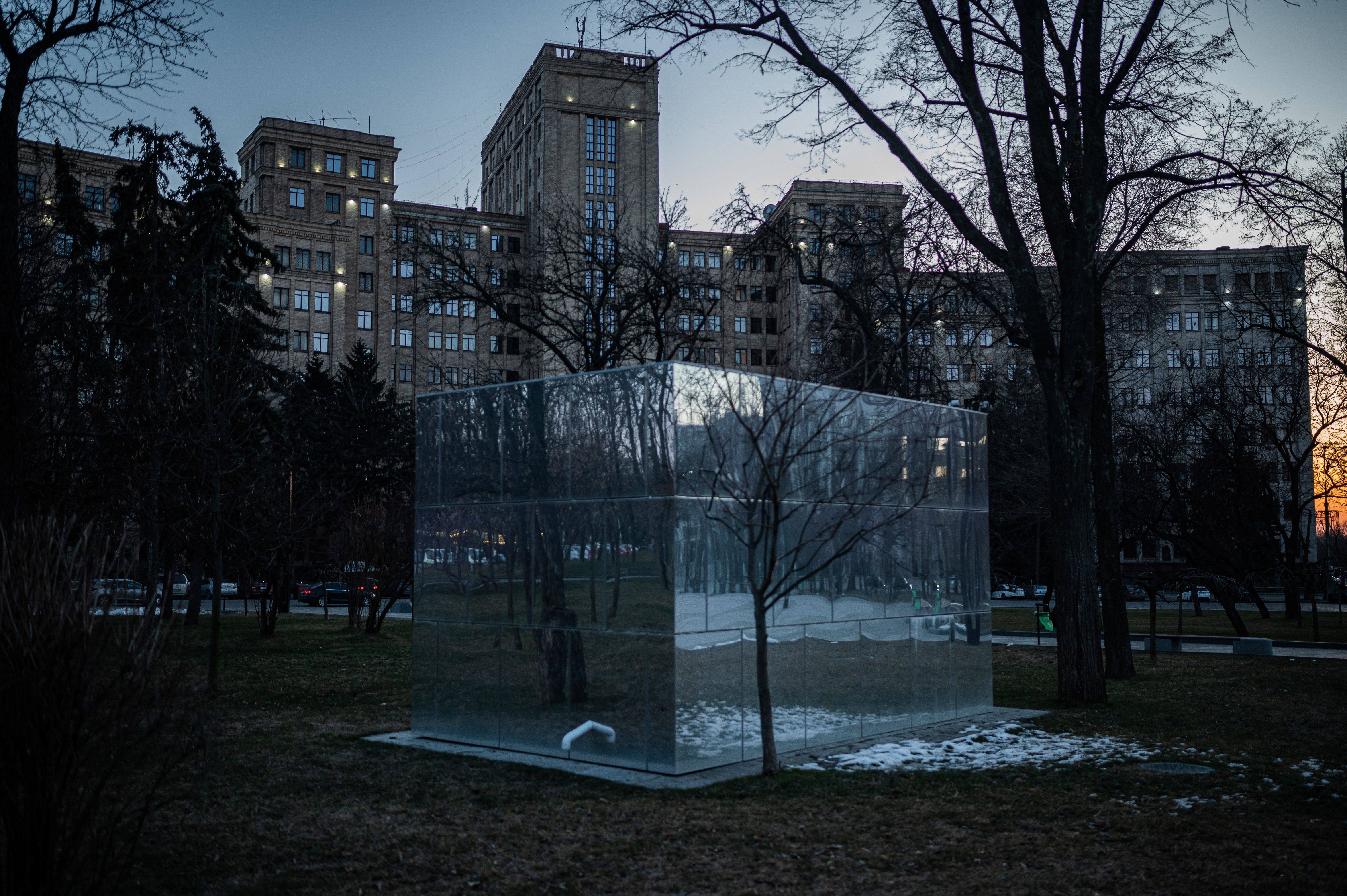
Kharkiv became Ukraine's industrial centre. There were no mineral resources of its own. It was not Donetsk, Luhansk, Mariupol, Zaporizhzhia, or Kryvyi Rih – cities where industry developed because the ground beneath held everything they needed. In Kharkiv was where strategies were shaped, industrial policy was formed and the ‘think tank’ for the entire Donbas region operated. The developing industry focused on manufacturing: cars, the first aviation factories, the first camera factory, bicycles, turbines, tractors – everything tied to technology and engineering, not raw material extraction.
Maks argues that many of these factories should now be closed for both ecological and economic reasons. He says it’s like attempting to revive a long-dead patient. The demand for tractors, for example, will never again reach the scale of the 1930s.
Many factories have lost their relevance and scale. Instead, Maks believes their territories should be adapted to serve the people of Kharkiv – transformed into cultural spaces that preserve the city’s industrial legacy. Some of these buildings could become museums of the Industrial Revolution and be included in the city’s heritage registry. The old industrial architecture could be reborn as lofts or creative spaces.
Many of these factories were originally built on the outskirts of the city, but today, they sit in what has become central Kharkiv. Such spaces could become galleries, concert halls, museums, IT offices, design studios and architects’ offices.
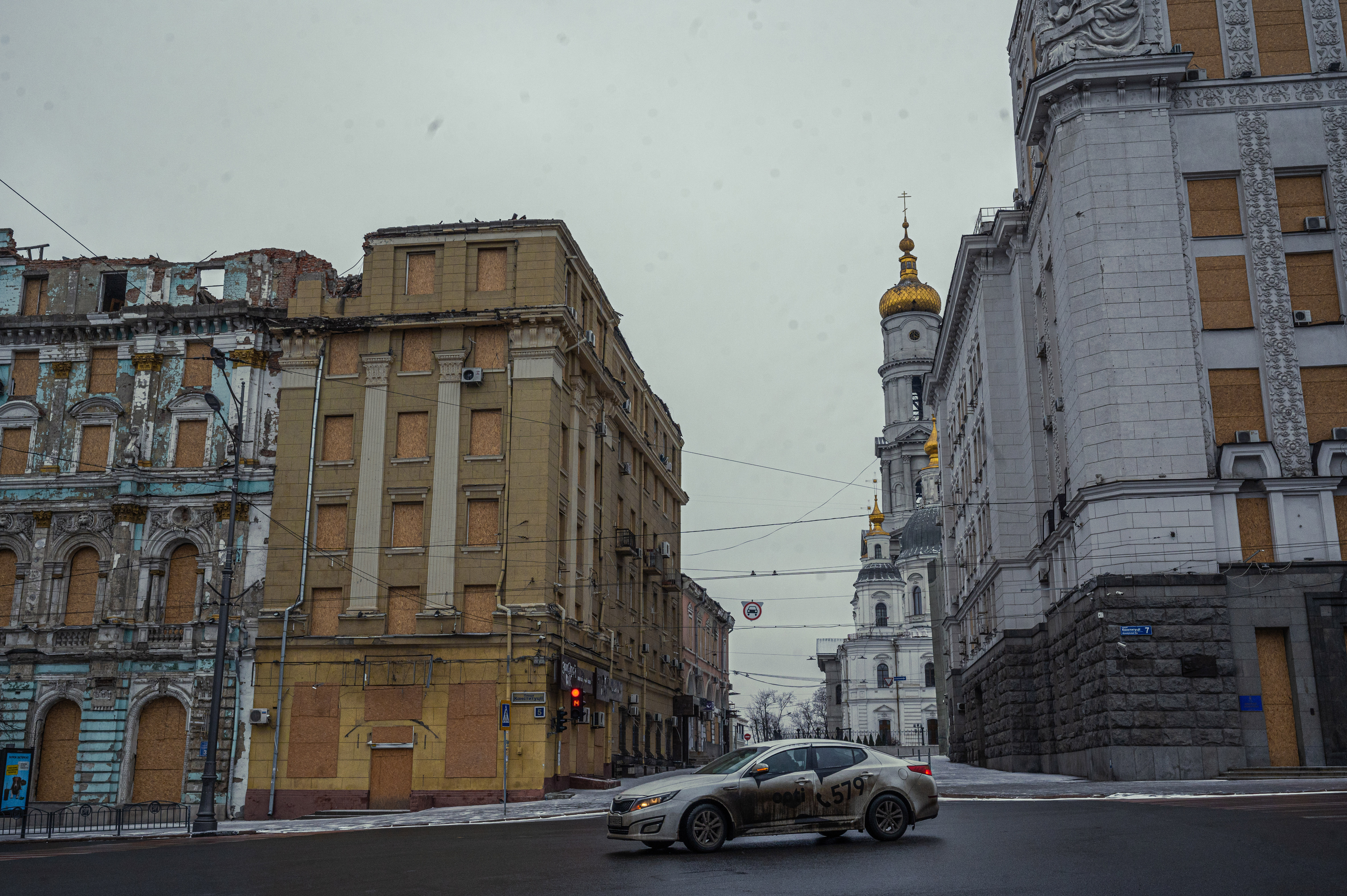
I spent a couple of days with Maks, walking around Kharkiv, listening to his ideas and stories about the city. Hearing his bold and futuristic visions of the city, while air raid sirens wailing, felt both surreal but hopeful. Naturally, the question arose: “How realistic is all of this?”
Maks emphasises that these ideas are far from being an approved project – they’re an invitation to a broader discussion. The idea of the three frontiers leads directly to a fourth: Russia’s war, where Kharkiv’s new frontier is taking shape in real time.
“Today we must build a new future based on what has already been created. We must revive what’s been destroyed and create what doesn’t yet exist.”