
Ukraine’s Burning Frontlines
Fire is not always, not everywhere, a natural ally.
This is part two of an essay where NARA writer Dominyka Nachajūtė speaks with individuals coping with the consequences of fire in two separate parts of the world, marked by some of the biggest wildfires today: California and Ukraine. Read the first part here.
As Russia’s full-scale invasion continues, Ukraine has become the most fire-devastated country in Europe – revealing that here fire is playing a significant role in the history that is unfolding on their land.
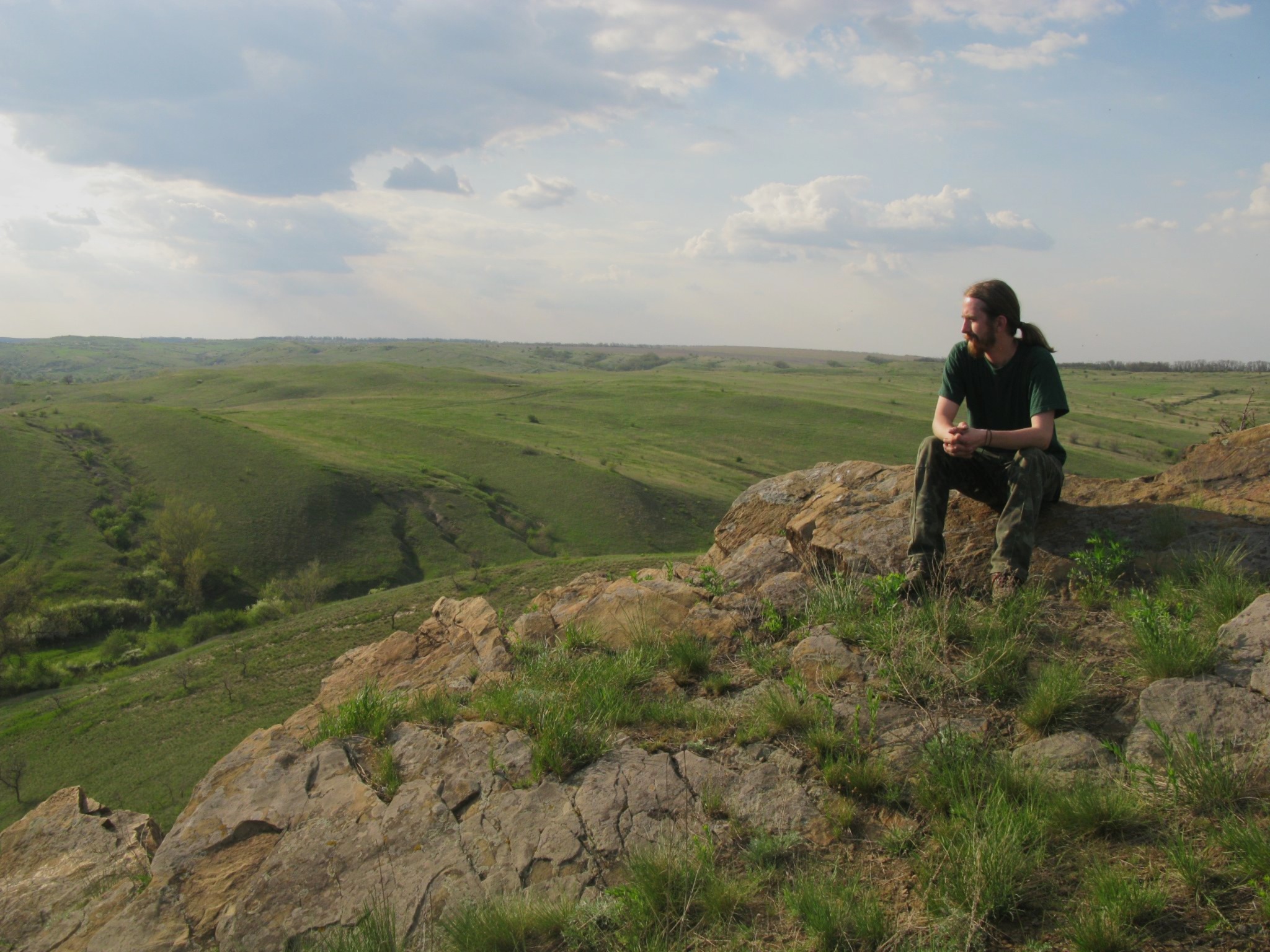
The testimony of Oleksii Vasyliuk, head of Ukrainian Nature Conservation Group (UNCG), reminds us how different the role of fire can be, depending on where and how it burns. Oleksii shared that he has always had an instinctive interest in wildlife and, inspired by Ukraine’s fields spanning territories almost unseen elsewhere in Europe, felt the obligation to act for nature conservation. In 2014, he co-founded the UNCG, a network of biologists and experts dedicated to developing nature preservation areas, studying diverse species, and influencing national environmental policy.
And while an environmentalist’s work is never easy or complete, Oleksii and his colleagues have recently had to introduce a new line of work to their organisation – monitoring the environmental toll of war. UNCG is one of the central groups with the capacity to track this impact and respond in real time – which is why I turned to Oleksii to understand how war reshapes the understanding of fire and nature itself.
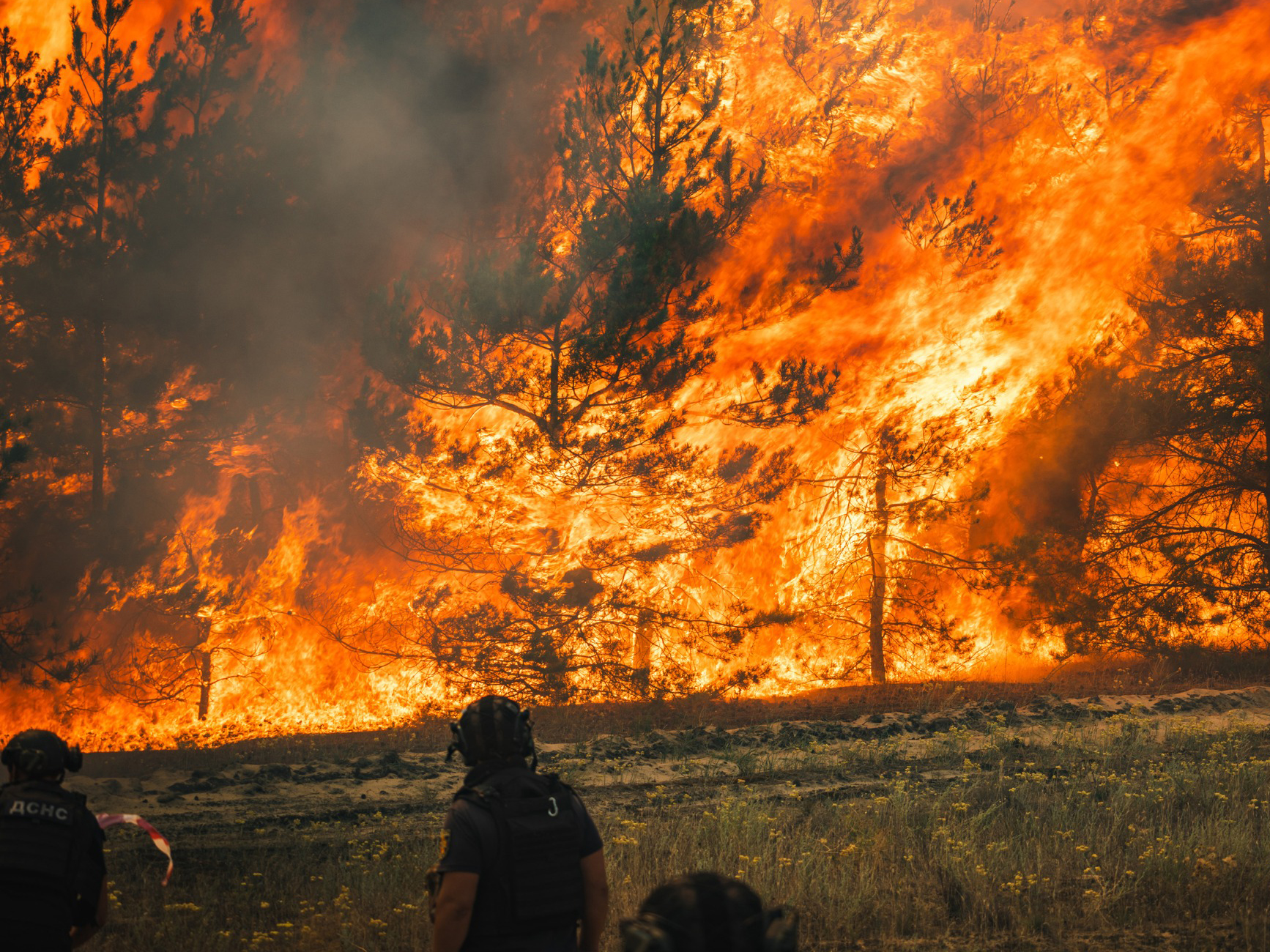
Since Russia’s full-scale invasion in 2022, Ukraine has been the most scorched country in Europe – both in terms of land burned and the frequency of large fires. From February 2022 through September 2024, around 2 million hectares burned, and nearly three-quarters of them in, or adjacent to, the active front lines. In 2024 alone, Ukraine experienced its worst wildfire season in over 30 years. Nearly 9,000 fires burned approximately 965,000 ha of land – more than twice the total area burned across all 27 EU countries combined. Most of these fires were ignited by artillery, rockets, and other war ammunition. The east of Ukraine, particularly the Donetsk region, has seen most of its forests burned down. Around 20,000 acres have burned around Chernobyl and are spreading towards Kyiv. In Kherson Oblast, great numbers of artificially-built forests were destroyed.
But beyond collateral damage, fire has increasingly become a deliberate weapon of war. Incendiary bombs and shelling are often not only intended to destroy infrastructure, but also to spark uncontrollable fires. At the same time, in 2024 Ukraine experienced an unusually dry summer, likely linked to climate change. With vegetation dried out and easily flammable, even a single strike from ongoing hostilities was enough to ignite flames that quickly spread into large-scale blazes.
“It’s heartbreaking that restoring this natural heritage will take centuries – far beyond the span of our own lives”
There remains a big margin of error in assessing to what extent forests in Ukraine have been impacted. Satellite images might show canopy loss but miss harm to trunks, roots, and soil – elements that can significantly expand the true scale of the areas deemed affected. The extent of damage further expands if one also considers the chemical residues from bombs that linger in the environment – polluting soil and preventing the recovery of ecosystems. “It’s important to understand that, unlike in places like California, Ukrainian nature is not adapted to survive fire”, Oleksii explains in Ukrainian, as I speak to him over video call in Vilnius this May. The consequences of this natural force are often far more crippling: “The fire here destroys everything, no living thing survives.”
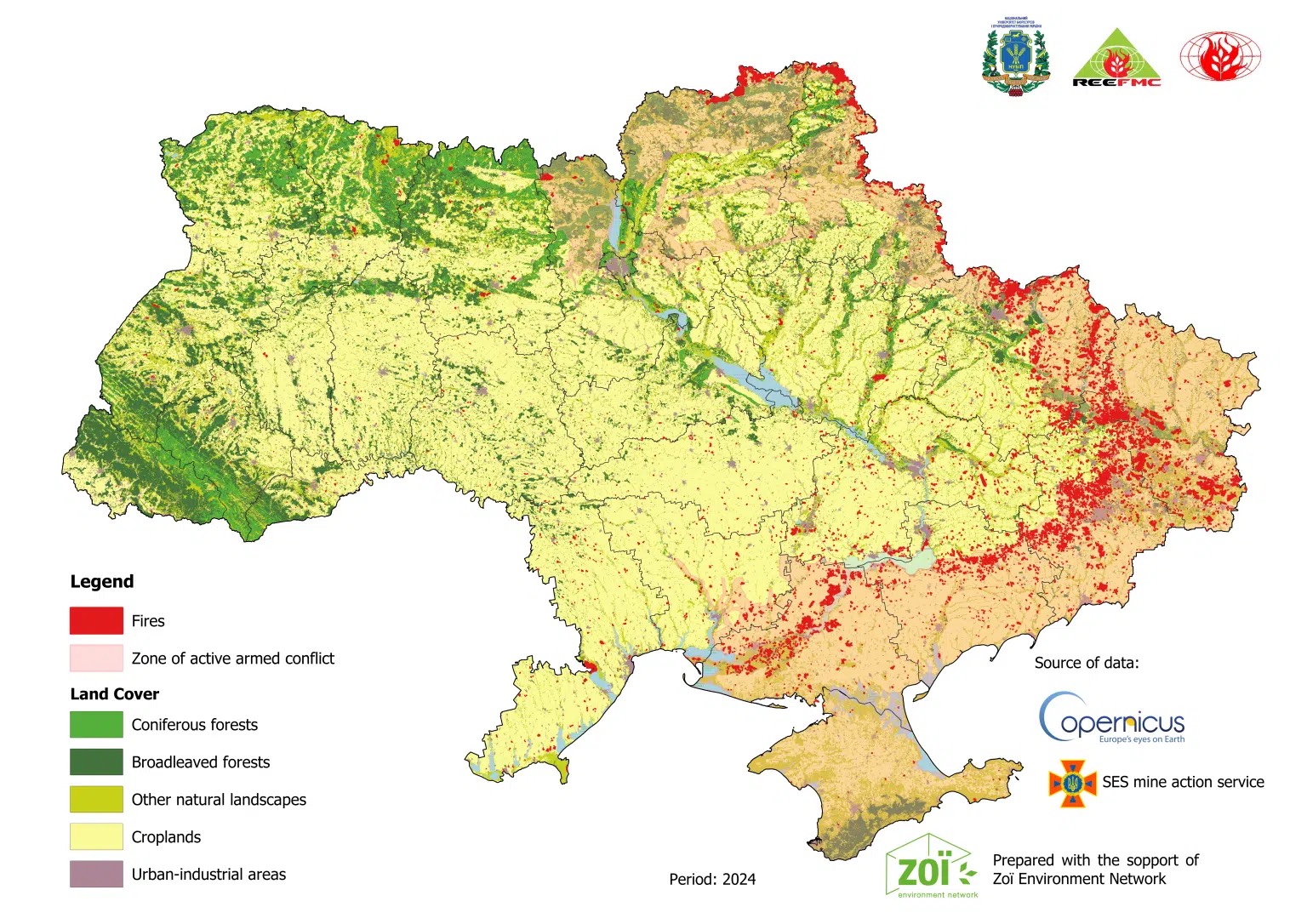
Oleksii mourns that the majority of places lost to fire were precisely the ecosystems designated as protected and highly valuable. “It’s heartbreaking that restoring this natural heritage will take centuries – far beyond the span of our own lives,” he admits. The forests that have burned down in the Donetsk region were around 600 years old; such ancient forests are increasingly rare across Europe.
The majority of areas affected in Ukraine are protected national parks and reserves. Donetsk Oblast hosts the Holy Mountains National Nature Park and the Chalk Flora Nature Reserve – areas safeguarding Ukraine’s unique relict pine species growing on steep chalky limestone hills, surrounded by steppe.


In the first year of the full-scale war, Russia occupied Askania-Nova Biosphere Reserve in Kherson Oblast – one of Ukraine’s oldest and most celebrated nature reserves. Established in 1898, Askania-Nova preserves one of the largest virgin steppe ecosystems in Europe and is home to over 3500 plant and animal species, including endangered wild Przewalski's horses, birds of prey, and even successfully acclimatized zebras. Once occupied, Russian troops have not been lenient towards this ecological oasis: they looted the reserve’s rare animals for exploitation and profit, terrorised the wildlife with military action, and intentionally set fires that burned over 1,400 ha of the steppe.
As a result, during the first year of the invasion, Oleksii and his colleagues at UNCG dedicated most of their efforts towards the Askania-Nova reserve. However, tending to natural areas in war zones is a Sisyphean and often impossible task. “The occupied territories are completely inaccessible. Even in the areas that have already been liberated, it’s extremely dangerous – there are landmines everywhere. So no one can actually come and deal with the fires after they have started. Uncontained, the fire keeps spreading and we’re left to wait for rain or for the fire to die down on its own,” says Oleksii. In the liberated regions, the first step of wildfire management is often not firefighting but in fact, demining: trained teams, sometimes aided by drones, survey the ground to locate and remove explosives one by one before anyone can safely enter. Despite these dangers, some conservationists and firefighters still choose to enter these areas, risking their lives.
Many colleagues from UNCG have risked theirs by joining the army soon after the war started. With fewer human and financial resources, organizations like UNCG are unable to sufficiently support Ukraine’s nature and must mobilise and devote a significant part of their resources to winning the war.
At the same time, according to Oleksii, the war also serves to conveniently mask the persistent and extractive practices within Ukraine’s industry to continue unchecked. Even before the war, UNCG’s experts have constantly been at odds with Ukrainian policy makers and industry representatives. Oleksii regrets that the environmental policy in Ukraine still bears some deep Soviet-era legacies: from the active cultivation of monoculture forests, to an extractive mindset that prioritizes endless timber production over long-term ecological preservation. Nowadays, wood has been increasingly used to build fortifications for Ukrainian soldiers, but industry has also seized the opportunity of war as justification for expanding logging operations – citing reconstruction and recovery needs, while accelerating extraction for commercial use. “As if it no longer matters that the extraction plans still come at the expense of nature.”
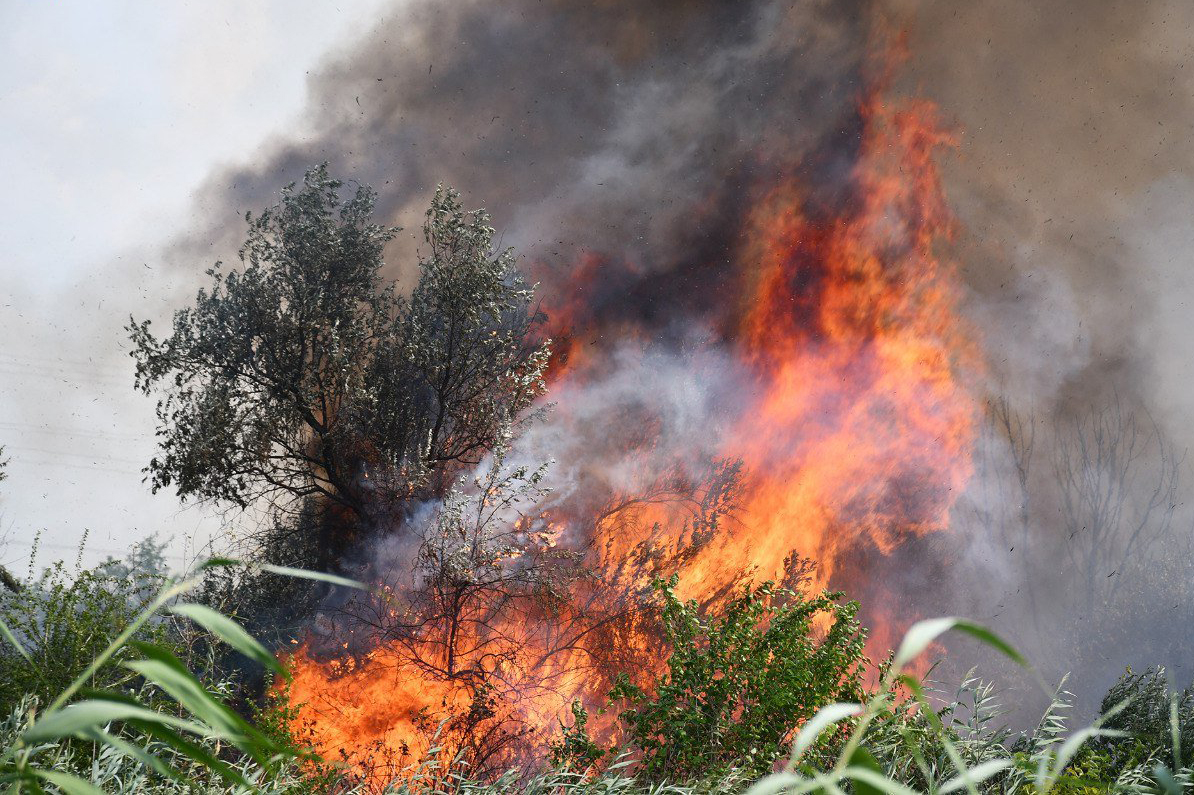
Oleksii has also been actively opposing the forestry sector’s tolerance of invasive species. In May 2023, after extensive public campaigning, Ukraine’s Ministry of Environmental Protection and Natural Resources banned 13 alien tree species from being planted for reforestation. The move was important to restore more war- and climate- resistant forests, with high protective properties and without aggressive invasive species that threaten the health of Ukraine’s natural ecosystems. Some of these species, such as black walnut, red oak, or black locust, were introduced from North America and possess varying degrees of fire tolerance – something that many native Ukrainian species lack. “Most people operate on a very simple logic: it’s important to have trees, any trees. But not all forests are good forests. When people don’t understand the basics of ecology, it’s hard to get through to them and explain which trees we really need,” says Oleksii. He warns that monoculture forests create ecological dead zones with little biodiversity within them. However, as fires become more frequent, the more these few North American invasive species outcompete and replace native vegetation, reshaping Ukraine’s natural landscape. After the forestry industry successfully challenged the bill in court, the Ministry’s decision was revoked, dashing environmentalists’ hopes.
Ukraine insists Russia should pay for the environmental damage it has inflicted, and is already pursuing around 40 criminal cases against Russia over the damage caused to forests
Large-scale wildfires are more than ecological disasters. They emit vast amounts of carbon emissions into the atmosphere, while also destroying vital ecosystems that once served as natural carbon sinks. In 2024 alone, emissions from all landscape fires in Ukraine, including forests, amounted to 48.7 MtCO2e. The combined impact of direct pollution and the loss of nature’s ability to regulate the climate puts into perspective not only what the green recovery must truly reckon with, but also what climate action and resilience really look like in a face of overlapping crises.
Oleksii notes that the green recovery in post-war Ukraine shouldn’t only result in sustainable energy or transport infrastructure, but also a conscious effort to recover the damaged environment. So far, no official plans exist to meet this objective.
At the same time, Oleksii remains cautiously hopeful: “In some war-torn regions of eastern Ukraine, where human activity has completely paused, our colleagues are already observing the return of natural forests and wildlife. Perhaps one of the most effective remedies for environmental healing is giving nature the space and time to recover on its own. It is precisely by not meddling with ecosystems that humans can ensure their survival.”
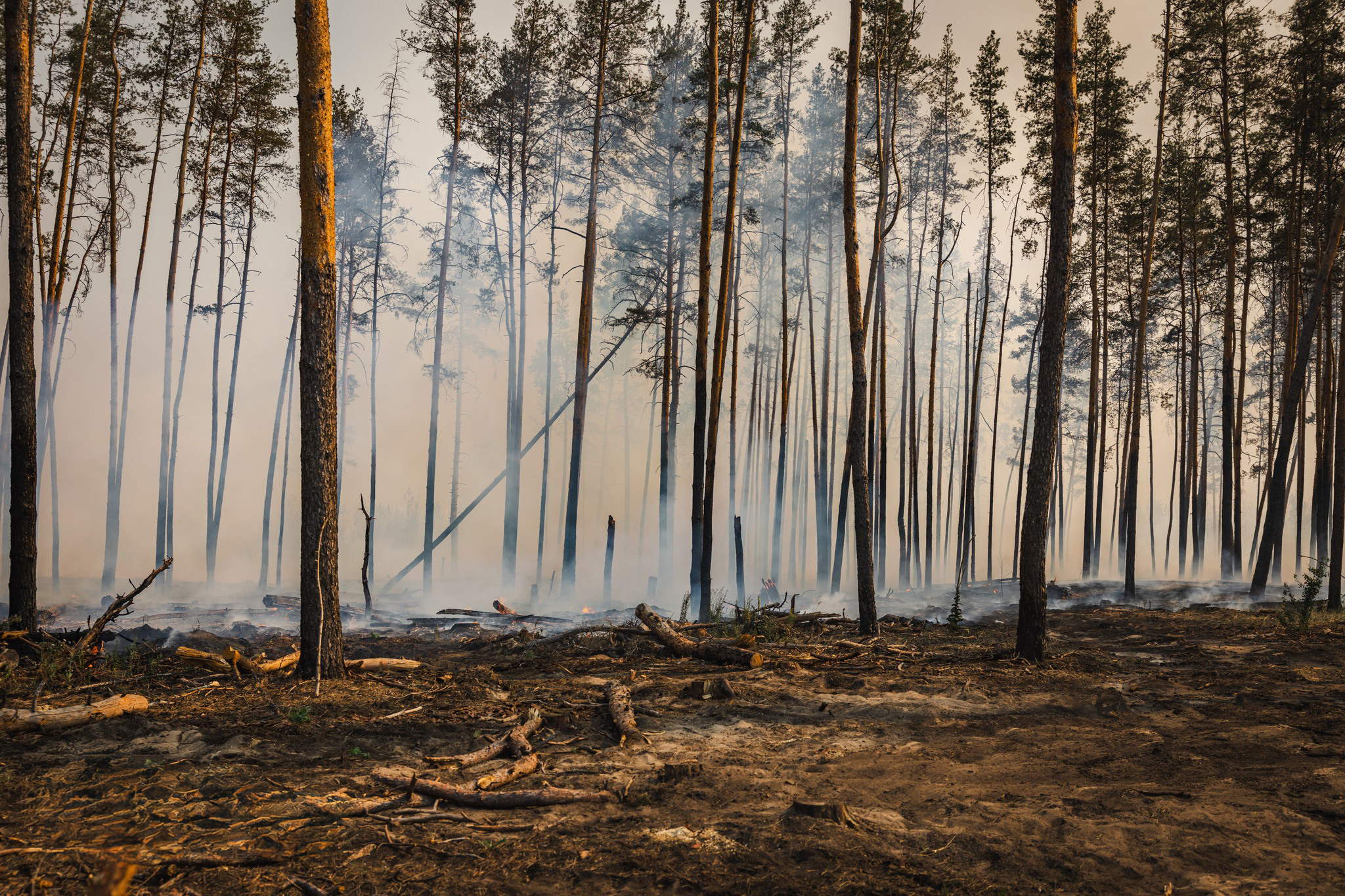
But will Oleksii – and Ukraine – be able to reclaim their beloved nature? From forests to farmland, current estimates suggest it could take 70 years to demine all contaminated land. According to a World Bank estimate from February, the war has caused more than $30 billion in damage to forests and protected ecosystems, such as marshes and wetlands – with at least as much, and likely more, needed to recover it.
Ukraine insists Russia should pay for the environmental damage it has inflicted, and is already pursuing around 40 criminal cases against Russia over the damage caused to forests. Yet the toll of wildfires is only one part of the wider network of environmental destruction from the war: soil and rivers poisoned, many species threatened, air polluted, and areas outright deserted. The question that remains is not only how to rebuild, but whether those who treasure this land the most will be able to witness its recovery in their lifetimes.
Today’s flames are fed by yesterday’s decisions
The war in Ukraine is a mirror of all of Europe’s security, geopolitical uncertainty, and, ultimately, its future. But what characterises the European land that we aim to defend, and where do its boundaries truly lie? The forests now being destroyed by war are not just local terrain but also part of a living continuum of our identity and our resilience – will we make sure to protect them?
For Oleksii, who has devoted his life to this mission, it is clear that: “Ukrainian nature is not just Ukrainian nature”. The health of Ukraine’s environment is a collective responsibility as it is part of our planet’s common natural system. Scandinavian birds that migrate to Ukraine’s wetlands for winter will also be affected by the harsh realities on the ground and may not return home. Nature does not know borders, but will echo our solidarity, or our neglect. Solidarity means sending donations, amplifying Ukrainian voices, supporting environmental groups, and pushing for political outcomes that help Ukraine defend itself – and restore its forests and fields.
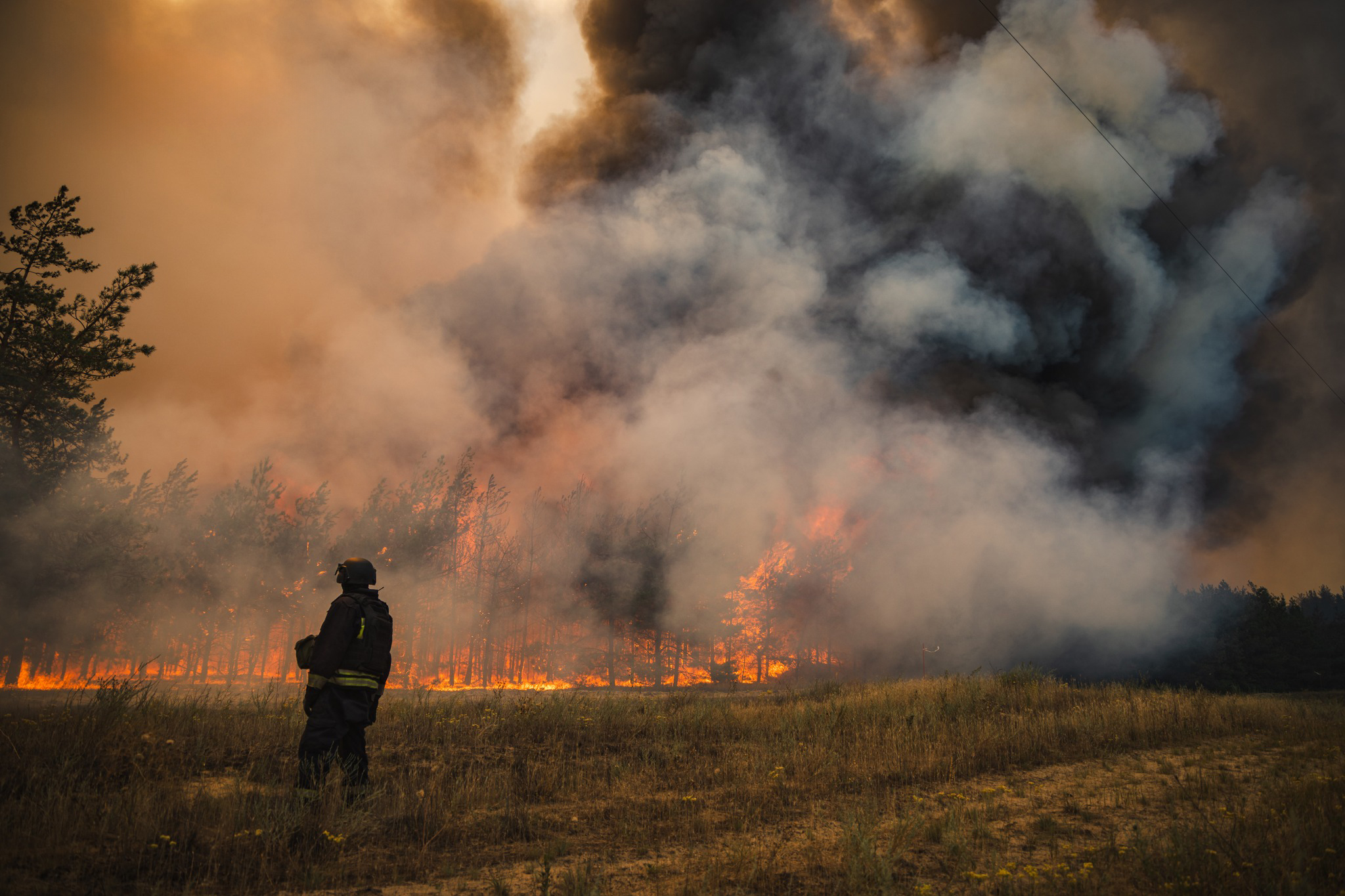
Whether in California, where fire is woven into ecological rhythms and traditions, or in Ukraine, where it symbolises destruction, large-scale wildfires are never just natural disaster events. They are layered outcomes of historical, political, and moral actions that are only further exacerbated by the climate crisis. Today’s flames are fed by yesterday’s decisions.
From marginalisation of indigenous communities, to raging a war against a neighbouring sovereign country, injustices persist and will continue to manifest themselves in ways we don’t always expect.
With consequences that transcend borders, wildfires are slowing down our collective efforts towards climate action – something we cannot afford. As fires increase in frequency and intensity, they release additional emissions and destroy natural carbon sinks – exacerbating economic losses and intensifying the climate crisis that fuels them.
Even if far from the flames in California or Ukraine, the grief of Rod and Oleksii for lost nature, people, and heritage in their homelands feels universal – when fire is not tended to correctly or is abused. Their testimonies are not only chronicles of loss, but, in fact, history lessons for us all. Lessons on the urgency of indigenous land stewardship. On the need to recognize the dangers of invasive species. And on the moral responsibility to stand in solidarity with those still fighting for what is rightfully theirs, and for what is simply right – through our joint resources, our political will, and our voices.
By confronting fire, we must confront our history and our history-in-the-making. And by planning for future resilience, we must do so with justice, wisdom, and the humility to listen – to those who have long known how to live with fire, and to those now learning to survive its worst.
-
Friend €5 mo.
-
Penpal €10 mo.
-
Advisor €30 mo.
-
Patron €100 mo.
-
Friend €50 y.
-
Penpal €100 y.
-
Advisor €300 y.
-
Patron €1000 y.
Dominyka Nachajūtė is an environmental researcher and economist, a graduate of Columbia University in New York, exploring the interdisciplinary connections of nature conservation, economics, sustainable finance, and international development.
We thank Polina Tolpygina for her assistance with Ukrainian–English translation during the interview for this publication.
This article was created in cooperation with the Vilnius – Green Capital of Europe initiative, affirming Vilnius’s solidarity with Ukraine, where both people and nature are being destroyed by Russian forces. The NARA editorial team is solely responsible for the content of this publication.