
To Survive in War, They Pay With Their Bodies
As Russia’s full-scale invasion of Ukraine continues into its fifth year, sex has become the only commodity some Ukrainian women can provide in exchange for their survival. But where, in war, is the line between free choice and coercion?
Liza enjoys working with military men. She says she understands what they’re going through and feels respect for what they do for Ukraine. She couldn’t work with civilians as it would create internal conflict. Liza is angered that while some men sacrifice their lives, others hide in their apartments to avoid mobilisation: “Even I have enough courage to come here and help in some way.”
Liza is her pseudonym. She provides intimate massages in Kramatorsk, in Donbas – just 10 kilometres away from Russian positions on the front line.
The European Union flag flutters above the salon where Liza works. There are no signs indicating that massages are offered here – and especially those with a ‘happy’ ending. From the street, it looks more like a hub for humanitarian aid. Such salons operate in the shadows in Ukraine, but near the front they are as common as volunteer centres.
Having sized us up, the salon hostess offers us an intimate massage for two. When we explain that we're journalists and only want to talk about sex and intimacy near the front line, she doesn't seem surprised. Soldiers also come by to just talk or fall asleep in an embrace. Provided we pay for the time, we can spend it with a 'girl' in conversation, too.
Three girls are listening to our conversation and one of them is Liza – who appears to be the most eager to take us to her work room to talk, not only for the money.
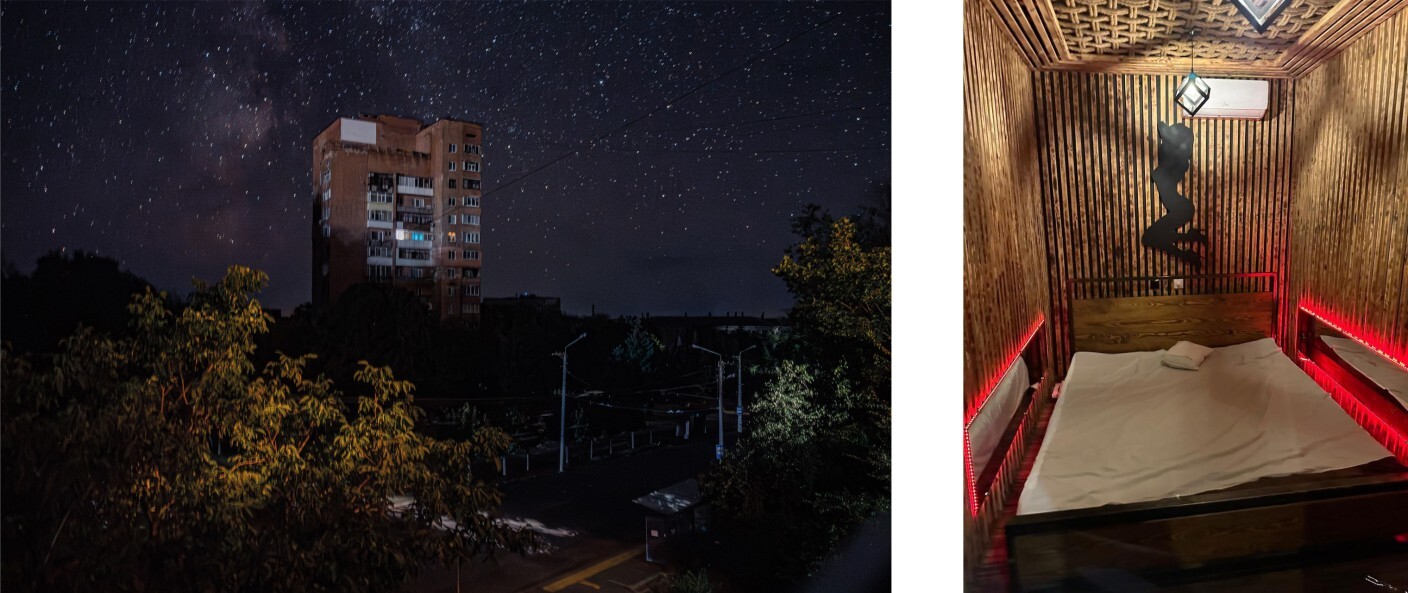
On the right – Liza’s work room in the salon. ©Anonymous
Liza comes from an intellectual family in Kyiv. Her grandmother is a doctor and her father is a former officer for the military; she studied psychology and previously gave traditional massages. When she decided to change the nature of her work, it was difficult for her to step beyond the image of a ‘good girl’ and to accept the ‘shadow side’ of her personality. She had always been obedient, followed the rules, and held down a ‘normal’ job. Her family don’t know about her work now and believe she works as a beautician.
The network of intimate massage salons extends across the whole of Ukraine. Liza herself still lives and works in Kyiv, with Kramatorsk being a new job for her. After all, the closer to the front line, the greater the demand for work.
The salon operates around the clock and there are always men inside. According to Liza, the vast majority are soldiers. In our conversation with Liza, she echoes the grim reality of the Ukrainian front line: soldiers are struggling immensely, rarely get leave, and witness their friends dying at the front. Some need ‘to cum’ in order to unwind; others only need to be listened to and some are just satisfied with music or a dance: “Sometimes we turn on music and organise a disco for them. And they can forget themselves a little.”
Nevertheless, this work diminishes Liza’s trust in men. “It’s hard for me to make sense of it: on the phone screen – a wife, children, and yet he comes here,” she says. According to Liza, some soldiers don’t allow their partners to come to Kramatorsk because they worry about their safety. Instead, they buy intimacy from the women who live here.
The women are protected by security guards, and so Liza feels safe in the salon - especially if a client demands more than just an intimate massage. At work she wears a short black dress but she would never wear one out on the street. She says it’s dangerous for women in Kramatorsk and she always carries pepper spray and dresses in a way that wouldn’t attract male attention, out of fear that a man might follow her home. Liza is afraid of men because she knows the trauma they carry and how this could affect their behaviour. Soldiers sometimes come to the salon armed and at times even get into fights with each other.
Liza compares intimate massage for soldiers to war psychology – through her work she accumulates not only money but also experience, which she intends to treat war traumas in the future. She says she wants to “actively contribute to recovery after the war” by counselling veterans and their wives. In her view, domestic violence will increase after the war – as it already is.
The history of wars teaches us that in areas affected by military conflict, domestic violence is more widespread, with women and children often being those who suffer the most. This violence is often driven by heightened stress and post-traumatic stress disorder.
As Russia’s full-scale invasion of Ukraine has intensified, cases of domestic violence have started to rise. According to data from 2024, 2 in 3 women have experienced psychological, physical or sexual violence. Those at greatest risk are widows, single mothers, partners of war veterans, and women living in poverty. Women’s rights organisations stress that many women don’t seek help as they regard it a private matter or undermine their own safety – “my pain is nothing compared to my husband’s experiences at the front.”
★ ★ ★
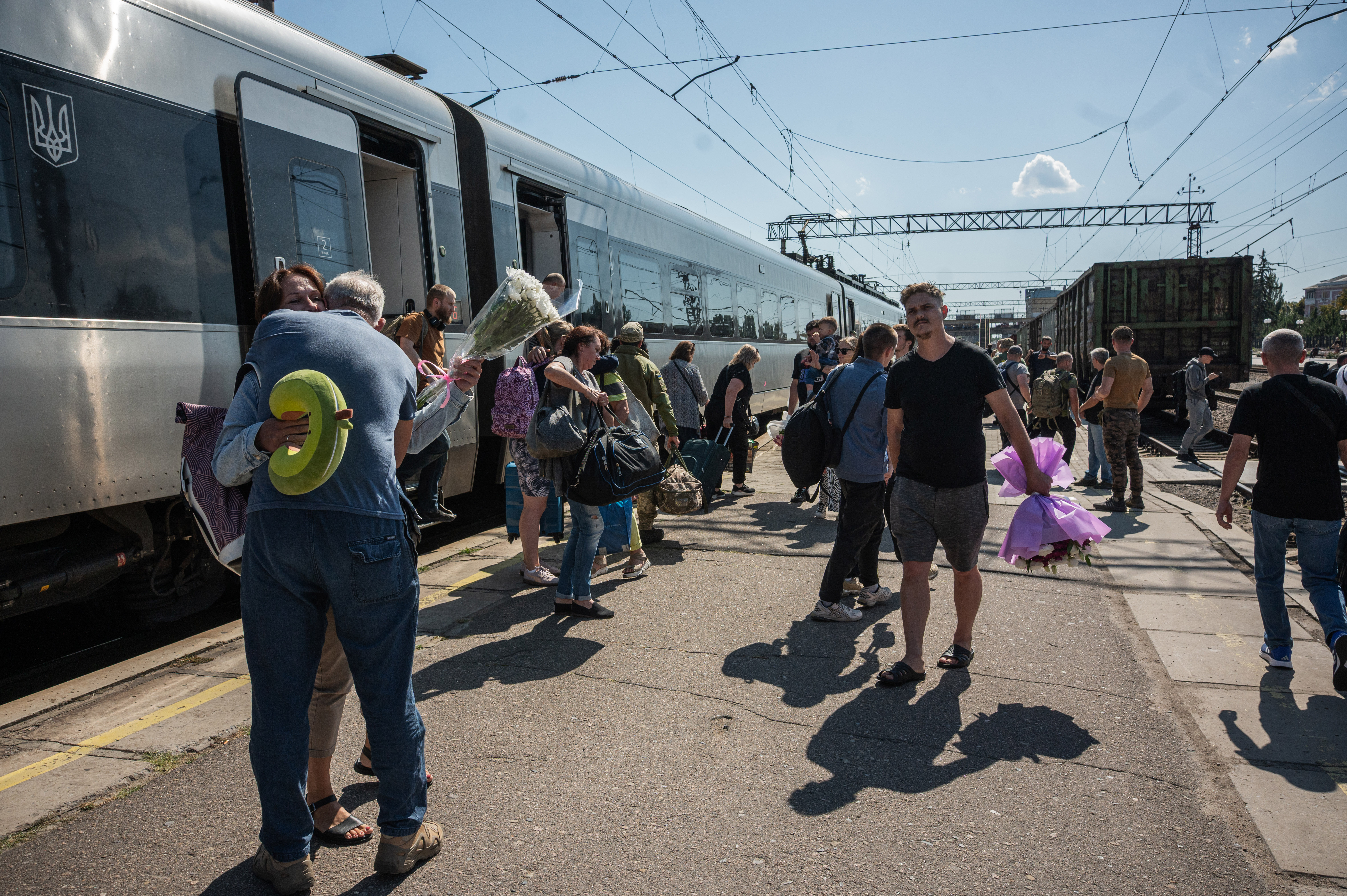
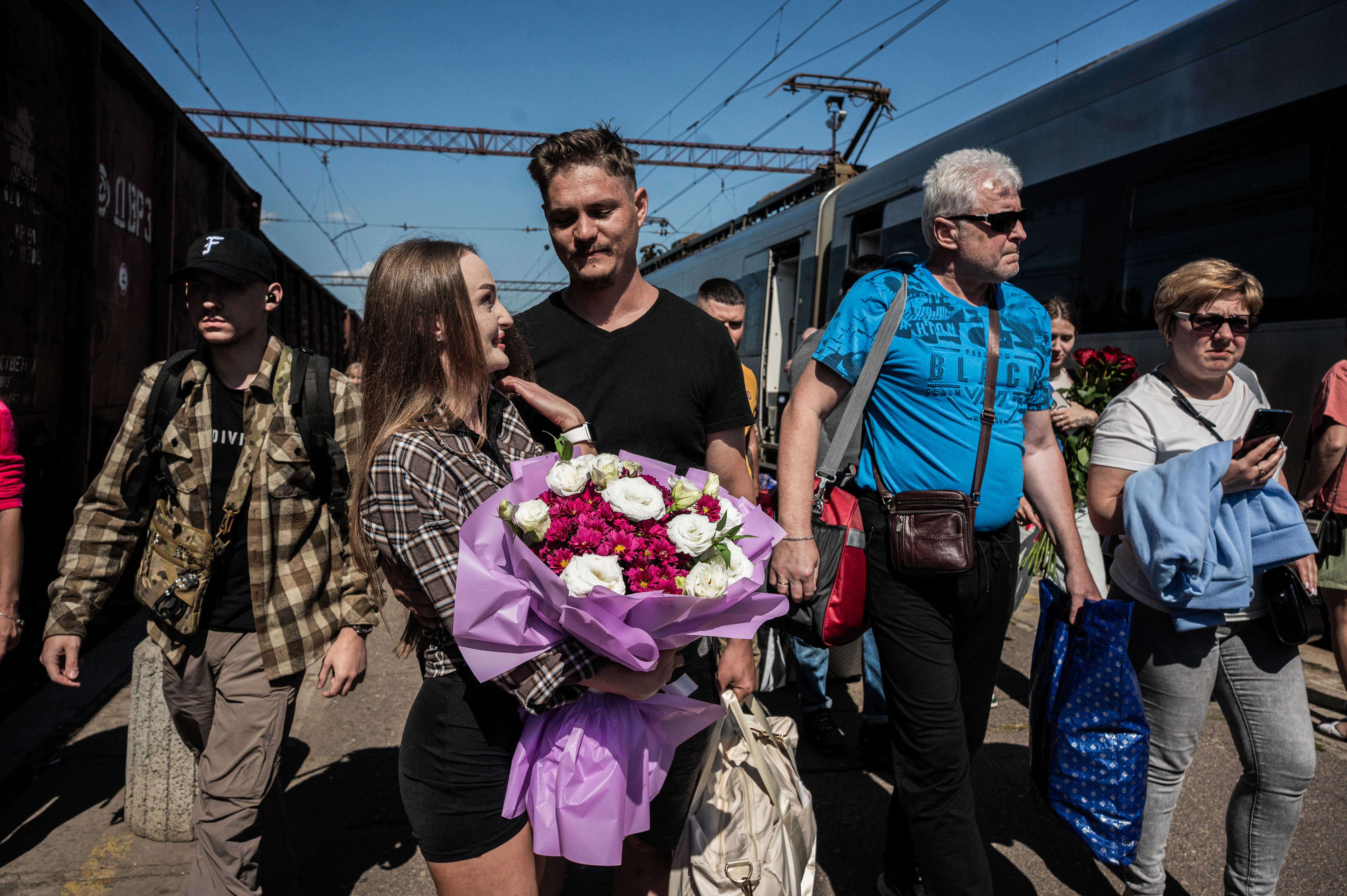
Kramatorsk is sometimes called the city of love. This is perhaps best illustrated by its train nicknamed 'Kyiv-War', which arrives at the station from the capital and the women who step off are met by perfumed, well-dressed men carrying bouquets of roses. Couples who have not seen each other for a long time embrace and kiss stand besides couples who are saying goodbye. “We will rest, and enjoy life while we still can,” says Maksym, whose girlfriend Katia has come from Kyiv to visit him. The couple meet once a month and spend three or four days together.
Such scenes are no longer visible at the station – since November 2025, trains have stopped running here for security reasons: enemy drones and ballistic missiles are striking Kramatorsk with increasing frequency. However, the city can still be reached by bus. For Kramatorsk, this is just another circumstance of war that it must adapt to.
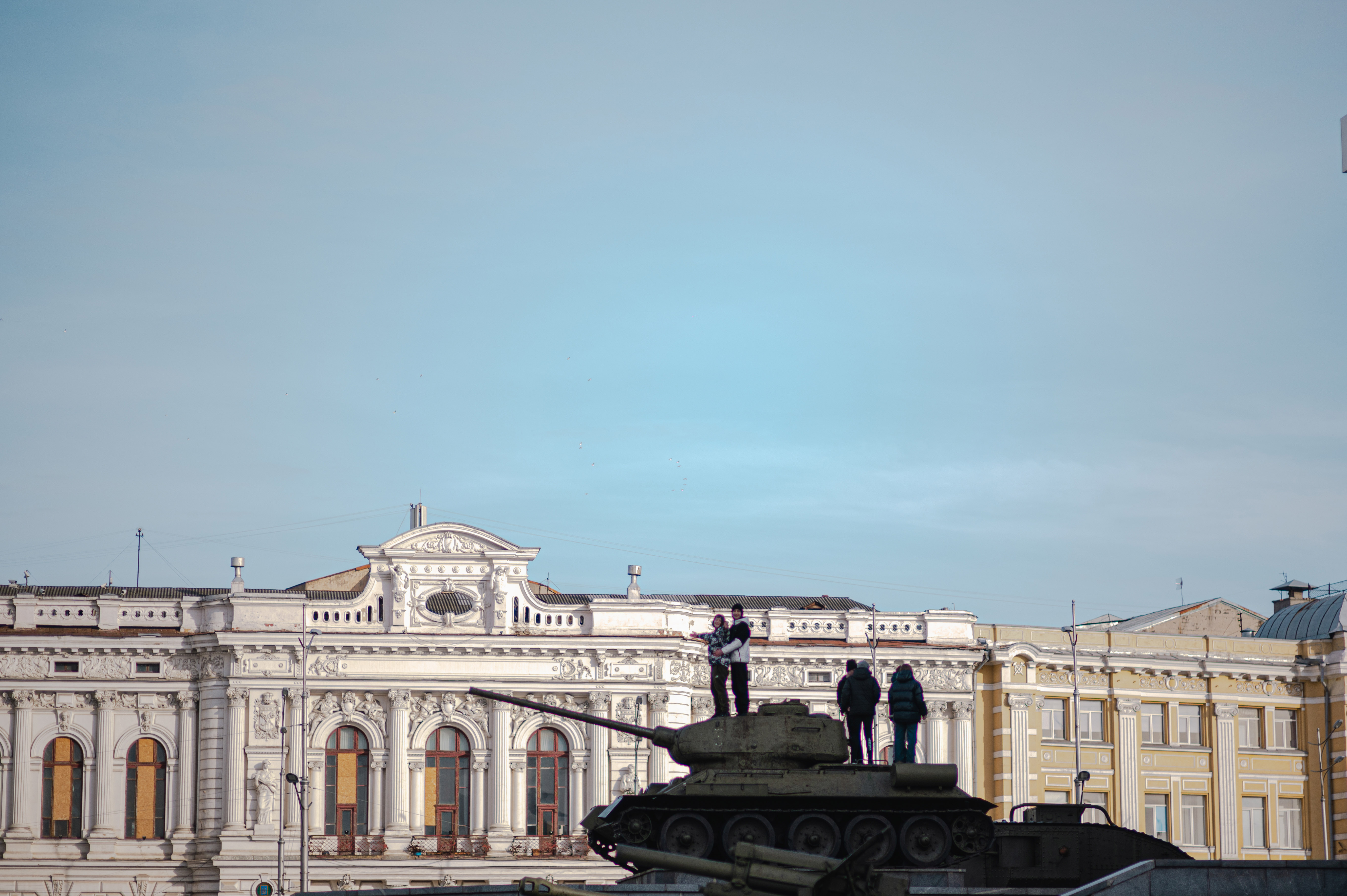
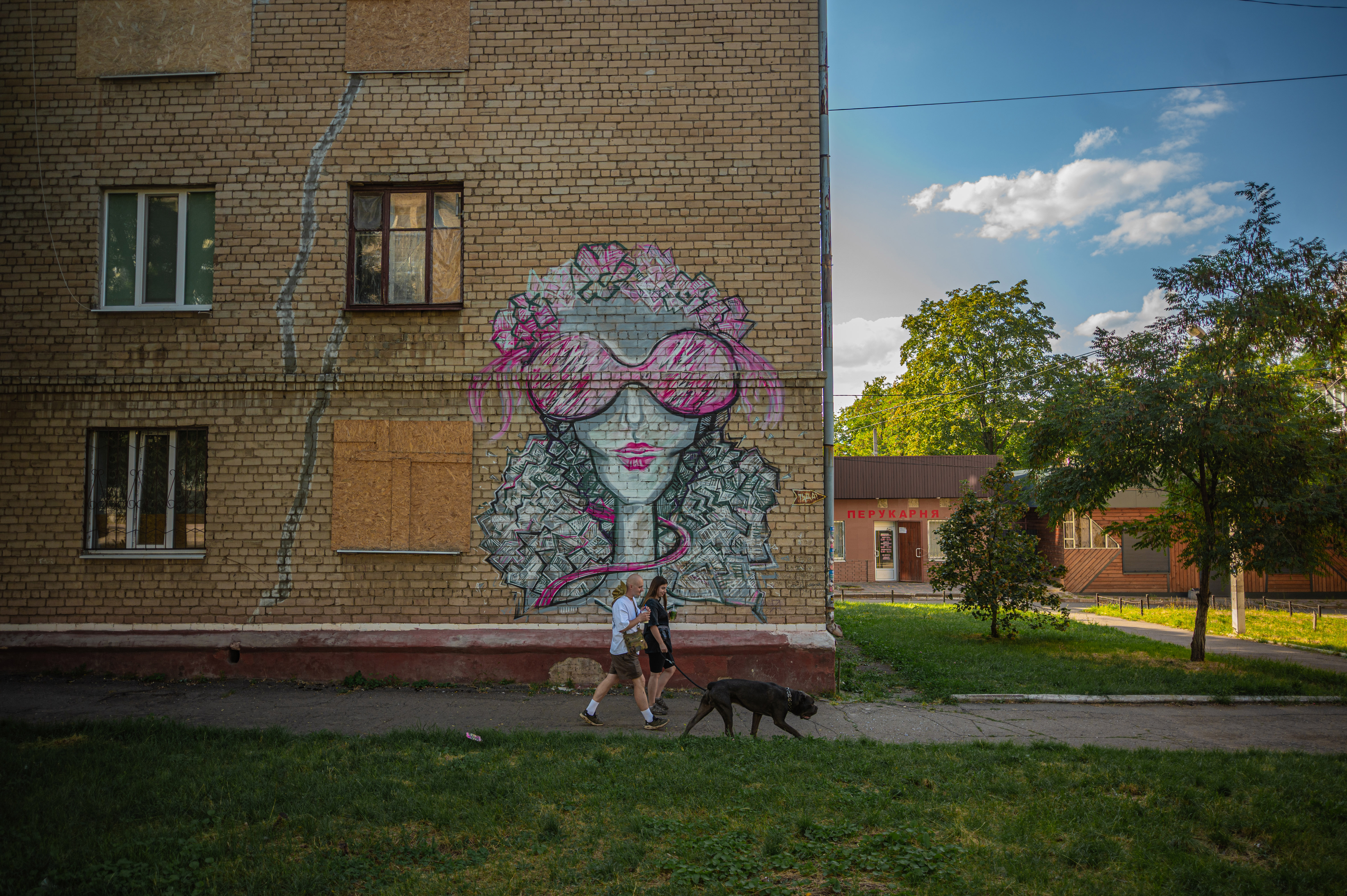
In 2014, when the war in Donbas began, the city was occupied for three months. Kramatorsk was later liberated, and since then the industrial city has rapidly militarised. Over the last decade, it has transformed from an industrial centre into a military and logistics hub – a city that understands soldiers and, it seems, asks them nothing in return. Although constantly shelled, it is a relatively safe place for soldiers – in Kramatorsk they rest after fighting at the front.
Since that time, locals have been in a cycle of leaving, returning and leaving again. Until February 2024, about 150,000 people lived here; now, only a third remain. The war has forced many of Kramatorsk’s largest factories to shut down, and the city has been left with services mostly in demand among soldiers – such as intimate massage salons, brothels, and the option to call a sex worker to the trenches.
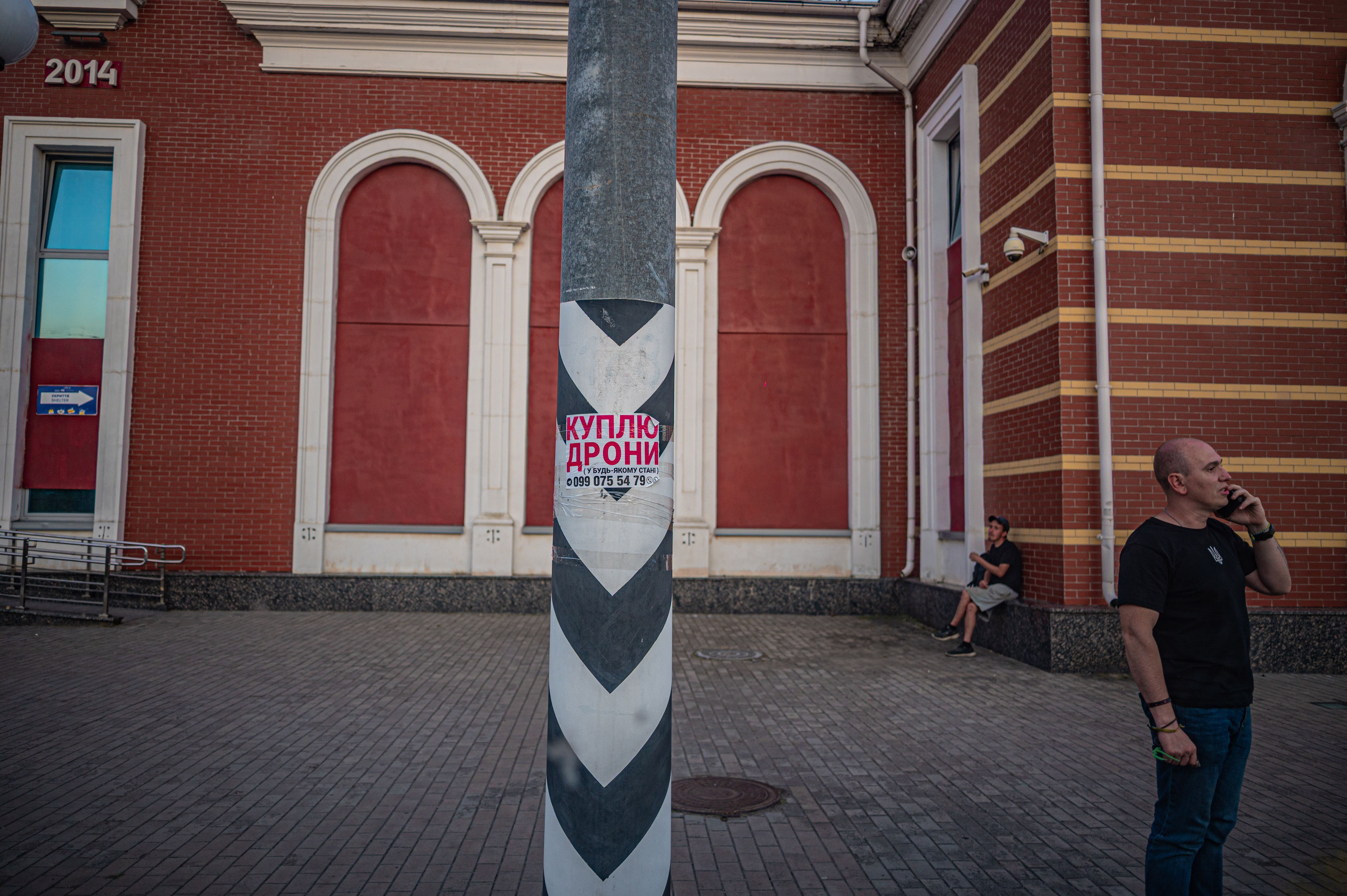
An unremarkable street in Kramatorsk where Liza works is known not only for intimate massage, but also the place for sex services. Liza recounts stories she has overheard: a young woman was taken to the trenches, and when shelling began, the soldiers left her behind; soldiers exploited a girl they had called to their home and didn’t pay – instead, they gave her a sack of potatoes and chased her away. The provision of sexual services is illegal in Ukraine, so there are no institutions who would protect such women. “The police will always be on the side of the military. And women like them will always suffer the most,” says Liza.
Sex work, like sexual violence, is most often wrapped in rumours and retelling. The women themselves rarely share their stories – it is taboo, illegal, they’re afraid and the publicity wouldn’t benefit nor protect them. The stories often remain in private conversations, in places like beauty salons, of which there are also plenty in a front line city.
We receive Lena’s contact details From Yuliia Dorokhova, who is the head of Legalife-Ukraine – an organisation helping women leave sex work. Lena has agreed to tell her story. On the arranged day, Lena is returning from work at the front. She stops responding to our messages, and eventually to those of Yuliia and her assigned social worker, Nataliia – who says this often happens. Most likely Lena, while waiting for the train (in August they were still running), decided to earn some money.
That evening Lena never appears. Only later do we learn from Nataliia that she returned alive and well – on the way to Kramatorsk she had stopped to see clients in Sloviansk.
Liza, Nataliia, and others repeat that, since the war began, it has become harder for women from small towns and villages to make a living. Factories have closed; with men killed at the front, women have been left as single mothers and widows. For some, providing intimate services becomes a means of survival. According to Legalife-Ukraine data, in 2023 around a tenth of sex workers had taken it up after the war began. “I think OnlyFans has become a lifeline for many women,” says Liza. Intimacy at a distance provides financial relief and offers physical protection. Among politicians there have even been proposals to decriminalise pornography, so that Ukraine could collect more tax revenue from OnlyFans creators and thereby support its war-ravaged economy.
According to Nataliia, women come to Kramatorsk to earn money. Without precise statistics, she relies on what she experiences in her work with women dependent on drugs: around 15 local women come to her to collect “syringes, condoms and lubricants.” Nataliia says some “leave the centre and go straight to the road – soon a car with soldiers stops, they take them away, and the work begins.” She also says there are ‘elite girls’ in Kramatorsk who charge more, are more confident, regularly get tested for sexually transmitted infections, and are thus in greater demand. Their clients are also soldiers. The ‘elite’ are looked after by a pimp, known as ‘Madam’, who takes condoms and lubricants from Nataliia ‘by the box’.
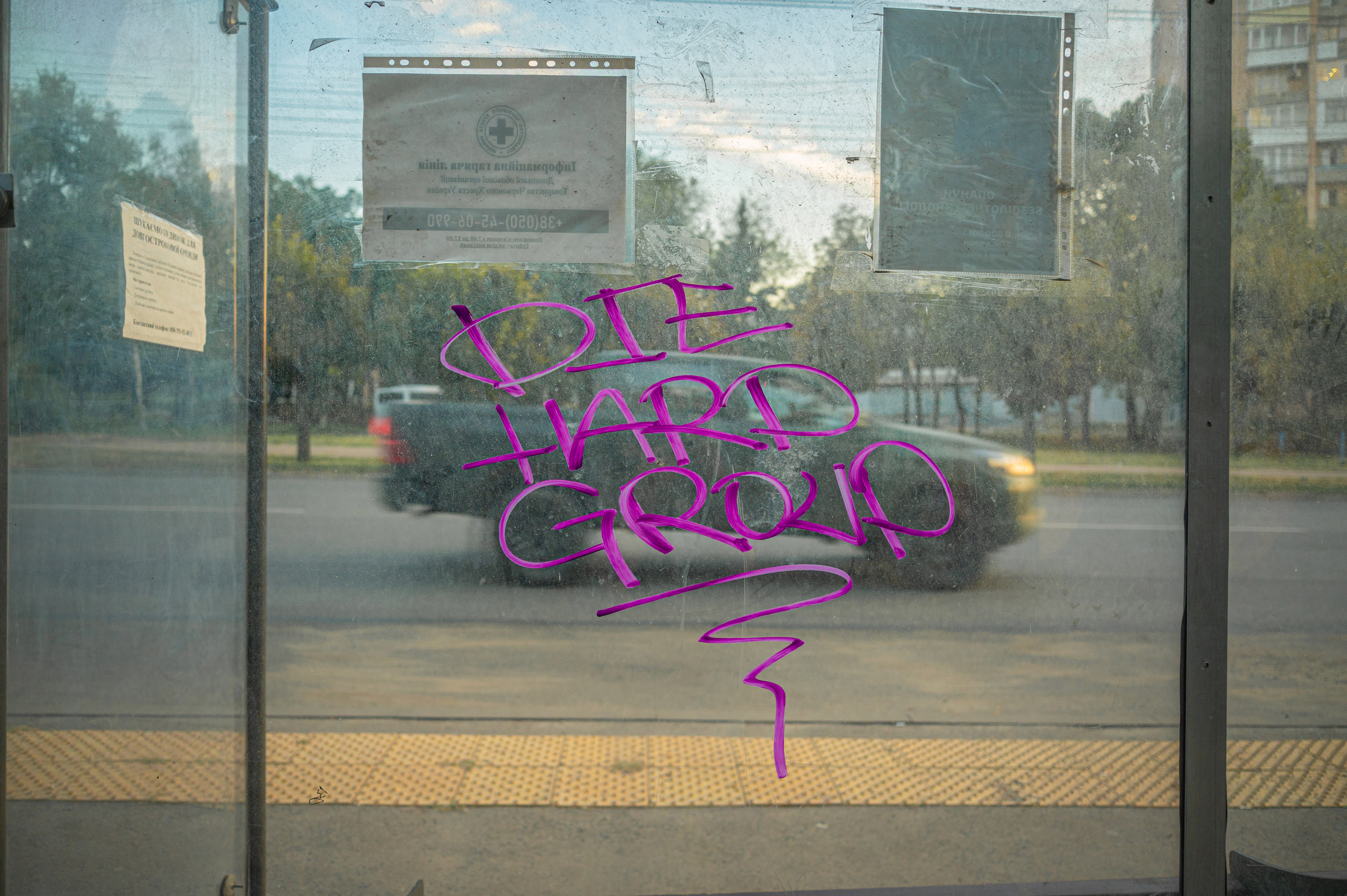
“And those soldiers who try to save money use my girls,” says Nataliia. According to her, the ‘elite’ have unofficial protection, while it is understood that Nataliia’s ‘girls’ have none.
★ ★ ★
‘Madam’ also comes to see Viktoriia Semchenko, the coordinator of the charitable organisation Positive Women (Ukr. “Pozytyvni zhinky”) in the Donetsk region. The word ‘positive’ refers to an HIV diagnosis.
According to Viktoriia, Madam is endlessly taking condoms from her organisation, as well as tests for syphilis, HIV and hepatitis. We don’t know whether this is the same Madam mentioned by Natalia. Viktoriia says “there are many soldiers” and so the demand in Kramatorsk is high. According to her, Madam runs a brothel and looks for women of any age – it doesn’t matter what they look like, providing they “have their heads on straight”.
Viktoriia says that the brothel of the mysterious Madam is protected by the police. It seems that police officers, taxi drivers, and pimps form a holy trinity of support to keep the supply of sexual services running: the police either fine or cover for them; taxi drivers provide transport and find clients; the Madams supervise by supplying tests and protection.
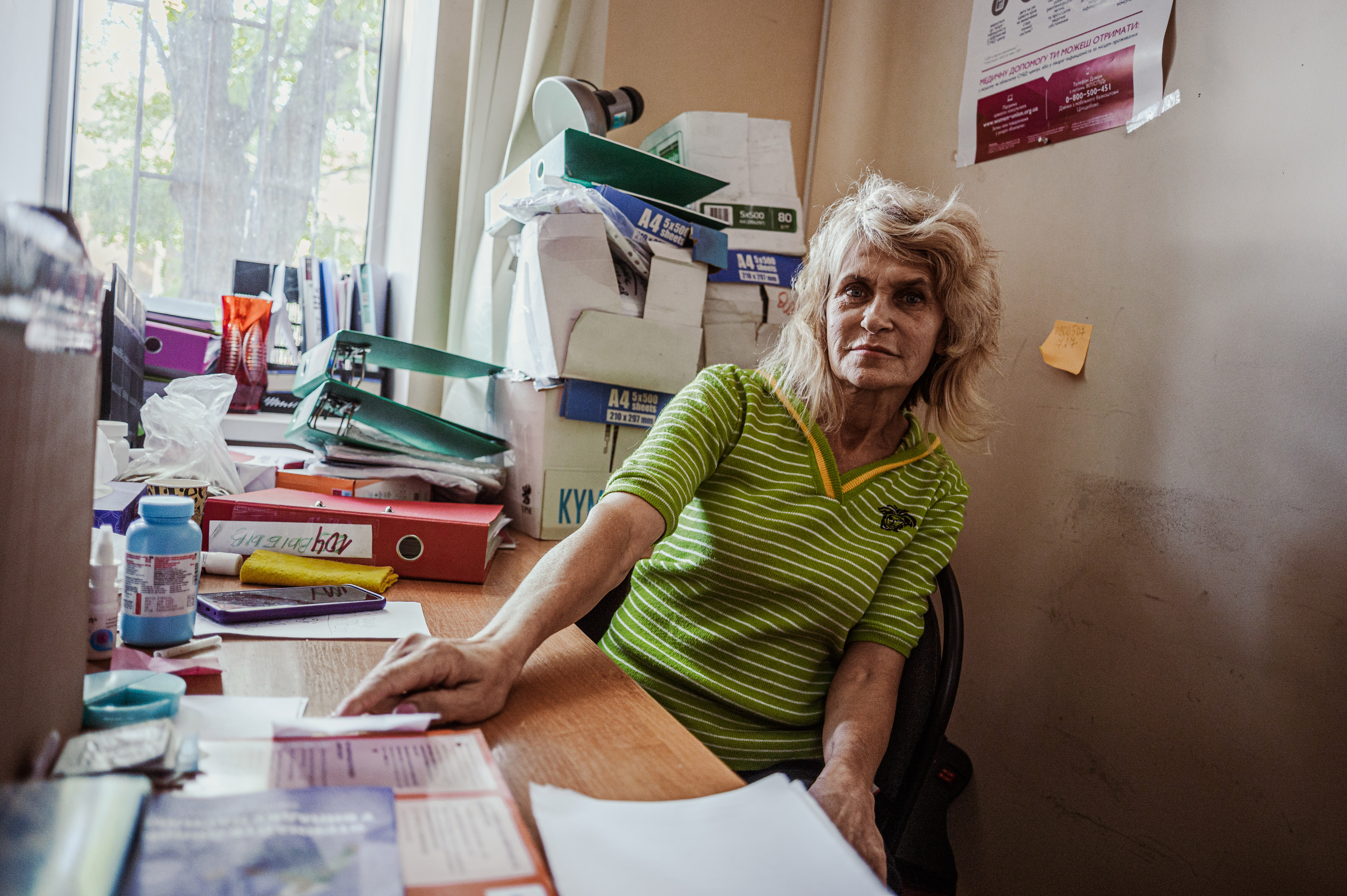
Viktoriia recounts her clients’ stories: “There is a woman whose husband abuses her, but she won’t want to talk about it. She is my client, lives with HIV, reports she is receiving treatment, picks up food for the baby, and that’s it. All her teeth are knocked out. The husband seems to have been mobilised, so now she will get some rest. But what will happen when he returns from the war? Then it will be even worse...” Her words echo what women’s rights activists say: that for some women the war has become an opportunity to escape abusive husbands – the men have been mobilised and the women have left for Europe. There are cases where men have stopped being violent because they are hiding from mobilisation and live in fear of the police. Or, on the contrary – they become more aggressive.
Viktoriia has lived with HIV for 30 years. She was also addicted to ‘shirka’ – a homemade poppy brew she made herself. She used it for 12 years until she was imprisoned for drug production. After her release, she exchanged hard drugs for vodka and weed, and later “found faith in God and remained in remission for about 18 years.” The war ended her remission, with the stress pushing Viktoriia back into dependency – this time to promorphine, which she received at the hospital in addition to methadone during substitution therapy “At night the sirens would howl, and if you can’t sleep – you break off a little, put it under your tongue, and everything becomes fine. An old habit. The craving woke up again.”


Viktoriia looks exhausted from the constant stress of the front. She says that everyone’s psyche here is damaged: on the bus she listens to locals saying that they once again couldn’t sleep because of the shelling. “Everyone is waiting to see what will happen next, where, how…you can feel it in our city.”
Nevertheless, Viktoriia has no intention of leaving Kramatorsk. She fears that nobody would take her in with 14 cats, and she isn’t prepared to abandon them. “But if it happens that they [russians] come here, then I will have to leave.”
★ ★ ★
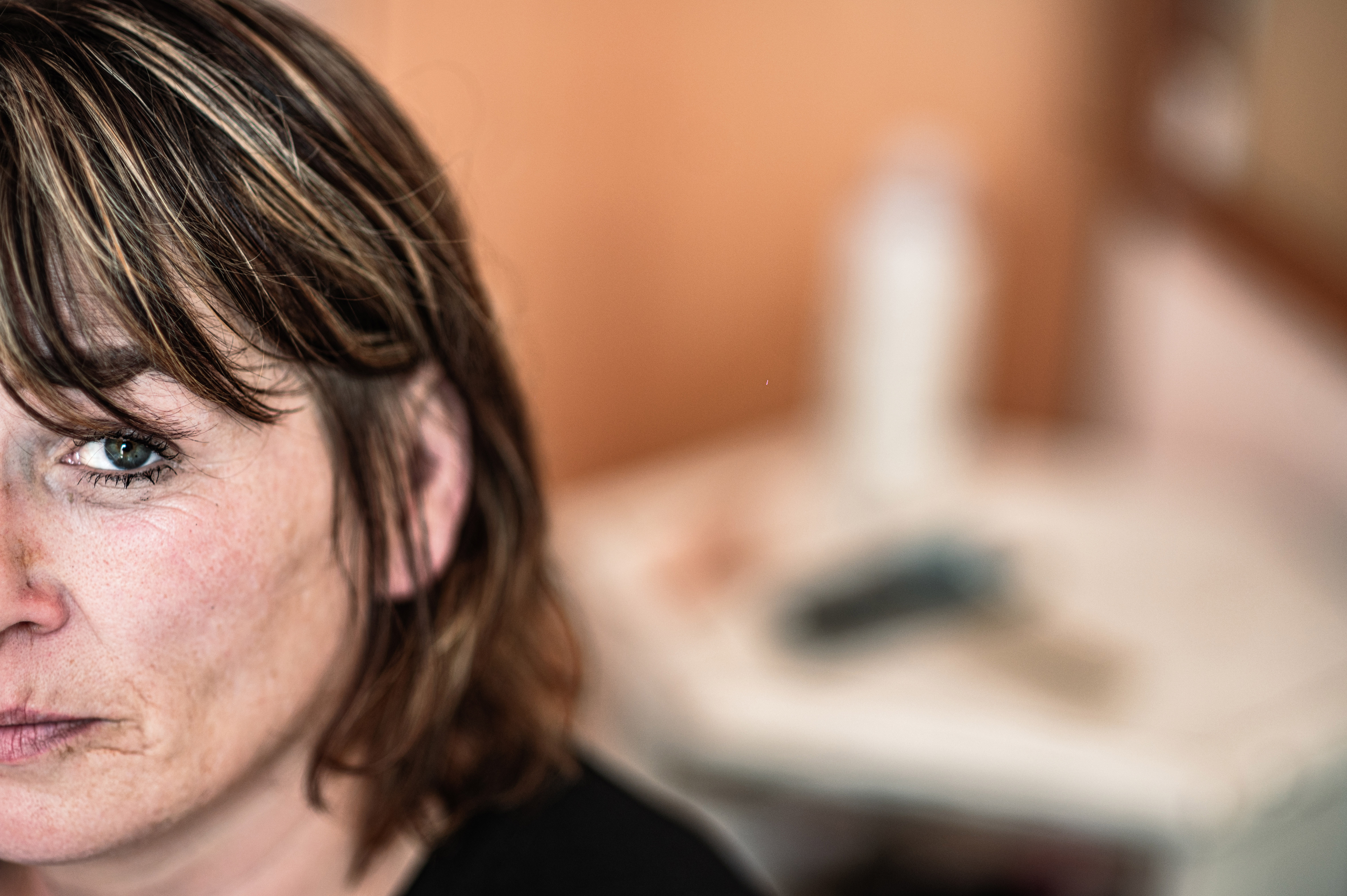
Svetlana calls herself a ‘call girl.’ She grew up in a children’s home near Donetsk and got involved in sex work while still at school after someone suggested she could earn money. She knew about sex only as much as any teenager raised in a post-Soviet environment without sex education. “The first time [providing sexual services] was very brutal. First, he got angry that I didn’t warn him I was on my period. Second, I didn’t warn him that there would be no anal. I tried to calm him down with my hands, but he was drunk. I talked to him, but he was still very angry. I was just lucky that he came.” Svetlana does not remember how old she was at the time – perhaps 17 or 18. Now she is 43.
All this time Svetlana has worked as a sex worker because, as she herself says, it was the only thing she was good at. Being ‘good at it’ meant many returning clients; apparently some of their wives even thanked her for ‘saving their marriage.’ But in order to earn a living, Svetlana “needed a lot of clients” as her modest earnings had to be shared with the ‘bath house woman’, the pimp and the taxi driver.
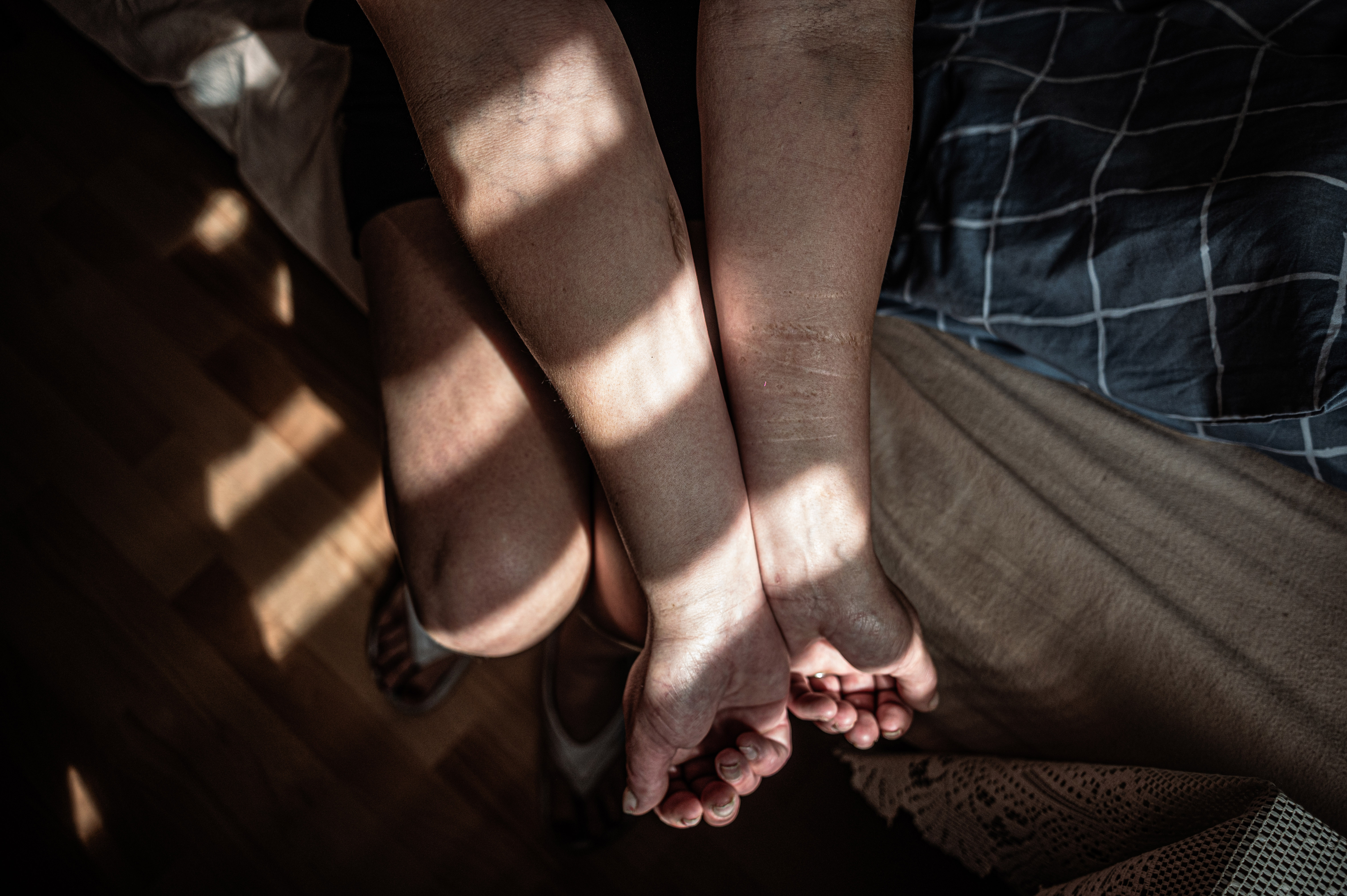
Svetlana reels off traumatic experiences with clients, one after another: “there was everything – guns and threats”. Her survival strategy became not to resist. “The girls were beaten, but not me. Because I understood that it was better that way than otherwise. One girl had her teeth knocked out, another had her arm and leg broken, because they resisted. I would simply get wasted.”
Svetlana’s accounts weave together a story of violence, coercion, hard drug dependency, suicide attempts, imprisonment, deceit, theft, chronic illness, and war – which Svetlana has experienced twice in Mariupol. In 2014, she gave birth to her first son at home amidst explosions and without doctors. He was a month and a half premature and was diagnosed with cerebral palsy. His father was a client but it’s unclear which one.
In 2022, Svetlana sheltered from shelling on the deck of a ship in the port of Mariupol. She was with her son and daughter – who has also been diagnosed with a disability. Her daughter’s father is also a client. Another client, a sailor, persuaded Svetlana not to have an abortion. “He loved me very much,” says Svetlana, adding that the sailor helped her, “but he sailed on a voyage when I was in hospital. I was diagnosed with tuberculosis.”
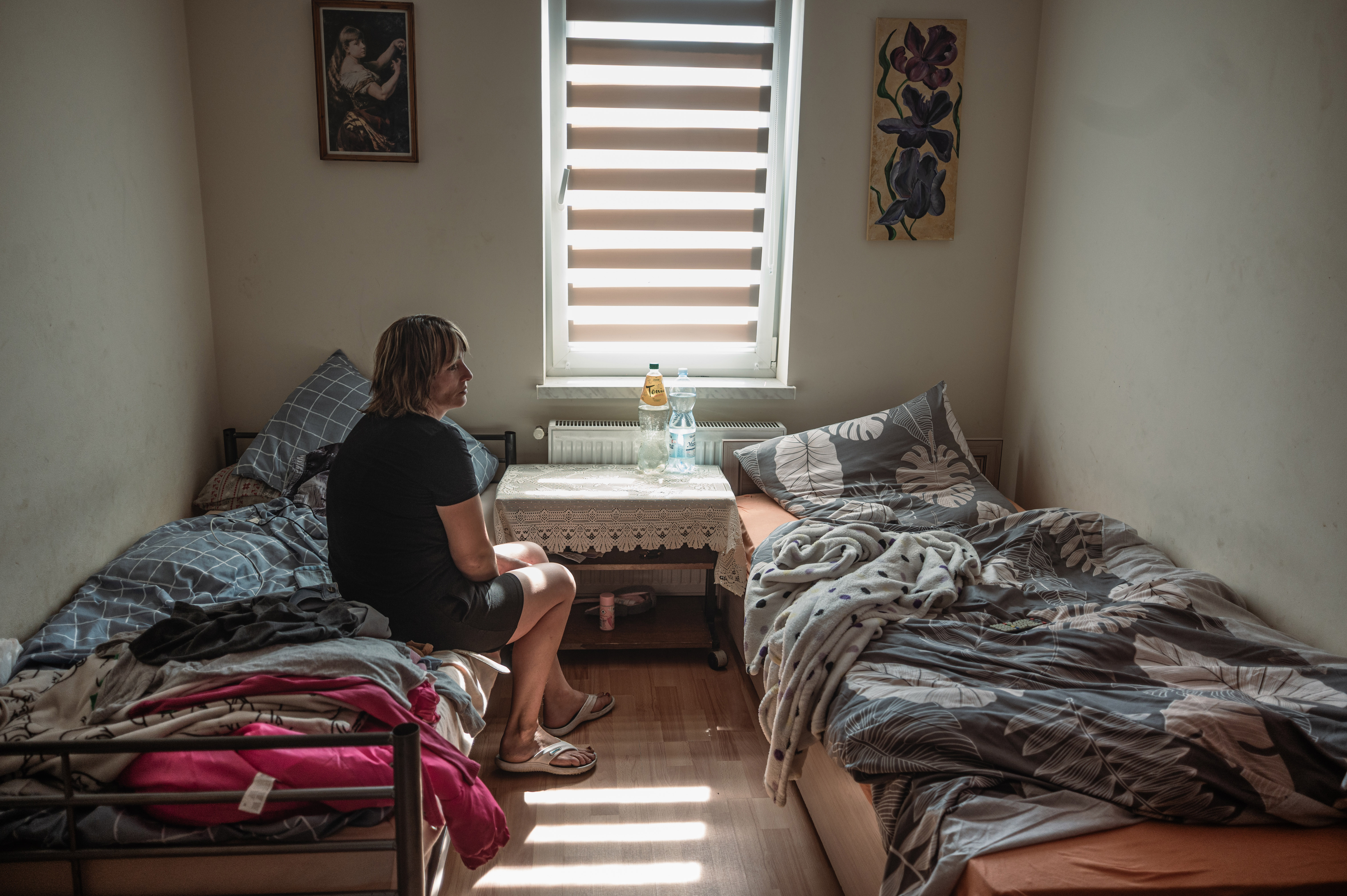
From the besieged port city, Svetlana fled to Dnipro with her two children. She was helped by a ‘taxi driver’ she worked for at the time. “I have a wonderful guardian angel who pulls me out of every situation,” she adds. It seems that even within the vicious circle of cruelty, Svetlana still manages to find a grain of empathy and gratitude for whatever good has touched her life. For one man she feels gratitude, who lived with her and took care of her children – even though that care, for nappies or a lift to the hospital, would always come at the price of sex.
In 2023, Svetlana arrived in Poland as a war refugee, in the so-called Suwałki Corridor, where she has lived ever since. She works as a cleaner in a hotel and receives a war refugee allowance. It was here where we met her.
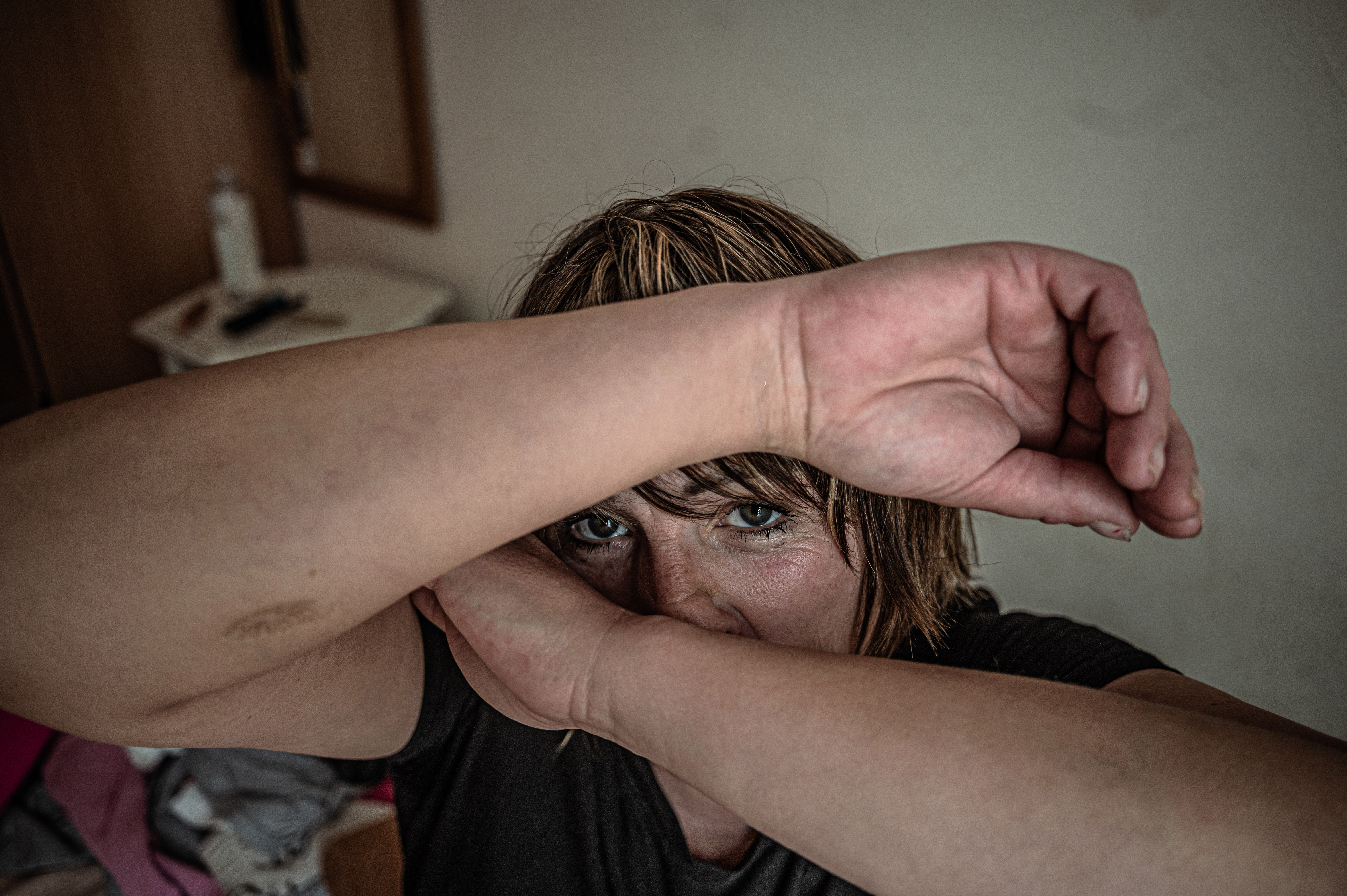
In Donbas, Svetlana used to work a lot with soldiers. After the first invasion – with separatists, and later with the Ukrainians who recaptured Mariupol. After the start of Russia’s full-scale invasion of Ukraine, the number of clients from military structures increased. According to Svetlana, when dealing with soldiers from both sides, she never knew what to expect. On different occassions, soldiers kept her locked in a metal booth for five days, fed her only bread and Coca-Cola, raped her (often several at a time), and took her to the barracks. “I am grateful to them for defending the country, but some behave like animals. They want to show power, to humiliate. I understand – war, their heads are full of chaos, but...”
According to her, around one in ten behave ‘like animals’. There were also those who didn’t need sex, but simply wanted female company. “To sit and drink vodka, to talk about friends who had died, about sitting in the trenches, about explosions.”
Like Liza, Svetlana says she often felt she was providing soldiers with emotional support. She learned how to interact with people who had experienced trauma on YouTube: “Sometimes there were such hysteria, such screaming, that I didn’t know what to do. Men would cry like children. I wouldn’t say that everything would be fine – that doesn’t help. I would simply sit, drink with them, hug and stroke them.”
★ ★ ★
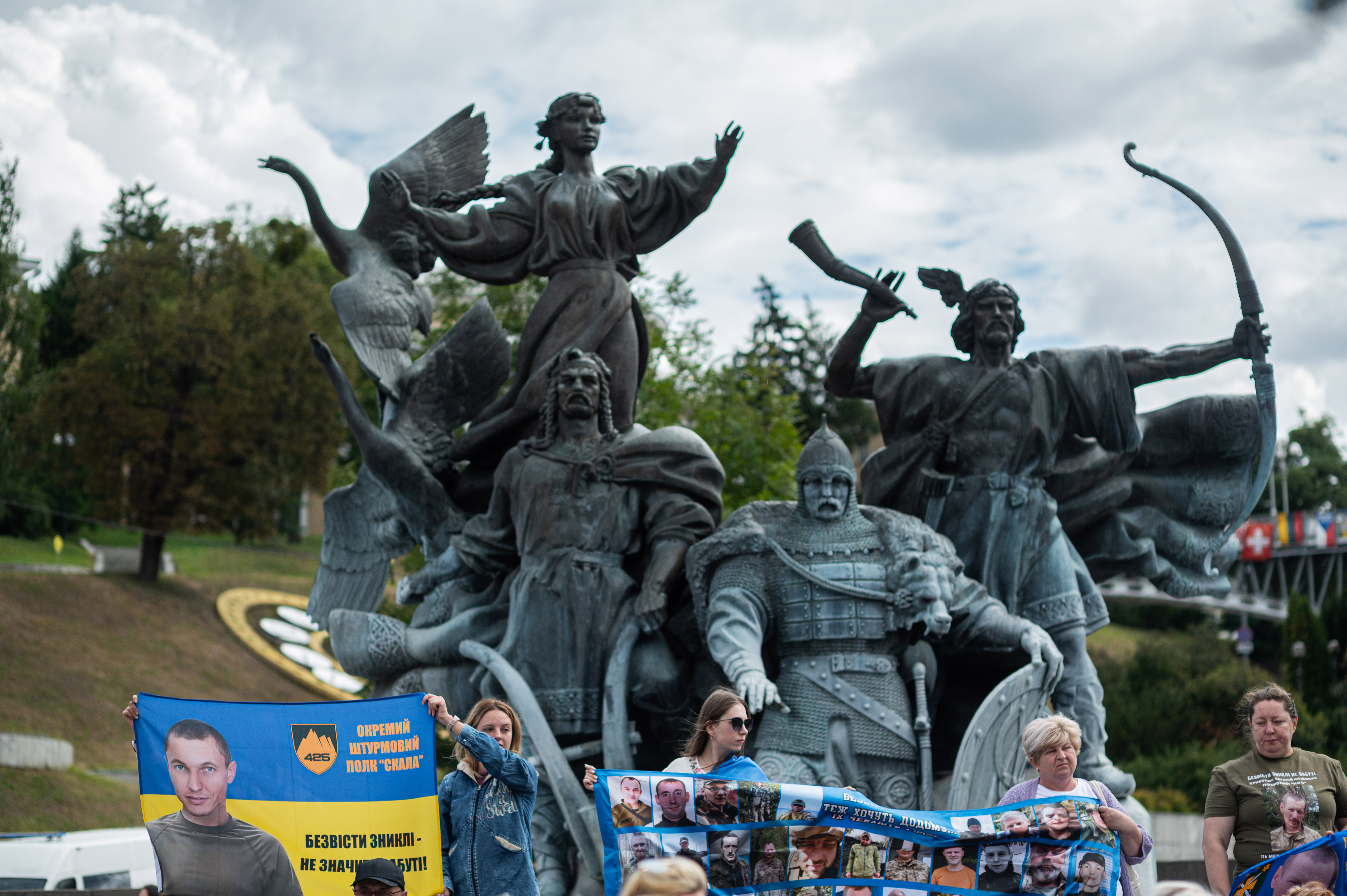
All wars leave the mark of sexual violence on women’s bodies. Until the 19th century women were considered war booty or a reward for soldiers; later, sexual violence came to be understood as an inevitable consequence of war. After the Second World War efforts were made to prohibit it, and in 1998 the Rome Statute of the International Criminal Court established it as a war crime. In practice, however, sexual violence has remained one of the most brutal weapons of war, used primarily by the enemy – to humiliate, exploit, break communities and carry out ethnic cleansing. Russia is also using this weapon of war in the occupied territories of Ukraine.
The history of wars is also full of examples of women being forced to satisfy the sexual needs of soldiers, or compelled to do so in order to survive. In earlier wars, armies were followed by camp followers – women who washed, cooked, nursed, boosted soldiers’ morale and satisfied their sexual needs. This was common practice, and women’s bodies were part of the everyday reality of war. According to feminist researchers, it was most often the only survival strategy available to women who had fallen into poverty, rather than free choice.
During the Second World War, around 200,000 so-called ‘comfort women’ from Asian countries were forced to satisfy the sexual demands of Japanese soldiers in military brothels – a case now recognised as a war crime against humanity. In the late 1960s, 20,000 registered sex workers, with the knowledge of the authorities, provided sexual services to 62,000 stationed US soldiers in South Korea. Most of them came from poor families. The list could go on, but the best documented cases are in countries where researchers have access. Similar models, such as the Soviet or Russian armies, are not well documented, but there are individual testimonies – such as the ‘field wives’ working with Russian soldiers today.
The exchange of sex for money, shelter, food or medicine is part of contemporary wars. For women in vulnerable situations it can often become the only strategy for survival. Academics and NGOs describe these exchanges as ‘survival sex’, which is a term indicating women have no other alternative. Most often, it is driven by poverty, widowhood, refugee status, war trauma, and structural inequality. Such cases have been recorded in Nagorno-Karabakh, after the Rwandan genocide, in Bosnia and Herzegovina, in the Democratic Republic of the Congo and in almost every refugee or displaced persons camp across the world.
The term ‘survival sex’ was coined so this form of exploitation wouldn’t be confused with voluntary sex work but to identify when women have alternatives, and when they don’t, can be difficult to distinguish. In research on sexual violence in military conflicts this is considered a grey zone - with cases of ‘survival sex’ not always considered as sexual violence.
★ ★ ★
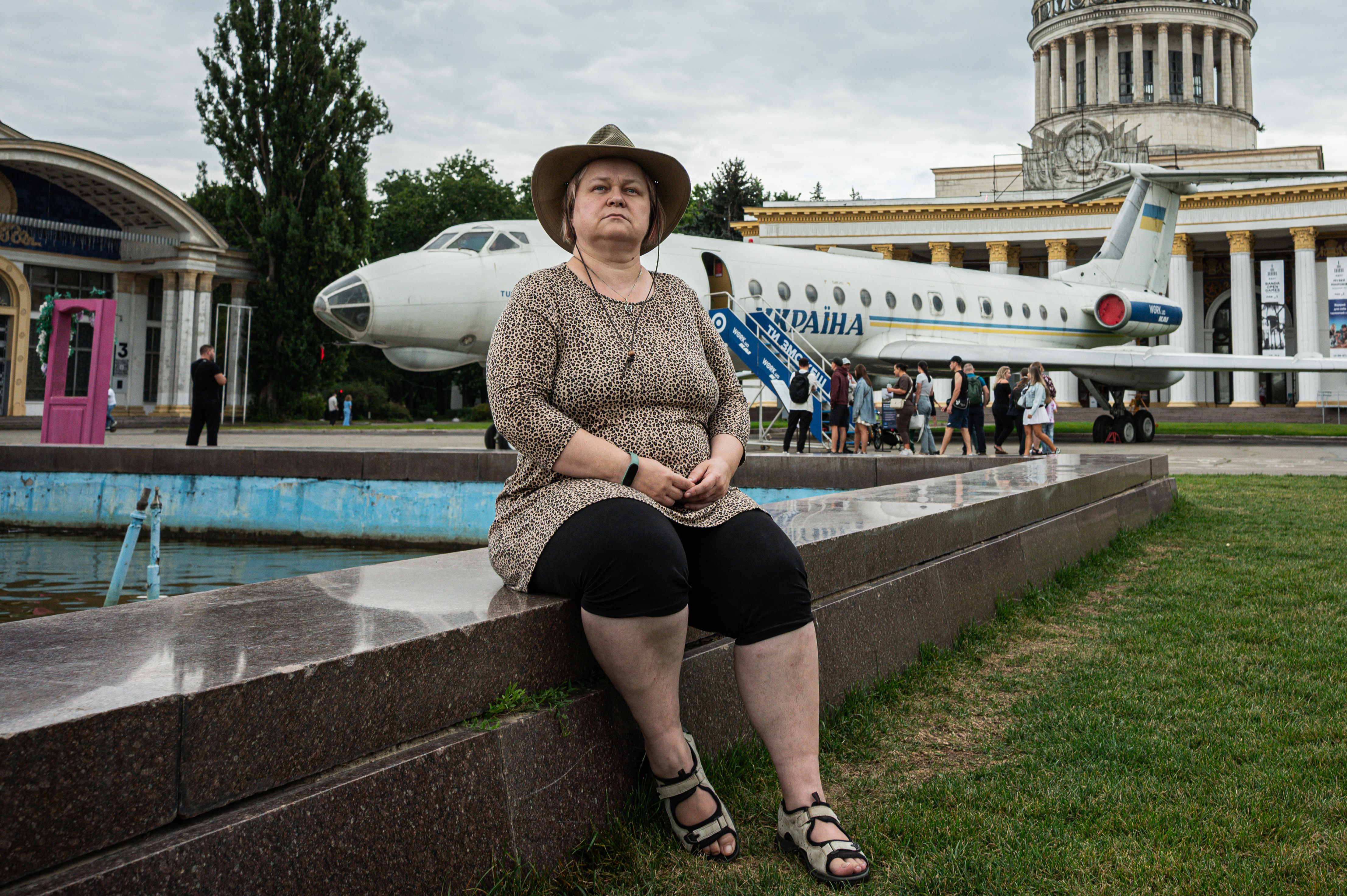
“If a woman comes to you and has to sleep with you in order to get protection, money or food – that is not charity. That is violence. It doesn’t mean that you’re charitable – it means that you’re a dick,” says Mariia Dmytriieva, who introduces herself as a Ukrainian radical feminist. She emphasises that everyone defending Ukraine deserves respect, but draws a clear distinction that among “war heroes” there are also “assholes.”
For the past thirty years Mariia has been defending women’s rights and fighting against patriarchy and misogyny: she runs training, gives lectures and helps politicians draft legislation. She devotes most of her efforts to combating sexual and reproductive exploitation – which, in her words, includes sex work, pornography and surrogacy. “My work – both paid and unpaid – is dedicated to defending and strengthening women’s rights, because without them, democracy cannot function.”
Mariia, like the others we interviewed, also shares that there are no official, nor reliable statistics on how many women actually engage in ‘commercial sex’ (as it is referred to in official documents) -but there are suggested figures. According to Mariia, by 2018 there were around 100,000 such women. “That is significantly fewer than one might expect, considering how many people in Ukraine live below the poverty line, especially in territories along the front line,” she says. This figure also doesn’t include women whereby sex work is a secondary activity. Nor does it include minors.
Even before the full-scale invasion, Mariia worked with women and young people in the Donetsk and Luhansk regions – strengthening their leadership skills and educating them about women’s rights. She shares that when discussing everyday threats, women would name all kinds of dangers, but not one of them would mention sexual harassment. When asked why, they would answer: “Oh yes, that happens all the time. We simply don’t acknowledge it.” According to Mariia, it is very common for local taxi drivers, shop assistants, and even relatives to encourage young women living near the front line to visit Ukrainian soldiers, sleep with them, and get paid for it. But the women, according to Mariia, do not consider this sexual harassment.
During the full-scale invasion war of Ukraine, the most documented sexual violence has been committed by Russian soldiers. The prosecutor’s office in Ukraine is actively pursuing the investigation of these crimes, with specialists travelling to liberated territories to collect testimonies. Officially, 376 cases of conflict-related sexual violence have been reported, but the real number is undoubtedly far higher. In many cases the victims are men, as this statistic also includes prisoners of war, against whom sexual violence is also used.
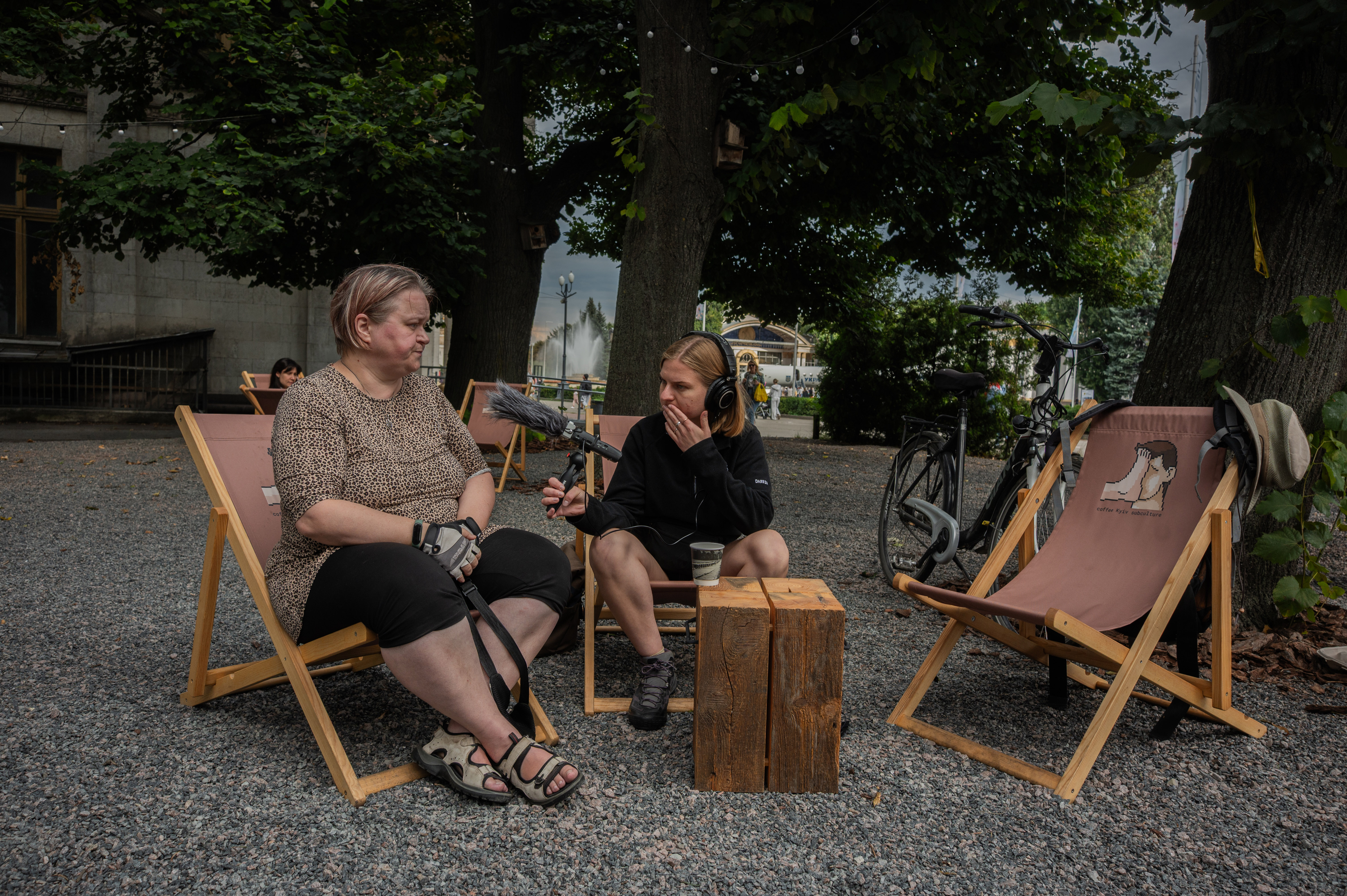
According to Mariia, the war in Ukraine is not only one of the most documented, but also an example in which women’s rights are being supported and strengthened. “Over ten years of war, the situation for women, including at the legislative level, has only improved.” Mariia notes that the fact that war crimes of sexual violence are being investigated now, rather than in 10 to 15 years later (as for many other conflicts), is a major achievement. This has also encouraged society to become less tolerant of everyday harassment and sexual violence against women.
However, Mariia also shares that society is only prepared to discuss Russians raping Ukrainian women, whereas when “Ukrainian soldiers rape Ukrainian women for money, drugs or medicine, it is named by the sterile term ‘survival sex,’ even though it is rape.” Mariia wants for any form of sex work to be viewed as violence against women, for those who have experienced such violence to receive support, and that those who buy and sell their services to be prosecuted. “Many politicians support this, but every time we call for a law to be passed, we are told that it’s not yet the time. That causes me pain.” This position is also opposed by some feminists, who argue sex work can be be a woman’s free choice.
A more even challenging subject is ‘survival sex’ in occupied territories. For the women who remain there, providing sexual services to Russian soldiers often becomes the only means of survival. The reasons are the same: closed businesses, poverty, widowhood, children or supporting relatives with disabilities. Working in liberated settlements, Mariia observes that locals often feel deeper hatred towards these women than towards collaborators who betrayed local activists or revealed the positions of Ukrainian forces.
“I’m afraid that when we [Ukraine] win and everyone is happy, no one will want to talk about those women anymore,” says Mariia. “As happened in France after liberation from the Nazis: it was not the men who allowed the country to be destroyed who were blamed and persecuted, but the women who tried to survive.”
After the Second World War, in many European countries, women who had sexual relations with soldiers of the occupying forces were publicly humiliated: their heads were shaved, and in some places they were stripped of their citizenship. Mariia wants women who provided sexual services to Russian soldiers to also be included in support programmes. In theory, sex in the occupied territories falls within the legal definition of conflict-related sexual violence, but it is not clearly distinguished. According to Mariia, if this is not named directly, it is very difficult to convince social workers and officials that these women deserve support and are not traitors.
A year ago, the then head of Ukrainian intelligence Kyrylo Budanov claimed that intelligence services recruit sex workers in the occupied territories to spy against Russia. Information is thus obtained by exploiting human weaknesses. According to Budanov, men reveal a great deal of information in order to demonstrate their power. Moscow uses the same tactic, recruiting Ukrainian sex workers. According to Budanov, there are also cases of double agents.
★ ★ ★
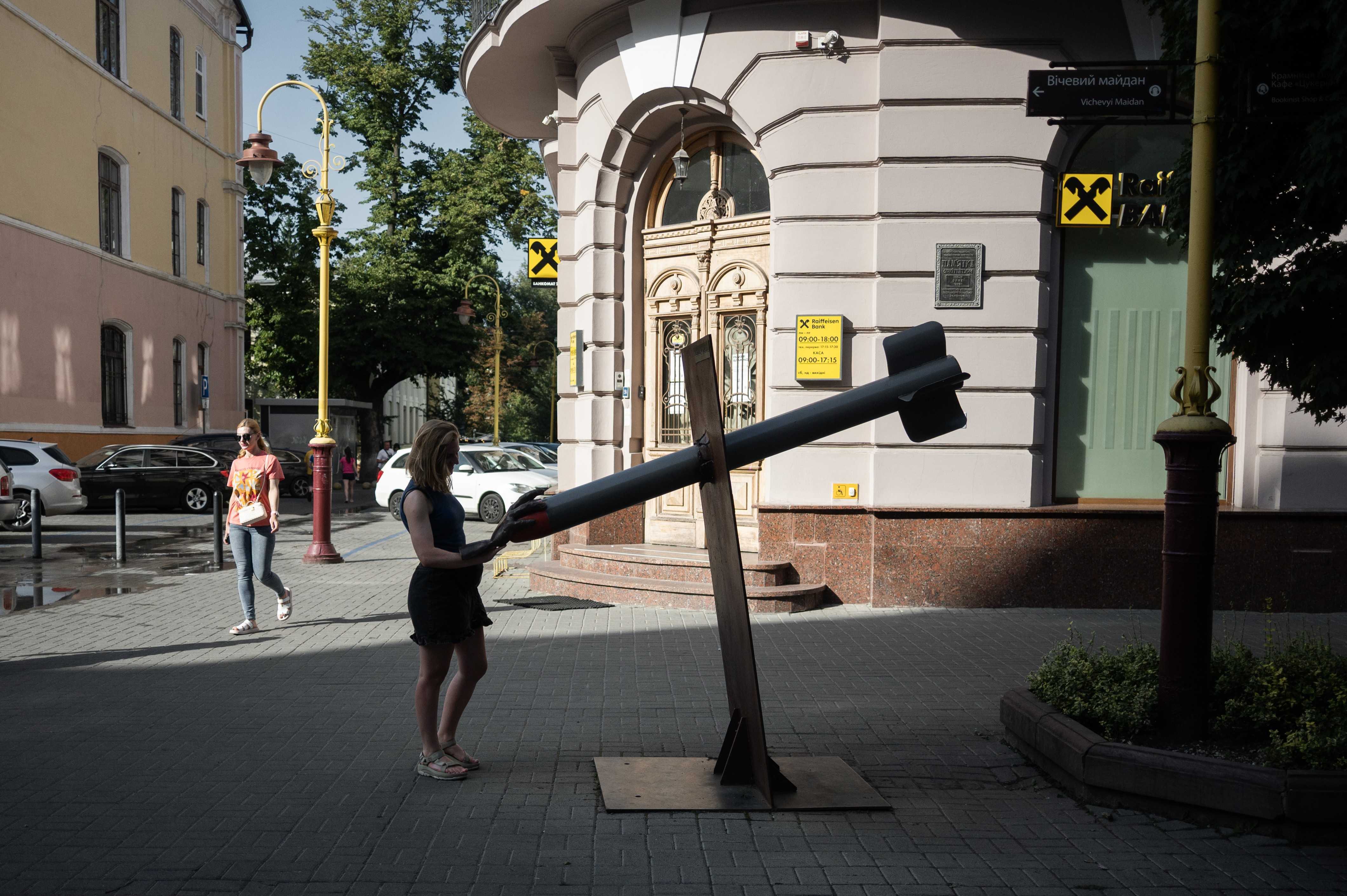
When speaking about the impact of war on women, Mariia first said: “When the full-scale war began, instead of falling to their knees and crying [out] to heaven ‘save us’, Ukrainian women did what they always do – they rolled up their sleeves and got to work.” She is referring to the various roles women take on, which often remain unnoticed or undervalued: caring for children, supporting the family, volunteering, joining the army, creating or sustaining businesses, taking over the jobs of mobilised men, and so on. Also, working in the non-governmental sector, including women’s rights organisations that were already well-established and resilient even before the full-scale invasion.
It is precisely these organisations that set up crisis centres, provide psychosocial support and legal advice to women who have experienced violence. Activists have achieved (and continue to pursue) legislative changes aimed at combating sexual violence and domestic violence. According to women’s rights organisations, Ukraine has advanced further in the area of conflict-related sexual violence than most other conflict-affected countries. However, effective implementation remains a problem: there are challenges in meeting the needs of survivors and providing them with support.
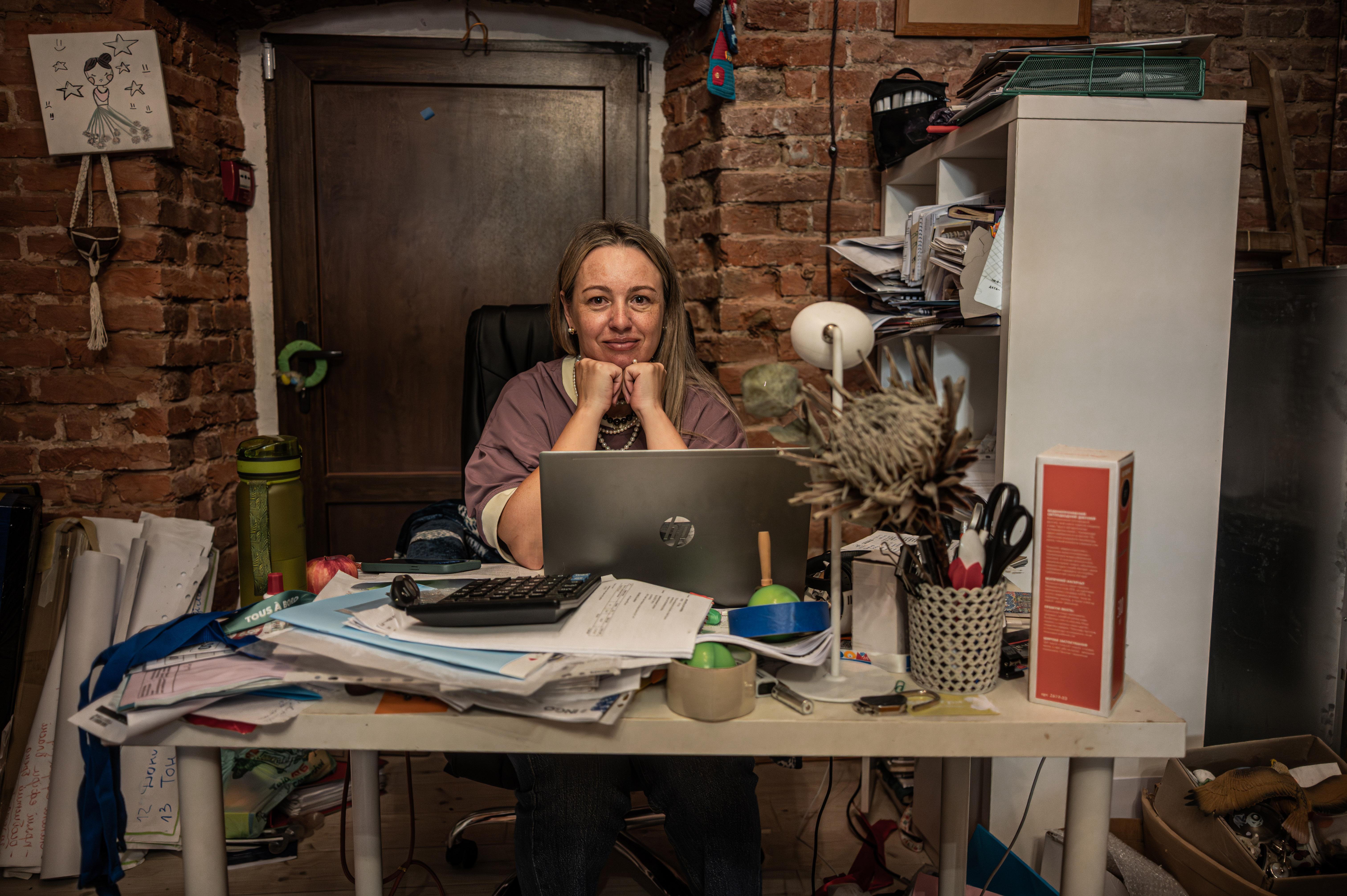
“This topic [conflict-related sexual violence] has become quite ‘trendy’. [...] At least that is how it seems in my bubble,” says Nataliia Vyshnevetska, head and co-founder of the NGO D.O.M.48.24 in Ivano-Frankivsk. She founded the organisation more than ten years ago together with other women from eastern Ukraine in order to help people displaced by the war to integrate. Over time, gender-based violence became the primary focus of D.O.M.48.24 – women fleeing the war in Donbas most often arrived with complex experiences of violence as well.
According to Nataliia, before the war few people cared about domestic violence, sexual violence and its other forms. After the full-scale invasion, the issue came into the spotlight. This is partly good, but according to Nataliia, when domestic violence is not linked to the war, it is not given priority – women who have experienced it may not receive support or assistance. A war veteran’s violence against his partner may also not be assessed as conflict-related sexual violence.
In 2022–23, Nataliia’s organisation conducted a study: the partners of men fighting in the war were asked what problems, in their view, men would face when they returned from the front. The dominant answer was that everything would be fine, they only needed to wait until they returned. “They did not even consider that it would be difficult, that they would face challenges, that their husbands would have changed and that they themselves would have changed. [...] Of course, they expect their husbands will take over part of the responsibilities when they return, but they do not consider that they may be unable to do so. Conflicts may arise, because they will be unable to understand each other.”
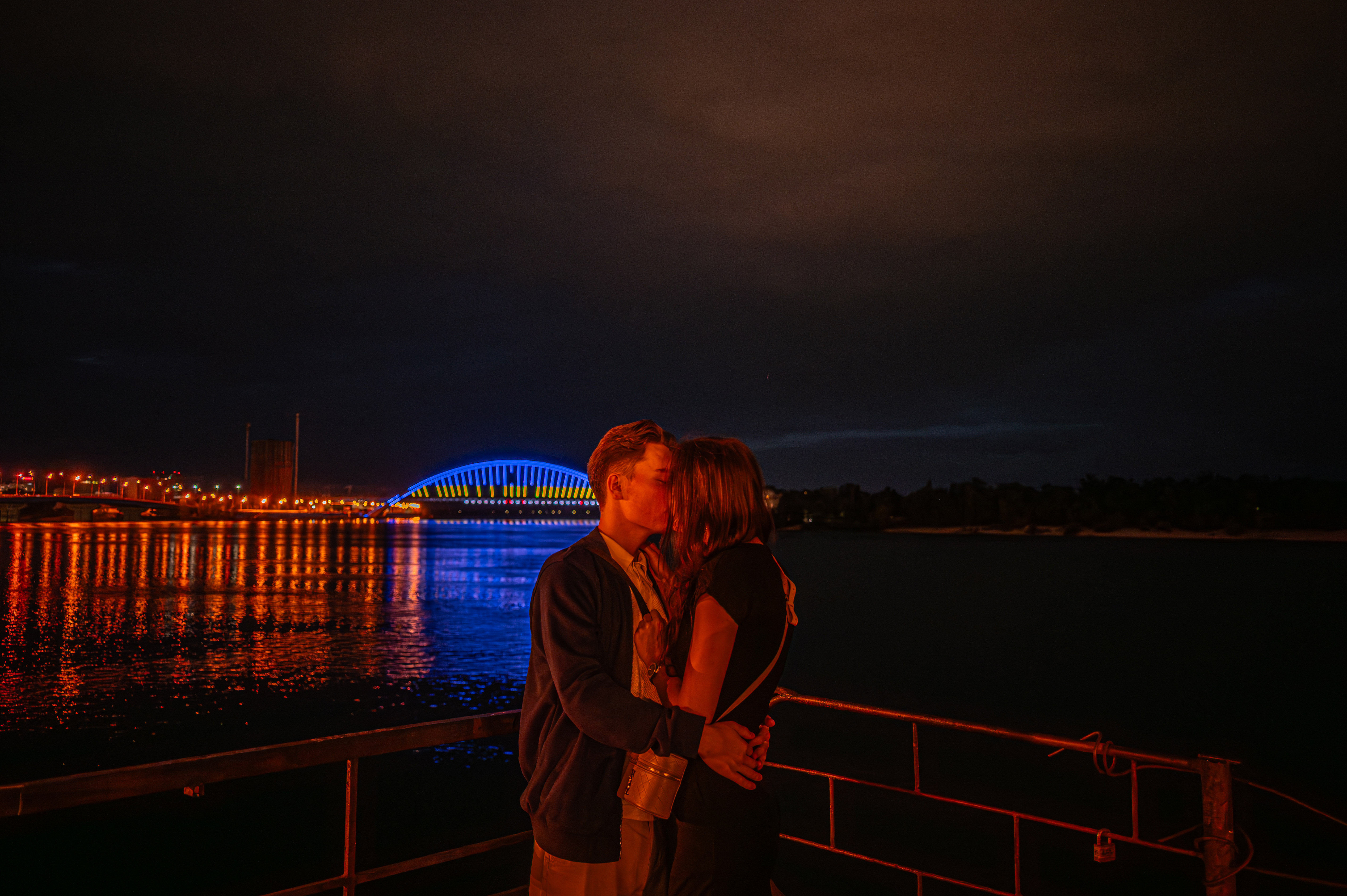
We paid two of our interviewees, Liza and Svetlana, for the time they gave to the interview during their working hours. Although paying interviewees for their time is contrary to usual journalistic practice, we decided to make an exception in view of their vulnerable situation. We talk more about our decision and the dilemmas journalists face when working with vulnerable groups in the podcast ‘Returning from Ukraine: The Cost of an Interview.’
We thank Regina Jegorova-Askerova, Gražina Bielousova, and Reda Jureliavičiūtė for their help in finding interviewees.