The residents of Kapčiamiestis are tired of talking about the training ground. What does security mean to them?
It seems that the training ground, which is intended to strengthen national security, is paradoxically beginning to diminish the sense of security in the local community.
This summer, the first NARA journalism camp took place in Kapčiamiestis, where 15 emerging journalists delved into and reported on the issues facing the region and prepared publications. The participants explored topics of security, historical memory, environmental protection and the economy. This is the first of four reports in the series.
In the centre of Kapčiamiestis, on a noticeboard by the Emilija Pliaterytė Museum, we find a poster:
"During a period of prolonged uncertainty and the feeling that decisions are being made beyond our control, the body experiences increased stress. The unknown can cause anxiety, anger, a sense of helplessness or insecurity, and disrupt sleep. We encourage you not to stay alone with this – we can provide professional emotional support."
At the end of last year, it was decided to build a military training ground in and around Kapčiamiestis. According to the country's leaders, it should ensure the security of all of Lithuania – including the people of Kapčiamiestis themselves. However, local residents' opinions on the matter were divided, and the unexpected decision caused considerable outrage.
When we call the phone number on the poster, a psychologist called Kristina answers. She remembers the community's anger when news of the planned construction of the training ground spread through the media.
"It's good that this anger broke through. It shows boundaries […]Perhaps it was a lesson for the municipalities and ministries that they need to respect the people who live here – their own children," says Kristina.
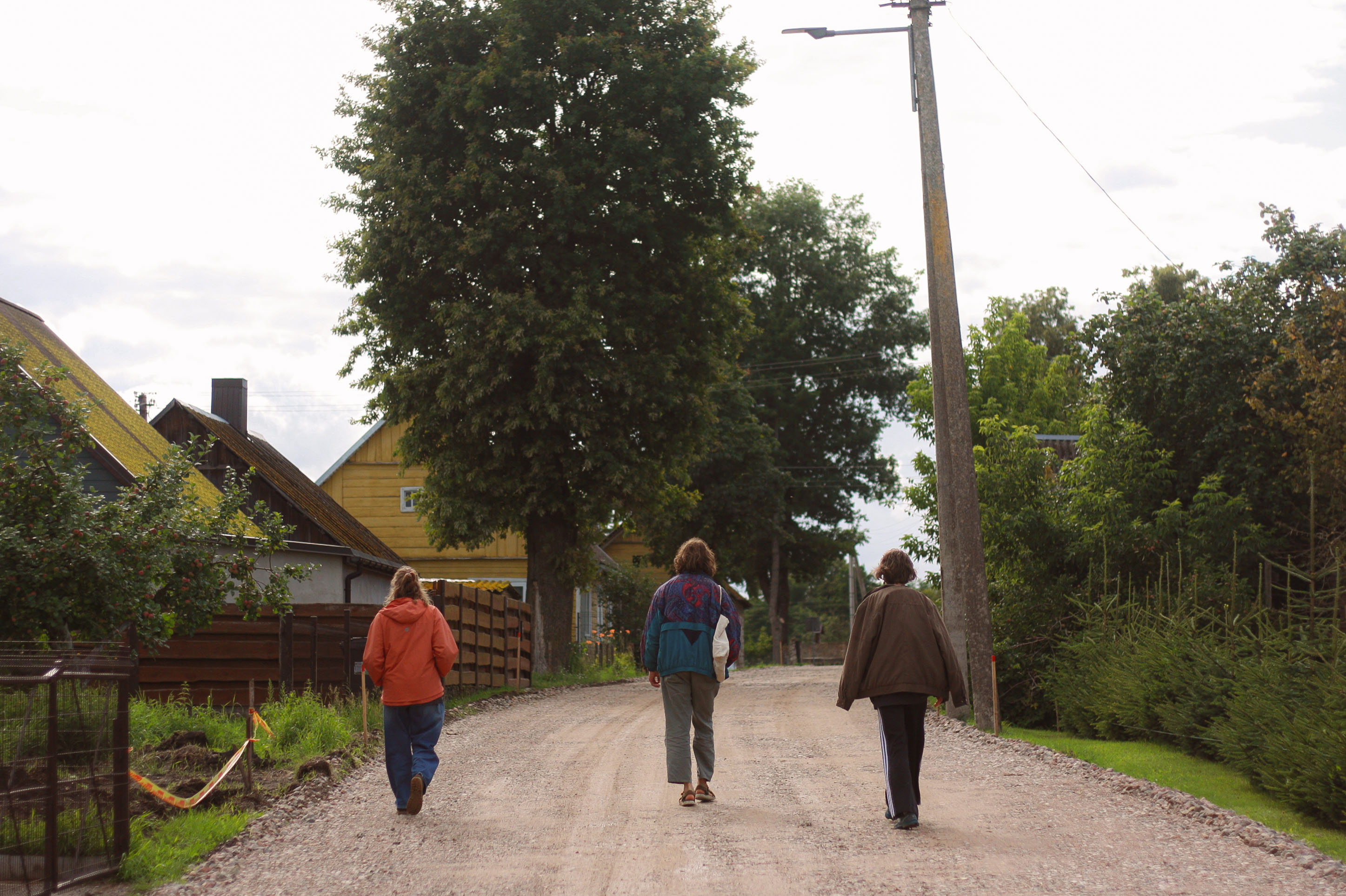
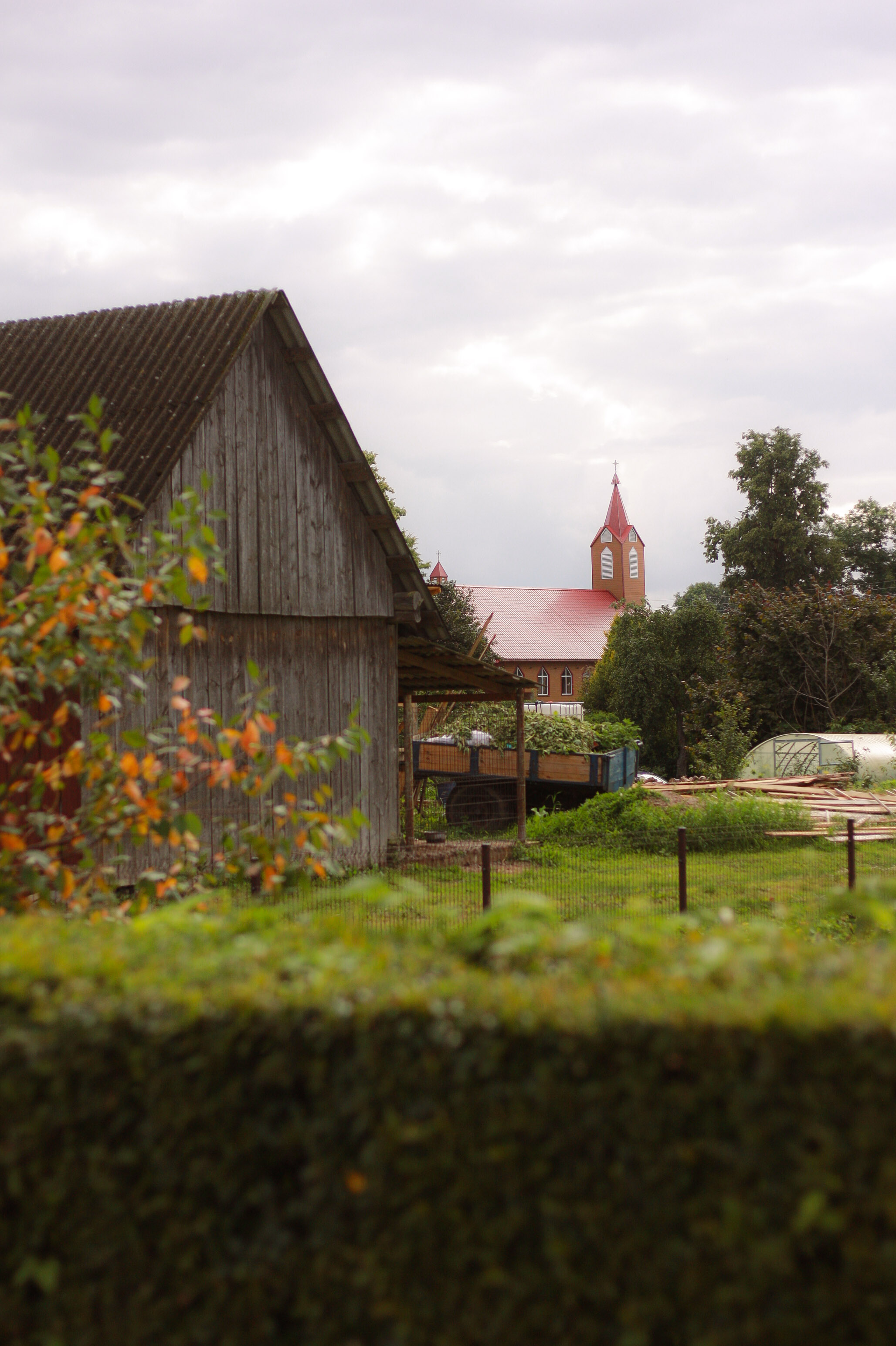
This tension between the authorities and the residents prompts us – the NARA camp participants visiting Kapčiamiestis – to get to know the local community better. In search of a story, we go to the tavern, the Kapčiamiestis forestry office and the shop, call the parish priest and knock on the door of the community centre. People are happy to tell tell us about their lives or businesses, but as soon as we ask about the training ground, the conversations break off. Among ourselves we call it the ‘P-word’ (from poligonas – Lithuanian for training ground) – a kind of swear word that must not be mentioned.
We understand that in Kapčiamiestis we are guests. And when you are a guest, you must follow the rules – first, listen to the local daily life, and only then ask questions.
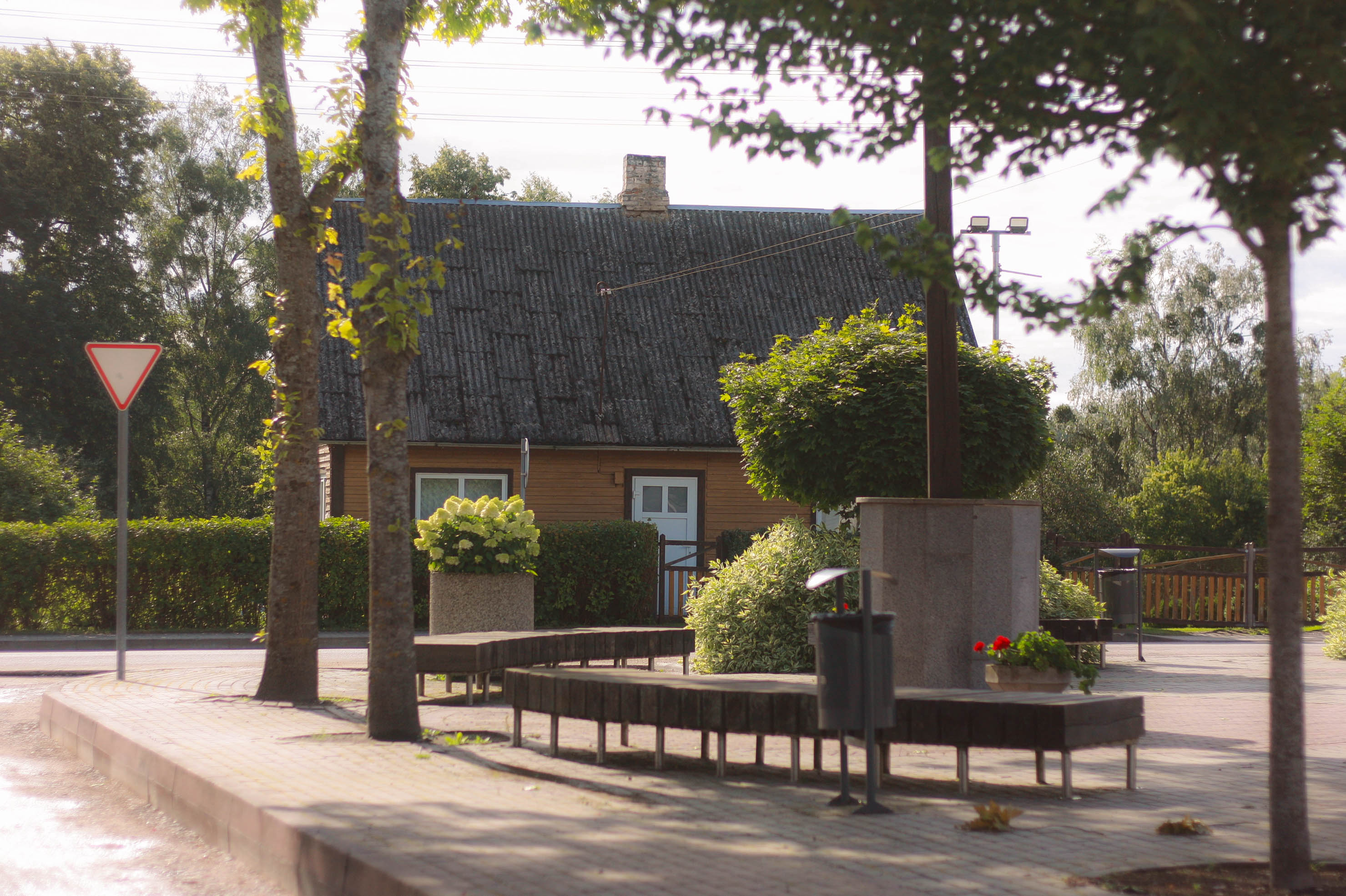
Visiting Irutė
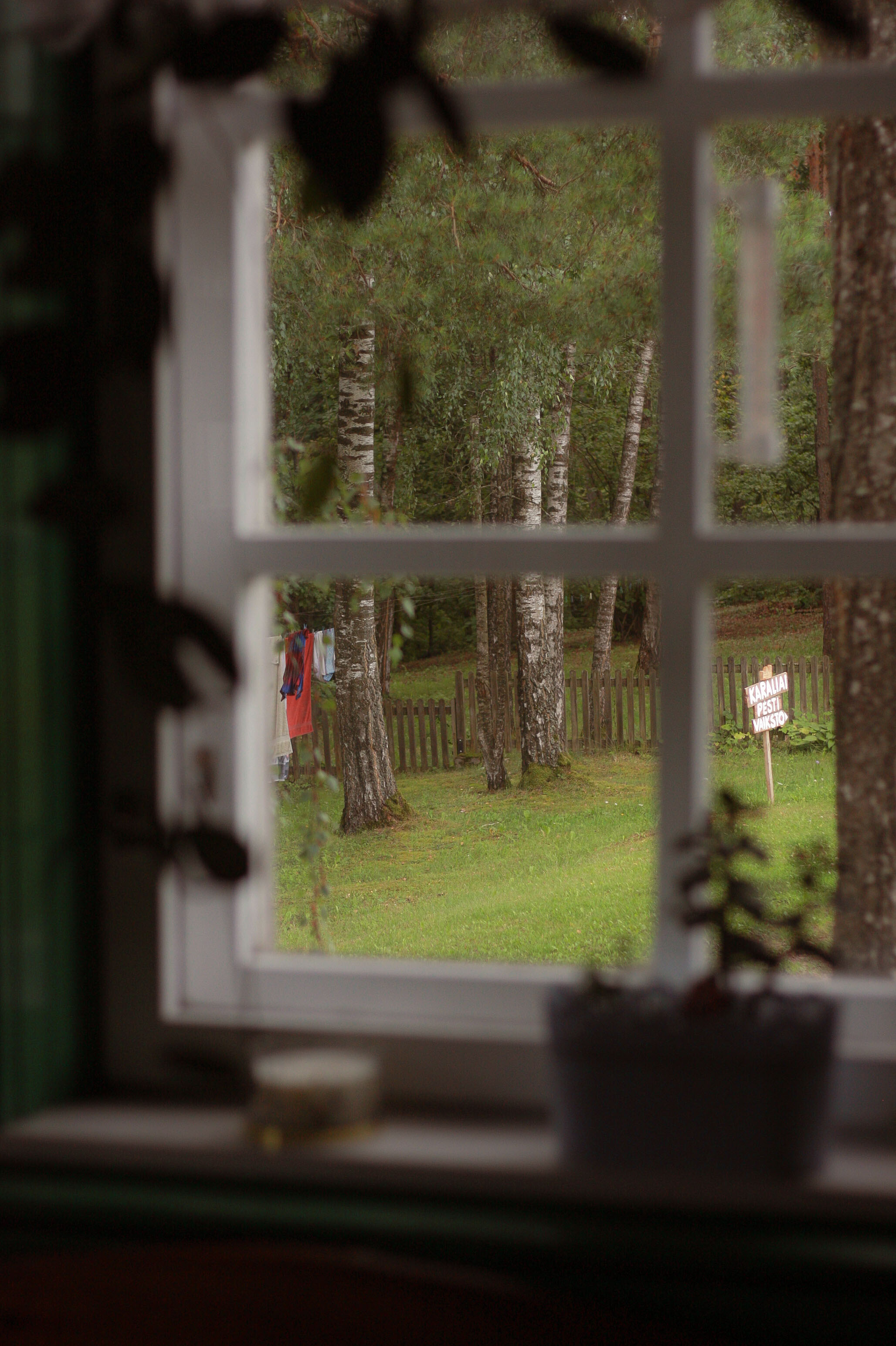
The walls of Irutė's kitchen are painted bright green, which blends harmoniously with the garden blooming outside the window. She invites us to choose our cups for coffee because, in her view, coffee is something to be savoured, not just gulped down from whatever happens to be at hand. We sit down at a stone table; her dog Morka and cat Reksas hover nearby. According to Irutė, Reksas has a particularly painful bite – and is why he was given what is usually a dog's name.
Irutė has four daughters, all living in different parts of Lithuania: one in Vilnius, another in Druskininkai, the third in Veisiejai, and the eldest near Kačerginė.
"We have a big family, there are 11 of us. So what do we have to complain about here? Look, when we all get together, we don’t shut up,” jokes Irutė.
Irutė and her husband moved from Alytus to a farmstead near Kapčiamiestis when they were in their twenties. They bought an old farmhouse without running water or a toilet, and the stove was painted bright blue with tractor paint.
"We came to the middle of nowhere," she recalls.
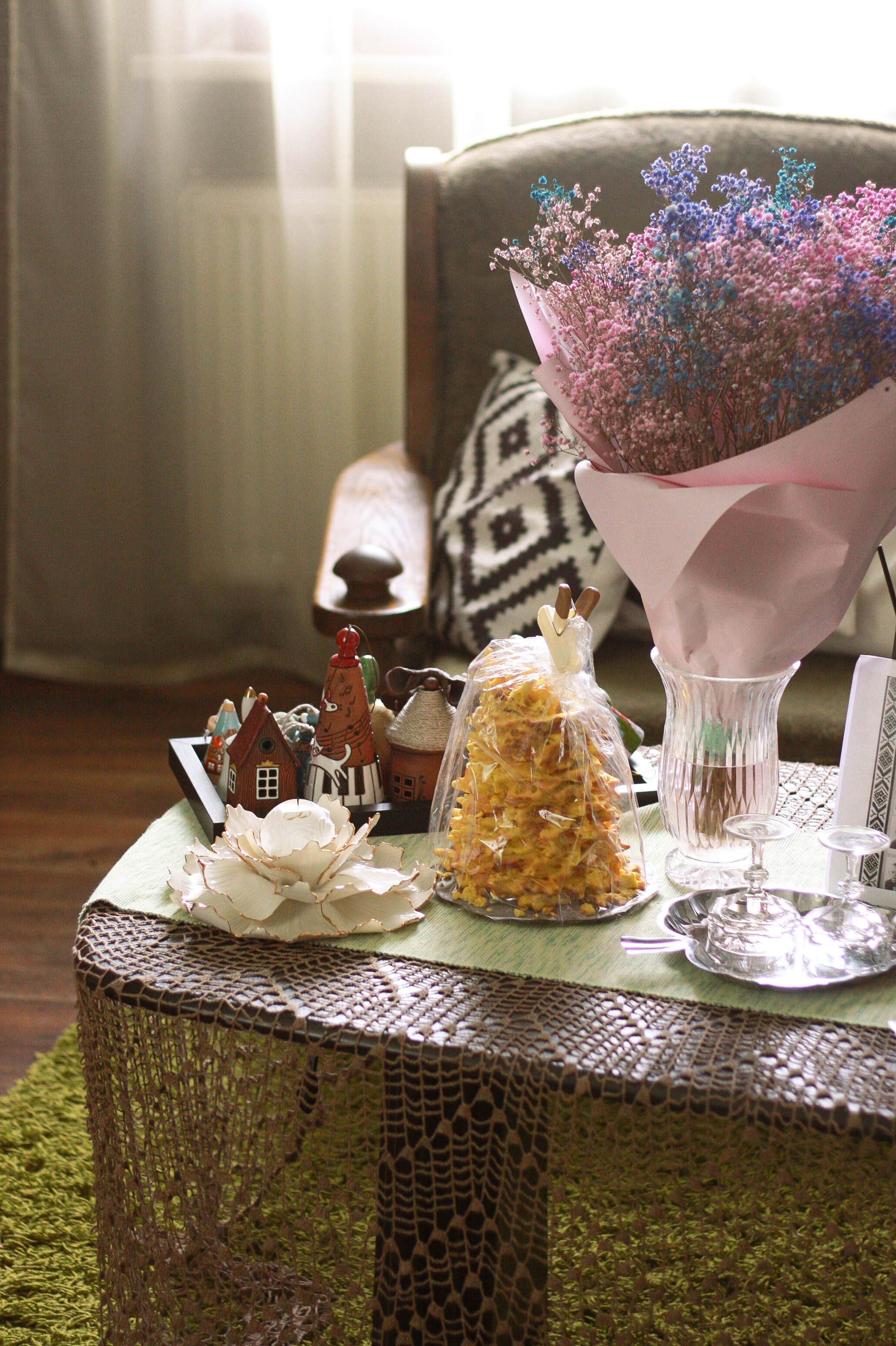
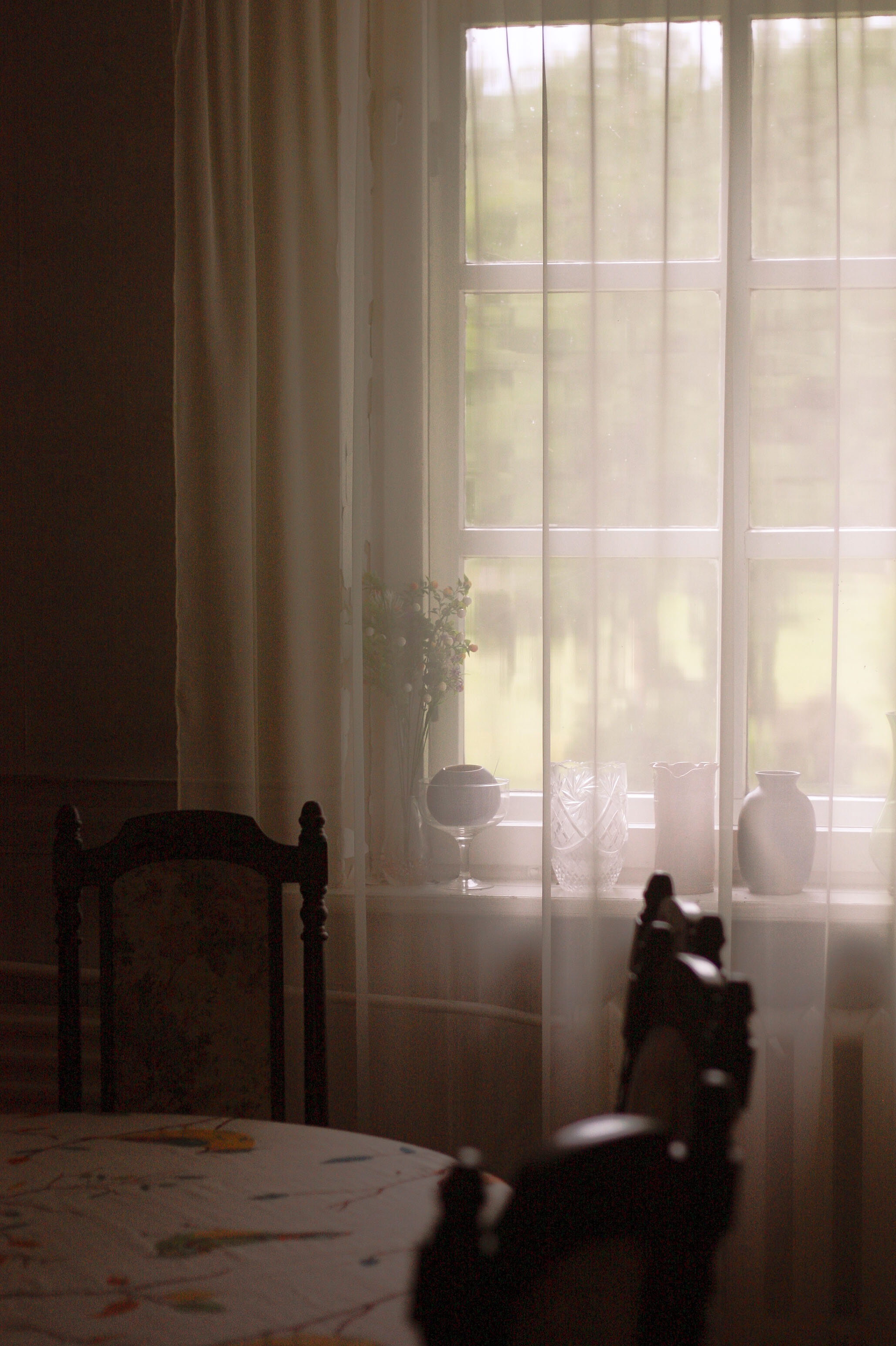
Now Irutė's home is so cosy that we, too, want to stay a little longer. Irutė proudly tells us about the curtains she spent three years crocheting, and our eyes are drawn to the hallway walls, decorated with dozens of family portraits.Irutė's awards for her many years of work at the Lazdijai Art School take pride of place on the living-room chest of drawers..
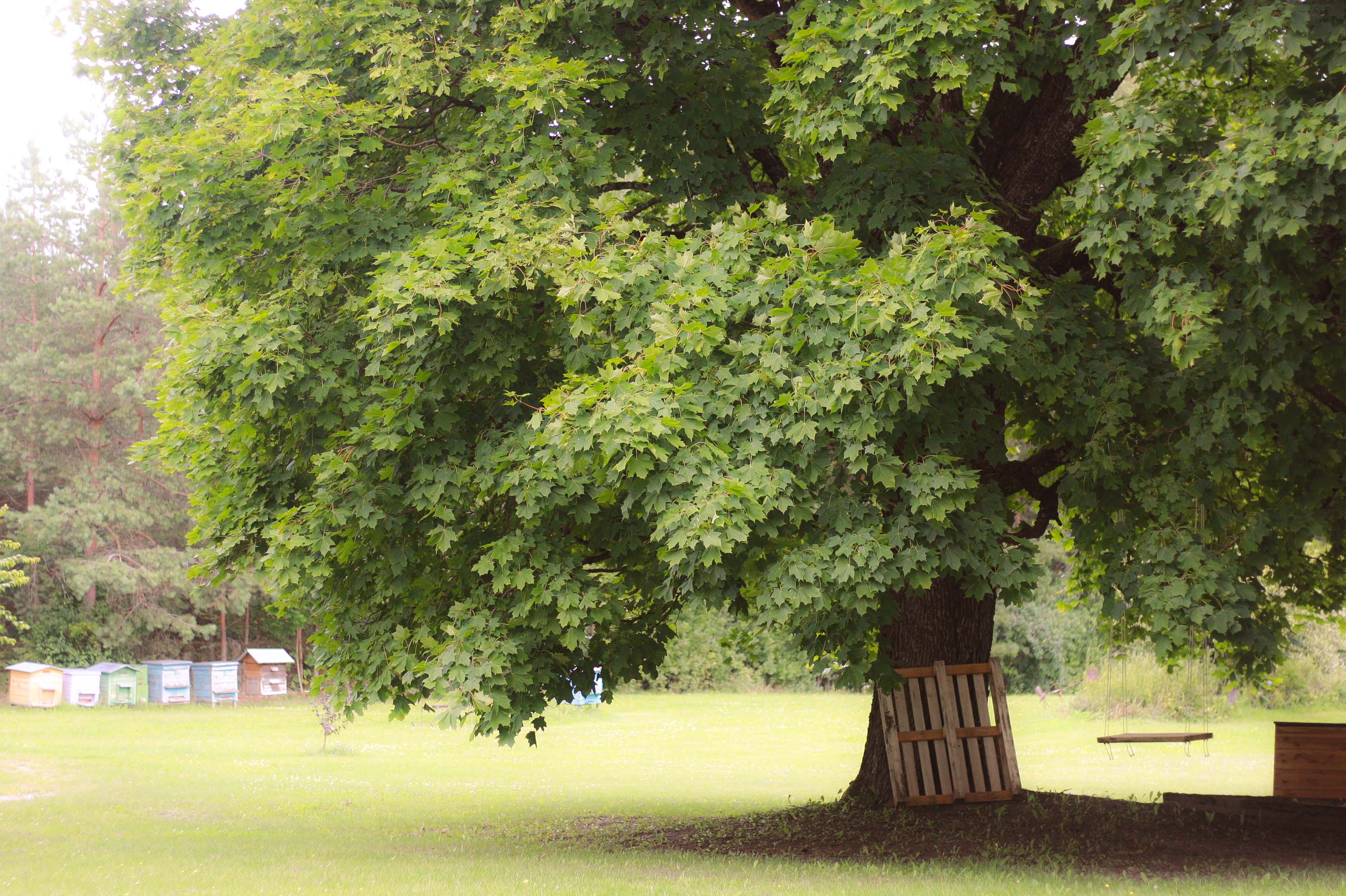
The only thing that remains from when Irutė and her husband moved in is an old maple tree in the yard, whose motif is now tattooed on the arms of all her daughters. One of them got married under it..
Perhaps that is why, when Irutė talks about security, she thinks first about what she already has: her house, her garden, her rituals, her little jetty on the lake, her large family and the chance to drink coffee from her favourite cup.
"I’m not hurt, everything's fine. We keep moving forward and there's no time to moan," Irutė insists.
One of Irutė's daughters – also called Irutė – is a volunteer soldier who has served in the Lithuanian Armed Forces for 10 years. Irutė is very proud of her, but she remembers her daughter feeling sad as she walked down the street in her military uniform after training exercises in Veisiejai. The angry looks from those around her give Irutė no peace. People used to smile and thank her, But since the decision to build the training ground, their reactions have changed.
"It's not a nice feeling when people give you dirty looks...though deep down I feel that I'd go and defend you too, you angry person. I don't do it for the government, or for some party, but for all of us, so that we can be safe and this dear land stays ours," says the daughter.
Irutė, her mother, is surprised that the planned training ground has created so much hostility between people. For her, talking about the training ground is like being "at daggers drawn". That is why she avoids discussing the matter with neighbours who don't support the construction – she doesn't want to fall out with them.
Irutė's home does not fall within the territory of the training ground, and she talks about it without much drama – she herself grew up next to one in Alytus. When she was a child, the army was simply part of the surroundings: homes, soldiers and shops were all side by side – everyone got along with each other. According to her, people tend to assume that there will be non-stop shooting and endless exercises, but Irutė's experience is different – she used to go mushroom picking with her parents on the training ground and visit the cinema there. However, the Alytus training ground is much smaller than the one planned in Kapčiamiestis.
Irutė's nearest neighbour is a kilometre away. Silence doesn't make her anxious – quite the opposite. Before we say goodbye, she tells us about her latest online purchase: a jumper that reads "I need coffee and silence."
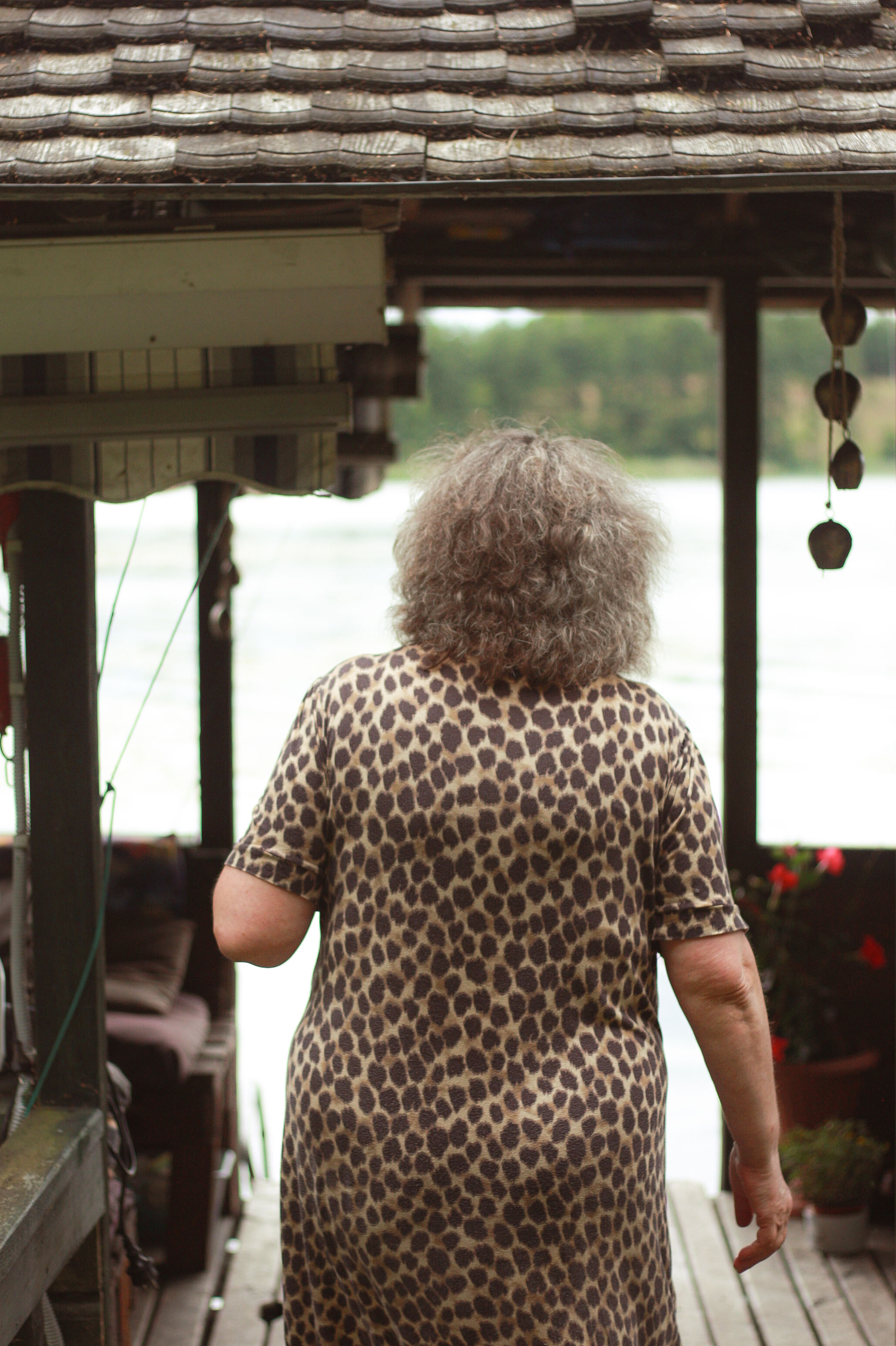
"If someone wants to do you harm, they'll come and do it. You can’t defend yourself, you can’t put up gates – are you going to sit here crying, or what? We live without fear," Irutė assures us, striding firmly towards the lake, where she starts every day with a swim.
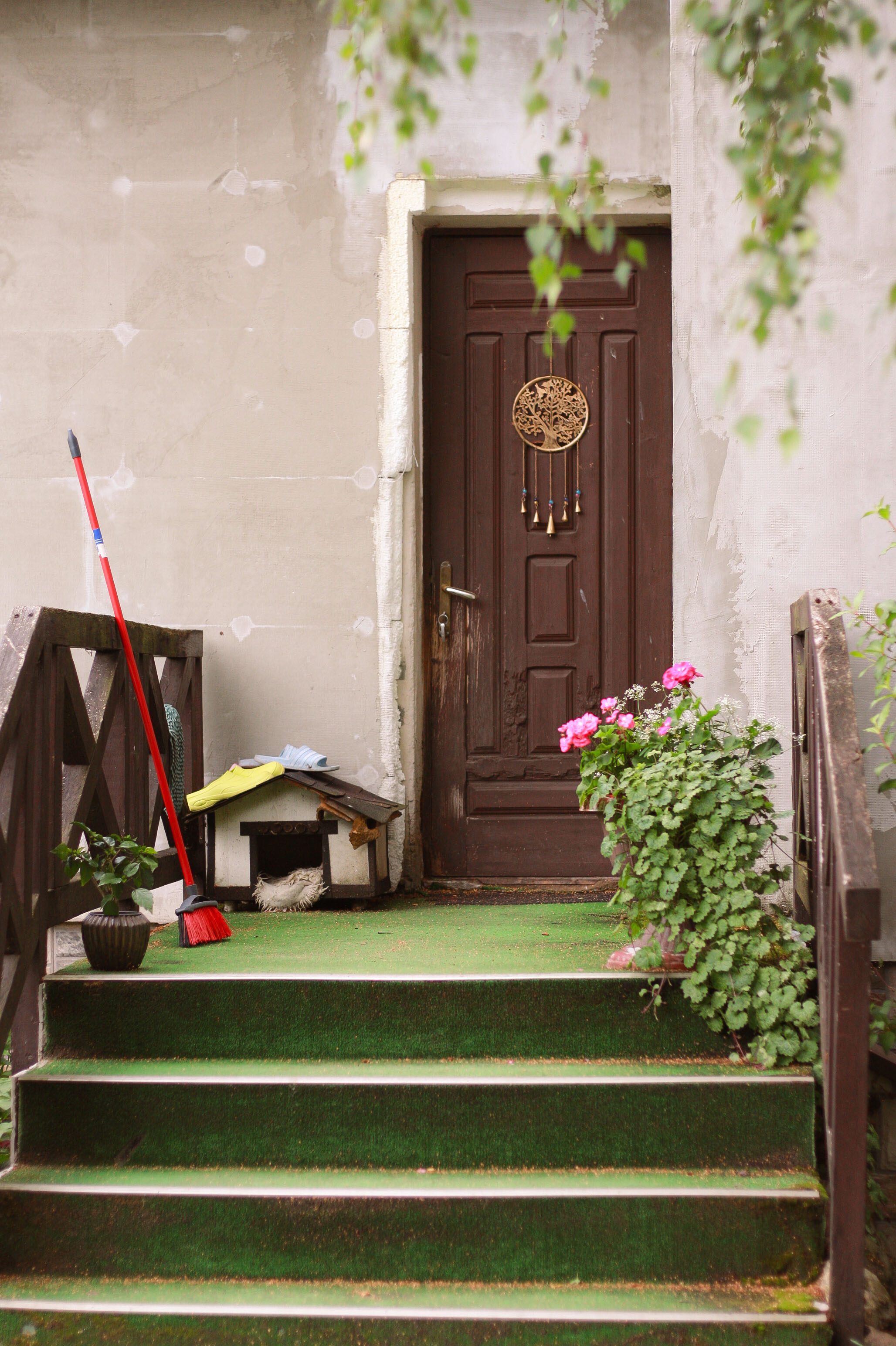
Visiting Aldona
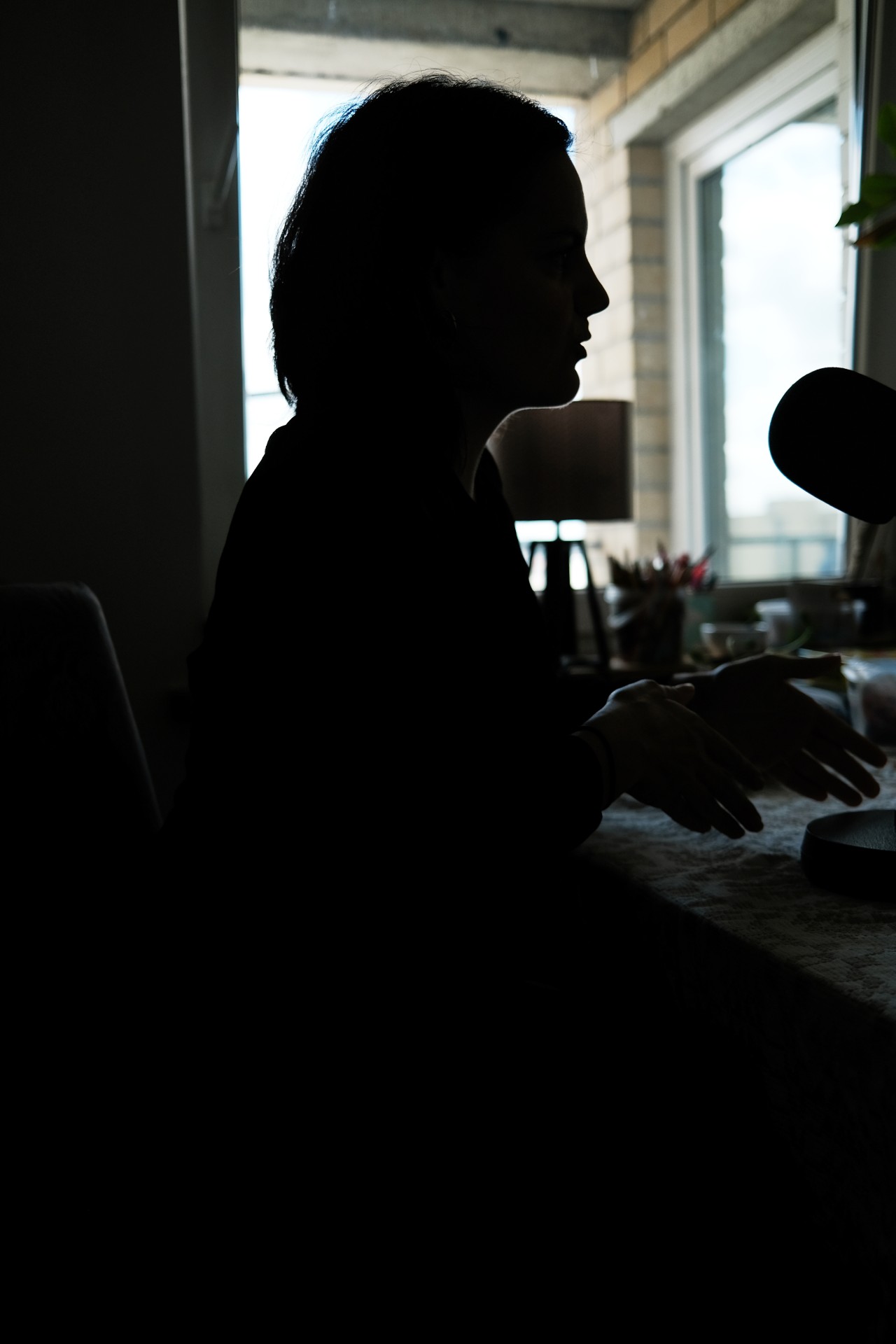
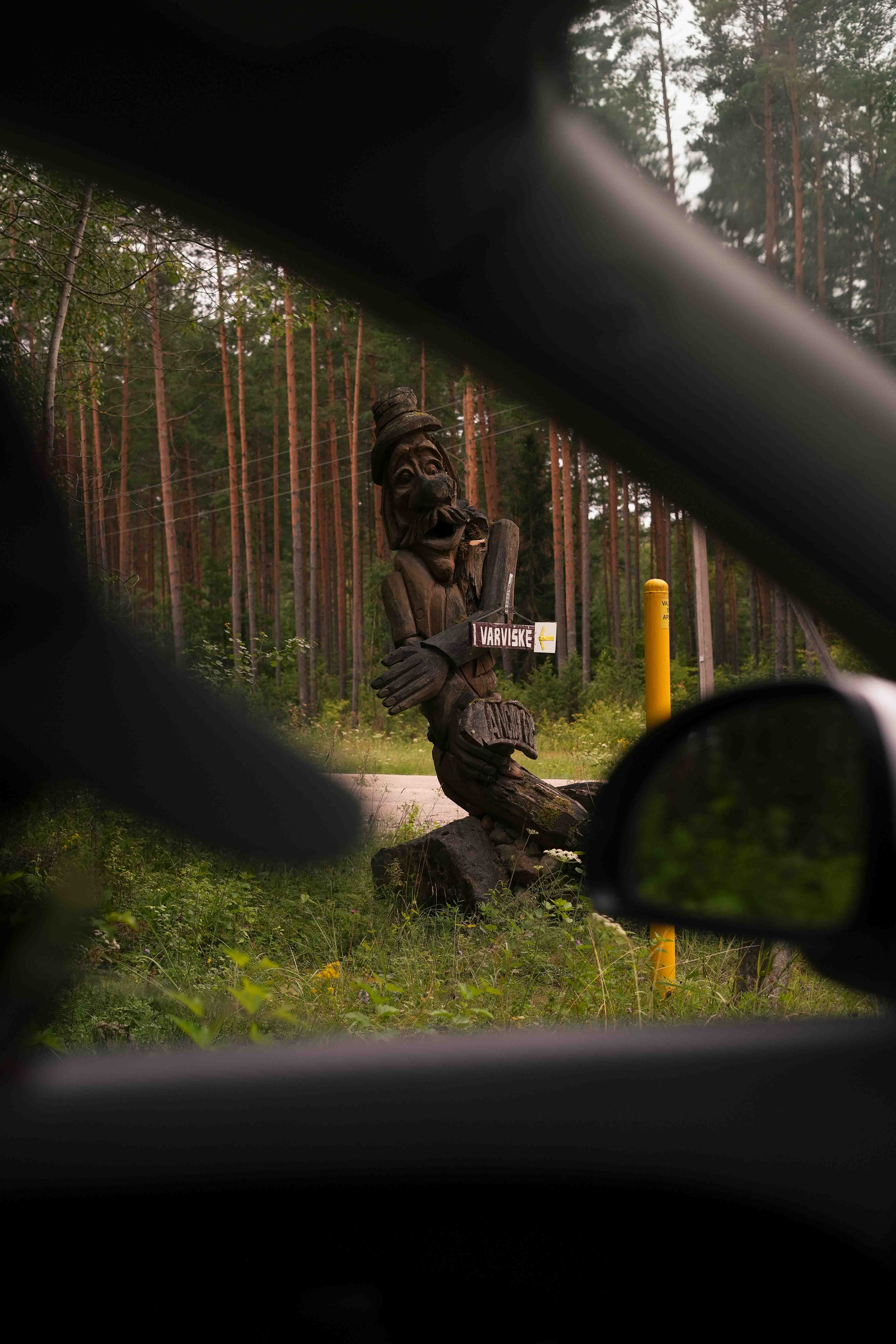
Aldona* lives in Varviškė, a village between the Kapčiamiestis training ground territory and the Belarusian border. She agrees to be recorded but wishes to remain anonymous, so we are calling her Aldona. Our colleague walks around the yard, photographing abstract details. Aldona follows her with her eyes.
For Aldona, life on the border means passing border guards, smugglers’ balloons that occasionally drift across, and the sound of gunfire coming from the Goža training ground on the Belarusian side. The shots are so loud that "even the windows shake". Relatives and friends she hasn’t seen for many years remain on the other side of the border, and the places where she used to go dancing in her youth are now out of her reach.
Aldona tells us stories from her childhood and memories of her parents. Several times she says, "Just don't put this in." And she keeps checking whether the red light on the voice recorder is on. It isn't easy for her to trust strangers, so it's better not to talk and not to remember at all, as she says herself.
But when we are about to say goodbye, she tells us to sit back down on the terrace and disappears behind the farmhouse door. She soon returns with freshly brewed coffee and biscuits kept for special occasions. Catching their scent, Aldona's little dog squeezes in between our legs.
Over a cup of coffee, Aldona eventually opens up about her family history: she tells us how, during the Second World War, her parents hid behind the trees by the River Nemunas while bullets plopped into the water, one after another. She worries that her home, squeezed between two training grounds, will end up in a danger zone. When we try to point out that the soldiers will only be training there, Aldona replies: "Now they're training, but if, God forbid, [war breaks out], then there'll be ALL SORTS! And then it'll be scarier. Well, we'll have to live through it, then we'll know."
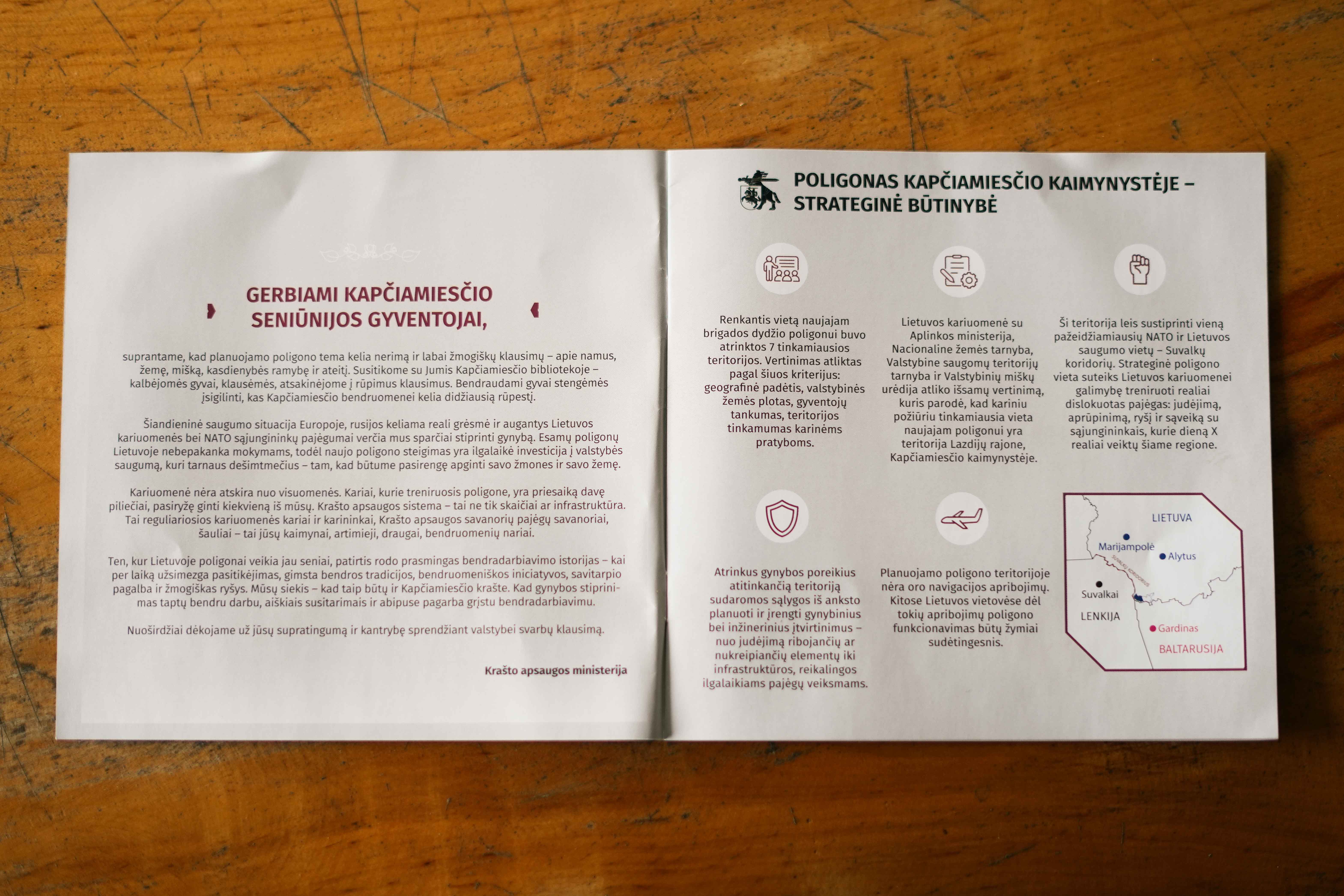
Aldona found out about the construction of the training ground from the TV news. Her homestead does not fall within the territory of the training ground, so the Ministry of National Defence did not inform her by personal letter. According to her, the only information from state institutions – a leaflet about the Kapčiamiestis training ground – reached her this July.
"There's nothing much written in it. Everyone got the same one. I only got it last Saturday – our postman comes round on Saturdays," she says.

Visiting a volunteer soldier
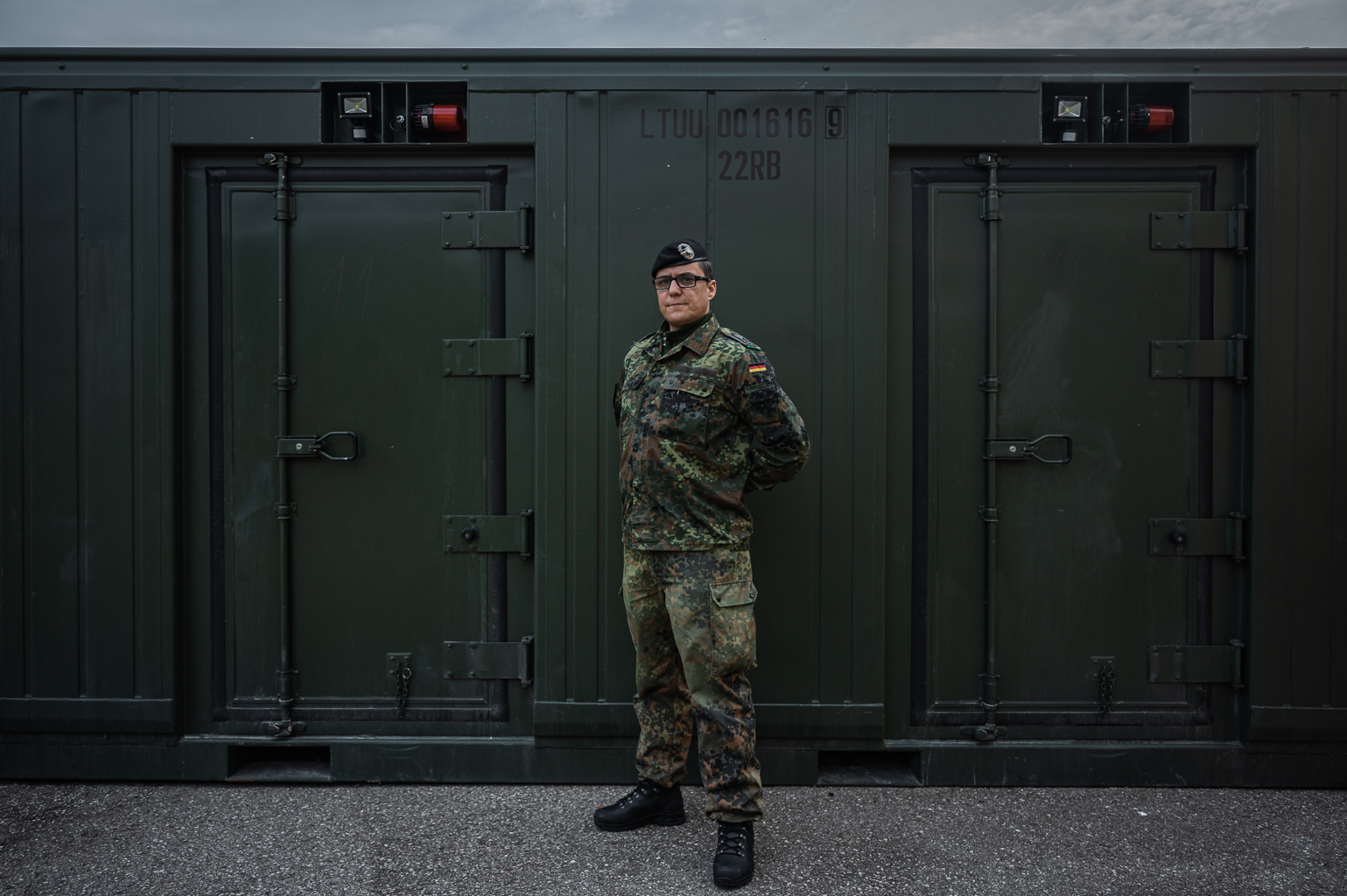
Mantas*, whose name has also been changed, has served in the National Defence Volunteer Forces for a number of years; he joined with his friends while still at school in Kapčiamiestis (the school was closed in 2020).
"To this day, we're all soldiers. And none of us regrets it," he says firmly.
According to Mantas, military training and knowing that he can defend himself and others give him a sense of security. One of his most vivid memories is the swearing-in ceremony at the birthplace of the partisan known as Tigras, where, as the best volunteer of his intake, he was entrusted with reading the oath and kissing the Lithuanian flag.
Mantas comes from a large family. His older brother is also a volunteer soldier, and his example inspired Mantas to follow the same path.
"We [in the family] used to celebrate all the national holidays: 6 July, 13 January, 16 February, 11 March. We always hung out the flag, raised it and so on," he recalls as we talk by the yard of the former school, next to the Kapčiamiestis town museum.
Last winter, when the State Defence Council announced plans to build the training ground, Mantas's parents were initially opposed – his father actively objected to it at a meeting between the Kapčiamiestis community with representatives of the Ministry of National Defence. But Mantas says that after long discussions his parents were eventually swayed by his arguments about national security, and they changed their minds.
Mantas believes that more locals have changed their minds, but they choose not to touch on the subject for fear of falling out with neighbours or relatives. Residents who support the training ground worry about being shut out of the community, while those who don't support it worry about being branded as anti-state or ‘vatniks.’
It seems that the training ground, which is intended to strengthen national security, is paradoxically beginning to diminish the sense of security in the local community.
Mantas recalls finding a comment in a Facebook group suggesting that his family should go and live with Lukashenko because they supported the training ground. Mantas doesn't attach much importance to such comments, but says they "defy logic".
Although he sees the need for the training ground, Mantas does admit, when asked, , "And what if you had to move out?", that case his attitude towards it might then be different.
Visiting Marija
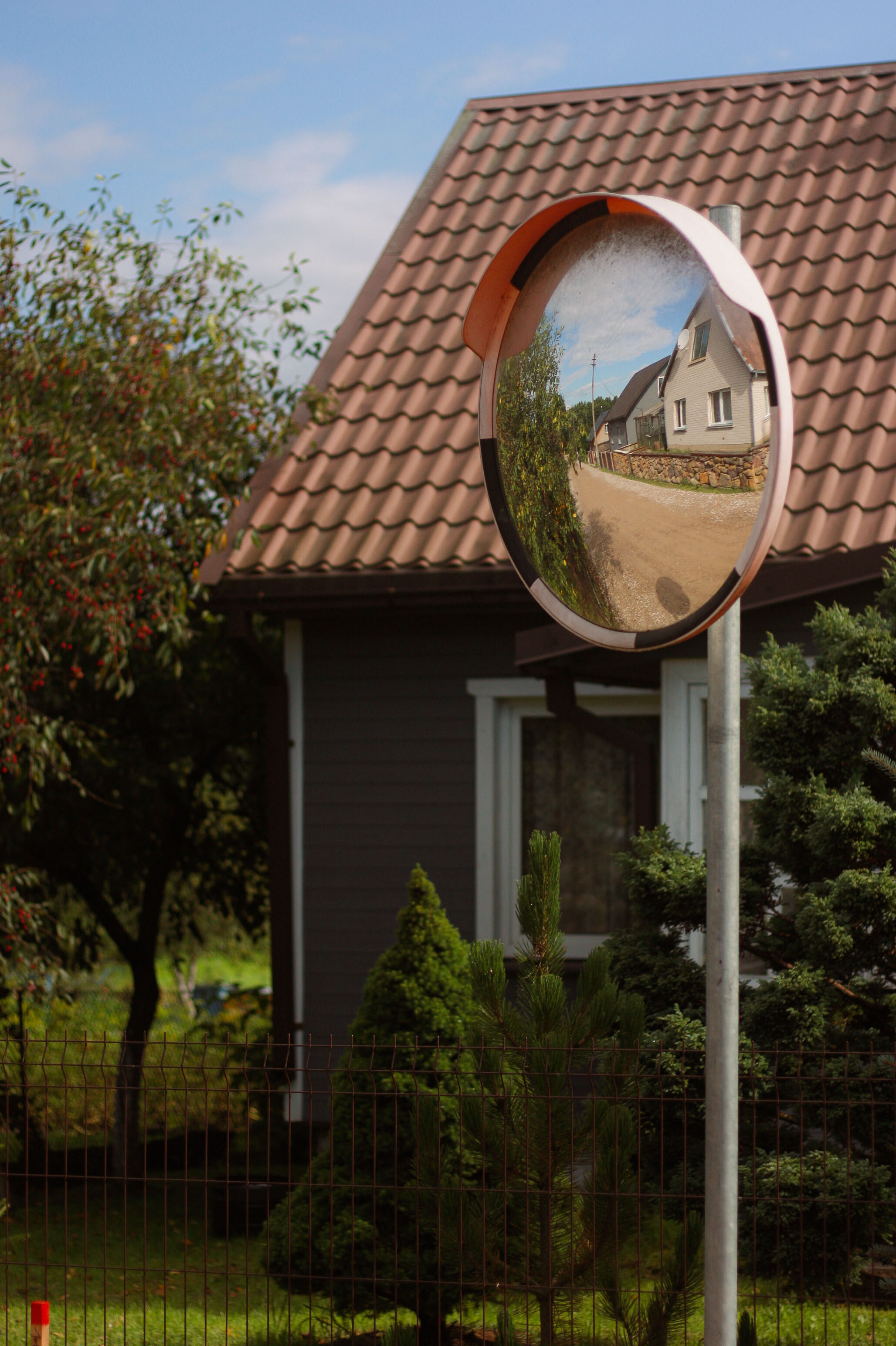
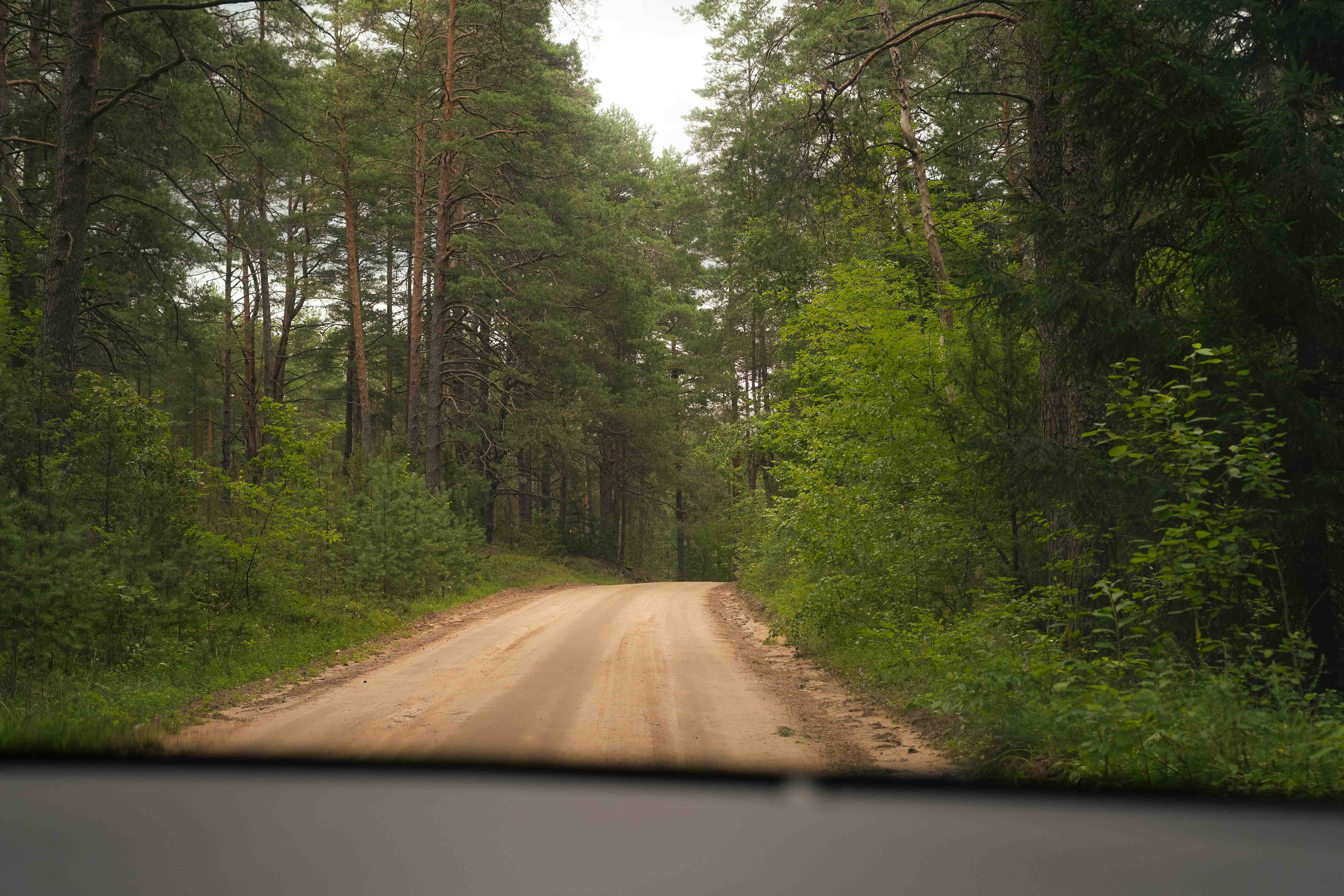
After studying a map showing the territory of the future training ground, we decide to visit a few of the nearest homesteads facing eviction. As we drive through the forest in the village of Žmirkliai, two small houses and a farm building gradually emerge. We step hesitantly into the yard, and after a few moments Marija comes out of the door: an energetic woman from Dzūkian who agrees to talk to us for a while. She says that the surrounding homesteads are inhabited only by her relatives. Marija's cousin lives next door with her son and will also have to move out. The situation is difficult because she has trouble walking and lives there all year round – some of the other homesteads within the training ground territory are summer houses.
"First it was Siberia, and now our people are deporting their own," Marija says about the eviction.
Marija herself was born in Siberia and returned to Lithuania in 1958. The little house where she spends summers with her husband Romas was built by Marija's father a few years after he returned to his homeland. Growing up in the village, Marija was surrounded by 32 cousins. She fondly remembers wading through snowdrifts with her relatives to school in Kapčiamiestis. Later, when she was older, she and her cousin would cycle to dances on the Belarusian side.
She talks a lot about her family's experiences during the partisan war – about the ‘forest men’, who, in her family's experience, are not remembered only fondly. Marija speaks with resentment about the neighbours and relatives who betrayed the family – her parents were denounced by a neighbour, and they had to go on living next door to him after returning from exile.
"Maybe only the good Lord knows everything and does everything now. Otherwise you're afraid of people and [can't] trust just anyone," she says.
Marija does not agree to be recorded, but the story of the house built by her father after he returned from Siberia won't let go of us. We decide to visit her and Romas once more. Marija is surprised to see us, but this time she lets us record and agrees to show us around the garden. She seems happiest about the watermelons that are filling out.
We realise that one day she will no longer be able to return to these places, even though now it seems as if the little house will stand here forever.
Once she has taken care of the house and the vegetable garden, Marija always dashes off to the forest, just a few metres away. She says she used to pick more berries when her health allowed, but now she goes mushroom picking more often. It is clear that this place has become part of who she is – she talks warmly about her daily walks in the forest and the joy she takes in every tree growing around her and every singing bird.
Marija talks about the Kapčiamiestis school, which we have already driven past more than once, and about the village of Kalviai, where her father came from and where we happen to be staying this week. We talk about the nature surrounding us and learn that the meadow in front of us was once a marsh teeming with wildlife.
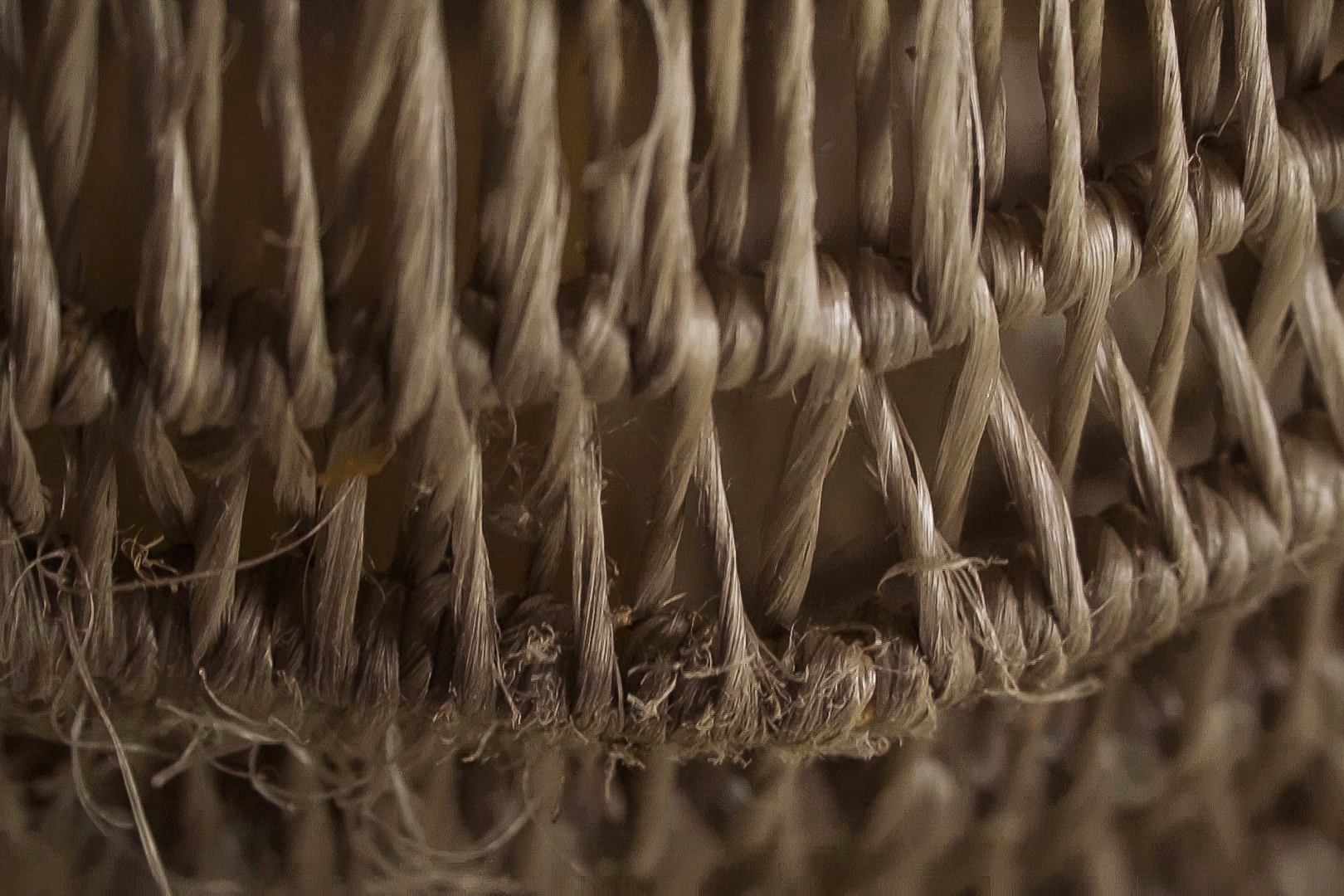
On the wall we notice a pretty basket that Marija uses for mushroom picking – she mentions that her father wove it. Although she still doesn't trust that our interest is sincere, she shows us other baskets and runs into the house to fetch a tablecloth woven by her mother. Marija recalls that this piece, one of many, was carefully woven over many hours, and perhaps that is why it has kept so well – it looks as if it had been woven only yesterday.
Later the conversation returns to the house her father built. This time there is more sadness in Marija's voice. It seems that, in telling her family's story, she has lived through it once again.
Her father's wicker baskets will remain in the empty annexe, together with the dishes and furniture Marija no longer needs, until the building is demolished. In this way, the history of the house and the family will be erased. We would like at least to take a photograph, but Marija refuses. We realise that one day she will no longer be able to return to these places, even though now it seems as if the little house will stand here forever.
"Whatever they've decided, that's what they'll do. Nothing depends on us [...]. As they say, a dog's bark doesn't reach heaven," Marija says, dejected.
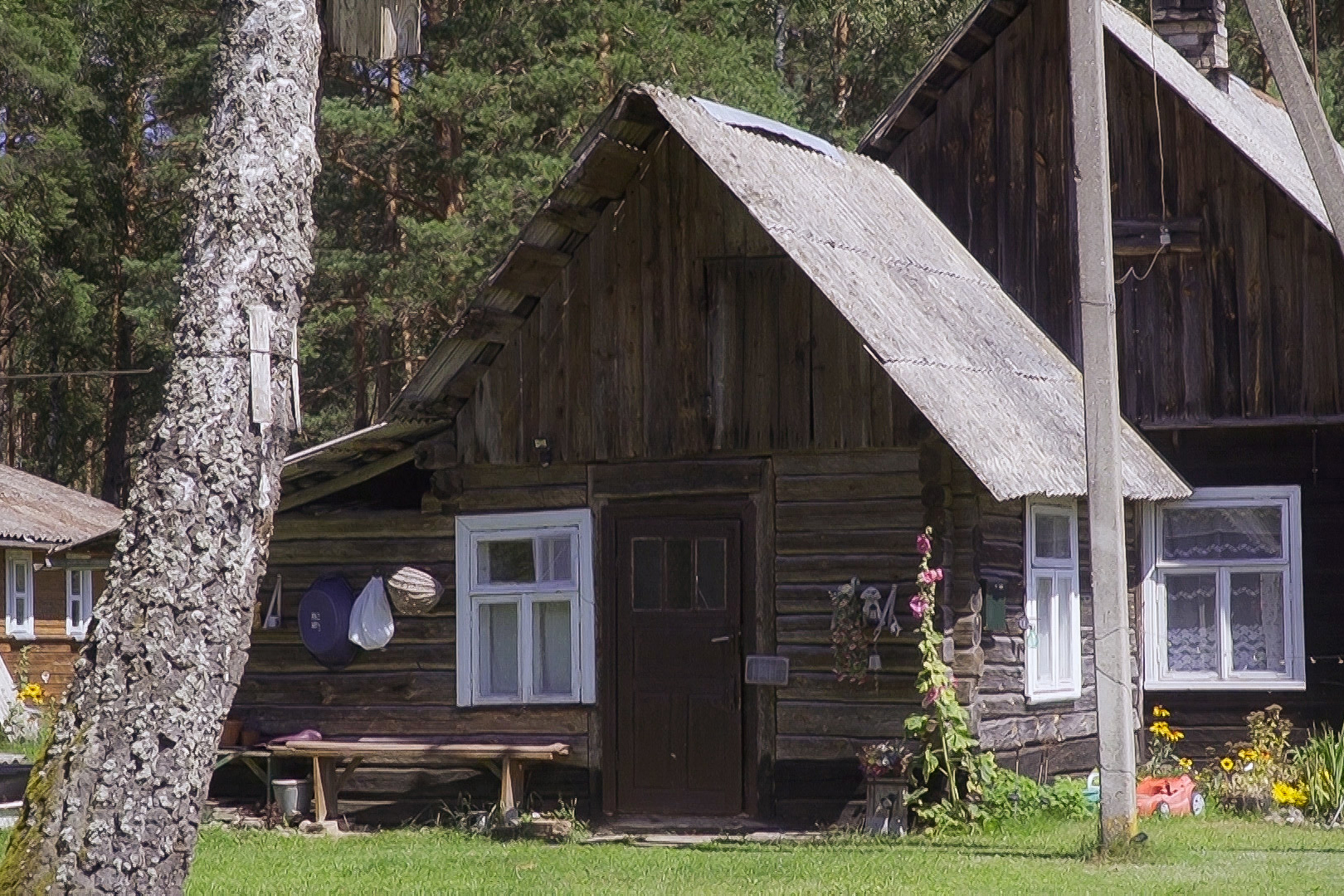
In summer, emigrants return to Kapčiamiestis from abroad to visit home, and fireworks are set off here on Saturdays. Irutė is preparing to conduct at the 500th anniversary celebration of the Veisiejai parish, and the owner of the Kapčiamiestis tavern and shop bustles behind the bar, serving the locals and guests who have flocked in – guests like us, who have dropped by to say goodbye but have promised to return. Work in the town doesn't stop: in a cloud of wet dust, heavy machinery is laying new asphalt. The air is saturated with the smell of boiling bitumen, and the noisy background is dominated by the roar of machines and the occasional shouts of workers. In just two years, military vehicles will be moving along the new road, new journalists will arrive, and the local cat Micius will gaze from his bench at a different Kapčiamiestis.
*Some interviewees' names have been changed at their request.