“I’m Not Going to Finish this Until I’m in Kyiv Having a Coffee with You.”
Graphic novelist Sarah Lippett has been documenting stories of Ukrainian people since 2016. We spoke with the acclaimed British illustrator ahead of her upcoming exhibition at the Martynas Mažvydas National Library of Lithuania in Vilnius.
The exhibition, titled ‘10 Years: Documenting Ukrainian Resolve and Resistance’, portrays people living in Muzychi and Kyiv as graphic story characters. It will open on July 2nd on the 5th floor of the Martynas Mažvydas National Library of Lithuania. The exhibited stories will also be self-released as a graphic novel of the same name.
Sarah Lippett, an Edinburgh-based graphic novelist and illustrator, first came to Kyiv in 2016 to escape the grief of Brexit. She was moved by the generosity of the people there and made three of them – Taras, Lisa and Misha – her lifelong friends and characters in her stories. In 2017, her comics were exhibited in Kyiv.
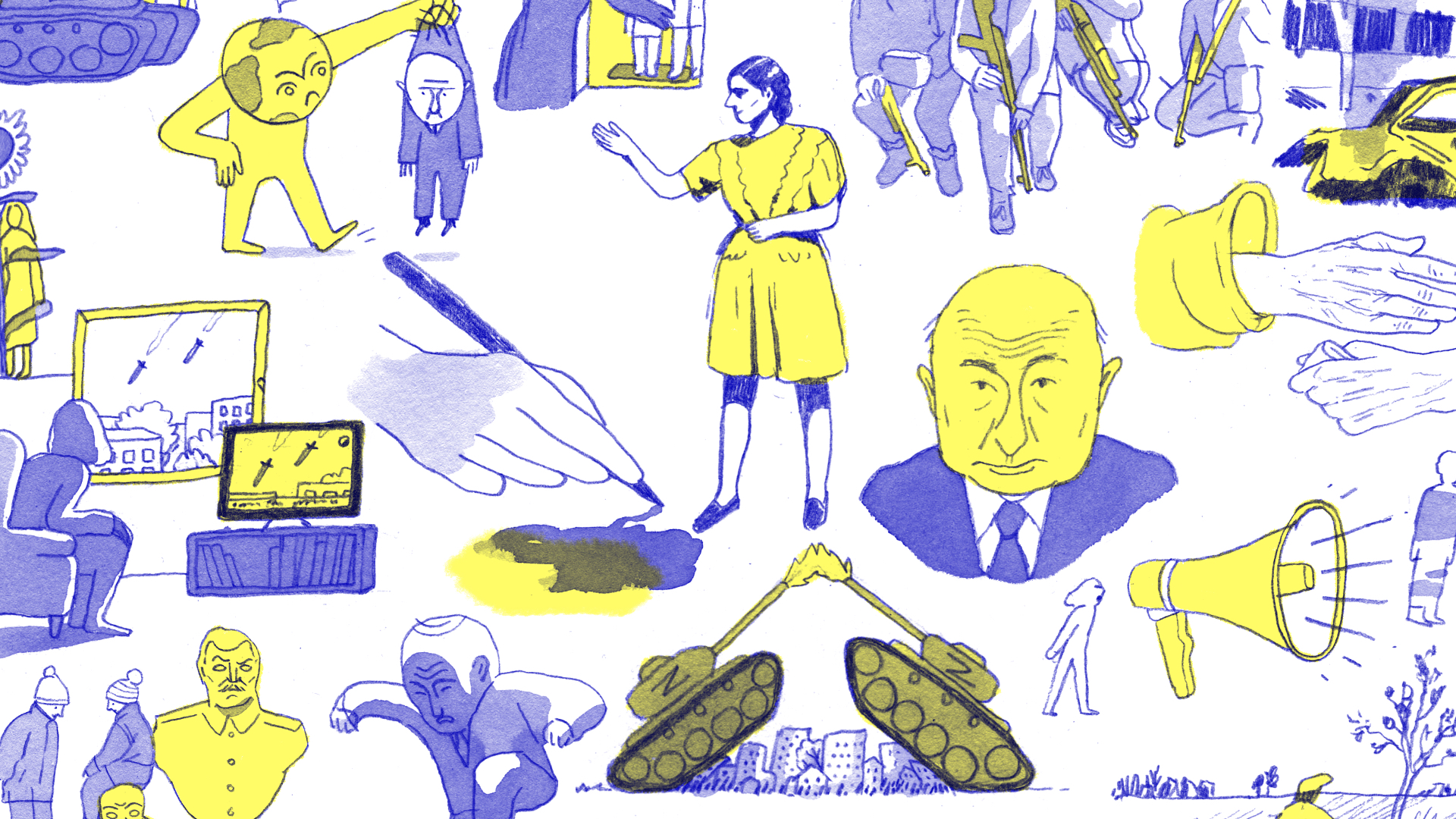
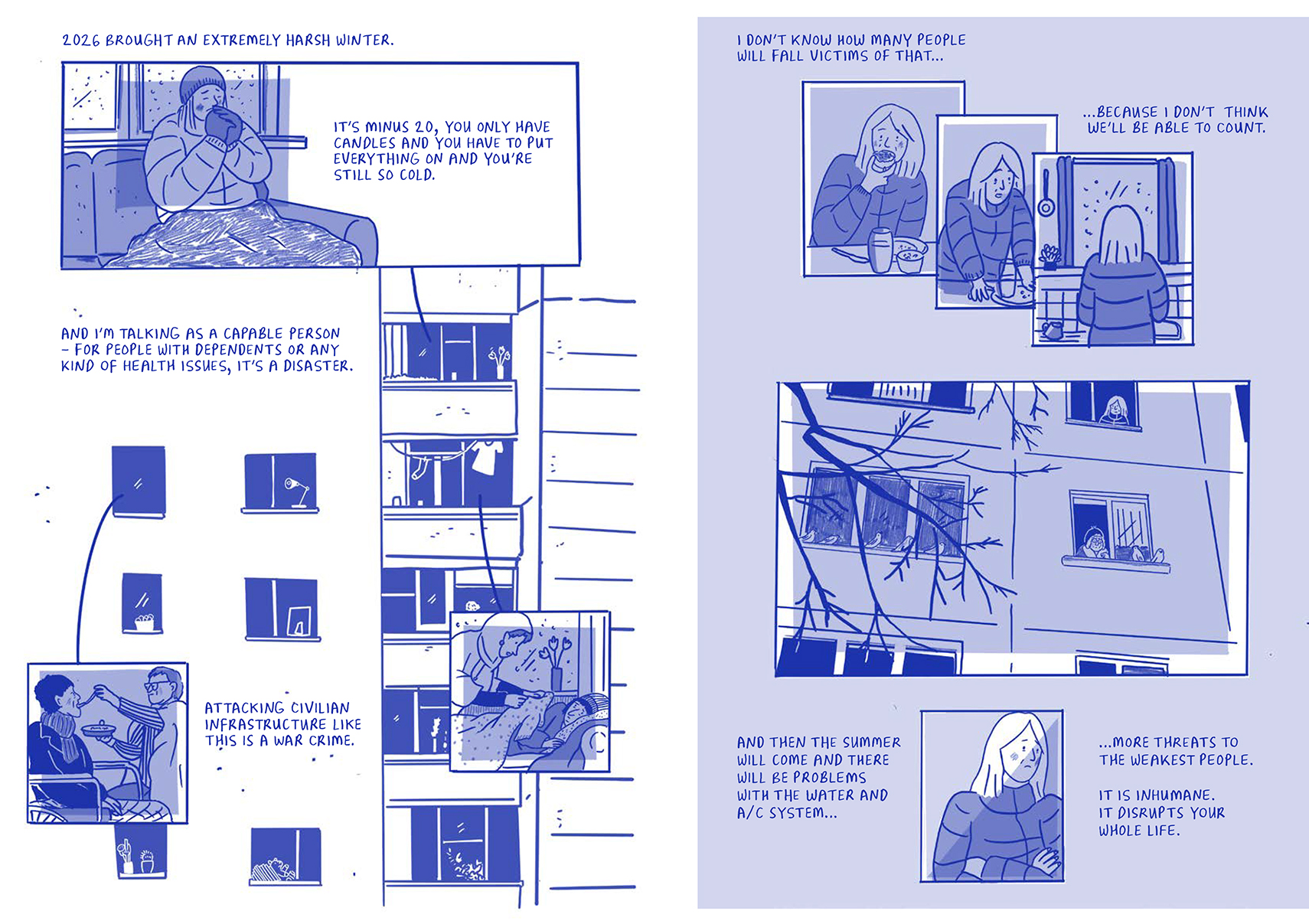
Recently, Sarah drew a new addition to the comics, which documents the updates and reflections over the course of the Russian full-scale invasion of Ukraine. Viewers can see how the 2016 conversations about democratic society in Ukraine – questions about desovietisation, healthcare, LGBTQ rights – were silenced by the brutal reality of war, in which more than 50,000 Ukrainians have died and nearly 10 million remain displaced. Vilnius is the first city where the full collection of Sarah's Ukrainian comics will be exhibited. All profits from the project will go to the Ukrainian Emergency Art Fund.
Sarah’s other published comics and graphic novels include the memoirs Stan and Nan and A Puff of Smoke, as well as a young adult novel about the role of music in the life of a teenager, Everything Amplified, which she co-wrote with author Ziggy Hanaor.
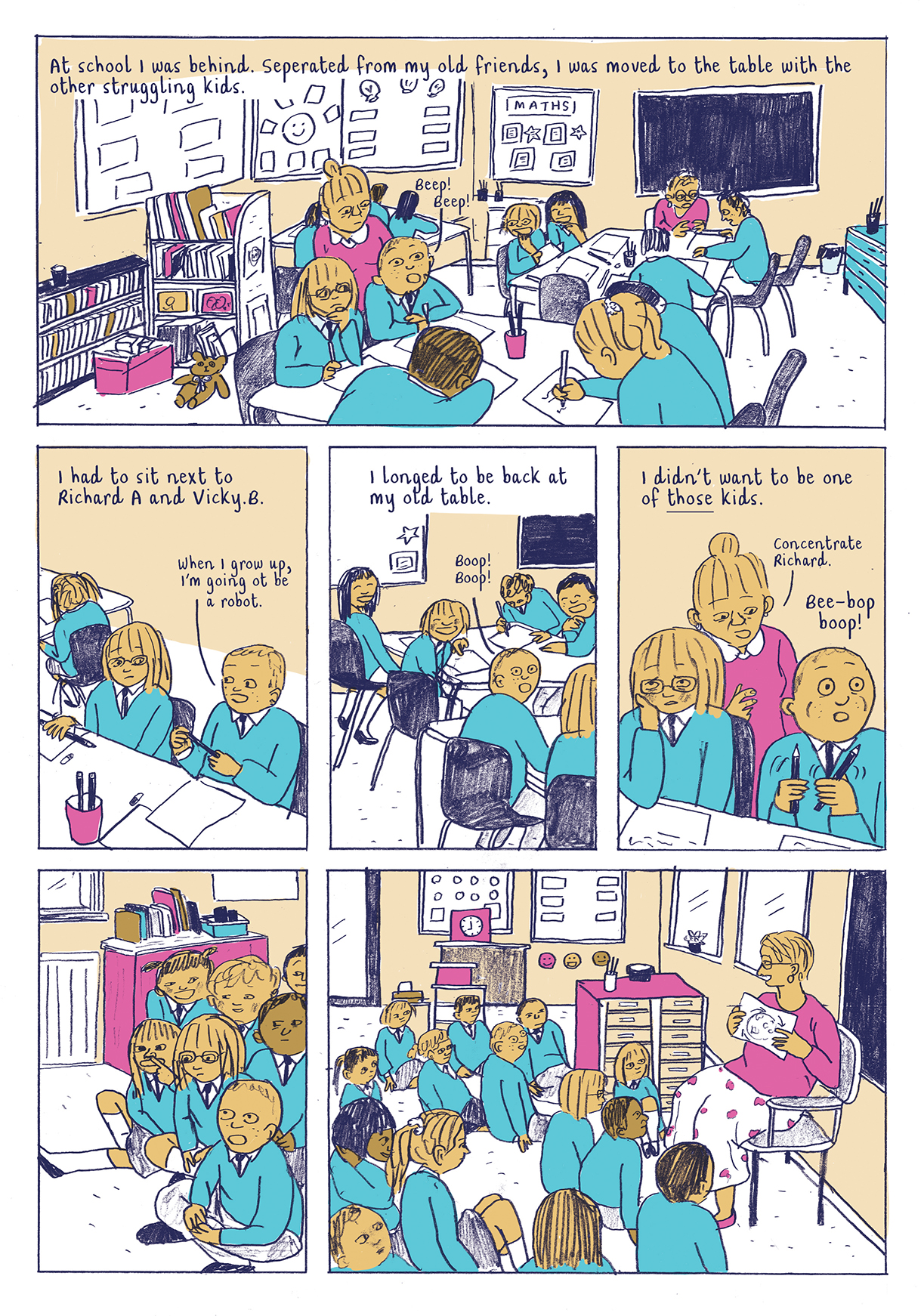
A Puff of Smoke, which portrays her life growing up with an illness that nobody could diagnose, was named one of The Guardian’s graphic novels of the year in 2019 and featured on BBC Radio 4’s Woman’s Hour. Everything Amplified was named a Herald Scotland Book of the Year and has just won a prestigious Victoria & Albert Museum’s Illustration Award for Adult Fiction.
Sarah’s work has also been featured in The New York Times, NPR, It’s Nice That and many other publications. Alongside her work as a graphic novelist, Sarah teaches Illustration at the University of Edinburgh and runs Onion Press with comic artist Maria Stoian.
She spoke to NARA’s Polina Tolpygina about the upcoming exhibition in Vilnius and the power of comics – where words fail, drawings speak. Read the full conversation, which has been edited for length and clarity.
Polina: You started drawing for fun when you were a kid, together with your brother, but at first you didn’t take it seriously. What made you consider making illustrations for a living?
Sarah: When I was at school, I was very ill. I was in and out of the hospital and drawing was a way to manage my health. When I finished school, it was a bit like, Well, I’m still ill, but art is the one thing that I really enjoy, so I went to college to do a one-year diploma in arts. During that time, I had brain surgery and I got better. But while I was in college, it was like my eyes had been opened up. I was being taught by these incredible tutors who were like, You can make a living as an artist.
I remember one tutor saying to me that it was a life choice, not a career. That inspired me. And then he looked at my sketchbooks and said, You're an illustrator. And I said, I don't know what that is.
I knew, obviously, about fine art, but that opened up my world to this whole other way of communicating visually. Then I went to university to study illustration. I was better, I had a whole new life, in a way, because I had my health back. I had this vision of how art could speak to people and communicate, and that was the start of the journey of taking it – my drawings – seriously.
You got your BA in Illustration at Brighton University, and your MA in Visual Communication at the Royal College of Art in London. Were both of these colleges your main sources of education, or were you also influenced by someone else? What things have you taught yourself along the way?
When I was at Brighton, I wanted to do two things. One was that I wanted to communicate with people through humor in my illustrations. I wanted to make people laugh through adversity. I was like, No, everything’s joyful! Second, I wanted to be a serious illustrator for big newspapers.
On the one hand, I was making this personal work that was very silly. I was making little zines, but they didn’t have narratives – just one-off drawings that were a bit weird, inspired by British comedians Vic Reeves and Bob Mortimer. But then I also did get to work with The Guardian and The New York Times, and it was incredible. I did work with some bands as well. There’s a British band called Los Campesinos, I was doing some artwork for them.
I got a bit bored after a few years of being a freelancer and I went off to New York for three months, just on a whim with a friend. I took my portfolio around to get work and I met all these amazing artists working in a narrative form, especially at the New York Society of Illustrators. It really inspired me. It felt like you could communicate so much more.
I was also inspired by podcasts and by telling stories through journalism and radio. My favourite podcasts at that time were This American Life and Radiolab. And I applied to the Royal College of Art in London and got a place. My tutor said to me, What do you want to do for two years here? And I said, I want to be the visual Ira Glass (the host of the radio series This American Life). I wanted to bring real-life stories to life through visuals. And that’s what I did. I made my first graphic novel there.
"The only thing I could do was to talk to my friends, share what they’re saying and draw. That's always been my go-to when I'm struggling with something."
How did you choose Ukraine as a topic for your work?
In 2016, my first graphic novel had just come out. The summer felt heavy because we had just Brexited and I was devastated. I had an email from the British Council asking if I wanted to apply for this residency in Ukraine. I knew a bit about Crimea and what was going on there, but that was all. I’m a very curious person and still see myself as a journalist in some way, digging for stories. So I wrote in my application: I don’t know anything. I’d like to know more by speaking to and learning from the people of Ukraine. And I got it.
In the residency, which was called SWAP: UK/Ukraine, there were five other artists and I. Me and another Sarah, Sarah Tynan, who’s a good friend of mine now, were both there. I was based in Muzychi, a small village outside of Kyiv and Sarah was based in Kyiv. We went out there knowing nothing. And I had the most incredible experience. I’ve never felt so welcome. One of the villagers, who didn’t speak any English, just left me loads of vegetables from their garden outside of where I was staying for me to cook with. I was so touched by the conversations and what I was learning. I was fascinated by and hopeful for the country.
Each artist in the residency was invited to spend one month in a different area of Ukraine and was paired with an artist in their location. I stayed with Alevtina Kakhidze, who is an incredible artist and performer. Sarah Tynan was based a few kilometres away in Kyiv with Taras Kovach. Both Alevtina and Taras would support me in reaching out and speaking with other people in Muzychi and Kyiv. In the early comics you will read stories from Alevtina and her friends and neighbours in the village, alongside those of Taras, Misha and Lisa from Kyiv.
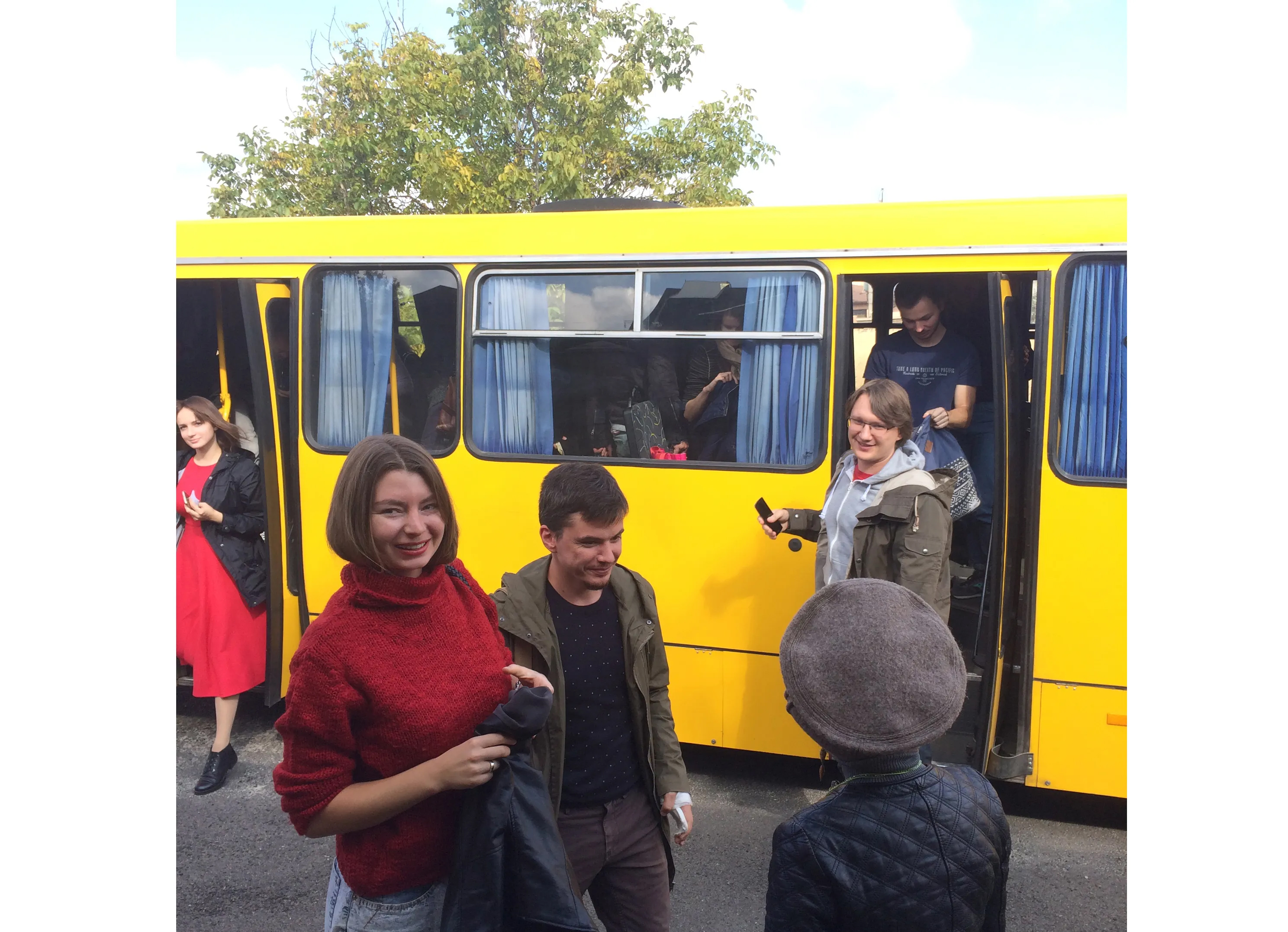
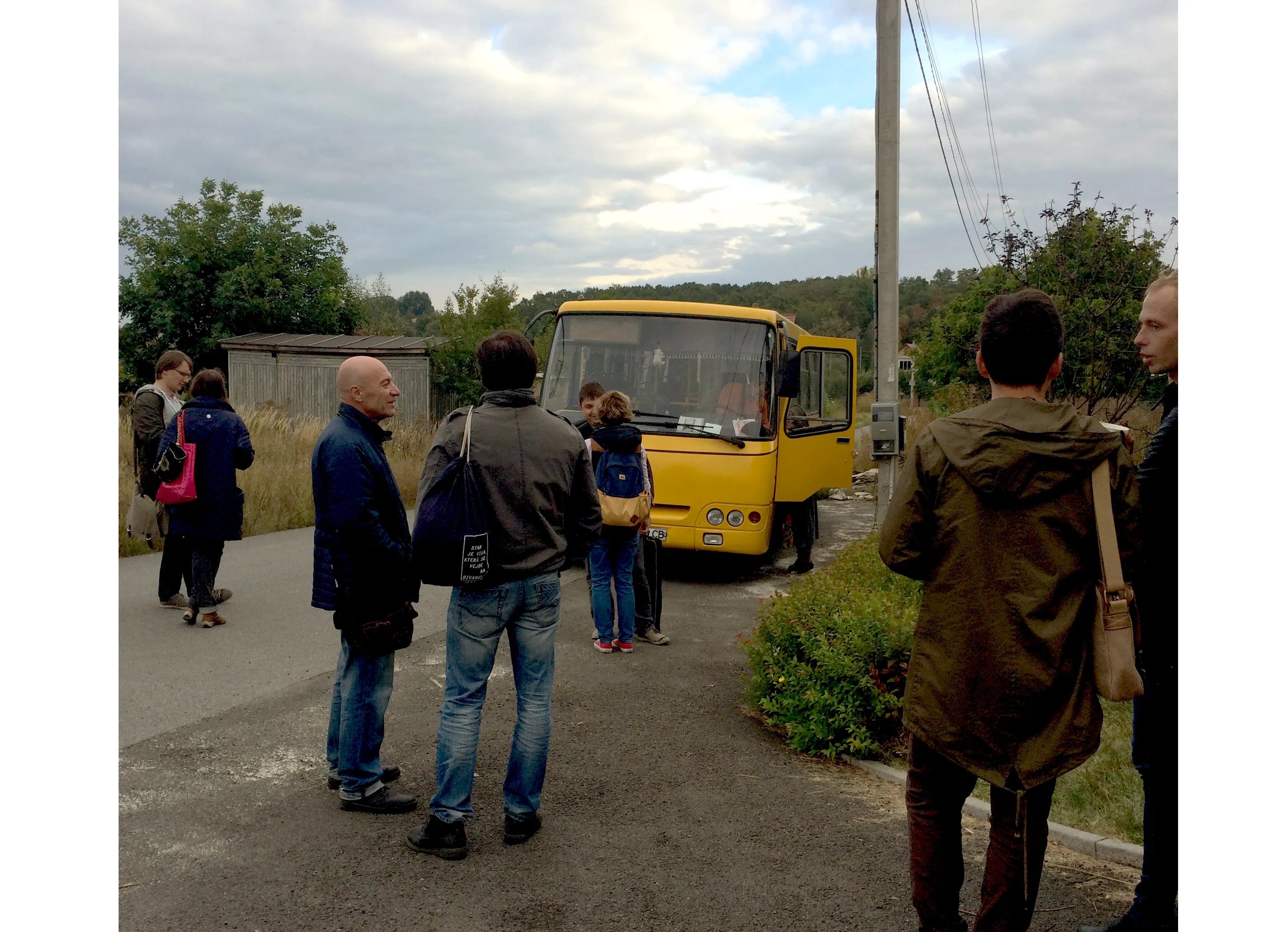
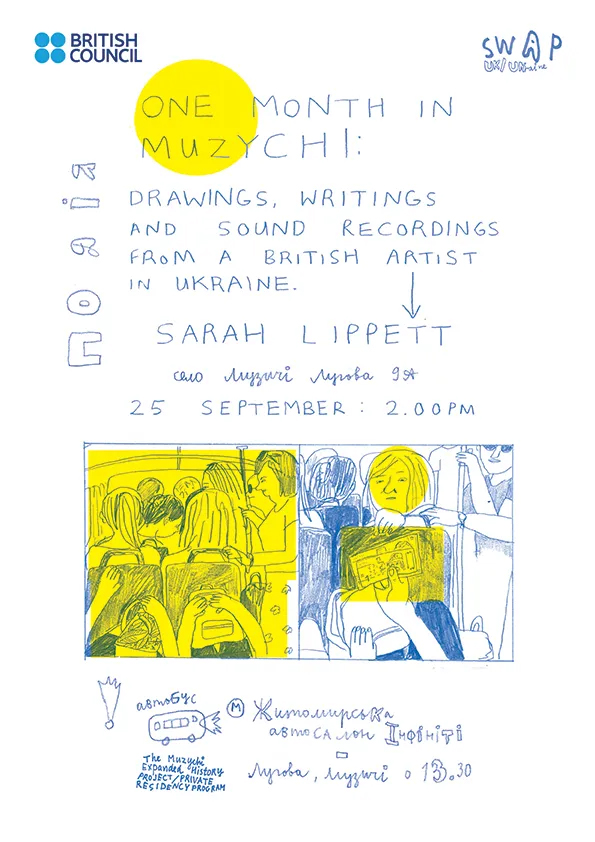
I went back again to Ukraine for the exhibition in 2017. Whenever I talked about my work, I kept on showing my Ukraine work. Because it was so important to me, and I still kept thinking about it and wanting to go back to it. I remember Sarah Tynan from the residency phoning me when the full-scale invasion happened. I was absolutely devastated. We were both crying on the phone. I was messaging friends in Ukraine, thinking what can I do? The only thing I could think to do was talk to my friends and share what they’re saying, and draw. That’s always been my go-to when I’m struggling.
And so I thought, well, if I can do that, and maybe if I can share those stories… Any profits I gain from selling the little comics that I was making could go to Ukrainian charities. That’s a small way of doing two things. One is sharing the everyday stories of people living through it. Because I think maybe you don’t necessarily see that in the news. You see the harshness of the war, but not necessarily on a personal level. And then again, I wanted to reflect on how everyone was feeling at this stage, because I don’t think in 2022 people thought that in 2026 we would be here. My friends are brilliant, open people, and they’ve been nothing but positive about being documented over so many years. They are revisiting themselves at these different stages – it’s also their life journey, in a way.
Tell me about the people who are in your comics.
Taras, Lisa and Misha have been part of this all the way through. I think they’re interesting because of their different journeys and where they’ve been at different times. Lisa was in Chicago for a bit and now she’s back in Ukraine. Misha moved from Kyiv to Lviv and is now in Basel, Switzerland. With Misha, there’s a lot of guilt there and these mixed feelings about having left. But then he touches on the difficulties of being gay in Ukraine in 2016. Coming back to that idea again in 2026, he said, Well, I would have left anyway because it wasn’t somewhere where I felt like I could be myself. These reflections are quite interesting across the timeline.
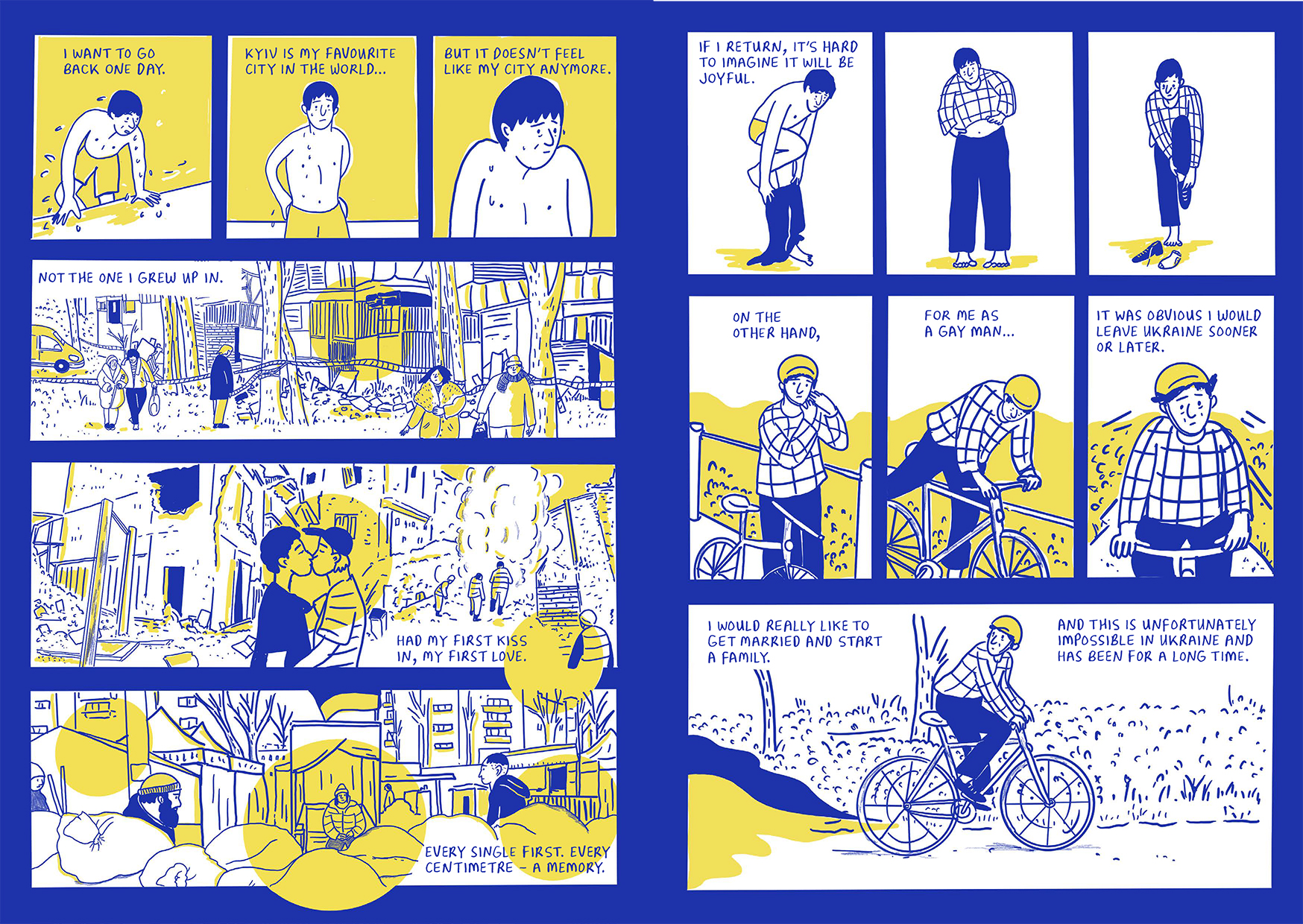
What were the most interesting insights you found from 2022, and then from 2026 – four years after the beginning of the full-scale invasion?
I often cried after the interviews because of the difference in my friends’ perspectives. I feel like so much hope has left them. And I can see, particularly with Taras and Lisa, what they’ve been through, and how much it’s taken out of them. They seemed so much more hopeful in 2022, and the same goes for Misha.
Lisa said to me that she had stopped talking about how she felt about everything. It was the first time in our interview that she had talked about it for a long time. After we’d finished speaking, she did say that it was quite good to just get it out. I said to her, We’re going to have a coffee in Kyiv one day. And she said, I can pin some hope on that. As a human being, you want to reassure a friend. But what can you say and how can you support anybody in this kind of situation? I definitely felt that harder because of the longevity of everything now.
"I often cried after the interviews because of the difference in my friends’ perspectives. I feel like so much hope has left them."
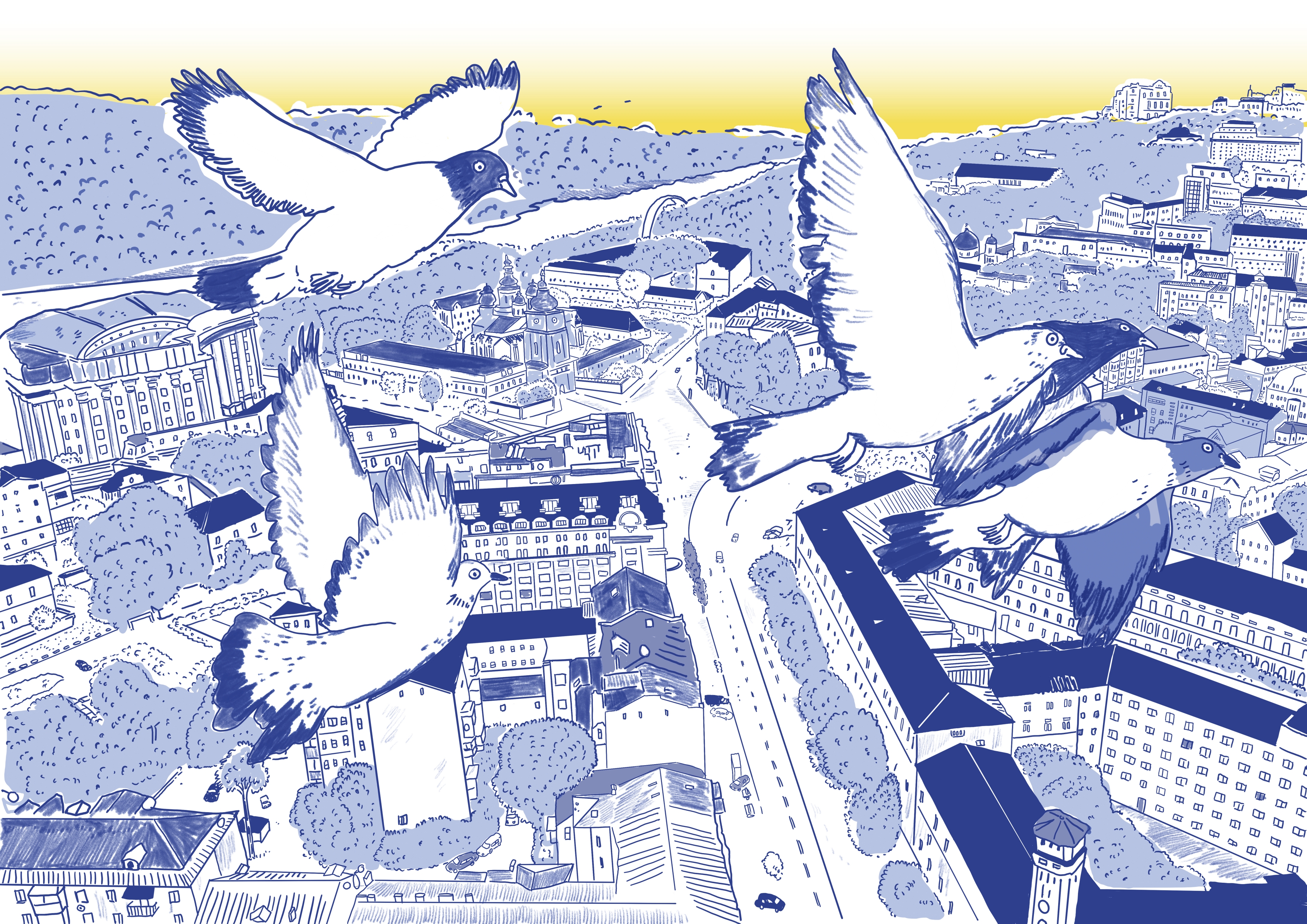
You captured Kyiv beautifully in one of your latest drafts that you sent me. I immediately recognized St. Michael’s Cathedral and the building of the Ministry of Foreign Affairs of Ukraine. It’s this view of pigeons flying over the center of Kyiv. From a technical perspective, how did you draw that?
I found reference material. My husband actually helped me. I wanted a bird’s-eye view of the city, and there was a film online that I found that was like a drone flying over, and I just paused it at this one shot where I was like, This is Kyiv. There was something in that comic: the symbolism of the pigeons and Taras caring for them and then letting them free and fly out over Kyiv. I love that sequence.
It’s been difficult to draw them, obviously. It’s a tricky balance with telling their stories and balancing the visuals – the juxtaposition of their thoughts and opinions and their everyday lives. With Taras, I was imagining his day: walking to the pigeons, then walking through the city to teach, and returning to care for the pigeons. I wanted to have the subway in it because the subway meant a lot. It’s maybe the most beautiful subway I’ve ever visited. And isn’t it the deepest in Europe? Also the fact that the subway is protecting Ukrainians during this time – I love that.
The pigeon sequence is a wonderful sequence. Did you also have Taras take pictures for you of some places that he goes to?
Yeah, I did ask him. Especially the pigeons, because they are so important to him. And he says at the beginning of the early comics that he and his partner, Anna, built a play park for children, and they built a pigeon house in it. He said, I always had a pigeon house. It made me laugh because it was so him. I don’t think he made the connection that most kids don’t have pigeon houses.
Taras is a talented artist who teaches at the National Academy of Fine Arts and Architecture in Kyiv. I have fond memories of visiting the academy with him in 2016. Students painting on easels outside in the grounds, the beautiful architecture, the hallways and rooms lined with paintings and sculptures – I worked from memory and reference photos for those parts.
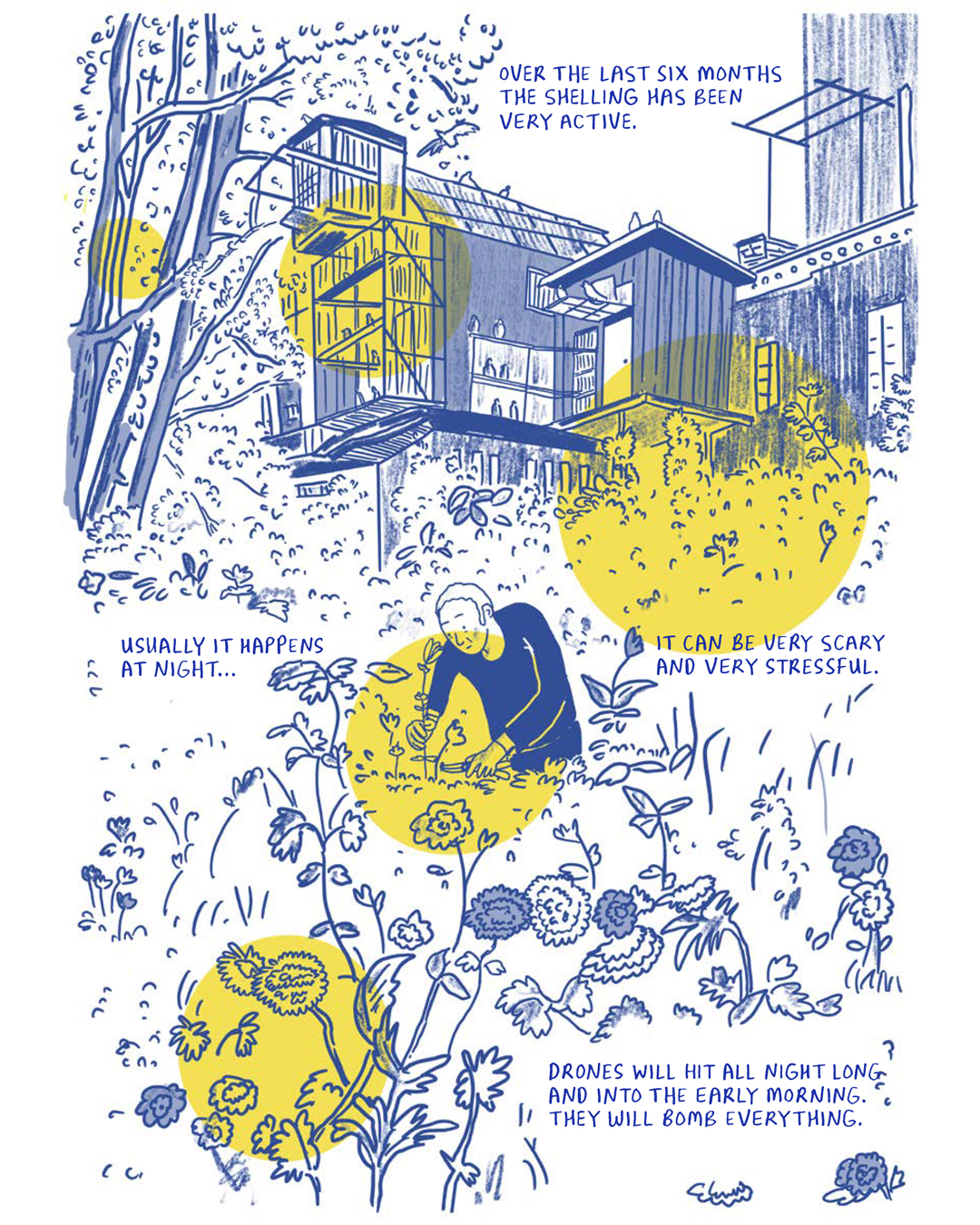
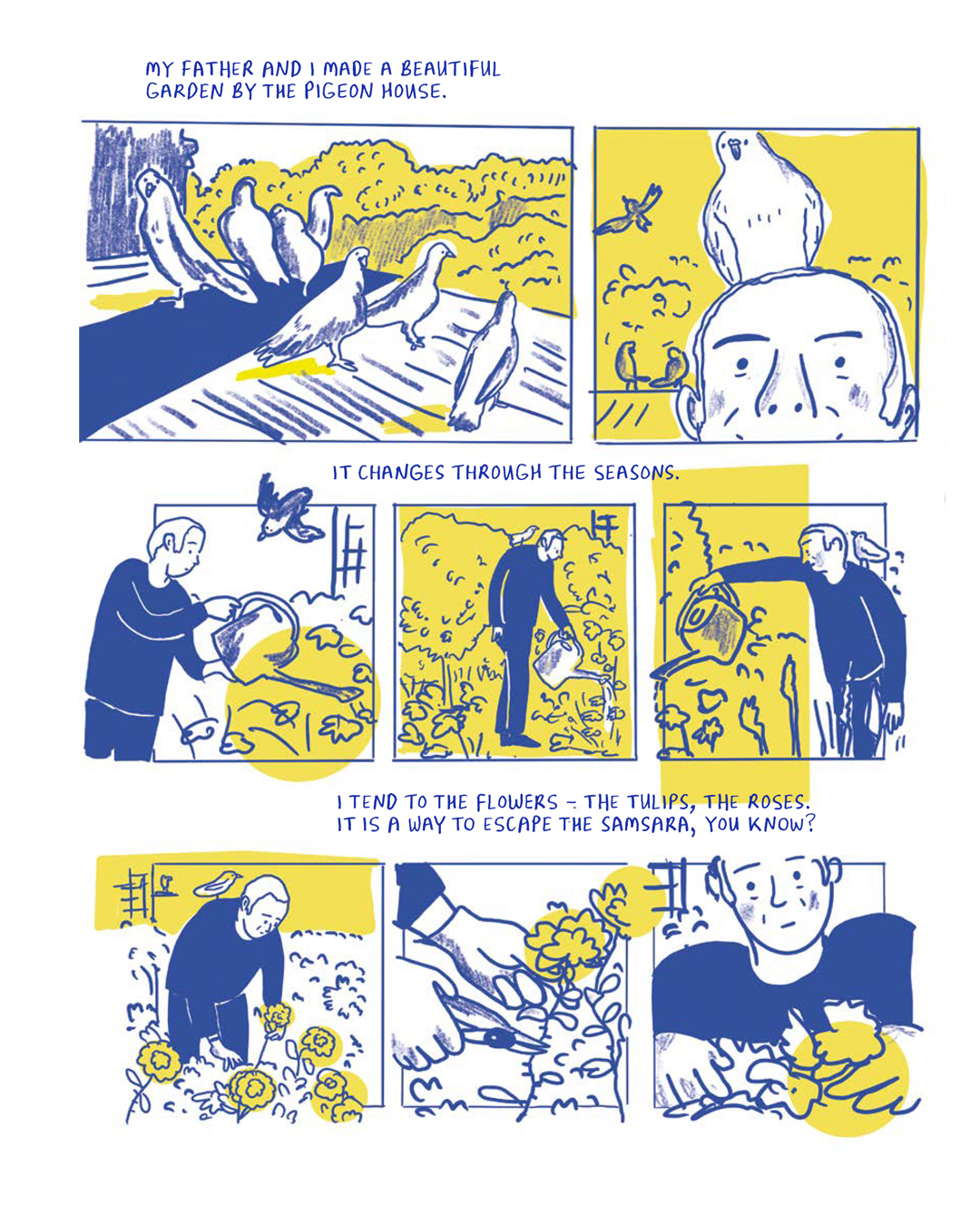
The colour yellow often feels strategic in the way you use it. It’s almost like when there’s a streak of yellow, it’s highlighting some truth about some social context in Ukraine, or when there’s a yellow circle highlighting your hero in the story – that also feels intentional. I am wondering how strategic you are with colours.
In all my work I have a palette, and it is really important for trying to force the audience to look in a certain direction. Like you say, with the yellow – to emphasise something. Or if we’re completely draining color from a scene… It’s all about communication. So you’re using everything in your power, as a visual storyteller, to speak to your audience and you want to do it in a subtle way. Hopefully when you’re reading my comics, you’ll notice things the second or third time. That’s always been my favorite kind of work where you pick up on more the more times you read it.
With the original colour scheme you might think, Oh, it’s obvious because it’s blue and yellow. It’s the Ukrainian flag. It came from the story that Taras was telling me: about how after the revolution everyone painted everything blue and yellow. He told me the story about the dam being painted blue and yellow – and then everyone in the village was nervous that the Russians were going to bomb everything that was blue and yellow from the sky. So I thought if I started with that story… It’s all very intentional. Occasionally it is because I want to balance a page aesthetically. But often it is about making a point.
Is there anything specific that you think illustration can convey that writing alone can’t?
There are things where I can never find the words, but I could draw it for you. If I’m writing a story, I will write a script and I’ll work with that to make my drafts. I’ll draw them out, and I’ll keep changing them until I'm happy with it.
With A Puff of Smoke, my graphic novel about growing up with a rare disease, I had this sequence that I’d drawn, and it had all these words that I’d written about how I was feeling. It was the night before my brain surgery and I was on my own. My parents had left me. I was 18 years old and I was really frightened. I’d written this whole thing out. And then very, very late on I just was like, Why am I even saying anything? Because all I needed to do was have two full pages of just me sitting there. We’re leaving space for the audience to remember a time when they felt similarly. That is more powerful than me saying what was in my head. I suppose it’s similar to how you use music in film. Comics are amazing at the juxtaposition between the images and the words, which don’t necessarily need to align. I don’t necessarily think words on their own can do that.
As a reader, would you say it’s a different experience to read graphic novels?
Yeah. The thing is, I didn’t read any comics until just before I went to the RCA (Royal College of Art). The first nonfiction graphic novel I read was Maus by Art Spiegelman. When I realised they could be serious and saw the power of them, it just blew my mind. They’re much more known as a serious format in the US, I think, or North America. And obviously in France and Belgium they are like the highest art form. What’s exciting about exhibiting in Lithuania is that, I’ve been told, people aren’t that familiar with the format. Especially as a way to share serious themes or political work. I think it’s pretty exciting to keep trying to push the format.
Also, you’ve mentioned that music means a lot to you. Did it play a role in your work on this project about Ukraine? Did you listen to something specific while sketching or during your residency that you now associate with it?
I did go to a couple of record shops. Taras told me how hard it was to get any music in the '90s, from the West. So there were all these Ukrainian bands who managed to find Ramones songs or whatever, and then they’d do covers of them in Ukrainian. So there are definitely a lot of Ukrainian punk covers that I resonated with. When I hear certain punk songs, I think of Taras and Ukraine. And there was a really great bar in Kyiv that had a jukebox with all of those tracks on and I remember us listening to them together. I think about that very fondly.
"What’s exciting about exhibiting in Lithuania is that, I’ve been told, people aren’t that familiar with the format. Especially as a way to share serious themes or political work. I think it’s pretty exciting to keep trying to push the format."
What would be your advice to aspiring visual artists and writers who want to write and illustrate stories that matter socially and politically right now?
My advice would be not to go with what’s popular, but to be curious. I think it’s the kind of thing where falling into something, or falling into a conversation, is the way. Because if you’re forcing it, and this is just completely my personal thing, it just loses its authenticity and you’ll lose your motivation. If you force a subject or a project, it’s not going to be your best work.
But I am aware that that might be a luxury because it might be that you have to take on something that you perhaps don’t like so much. But in my own experience, I think you can always find something within a subject that maybe you’re not that interested in initially that excites you. Or go back to your values and find them in the subject matter. And keep digging until you find it.
Do you already know what you’re going to be doing next?
I’d like to write another graphic novel. I have a few ideas, but nothing is very developed yet. I also run a small press with my friend and colleague at the university, Maria Stoian, who’s a very talented comic artist. It’s called Onion Press, and the next thing we’re working on is a series called Rosemary's Collection. It’s a collection of postcards from Rosemary, who lives locally in Edinburgh. She handed in thousands of postcards to a second-hand shop that basically told the story of her life – communication between her and family members and colleagues at the hospital where she worked. We have archived them all online onto a website, so you can scroll through the postcards of different years, which provide a social commentary of her life and the times she has lived through. We have created short comic responses and are now inviting artists to respond to them, too. The comics, artwork and sound pieces will be shared on the website.
How are you going to finish the project about Ukraine? What is your plan for the exhibition, and what’s the conclusion of this work for you?
In terms of how it runs consecutively, it’s going to end with that line that I say to Lisa: I’m not going to finish this until I’m in Kyiv having a coffee with you. So I’m going to carry on. I’m hoping that in say two years’ time, when I return to the project again, that it will be in Kyiv. I don’t want to stop until I feel like there’s some kind of conclusion. I don’t see the exhibition as a conclusion – I see it as a reflective point.
This work is some of the most important I’ve ever made, but it’s never been shown in the UK, so there’s going to be another version of this show exhibiting in Edinburgh in September. I’m really excited about that. Having the show in Ukraine, in its first iteration, was brilliant. Because everybody who saw it said, I see me in what these people are saying. I think because of the histories aligning – and the support in Lithuania is phenomenal – it will really resonate in Lithuania.
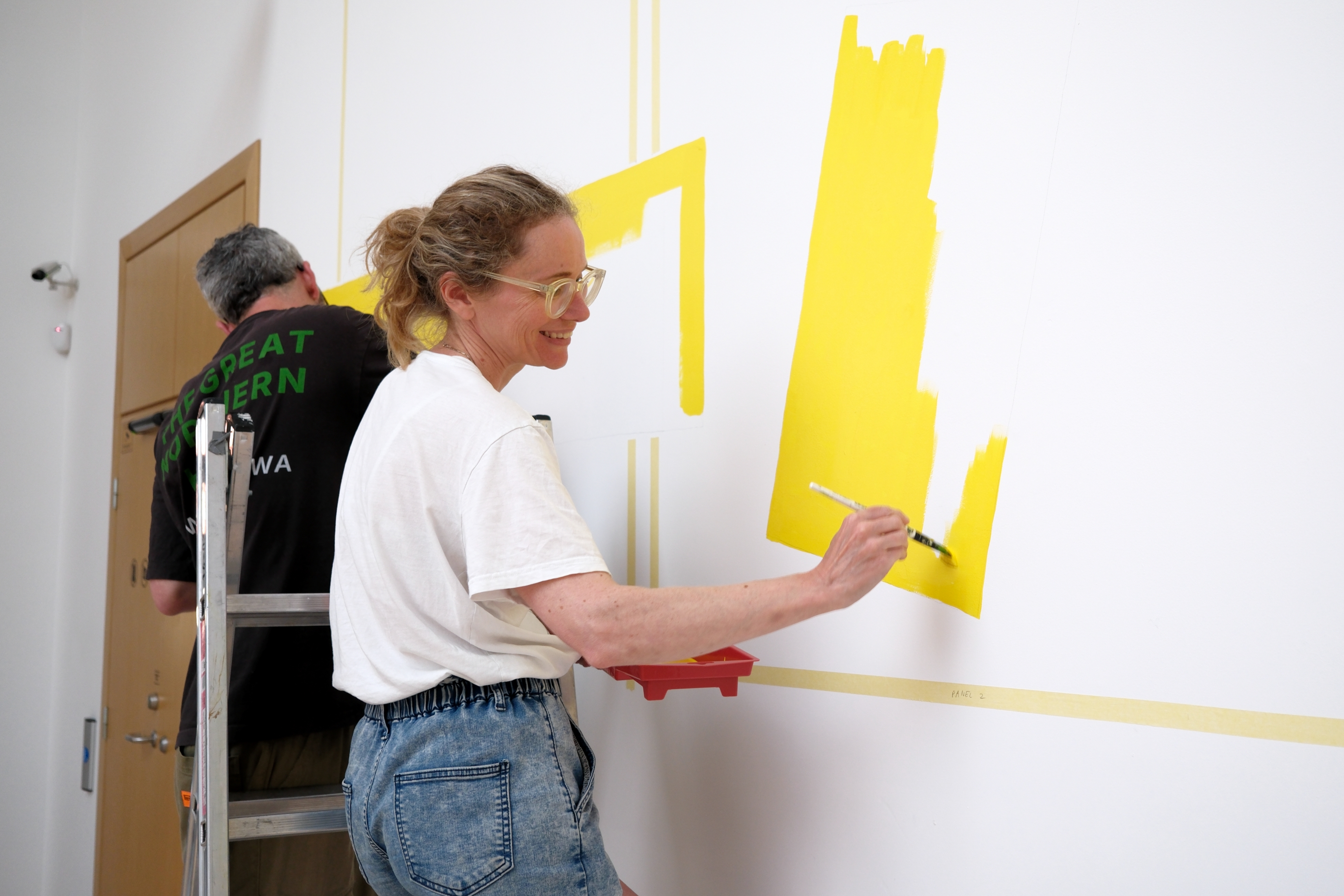
The exhibition “10 Years: Documenting Ukrainian Resolve and Resistance” will open on July 2nd at 6 p.m., at the National Library of Lithuania in Vilnius, with both Sarah Lippett and Polina Tolpygina in conversation. The exhibition will be open free of charge to visitors until August 25. The comics will be presented in Lithuanian, with English translations available. Find more information here.